
Creative Ideas: Fun and Innovative Ways to Boost Creativity
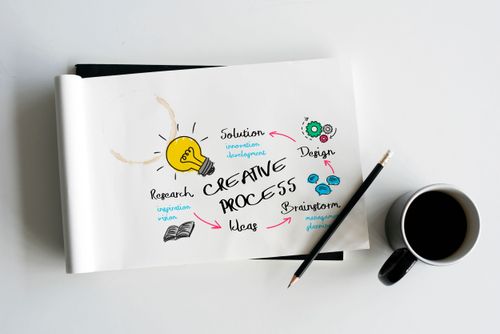

Table of Contents
- Why Does Creativity Stall and How Does PlanetSpark Help You
- What Are the Best Creative Thinking Ideas for Students and K
- What Are the Most Effective Fun Creative Activities for Adul
- What Innovation Ideas Actually Build Long-Term Creative Thin
- What Are the Best Ideas for Students' Creativity in Academic
- Explore PlanetSpark Creative Writing Classes
- Your Most Creative Chapter Hasn't Started Yet
You've got a deadline. A blank page. And a brain that's decided today is not the day it feels like cooperating.
That stuck feeling isn't a personality flaw. It's not proof that you're "not a creative person." It's what happens when creativity hasn't been given the right conditions to show up, and most people have never been taught how to create those conditions.
This blog fixes that. We'll cover why creative thinking stalls, what actually unlocks it, and the specific creative ideas that work for kids, students, and working professionals. These are the same approaches PlanetSpark's Creative Writing coaches use in real sessions every week. And if you'd rather build this skill with a real coach beside you, PlanetSpark's Creative Writing classes are built for exactly that gap, for anyone who wants creativity that shows up on demand, not just occasionally.
Why Does Creativity Stall and How Does PlanetSpark Help You Unlock It?
Creativity stalls when the brain repeats familiar patterns. New ideas need new inputs, deliberate practice, and the right mental environment to form.
Here's the belief that causes the most quiet damage: that creativity is a personality trait you either have or you don't. People decide they're "not creative" somewhere around age ten and spend the rest of their lives outsourcing that thinking to whoever around them seems to have it naturally. That's such a waste. Because creativity isn't fixed. It's trainable.
There's actual neuroscience behind this. The brain generates its most interesting connections during what scientists call the default mode network, the mental state you slip into during a walk, a shower, or a few minutes of genuine quiet. Studies suggest this network is responsible for the kind of associative, non-linear thinking that produces original ideas. When life is packed with noise, notifications, and back-to-back tasks, this network barely activates. The creative ideas aren't missing. The conditions for them are.
PlanetSpark's coaches see this across every age group. A student staring at an essay prompt for twenty minutes, not because they have nothing to say, but because the first idea feels wrong and they can't move past it. A professional cycling through the same three pitch angles because the mental environment for genuinely new thinking never gets created. A child with a vivid imagination who goes completely blank the moment someone hands them a pen. The problem is never creativity itself. It's always the absence of the right trigger or structure to channel what's already there.
Once you understand that, everything shifts. You're not waiting for inspiration. You're creating conditions for it. And that's entirely within your control.
Read More: Brainstorming Topics to Boost Creativity and Learning
What Are the Best Creative Thinking Ideas for Students and Kids?
The best creative thinking ideas for kids use open-ended prompts, playful constraints, and low-stakes challenges that make divergent thinking feel safe.
Kids are, in most cases, more naturally creative than adults. The real tragedy is that school environments often train that out of them by rewarding the single correct answer and treating divergent thinking as a distraction. A child who asks "but what if the answer was this instead?" gets corrected. Enough corrections, and they stop asking entirely.
PlanetSpark's Creative Writing sessions are designed specifically to reverse that pattern. Rather than asking a child to "write a story," coaches use layered prompts that push past the predictable opening. Rather than correcting immediately, they ask questions that help the child discover what their writing could become. Research from education psychology consistently shows that creative confidence in children develops faster through guided exploration than through direct instruction. The result isn't just better writing. It's a child who starts believing their ideas are worth expressing, which is actually the harder and more important thing to build.
The "What If" Game: Take something ordinary and apply an impossible condition. What if gravity worked sideways? What if your teacher was secretly a robot from the future? What if every lie you told turned a different colour? This prompt style unlocks divergent thinking faster than almost anything else and works across every age because there are no wrong answers, which removes the fear that kills creativity before it starts.
Constraint Writing: Write a complete story in exactly ten sentences. Write a poem without using the word "the." Describe a colour to someone who has never seen it. Constraints feel limiting and that's exactly why they work. When options are removed, the brain gets genuinely creative with what's left. Some of the most imaginative student writing PlanetSpark coaches have seen came from the tightest, strangest prompts.
Reverse Brainstorming: Instead of asking how to solve a problem, ask how to make it as bad as possible. Then reverse every answer. This consistently breaks mental blocks and surfaces ideas that conventional brainstorming never reaches. It's particularly effective for students who feel like all the obvious ideas are already taken.
Sketchnoting: Drawing and writing combined to capture ideas visually. Even students who insist they can't draw benefit enormously from this because it bypasses the internal editor, that voice that says "that's a stupid idea" before the idea even finishes forming. When the hand is moving, the self-consciousness tends to quiet down.
What Are the Most Effective Fun Creative Activities for Adults and Professionals?
Effective creative activities for adults use low-stakes experimentation, cross-domain learning, and timed practice to rebuild creative confidence that careers quietly erode.
Adults are often less creative in daily practice than children, and it's worth being direct about why. The imagination didn't disappear. The stakes got higher. A bad idea in a meeting room carries consequences that a bad idea in a classroom simply doesn't. Research on professional creativity suggests fear of negative evaluation reduces idea output by up to 40 percent in workplace settings. Most professionals don't notice this operating because it's been running quietly in the background for years.
PlanetSpark works with adult learners specifically on this. The structured writing practice in their adult sessions removes judgment from the equation in a way professional environments almost never do. When someone writes in a guided session with expert feedback rather than presenting ideas to skeptical colleagues, something opens up. Ideas that would have been self-edited before they formed actually make it onto the page.
Morning Pages: Three pages of longhand, stream-of-consciousness writing first thing in the morning. No editing. No rereading. No goal beyond clearing the mental backlog. This practice has devotees in every creative field because it empties the noise accumulated overnight and makes room for actual thinking. Writers use it. Executives use it. Designers use it. Twenty minutes. Disproportionate return.
Cross-Domain Learning: Deliberately studying something completely unrelated to your field. A marketer spending a month on architecture. An engineer reading poetry. A teacher exploring jazz theory. Creative breakthroughs almost always emerge from unexpected connections between separate domains, and you can't make those connections without the exposure. The most interesting thinkers in any field tend to be voracious readers outside of it.
Timed Ideation Sprints: Set a seven-minute timer. Generate as many ideas as possible on one topic without filtering any of them. Quantity over quality, deliberately. The best ideas rarely come first. They come after the obvious ones are exhausted and the brain is pushed somewhere less comfortable. Seven minutes of unfiltered ideation regularly surfaces one idea that a more careful process would never have reached.
Rewriting Endings: Take a book, film, or real professional situation you know well and write an alternative ending. PlanetSpark's adult writing coaches use this regularly because it builds narrative thinking and creative flexibility simultaneously. It's also genuinely enjoyable, which matters more than most productivity advice admits.
What Innovation Ideas Actually Build Long-Term Creative Thinking Skills?
Long-term creative thinking grows through daily idea capture habits, creative rituals, deliberate constraints, and consistent community practice over weeks.
Most creativity advice has a structural problem. It offers activities without addressing the habits and environment that either sustain or kill creativity over time. A single creative exercise is useful the way a single workout is useful. You feel something. But nothing changes permanently unless it becomes a practice, and practice requires a system.
PlanetSpark's curriculum is built around this distinction. Rather than one-off prompts, learners work through a progressive sequence of writing challenges where each session builds on the last and each piece of feedback compounds. Over six to eight weeks, creativity stops being something that happens when inspiration strikes and starts being something the learner can access deliberately. That shift is the actual goal.
Build an Idea Capture System: Creative ideas are extraordinarily perishable. They appear fully formed, feel completely memorable, and vanish within minutes if not written down. A dedicated notebook, a voice memo habit, or a notes app used consistently changes everything. Capturing ideas also signals to the brain that ideas are worth generating, which paradoxically produces more of them over time.
Create a Creative Ritual: Five minutes of freewriting before starting any project. A specific playlist that signals creative mode. A short walk before a writing session. Rituals reduce the activation energy required to begin, and beginning is where most creative blocks actually live. The blank page is scariest before you've started. Once you're moving, the fear recedes.
Seek Constraints Deliberately: Give yourself less time, fewer words, a stranger brief, or fewer tools than feel comfortable. The most innovative ideas in design, writing, and business frequently emerged from severe limitations rather than unlimited resources. Constraints aren't the enemy of creativity. They're often its most reliable catalyst.
Join a Creative Community: Creativity is genuinely contagious. Being around people who are actively making things and pushing their own creative limits raises your own baseline in a way that's hard to explain but very easy to notice. PlanetSpark's group writing sessions create exactly this dynamic, learners inspiring each other alongside expert coaching, which is a combination solo practice simply can't replicate.
Practice Creative Borrowing: Study the creative work you most admire and consciously imitate it. Not to copy but to understand the decisions behind it. Every skilled creative practitioner spent years imitating before finding their own voice. This is the actual path, and pretending otherwise does beginning creatives a genuine disservice.
Read More: 10 Fun Activities in PlanetSpark’s Creativity Master Course
What Are the Best Ideas for Students' Creativity in Academic Settings?
The best ideas for students' creativity integrate creative expression into existing subjects through perspective writing, constraints, and collaborative storytelling.
Creativity doesn't need its own subject slot to flourish in school. It needs permission to exist inside the subjects already there. A history essay written from the perspective of a minor figure usually left out of the story. A science concept explained through speculative fiction. A maths problem framed as a mystery where the solution is the resolution. These aren't gimmicks to make content feel fun. They're evidence-backed approaches to deeper learning that develop creative thinking as a byproduct of engaging with existing material more fully.
PlanetSpark's student programs are built around this integration. Creative writing practice develops alongside communication skills in a way that supports academic performance rather than competing with it. Students who write more creatively also tend to write more clearly, argue more persuasively, and think more independently across every subject. The skills compound in both directions.
- Perspective Writing. Argue the opposite of what you actually believe about any topic. Builds critical thinking and creative flexibility simultaneously, and it's uncomfortable in exactly the right way.
- Six-Word Stories. A complete story in exactly six words. Teaches economy of language and forces real creative precision. Sounds easy. Is genuinely difficult. Makes it excellent.
- Collaborative Storytelling. One student writes an opening, the next continues without knowing where it goes. Unpredictability forces creative adaptation in real time and produces genuinely surprising results every time.
- Creative Non-Fiction. Writing about real experiences using fiction techniques: scene-setting, sensory detail, dialogue, narrative arc. One of the most underused tools in academic writing and one of the most transferable to professional life later.
Explore PlanetSpark Creative Writing Classes
Build Creativity That Shows Up Every Time, Not Just Sometimes
PlanetSpark's Creative Writing classes are for kids, students, and adults who want creativity that's consistent, structured, and genuinely confidence-building. Whether your child avoids every writing assignment or you're a professional who wants sharper, more original thinking, these classes offer a guided path that goes well beyond occasional prompts and generic advice.
- Live, interactive sessions with expert creative writing coaches
- Structured curriculum from foundational creativity habits to advanced expression
- Personalized feedback on every piece of writing submitted
- Real-world creative challenges through projects and assignments that matter
- Confidence-building approach that works at every age and experience level
- Flexible scheduling built around school timetables and professional routines
- Progressive learning that compounds over time rather than one-off sessions
Want to build real creative thinking skills with expert support? Book a free trial class with PlanetSpark today.
Your Most Creative Chapter Hasn't Started Yet
Creativity Isn't Something You Wait For. It's Something You Build.
Every person you think of as genuinely creative got there through practice. Through environments that made experimentation feel safe. Through enough low-stakes attempts that the good ideas eventually started showing up more reliably than the mediocre ones. The writer whose work moves you. The colleague whose ideas always seem to come from somewhere unexpected. The child who never seems to run out of imagination. None of them were born that way. They were shaped that way, through repetition, feedback, and the right conditions.
The creative ideas in this blog aren't a one-time reading experience. They're an invitation to do something differently today, even if it's just five minutes of freewriting before your next task or one "What If" question with your child before dinner. Small things done consistently compound into something significant. That's not motivational language. That's just how habits work.
Creativity grows when you feed it. It deepens when it's practiced regularly in the right environment, with the right feedback, and with enough patience to let the process do its work. The blank page that feels like an obstacle today becomes an invitation once creativity is a habit you trust rather than a feeling you're waiting for.
Start small. Stay consistent. The most creative version of you isn't someone different. It's just a more practiced version of who you already are.
Frequently Asked Questions
Through the "What If" game, open-ended storytelling, sketchnoting, and reading widely across genres. PlanetSpark's Creative Writing classes accelerate this with expert guidance and consistent feedback that home practice alone can't replicate.
Six-word stories, collaborative storytelling, constraint writing, and rewriting the endings of favourite films. These replace the pressure of perfection with genuine creative engagement, which is where reluctant writers almost always get stuck.
Innovation ideas apply creative thinking specifically to solving real problems or improving existing systems. They use the same foundations, divergent thinking, constraint-based problem-solving, cross-domain connections, but point toward practical outcomes rather than purely expressive ones.
Habit formation research points to four to eight weeks of consistent daily practice for lasting behavioral change. Regular writing practice combined with structured feedback, as in PlanetSpark's program, tends to accelerate that timeline noticeably.
They share the same foundations: clarity of thought, audience awareness, structural logic, and the ability to make complex ideas accessible. Students who write creatively tend to communicate more confidently across both written and spoken formats, which is why PlanetSpark develops both together.