
Diction: Build sharper word choice and speaking clarity with PlanetSpark


Table of Contents
- Introduction to Diction
- What Are Diction Words?
- Types of Diction
- Figurative Language and Poetic Language
- How Expressive Language Enhances Communication
- 6. Tips to Improve Your Diction and Word Choice
- Boost Creativity with PlanetSpark’s Creative Writing Program
- Master Diction and Expressive Language for Confident Communi
In the journey of effective communication, diction plays a crucial role in shaping how we express ourselves. From speaking clearly in everyday conversations to writing creatively, the words we choose impact how others perceive us. Diction words are not just vocabulary - they are tools that convey tone, emotion, and intent. By mastering them, learners can enhance their verbal and written expression, making communication more precise, impactful, and memorable.
When we think about language, it is more than just a string of words. Every sentence, phrase, or poetic line carries meaning through the careful selection of words. This is where poetic language and expressive language come into play. They give life to thoughts, turning simple ideas into vivid images that engage listeners and readers alike.
Developing a strong sense of diction helps in many areas:
Improved verbal communication: Choosing the right words makes speaking confident and persuasive.
Enhanced writing skills: Proper diction ensures that writing is clear, expressive, and engaging.
Creative expression: Using figurative language and poetic diction adds style, emotion, and rhythm to writing.
Whether it’s crafting a story, reciting a poem, or presenting ideas in front of an audience, sharpening your word choice is essential. This blog explores the world of diction, its types, the importance of diction words, and how learners can develop better communication skills through deliberate practice.
Introduction to Diction
Diction refers to the choice and use of words in speech or writing. It is the foundation of clear communication. Every word carries meaning, and the way we select words can change the tone, style, and effectiveness of our message.
Why Diction Matters:
Clarity: Precise word choice reduces misunderstanding.
Expression: Different words convey different emotions, attitudes, and tones.
Impact: Powerful diction leaves a lasting impression on the audience.

Key Elements of Diction
Word Choice
Selecting the right word is essential. For instance, saying “astonished” instead of “surprised” can intensify the meaning.Figurative Language
Using metaphors, similes, and other figurative language can transform ordinary sentences into expressive ones. For example:Literal: The sun is bright today.
Figurative: The sun blazes like a golden torch across the sky.
Tone and Style
Diction affects tone. Formal diction creates professionalism, while informal diction makes the conversation friendly and approachable.Poetic Language
In poems, poetic diction emphasizes rhythm, sound, and imagery, helping writers express abstract ideas vividly.
How Diction Enhances Communication
| Aspect | Role of Diction |
|---|---|
| Speaking | Clear, persuasive, and confident speech |
| Writing | Engaging, expressive, and precise content |
| Creativity | Adds style, imagery, and emotional depth |
| Reading Comprehension | Helps learners understand subtle meanings and nuances |
By focusing on the right words, learners can master the art of expressive language, conveying ideas with clarity and elegance.
Tips to Notice Good Diction
Pay attention to word choice in favorite books and poems.
Observe how speakers use words differently depending on the audience.
Practice replacing simple words with more precise or expressive alternatives.
Fun Fact: Even small changes in diction words can completely alter the tone of a sentence. For example, “The dog ran” vs. “The dog sprinted” – both describe the same action, but the second conveys urgency and energy.
What Are Diction Words?
Diction words are the building blocks of effective communication. They are carefully chosen words that reflect meaning, tone, and style. Understanding and using them effectively allows learners to speak and write with clarity, confidence, and creativity.
Characteristics of Diction Words
Precision
Words should accurately convey the intended meaning. For example, instead of saying “bad,” using “terrible,” “awful,” or “dismal” adds more clarity.Tone Appropriateness
Words should match the context and audience. Expressive language can be formal, casual, poetic, or persuasive depending on the situation.Emotional Impact
Choosing strong, vivid words can evoke emotion in the reader or listener. For instance, “The forest whispered secrets” uses poetic diction to create imagery and emotion.Clarity
Avoid vague or ambiguous words. Clear diction helps your audience understand your message effortlessly.
Examples of Diction Words
| Type | Example Words |
|---|---|
| Formal | Commence, terminate, significant |
| Informal | Start, end, important |
| Poetic | Whisper, blaze, glimmer |
| Expressive | Furious, delighted, anxious |
| Figurative | Storm of emotions, river of thoughts |
Why Learners Should Focus on Diction Words
Boosts Speaking Confidence: Knowing the right words makes verbal communication smooth and persuasive.
Improves Writing Skills: Effective word choice strengthens storytelling and academic writing.
Enhances Understanding of Language: Learners can better interpret figurative language, poems, and literature.
Develops Creativity: Using poetic language allows expressing complex ideas imaginatively.
Practical Tips to Learn Diction Words
Maintain a vocabulary journal of new words and their usage.
Practice writing sentences using new words to internalize meaning.
Read diverse content - poems, stories, and essays - to see how authors use diction words and poetic diction.
Play word games and exercises to make learning fun and interactive.
"Words have power - choose them wisely and speak with confidence."
Join PlanetSpark’s Communication & Creative Writing programs to master diction, express ideas clearly, and unleash your creativity.
Types of Diction
Diction is not one-size-fits-all. Depending on the context, audience, and purpose, writers and speakers choose different types of diction to make their message clear and impactful. Understanding the types of diction helps learners refine their word choice and adopt the most effective style of communication.
A. Formal Diction
Formal diction is characterized by sophisticated, structured, and grammatically correct language. It is often used in academic writing, speeches, and professional communication.
Key Features:
Precise vocabulary
Complete sentences
No slang or casual expressions
Examples of Formal Diction:
Informal: “We need to fix this problem fast.”
Formal: “It is imperative that we address this issue promptly.”
Why it matters: Formal diction enhances credibility and makes communication professional and persuasive.
B. Informal Diction
Informal diction uses casual, everyday language, making communication friendly and relatable. It is often found in personal letters, conversations, and social media posts.
Key Features:
Contractions (e.g., don’t, can’t)
Simple vocabulary
Conversational tone
Examples:
“I can’t wait to see you!”
“Let’s get started with the project.”
Learning tip: Informal diction is essential for building rapport and connecting with peers or audiences in a casual setting.
C. Colloquial Diction
Colloquial diction refers to regional or local expressions used in everyday speech. It adds authenticity and personality to communication.
Examples:
“Y’all coming to the party?” (Southern US English)
“He’s feeling under the weather.”
Why it’s useful: Incorporating colloquial expressions makes writing or speech more relatable and natural.
D. Slang Diction
Slang diction includes words or phrases popular within a specific group or culture. It is often informal, fun, and trend-based.
Examples:
“That movie was lit!”
“She’s totally crushing it.”
Caution: Slang should be used appropriately, as overuse or misuse can reduce clarity and professionalism.
E. Poetic Diction
Poetic diction is the specialized choice of words in poetry. It emphasizes rhythm, imagery, and emotion, often using figurative language and expressive language.
Key Features:
Metaphors, similes, and personification
Musicality in word choice
Emotional depth
Example:
“The silver moon weaves a tapestry of light across the sky.”
Tip: Practicing poetic diction improves creativity and helps learners convey ideas more vividly.
Summary Table: Types of Diction
| Type | Features | Example |
|---|---|---|
| Formal | Precise, structured | “It is imperative to complete the task.” |
| Informal | Casual, conversational | “Let’s finish this soon.” |
| Colloquial | Regional expressions | “Y’all ready?” |
| Slang | Trendy, group-specific | “That’s epic!” |
| Poetic | Figurative, expressive | “The stars danced in the night sky.” |
Understanding the types of diction equips learners to select the right words for every context, whether speaking confidently, writing creatively, or engaging an audience.
"Express yourself clearly, creatively, and confidently with the right words."
Enroll in PlanetSpark’s programs to boost speaking clarity and creative writing skills.
Figurative Language and Poetic Language
Figurative language and poetic language are essential components of expressive communication. They allow speakers and writers to move beyond literal meanings, creating images, emotions, and moods that captivate the audience.
What is Figurative Language?
Figurative language uses figures of speech to express ideas in imaginative ways. Instead of literal statements, it conveys deeper meaning, emotion, or imagery.
Common Types of Figurative Language:
Simile: Comparison using “like” or “as”
Example: “Her smile was bright like the morning sun.”
Metaphor: Direct comparison without “like” or “as”
Example: “Time is a thief.”
Personification: Giving human qualities to objects or animals
Example: “The wind whispered through the trees.”
Hyperbole: Exaggeration for emphasis
Example: “I’ve told you a million times!”
Alliteration: Repetition of consonant sounds
Example: “Peter Piper picked a peck of pickled peppers.”
Benefits of Figurative Language:
Makes writing vivid and engaging
Strengthens storytelling and poetry
Enhances poetic language for creative expression
What is Poetic Language?
Poetic language is the use of words to create rhythm, melody, and imagery in writing. It often combines figurative language and expressive language to evoke emotion and connect with the audience on a deeper level.
Key Features:
Imagery: Painting pictures with words
Rhythm: Flow and musicality in sentences
Emotional impact: Evoking feelings through carefully chosen words
Symbolism: Using objects, actions, or words to represent larger ideas
Example of Poetic Language:
“The golden leaves pirouetted gracefully to the ground, whispering autumn’s secrets.”
How Figurative and Poetic Language Improve Diction
Enrich Vocabulary: Exposure to creative expressions expands knowledge of diction words.
Boost Expressive Language: Learners can articulate emotions and ideas more vividly.
Enhance Public Speaking: Incorporating figurative and poetic expressions makes speech memorable.
Improve Writing Skills: Texts become more engaging, persuasive, and impactful
Practical Tips to Use Figurative and Poetic Language
Read Poetry and Literature: Observe how writers use poetic diction.
Practice Writing Similes and Metaphors: Transform simple sentences into expressive ones.
Use Descriptive Adjectives: Words like “glimmering,” “radiant,” or “melodious” enhance imagery.
Experiment with Sound: Use alliteration and rhyme to add rhythm.
Combine with Everyday Speech: Even casual conversations can benefit from expressive phrases.
Example Exercise:
Original: “The night was quiet.”
Poetic: “The night draped the world in a silent velvet cloak.”
By practicing these techniques, learners can strengthen both their diction words and overall communication, making their language clear, expressive, and engaging.
How Expressive Language Enhances Communication
Expressive language is the art of conveying thoughts, emotions, and ideas clearly and vividly through speech or writing. When paired with precise diction words, it transforms ordinary communication into engaging and impactful expression.
Why Expressive Language Matters
Clarity of Thought
Using expressive words ensures that the listener or reader understands the exact message. Clear diction words reduce confusion and make communication precise.Emotional Connection
Expressive language allows the speaker or writer to connect emotionally with the audience. For example:Plain: “I am happy about this achievement.”
Expressive: “I am overjoyed and thrilled by this incredible achievement.”
Enhanced Storytelling
Stories, poems, and essays become more engaging with poetic language and figurative language. Expressive choices help listeners visualize scenes and feel the emotions conveyed.Confidence in Speaking
When learners know how to use diction words effectively, they speak with more confidence, clarity, and persuasion.
Key Components of Expressive Language
A. Vocabulary and Diction Words
Using precise, descriptive words improves both speaking and writing.
Example: Replace “good” with “exceptional,” “remarkable,” or “outstanding” to add impact.
B. Tone and Inflection
The tone of speech changes meaning. Words like “delighted,” “anxious,” or “curious” convey different emotions even in the same sentence.
C. Figurative and Poetic Language
Incorporating similes, metaphors, and other figurative expressions enriches the message.
D. Sentence Structure
Combining short and long sentences creates rhythm and emphasis, making content more engaging.
Benefits for Learners
| Benefit | How It Helps |
|---|---|
| Clarity | Communicates ideas precisely |
| Confidence | Speaking becomes more persuasive |
| Creativity | Enhances writing and storytelling |
| Emotional Engagement | Connects with audience effectively |
Practical Example:
Without expressive language: “The garden is nice.”
With expressive language: “The garden bursts with colors, fragrant blossoms, and the gentle hum of bees dancing among the flowers.”
This shows how expressive language, combined with strong diction words, can elevate communication from ordinary to extraordinary.
"Great communication starts with powerful diction and expressive language."
Unlock the power of words with PlanetSpark’s Communication & Creative Writing courses.
6. Tips to Improve Your Diction and Word Choice
Improving diction words and overall word choice requires deliberate practice. Here are practical strategies that learners can adopt to enhance speaking and writing clarity.
1. Expand Your Vocabulary
Read extensively: Books, poems, and articles expose learners to diverse diction words.
Keep a vocabulary journal: Write down new words with meanings and examples.
Use words actively: Try using new words in daily speech or writing to internalize them.
2. Practice Poetic and Figurative Language
Write metaphors and similes: Transform simple sentences into expressive ones.
Incorporate descriptive adjectives: Words like “radiant,” “sparkling,” or “melodious” enhance imagery.
Analyze poems and literature: Observe how writers use poetic diction and figurative language.
3. Focus on Context and Tone
Match words to the situation and audience.
Use formal diction for serious topics and informal diction for casual conversation.
Pay attention to emotional impact: some words convey enthusiasm, sadness, or excitement better than others.
4. Read Aloud Regularly
Reading aloud helps identify awkward phrasing and improves pronunciation.
Listening to your own voice strengthens understanding of tone and rhythm.
5. Use Tools and Exercises
Word games: Crossword puzzles, word search, and vocabulary quizzes.
Sentence transformation exercises: Convert simple sentences into descriptive or expressive ones.
Peer feedback: Share writing or speeches with friends or mentors for constructive critique.
Practical Exercise Table
| Exercise | Purpose | Example |
|---|---|---|
| Vocabulary Journal | Track new diction words | “Exquisite” – used to describe beauty |
| Figurative Writing | Enhance poetic language | “The wind whispered secrets through the trees.” |
| Read Aloud | Improve clarity & tone | Practice speech or poem daily |
| Sentence Expansion | Build expressive skills | “The cat slept” → “The sleek black cat slept lazily on the sunlit windowsill.” |
Key Takeaways
Improving diction words enhances clarity, confidence, and creativity.
Combining figurative language, poetic language, and expressive language makes communication more engaging.
Regular practice, reading, and writing exercises are essential for mastering word choice.
By consistently applying these strategies, learners can develop sharper word choice, stronger expression, and confident speaking skills.
Boost Creativity with PlanetSpark’s Creative Writing Program
Mastering diction words, poetic language, and expressive language is not just about speaking and reading - it also plays a huge role in creative expression. Writing allows learners to experiment with words, explore figurative language, and develop clarity in thought while sharing their ideas with others. PlanetSpark’s Creative Writing program perfectly complements the learning of strong diction and expressive communication by helping children express their creativity confidently and effectively.
Why PlanetSpark Creative Writing Makes a Difference:
Genre-Based Curriculum: Covers short stories, poetry, journal writing, essays, book reviews, and persuasive letters. Each genre has its own dedicated lesson plan to teach poetic diction and expressive language effectively.
Framework-Driven Writing Instruction: Kids learn story arcs (beginning-middle-end), S.T.O.R.Y structure, 5W1H method, and the PEEL technique for essays and arguments, helping them structure ideas with precision.
Writing + Speaking Integration: Children present their written work orally, enhancing their speaking clarity and narrative flow while practicing diction words naturally.
Editing, Feedback, and Rewriting: Real-time editing, peer review, and teacher feedback teach learners how to refine diction words and figurative language in their writing.
Real Publishing Opportunities: Stories can be published on PlanetSpark’s blog, e-magazine, or co-authored anthologies, boosting confidence and pride.
Creativity Stimulus Activities: Story dice, prompts, image-based writing, and guided imagination exercises foster original thinking and make learning poetic language enjoyable.
By combining creative writing with expressive communication, learners not only enhance their vocabulary and diction but also gain the confidence to articulate their thoughts beautifully in both speech and writing.
Pranav’s Journey: Shining in English Communication
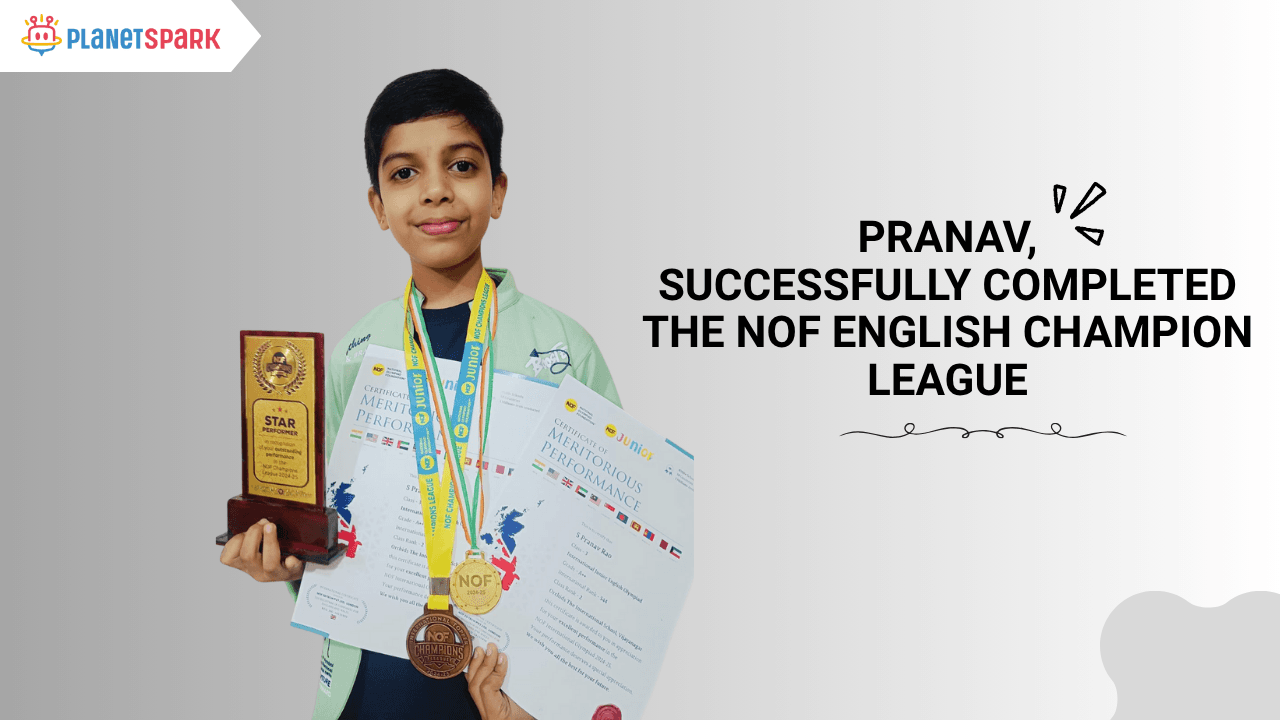
Pranav, a bright young learner, successfully completed the NOF English Champion League, showcasing remarkable skills in Public Speaking and Creative Writing. His dedication and confidence helped him articulate ideas clearly, use expressive diction words, and demonstrate creativity in every task.
Through consistent practice and guided learning, Pranav mastered poetic language, figurative expressions, and effective storytelling techniques, making him a confident communicator and a creative thinker. His achievement reflects the power of structured learning combined with expressive skill development.
Master Diction and Expressive Language for Confident Communication
Developing mastery over diction words, poetic language, and expressive language is essential for confident speaking, engaging writing, and creative expression. By understanding the types of diction, practicing figurative language, and using expressive word choices, learners can communicate ideas clearly, persuasively, and creatively.
Integrating these skills with structured learning, such as PlanetSpark’s Creative Writing program, helps children explore their imagination while improving clarity, vocabulary, and narrative flow. Regular practice, reading, writing, and applying poetic diction in both speech and writing builds confidence, creativity, and communication skills that last a lifetime.
Strong diction not only enhances academic performance but also prepares learners to express themselves eloquently in any situation, from storytelling and poetry to debates and presentations. With consistent practice and guided support, every learner can become a confident communicator and a creative thinker, ready to articulate ideas with precision, clarity, and style.
"Master your words, and watch your confidence soar."
Transform your ideas into expressive stories and confident speech with expert guidance.
Frequently Asked Questions
Diction words are carefully chosen words that reflect meaning, tone, and style in both speech and writing. They help communicate ideas clearly, vividly, and persuasively.
Understanding formal, informal, colloquial, slang, and poetic diction allows learners to select words suited to any context, making speech and writing more effective and engaging.
Figurative language uses metaphors, similes, and other expressions to convey ideas creatively. It enhances writing, storytelling, and public speaking by adding emotion, imagery, and depth.
Poetic language adds rhythm, imagery, and expressiveness, making communication more engaging. It improves creative writing, public speaking, and the ability to convey complex ideas vividly.
Regular reading, practicing creative writing, using figurative expressions, expanding vocabulary, and presenting written work orally help children master diction and expressive language.
Yes. Using precise diction words, clear sentence structure, and figurative language enhances essays, presentations, and storytelling, improving both writing quality and confidence in academic tasks.