
Editing Skills: How to Proofread and Improve Your Writing
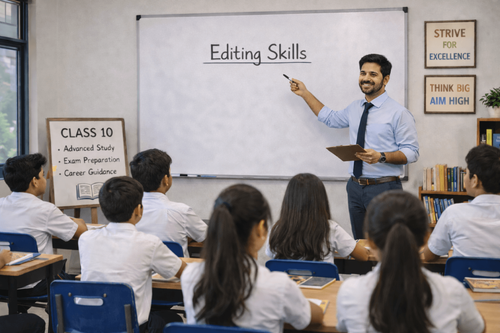

Table of Contents
- Why Editing Skills Matter in Modern Writing
- Understanding the Difference Between Editing and Proofreadin
- The Core Editing Skills Every Writer Should Learn
- 1. Clarity Editing
- 2. Structure Editing
- 3. Grammar Awareness
- 4. Conciseness
- 5. Tone Control
- Step-by-Step Proofreading Techniques That Work
- Step 1: Take a Break Before Reviewing
- Step 2: Read Slowly
- Step 3: Read Aloud
- Step 4: Check One Error Type at a Time
- Step 5: Use Print or New Format
- Writing Editing Tips for Better Sentences
- Remove Filler Words
- Replace Passive Voice When Needed
- Vary Sentence Length
- Use Strong Verbs
- Avoid Repetition
- How to Improve Editing Skills Over Time
- Build a Personal Error List
- Study Good Writing
- Edit Other People’s Writing
- Practise Micro-Editing Daily
- Ask for Feedback
- Common Mistakes Editors Catch
- Grammar Errors
- Punctuation Errors
- Style Problems
- Logic Problems
- Formatting Issues
- Editing Skills for Students
- Editing Skills for Professionals
- Editing Skills for Creative Writers
- Best Tools to Support Proofreading
- A 10-Minute Editing Routine
- Minute 1-2: Purpose Check
- Minute 3-4: Structure Check
- Minute 5-6: Sentence Check
- Minute 7-8: Grammar Check
- Minute 9: Read Aloud
- Minute 10: Final Scan
- Editing Practice Exercise
- Habits of Great Editors
- How Parents Can Help Kids Build Editing Skills
- Advanced Editing Strategies
- Reverse Outline Method
- Search Function Review
- Cut 10 Percent Rule
- Audience Swap Test
- PlanetSpark Creative Writing Course for Stronger Writers
- Edit to Elevate Every Word
Strong editing skills can turn average writing into clear, polished, and persuasive content. Whether you are a student, professional, blogger, or creative writer, learning how to proofread and revise helps you spot mistakes, improve flow, and communicate ideas better. In this guide, you will learn practical proofreading techniques, step-by-step editing methods, common errors to avoid, and expert strategies to strengthen every draft. If you want writing that sounds confident and professional, this blog covers exactly what you need.
Why Editing Skills Matter in Modern Writing
Writing the first draft is only the beginning. Real quality appears during editing. Editing helps refine ideas, remove confusion, and create a stronger message.
Key Benefits of Editing Skills
- Improves grammar, punctuation, and sentence structure
- Makes ideas clearer and easier to understand
- Enhances tone and readability
- Builds professionalism and credibility
- Removes repetition and weak wording
- Helps readers stay engaged
- Increases confidence in academic and workplace writing
Who Needs Editing Skills?
Editing skills for writing are useful for almost everyone:
- Students working on essays and assignments
- Professionals writing emails, reports, and proposals
- Bloggers and marketers creating content
- Authors and storytellers polishing manuscripts
- Kids developing school writing confidence
- Adults improving communication skills
Understanding the Difference Between Editing and Proofreading
Many people use these words interchangeably, but they are not the same.
What Is Editing?
Editing focuses on improving the overall quality of writing. It looks at structure, clarity, logic, tone, and word choice.
Examples:
- Reorganising paragraphs
- Improving transitions
- Rewriting unclear sentences
- Strengthening arguments
- Adjusting tone for the audience
What Is Proofreading?
Proofreading is the final stage. It checks surface-level errors before publishing or submitting.
Examples:
- Spelling mistakes
- Grammar errors
- Missing punctuation
- Formatting inconsistencies
- Typing errors
Simple Rule to Remember
- Edit first for meaning and flow
- Proofread last for accuracy
The Core Editing Skills Every Writer Should Learn
1. Clarity Editing
Ask yourself: Is the message easy to understand?
Check for:
- Long confusing sentences
- Unclear wording
- Missing explanations
- Complex jargon without need
Example
Weak: The implementation of the strategy facilitated enhancement.
Better: The strategy improved results.
2. Structure Editing
Strong writing follows a logical path.
Look for:
- Clear introduction
- Well-organised body sections
- Smooth paragraph order
- Strong conclusion
3. Grammar Awareness
You do not need to memorise every rule, but you should recognise common issues.
Watch for:
- Subject-verb agreement
- Tense consistency
- Pronoun confusion
- Run-on sentences
- Sentence fragments
4. Conciseness
Great writing says more with fewer words.
Replace:
- Due to the fact that → Because
- In order to → To
- At this point in time → Now
5. Tone Control
Your tone should match your audience.
Examples:
- Academic writing: formal and precise
- Blog writing: engaging and clear
- Email writing: polite and direct
- Creative writing: expressive and immersive
Step-by-Step Proofreading Techniques That Work
Step 1: Take a Break Before Reviewing
Distance helps you notice mistakes faster. Even 15 minutes away from the draft improves attention.
Step 2: Read Slowly
Most people skim their own writing because they know what they meant to say. Slow down and inspect each line.
Step 3: Read Aloud
Reading aloud is one of the best proofreading techniques because it reveals:
- Awkward phrasing
- Missing words
- Repetition
- Unnatural rhythm
Step 4: Check One Error Type at a Time
Instead of checking everything together, review in rounds:
- Round 1: Grammar
- Round 2: Spelling
- Round 3: Punctuation
- Round 4: Formatting
- Round 5: Clarity
Step 5: Use Print or New Format
Change the appearance of your text:
- Print the draft
- Increase font size
- Change font style
- View on another device
Fresh visuals help your brain catch errors.
Want structured practice in proofreading, storytelling, and writing confidence? Join PlanetSpark Creative Writing Course today.
Writing Editing Tips for Better Sentences
Remove Filler Words
Common fillers weaken writing:
- really
- very
- just
- quite
- basically
- actually
Example
Weak: She was very happy.
Better: She was delighted.
Replace Passive Voice When Needed
Passive voice is not always wrong, but active voice is usually clearer.
Passive: The report was written by Maya.
Active: Maya wrote the report.
Vary Sentence Length
Too many short sentences sound robotic. Too many long sentences feel exhausting. Mix both.
Use Strong Verbs
Weak: He went quickly to the door.
Better: He rushed to the door.
Avoid Repetition
If you repeat the same word too often, use synonyms or rewrite the sentence.
How to Improve Editing Skills Over Time
Editing improves through deliberate practice, not luck.
Build a Personal Error List
Track your common mistakes such as:
- Comma misuse
- Spelling errors
- Repeating words
- Long sentences
- Tense shifts
Review this list before editing each draft.
Study Good Writing
Read:
- Quality blogs
- Books
- News articles
- Essays
- Business communication
Notice how strong writers organise ideas and use language.
Edit Other People’s Writing
Reviewing others sharpens your own eye for mistakes.
Practise Micro-Editing Daily
Take one paragraph each day and improve:
- Clarity
- Grammar
- Conciseness
- Tone
Ask for Feedback
Outside readers notice what you miss.
Common Mistakes Editors Catch
Grammar Errors
- Incorrect verb tense
- Missing articles
- Wrong plural forms
Punctuation Errors
- Missing commas
- Misused apostrophes
- Random capital letters
Style Problems
- Repetition
- Wordiness
- Inconsistent tone
Logic Problems
- Missing evidence
- Weak transitions
- Contradictory statements
Formatting Issues
- Uneven headings
- Inconsistent bullet style
- Wrong spacing
Editing Skills for Students
Students can improve marks and confidence through better editing.
Checklist for Students
- Is the answer relevant to the question?
- Is the introduction clear?
- Does each paragraph have one main idea?
- Are examples included?
- Are grammar and spelling correct?
- Is the conclusion strong?
Smart Tip
Finish your draft early so you have time to revise.
Editing Skills for Professionals
Workplace writing needs speed and clarity.
What to Check in Emails and Reports
- Clear subject line
- Purpose stated early
- Action steps visible
- Professional tone
- Correct names and dates
- No unnecessary jargon
Example
Weak: Kindly do the needful at your earliest convenience.
Better: Please review this by Friday.
Editing Skills for Creative Writers
Creative writing needs both accuracy and emotion.
Focus Areas
- Character consistency
- Strong dialogue
- Scene flow
- Pacing
- Sensory details
- Grammar and readability
Important Reminder
Do not edit creativity too early. Finish the draft first, refine later.
Ready to become a stronger storyteller and editor? Learn with mentors at PlanetSpark Creative Writing Course.
Best Tools to Support Proofreading
Tools help, but they do not replace human judgment.
Useful Options
- Spell checkers
- Grammar assistants
- Readability tools
- Style guides
- Thesaurus tools
- Plagiarism checkers
Use Them Wisely
Always review suggestions manually. Software can miss context.
A 10-Minute Editing Routine
Minute 1-2: Purpose Check
Ask: What is this piece trying to achieve?
Minute 3-4: Structure Check
Review headings, paragraph order, and flow.
Minute 5-6: Sentence Check
Shorten long lines. Improve awkward wording.
Minute 7-8: Grammar Check
Correct tense, punctuation, and spelling.
Minute 9: Read Aloud
Listen for rhythm and clarity.
Minute 10: Final Scan
Check formatting and submission readiness.
Editing Practice Exercise
Original Sentence:
The team was very excited because they had successfully completed the project in a manner that was efficient.
Edited Version:
The team was excited because they completed the project efficiently.
What Improved?
- Removed filler word
- Shortened phrase
- Stronger sentence flow
- Clearer meaning
Habits of Great Editors
Great editors are not just rule-followers. They are careful readers.
Their Habits Include
- Patience
- Attention to detail
- Curiosity
- Consistency
- Respect for audience needs
- Willingness to revise multiple times
How Parents Can Help Kids Build Editing Skills
Children learn faster when editing feels encouraging, not stressful.
Practical Ideas
- Read their writing aloud together
- Ask what they wanted to say
- Highlight one improvement at a time
- Celebrate progress
- Use fun writing prompts
- Create a daily writing habit
Advanced Editing Strategies
Reverse Outline Method
After drafting, write one line for each paragraph. This reveals structure problems quickly.
Search Function Review
Use find/search for repeated words like:
- very
- really
- good
- nice
Cut 10 Percent Rule
Try reducing your draft by 10%. It often becomes sharper and stronger.
Audience Swap Test
Ask: Would a beginner understand this? Would the target reader care?
PlanetSpark Creative Writing Course for Stronger Writers
If you want expert support beyond self-practice, PlanetSpark offers a structured creative writing course for kids and adults designed to build real communication confidence. Learners receive 1:1 personal trainers who adapt lessons to individual pace, strengths, and goals. A personalised curriculum targets grammar, fluency, storytelling, structure, and creative expression step by step.
The platform also includes SparkX AI video analysis, which evaluates clarity, confidence, body language, grammar, and delivery through smart feedback reports. With AI-led practice sessions, students can independently practise speeches, storytelling, and structured responses anytime.
For writing growth, Spark Diary helps build daily journaling habits through stories, reflections, poems, and guided prompts. Learning stays engaging through gamified modules covering vocabulary, grammar, spelling, and revision challenges. Parents stay informed through regular PTMs and comprehensive progress reports with action plans.
Students can also join clubs and communities like debate, story writing, podcasting, poetry, and comedy. Through Sparkline, a safe sharing platform, learners publish their work confidently in a moderated space. Regular contests, showcases, and recognition events motivate consistent progress and creativity.
Explore PlanetSpark today and turn writing practice into measurable growth.
Edit to Elevate Every Word
Writing improves when you stop treating the first draft as the final draft. Strong editing skills help you express ideas clearly, sound more professional, and connect better with readers. Whether you are proofreading an essay, refining a report, or polishing a story, small revisions create big results. Start with one technique at a time, build a repeatable editing routine, and practise regularly. Over time, you will notice cleaner grammar, sharper structure, and stronger confidence in every sentence you write. Great writing is rarely written once, it is rewritten well.
You can also read:
Frequently Asked Questions
Editing skills are the abilities used to improve a piece of writing after the first draft. They include checking clarity, grammar, structure, word choice, tone, punctuation, and readability. Good editing transforms rough ideas into polished communication. These skills are useful in school, business, blogging, and creative writing.
The best way to proofread is to review your work in stages. First, take a short break. Then read slowly, read aloud, and check one issue at a time such as spelling, punctuation, grammar, and formatting. Changing the text format or printing the document can also help you spot mistakes.
To improve editing skills quickly:
Practise daily on short passages
Build a list of common mistakes
Read strong writing examples
Use editing checklists
Ask for feedback
Rewrite weak sentences regularly
Consistent practice creates faster improvement than occasional long sessions.
Proofreading helps remove small mistakes that can damage credibility. Even strong ideas lose impact when writing contains spelling errors, poor punctuation, or formatting issues. Final proofreading ensures your work looks professional, accurate, and ready for readers.
A structured program with personalised coaching is ideal. PlanetSpark Creative Writing Course helps learners improve grammar, storytelling, editing, public speaking, confidence, and communication through 1:1 mentoring, AI tools, practice activities, and measurable progress tracking.