
Elements of Short Stories for Kids Guide


Short stories have always been a doorway to imagination for kids. Unlike long novels, short stories are crisp, engaging, and packed with creativity, perfect for young minds who are still exploring how ideas turn into narratives. Children naturally love storytelling, but writing a story that makes sense, has structure, and keeps readers interested doesn’t come automatically. It’s a skill that grows with the right guidance.
Today, short stories play a big role in building communication skills, creativity, vocabulary, and self-expression. Schools often include story-writing activities, but children benefit even more when they understand the building blocks behind every well-written story. That’s where learning the elements of a short story becomes important.
Before diving into elements, kids should first understand what short stories truly are and why they are such a powerful tool for learning.
What Are Short Stories?
Short stories are brief narratives with a clear beginning, middle, and end. They’re long enough to develop a meaningful plot but short enough to be read in one sitting. For kids, short stories are the perfect mix of entertainment and education. They encourage imagination while teaching how to express ideas with clarity.
Why Short Stories Matter for Kids
They help children explore emotions and situations safely.
They sharpen creativity by teaching how to build worlds and characters.
They improve language skills, vocabulary, grammar, and sentence construction.
They nurture critical thinking as kids learn to analyze characters and story outcomes.
They motivate self-expression, allowing children to share ideas freely and confidently.
Short stories also teach children how to observe the world around them. A simple bus ride, a classroom moment, or a playful argument with a friend can all turn into powerful story ideas once children understand the storytelling process.
The best part? Anyone can write short stories. Kids just need the right guidance in using story elements effectively, setting, characters, plot, style, and more.
What Are the Elements of a Short Story?
Understanding the elements of a short story is like learning the recipe for a delicious dish. Once kids know the ingredients, they can create any story they imagine, funny, adventurous, mysterious, emotional, or magical. Each element shapes the story and gives it meaning, structure, and flow.
Below are the essential elements every child should learn when writing short stories.
1. Setting
The setting tells readers where and when the story happens.
It forms the story’s world, whether it’s a real place like a school playground or an imaginative world like a talking forest.
A strong setting helps children:
Visualize scenes more clearly
Understand the characters’ environment
Set the mood (happy, mysterious, scary, etc.)
Make the story realistic and relatable
For example:
“On a foggy morning in a small mountain village…” sets a completely different tone from
“On a bright summer afternoon at the school carnival…”
Encouraging kids to describe sensory details, what they see, hear, smell, or feel, helps make their short stories more immersive.
2. Characterization
Characters are the heart of any story. Without them, there’s no action, no emotion, and no message.
Characterization refers to how a writer builds and presents characters. Kids should think about:
Who is the main character?
What do they want?
What challenges do they face?
How do they change by the end?
There are different types of characters:
Protagonist: the main hero
Antagonist: the character or force that creates conflict
Supporting characters: friends, family, teachers, or magical creatures who help the story move forward
Children often relate to characters who are their age or face similar experiences, like overcoming fear, solving a problem, or making new friends. When kids learn to express emotions through characters, their short stories become stronger and more meaningful.
3. Plot and Structure
The plot is the sequence of events that make up the story. It’s the engine that drives the narrative forward.
A strong plot usually has:
Beginning (exposition): introduces characters and setting
Rising action: builds tension or conflict
Climax: the turning point where something big happens
Falling action: events after the climax
Resolution: the ending where things become clear
Kids often love creating twists or surprises in the climax, it keeps readers excited. Teaching children this structure helps them avoid writing stories that feel confusing or incomplete.
For example:
A story about a child losing their pet dog could start with panic, build tension as they search everywhere, reach a climax when they find a clue, and end with a joyful reunion. Even simple plots become beautiful when structured properly.
Don’t let your child miss the chance to master Creative Writing demo slots fill quickly!
4. Narrator and Point of View
This element determines who is telling the story. Kids can write in:
First person: “I found a mysterious box…”
Third person: “Riya walked into the old library…”
The choice affects how readers feel connected to the story. First person feels personal; third person feels descriptive. Teaching children to switch perspectives helps them experiment creatively.
5. Style
Style is the writer’s unique way of using words.
It includes:
Sentence patterns
Tone (funny, serious, magical)
Dialogue
Rhythm
Kids naturally develop their own style over time. Encouraging them to read more short stories helps them find the voice that feels most comfortable.
6. Theme
The theme is the main message or lesson of the story.
It might be:
Courage
Honesty
Friendship
Kindness
Problem-solving
A story without a theme feels empty. When kids choose the right theme, their story carries purpose and meaning.
Don’t let your child just read great stories, help them write their own. Limited seats filling fast!
Book a free demo class now and unlock their creative writing potential.
Types of Characters in Short Stories
Characters are the heart of all short stories. Even the strongest plot fails without memorable characters who feel real, relatable, and emotionally engaging. In children’s stories, especially, the types of characters shape the lesson, the tone, and the world-building.
Below are the common character types that young writers should know:
1. The Protagonist (Main Character)
This is the character the reader follows, the hero, the learner, or the problem-solver. In kids’ stories, this is often a curious child, an animal with human traits, or a magical being. The protagonist experiences challenges, makes decisions, and grows by the end.
2. The Antagonist (The Opposer)
The character (or force) that creates obstacles. It doesn't always have to be a villain; it can be a natural challenge like a storm, fear, a tricky puzzle, or even the protagonist’s own weaknesses.
3. Supporting Characters
These include friends, mentors, siblings, parents, or even fantastical helpers. They push the story forward, give advice, create conflict, or add humor.
4. Static Characters
Characters who remain the same throughout the story. Their purpose is to highlight the protagonist’s growth.
5. Dynamic Characters
Characters who change emotionally, mentally, or morally. In short stories for kids, this transformation is often tied to the theme, kindness, bravery, honesty, or teamwork.
6. Foil Characters
These characters contrast the protagonist to highlight differences. For example, a calm friend beside a hyperactive main character.
Teaching kids these character roles helps them structure richer and more engaging short stories without getting overwhelmed.
Every parent loves seeing their child shine, and PlanetSpark students truly do.
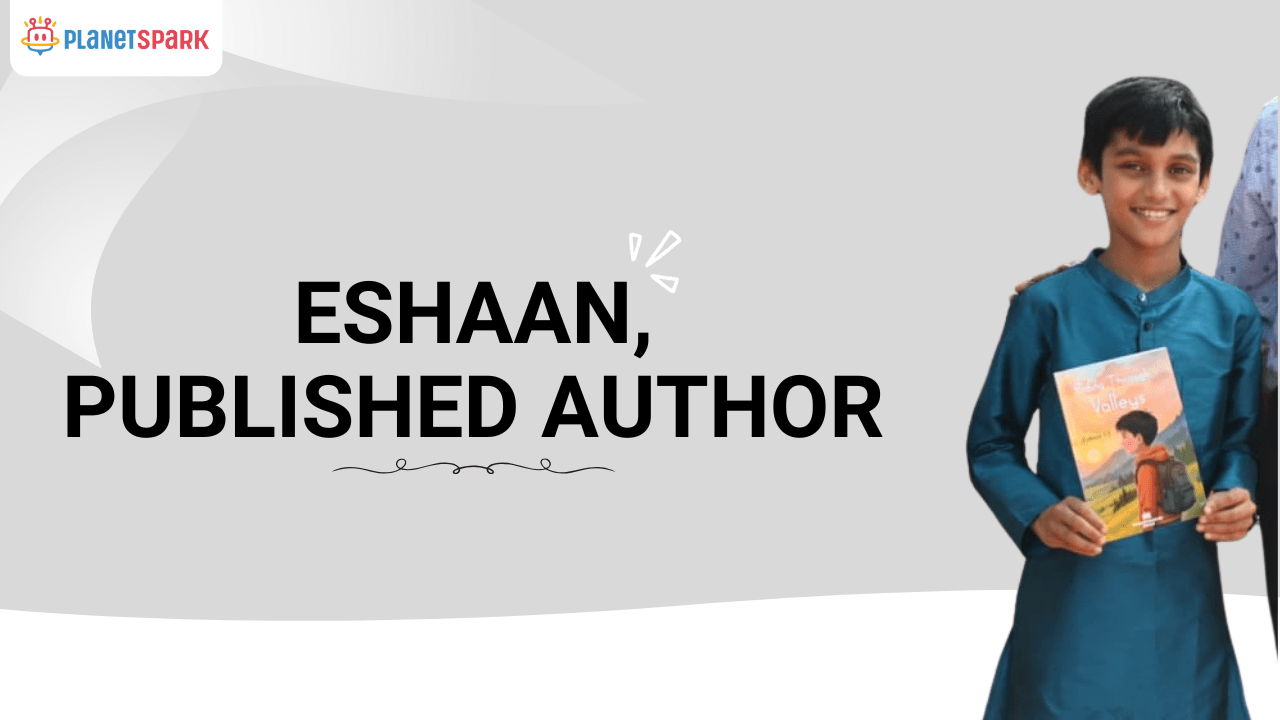
One of our brightest examples is Eshaan, who began his creative writing journey just like any other curious learner. What started as a classroom activity soon transformed into something remarkable:
Eshaan officially became a published author.
His ideas, characters, and imagination were shaped through PlanetSpark’s structured guidance, regular writing tasks, and one-on-one mentorship.
From building simple story outlines to crafting full narratives, Eshaan steadily grew more confident with every class.
His final project, a beautifully written storybook, became more than an assignment.
It turned into a published piece of work that he proudly holds today.
This kind of transformation is what PlanetSpark is known for:
unlocking creativity, strengthening writing skills, and helping children turn their thoughts into something extraordinary.
Your child could be the next young author. Don’t wait, seats fill fast!
Book a free demo class now and help them write stories worth sharing.
Understanding the Parts of a Plot in Short Stories
If characters are the heart of a story, the plot is the skeleton, holding everything together. Every strong short story follows a simple yet powerful structure. Kids who understand this can write stories that feel complete and satisfying.
1. Exposition (Beginning)
This introduces the setting, characters, and tone. It answers:
Where are we? Who is here? What is happening?
For children’s short stories, this section should be light, imaginative, and engaging.
2. Rising Action
The problem appears. Tension builds.
The protagonist begins a journey, physical, emotional, or both.
This is often the longest part.
Examples in kids’ stories:
The treasure map goes missing
A best friend stops talking
A magical creature needs help
3. Climax
The most intense moment, the turning point. The protagonist must make a choice or face a challenge that tests their values or strengths.
4. Falling Action
The consequences unfold. Conflicts begin to resolve, and emotional clarity comes in.
5. Resolution (Ending)
The story wraps up. The protagonist learns a lesson or reaches a goal. For kids, the resolution often reinforces the theme, such as honesty, courage, or empathy.
Why Kids Must Learn Plot Structure Early
Understanding plot structure helps them:
Write stories that flow naturally
Avoid unnecessary details
Stay focused on the message
Express imagination without confusion
When children know the “map” of a story, they get the freedom to be more creative inside it.
Why Choose PlanetSpark Creative Writing?
Creative writing is more than putting words on a page; it’s teaching children how to think, imagine, express, and communicate. PlanetSpark helps young writers build these abilities through structured learning, expert mentorship, and hands-on storytelling practice.
Here’s why thousands of parents trust PlanetSpark:
Genre-Focused Curriculum: Covers diverse forms like stories, poems, essays, reviews, and persuasive letters to build versatile writing skills.
Framework-Based Learning: Students master story arcs, the S.T.O.R.Y structure, the 5W1H method, and the PEEL technique for structured writing.
Writing and Speaking Integration: Learners present their written pieces to strengthen expression and storytelling confidence.
Real-Time Editing: Classes emphasize rewriting and refinement through peer reviews and teacher feedback.
Publishing Opportunities: Students can feature their work on PlanetSpark’s blog, e-magazine, or co-authored anthologies for recognition.
Creativity Boosters: Writing prompts, imagination games, and story dice activities nurture originality and creative thinking.
Give your child the chance to write with confidence.
Book a free demo class, sign up now, or enroll now before seats run out!
Where Every Child’s Imagination Finds Its Wings
Short stories aren’t just about writing; they’re a doorway into imagination, self-expression, and creative confidence. When children learn the elements of storytelling, understand how characters work, and explore different plot structures, they begin to see writing as a joyful adventure.
With the right guidance, every child can craft stories that reflect their ideas, emotions, and dreams. That’s exactly what PlanetSpark does: it nurtures young minds, strengthens their writing abilities, and gives them the structure they need to turn creativity into skill.
Whether your child is just starting out or already loves writing, now is the perfect time to encourage their storytelling journey.
With tools, mentoring, and opportunities like publishing and competitions, PlanetSpark ensures that your child doesn’t just write; they thrive.
Readers Who Loved This Blog Also Read
Create a smooth discovery flow by recommending related child-writing topics:
Frequently Asked Questions
Short stories help children develop imagination, vocabulary, sequencing skills, and emotional understanding. Because these stories are short and engaging, kids stay focused and learn narrative structure without feeling overwhelmed.
The best way is through simple examples, visuals, and fun activities like character creation, story maps, and guided prompts. Breaking elements into small, understandable parts, setting, characters, and plot, helps kids grasp them more easily.
Children’s short stories usually range from 200 to 800 words. The focus is not on length but clarity, imagination, and a message that resonates with young readers.
Encourage brainstorming, ask open-ended questions (“What if…?”), and give them real-world prompts. Enrolling them in structured creative writing classes gives them the tools and confidence to build strong stories consistently.
A strong kids’ story should always include:
- A clear setting
- Believable and engaging characters
- A simple yet meaningful plot
- A climax with emotional weight
- A resolution that teaches or reflects something
Mastering these creates stories that feel polished and purposeful.