
Learn Elements of Short Story Structure with PlanetSpark


Table of Contents
- What Is a Short Story
- Understanding the Plot in a Short Story
- Exploring Setting and Its Role
- Key Characters and Their Importance
- Conflict
- Climax and Resolution
- How All Elements Work Together
- Tips to Write Your Own Short Story
- Why Story Structure Matters in Writing
- PlanetSpark’s Creative Writing Program That Builds Real Skil
- Conclusion
Understanding the Elements of a short story is the foundation of powerful storytelling. A short story may be brief, but it demands precision, structure, and emotional depth. Writers must know not only what to include but how each component works together. In this guide, we will clearly answer What are the elements of a short story are, explain every basic element of short story writing, and explore the seven elements of a short story in a structured and research-backed way.
What Is a Short Story
A short story is a compact work of fiction that focuses on a single central idea, conflict, or emotional experience. Unlike novels, which may explore multiple subplots and complex character arcs, short stories concentrate on one main narrative thread. Because of their limited length, every sentence must contribute meaningfully to the plot, character development, or theme.
Most literary scholars define a short story as a narrative typically under 7,500 words. However, length is not the defining feature. Structure is. A short story must present a complete narrative arc with a beginning, middle, and end.
To understand the elements of a short story, it is important to recognise that short stories rely heavily on structure. Writers cannot afford unnecessary description or side plots. Instead, they use carefully chosen details that reveal character, build tension, and move the plot forward.
Here are the defining traits of short stories:
- Focus on a single conflict
- Limited number of characters
- Concentrated setting
- Strong climax
- Meaningful resolution
Short stories often aim to create one strong emotional effect. Whether it is surprise, reflection, fear, or hope, the impact must be clear and intentional.
When students master the basic elements of short story writing early, they develop sharper narrative skills that later translate into essays, speeches, and creative expression.
PlanetSpark’s creative writing program helps young learners understand story foundations step by step through guided mentorship and practical exercises. Limited slots available. Book your free trial today.
Understanding the Plot in a Short Story
Plot is the structural framework of a story. It is not simply a sequence of events but a carefully arranged chain of cause and effect. Among the seven elements of a short story, plot functions as the organising force that connects characters, conflict, and resolution.
A strong short story plot follows a recognisable narrative arc:
- Exposition
- Rising Action
- Climax
- Falling Action
- Resolution
However, short stories often compress these stages. The exposition may be brief, and the rising action may move quickly toward the climax.
How Plot Functions in Short Stories
Effective plot development depends on conflict. Each event must logically follow from the previous one. If something happens without cause, readers feel disconnected.
In answering what the elements of a short story are, plot is often considered the backbone because it shapes the reader’s journey. A well-structured plot ensures emotional engagement and narrative clarity. Children who learn structured plotting techniques gain confidence in organising ideas logically and creatively.
PlanetSpark's creative writing program trains students to design compelling plot arcs through guided writing practice and expert feedback. Book your free trial now and help your child craft structured, engaging stories.
Exploring Setting and Its Role
Setting is more than just location. It includes time period, cultural background, social conditions, and atmosphere. Within the Elements of a short story, setting influences how characters behave and how conflict develops.
A well-developed setting answers:
- Where does the story take place?
- When does it occur?
- What social or cultural factors shape events?
- What mood does the environment create?
For example, a story set during a natural disaster automatically increases tension. A story set in a peaceful countryside may emphasise emotional reflection instead of action.
Writers use sensory details to build a setting:
- Sight
- Sound
- Smell
- Texture
- Weather
Instead of lengthy descriptions, short stories rely on selective detail. A single line describing dark clouds gathering may signal an upcoming conflict. Setting also strengthens the theme. A restrictive society can highlight themes of freedom. A futuristic setting may explore technology and identity. Understanding the basic elements of short story writing requires recognising that setting shapes mood and conflict simultaneously. Children who practice describing settings improve vocabulary, imagination, and observational skills.
PlanetSpark’s creative writing program teaches students how to build immersive worlds using vivid description and contextual relevance. Book your free session today.
Key Characters and Their Importance
Characters are the emotional core of a story. They experience conflict, make decisions, and drive the plot forward. Among the seven elements of a short story, characters are central because readers connect through them.
In short stories, there are usually:
- Protagonist
- Antagonist
- Supporting characters
Due to limited length, character development must be efficient. Writers reveal personality through action, dialogue, and reaction rather than long backstories.
Methods of Character Development
- Direct description
- Dialogue
- Internal thoughts
- Interaction with others
- Reaction to conflict
Strong characters have clear motivations. Readers should understand what they want and what stands in their way. When exploring What are the elements of short story, character motivation is essential because it drives conflict and shapes the climax. Character growth, even subtle change, often provides satisfaction at the end of a short story. Teaching children to create layered characters improves empathy and emotional intelligence.
PlanetSpark's creative writing program guides students in developing realistic characters through structured storytelling exercises. Book your free trial today and help your child create memorable stories.
Conflict
Conflict is the engine that powers a story. It introduces tension and keeps readers engaged. Without conflict, there is no narrative movement.
Common types of conflict include:
- Character vs Character
- Character vs Self
- Character vs Nature
- Character vs Society
- Character vs Technology
In short stories, conflict is usually singular and focused. Multiple conflicts can overcrowd the narrative. Conflict appears early and intensifies through rising action. It reaches peak intensity at the climax. Understanding what the elements of a short story mean, recognising that conflict connects plot and character directly.
Strong conflict:
- Raises stakes
- Forces decisions
- Reveals personality
- Drives emotional impact
Teaching structured conflict development helps children create meaningful stories instead of random events.
PlanetSpark’s creative writing program helps students to strengthen narrative structure. Book your free trial session now.
Climax and Resolution
The climax is the story’s turning point. It is the moment of highest tension where the main conflict comes to a head. Resolution follows and ties up loose ends. Within the Elements of a short story, climax and resolution provide closure and meaning.
In short fiction, the climax often appears near the end. The falling action is brief and quickly transitions into resolution.
A strong climax:
- Forces a decision
- Changes the direction of events
- Provides emotional intensity
A meaningful resolution:
- Shows consequences
- Reinforces theme
- Provides closure
The resolution does not always mean a happy ending. It means a complete ending.
Understanding the basic elements of short story structure ensures that endings feel earned rather than sudden.
PlanetSpark's creative writing program trains students to craft powerful climaxes and satisfying endings through guided revision techniques. Book your free trial today.
How All Elements Work Together
A short story functions like a system where every element supports another.
The seven elements of a short story do not operate independently. If character motivation is weak, conflict feels artificial. If the setting is unclear, the mood suffers. When writers clearly understand the elements of a short story, they create balanced and cohesive narratives.
Integration is the key to mastery.
PlanetSpark's creative writing program helps students connect all story components through structured storytelling frameworks. Limited seats available. Book your free trial session now.
Tips to Write Your Own Short Story
Here is a structured approach to writing:
- Choose a central theme
- Create a clear protagonist
- Introduce focused conflict
- Build tension steadily
- Deliver an impactful climax
- End with a meaningful resolution
Additional tips:
- Keep the story focused
- Avoid unnecessary characters
- Show emotions through action
- Revise carefully
Practising the basic elements of short story writing buildslong-termm narrative skill.
PlanetSpark's creative writing program provides expert guidance, structured lessons, and real-time feedback to help children write publish-ready short stories. Book your free trial today.
Why Story Structure Matters in Writing
Story structure provides clarity and emotional impact. Writers who understand the Elements of a short story communicate ideas more effectively.
Structured storytelling improves:
- Logical thinking
- Creative confidence
- Academic writing
- Public speaking
Understanding the elements of a short story empowers young writers to express ideas clearly and creatively.
PlanetSpark's creative writing program builds strong storytelling foundations through expert mentorship and interactive practice. Book your free trial now.
PlanetSpark’s Creative Writing Program That Builds Real Skills
Help children express creatively while mastering structure, vocabulary, and coherence.
- Genre-Based Curriculum: Dedicated lessons in short stories, poetry, journals, essays, book reviews, and persuasive letters.
- Framework-Driven Instruction: Story arcs (beginning–middle–end), S.T.O.R.Y structure, 5W1H method, and PEEL technique for essays/arguments.
- Writing + Speaking Integration: Students present their work orally to build confidence and narrative flow.
- Editing & Feedback: Real-time editing, peer review, and teacher feedback emphasise revision and improvement.
- Publishing Opportunities: Stories featured on PlanetSpark’s blog, e-magazine, or anthologies to boost pride and visibility.
- Creativity Stimulus: Story dice, prompts, image-based writing, and imagination exercises spark originality.
Your Child can be the next Creative Writing Champion!
Pranav, a Grade 3 star, completed the NOF English Champion League, showcasing his brilliance in Public Speaking and Creative Writing. Eshaan has officially become a published author, turning a classroom activity into a captivating storybook.
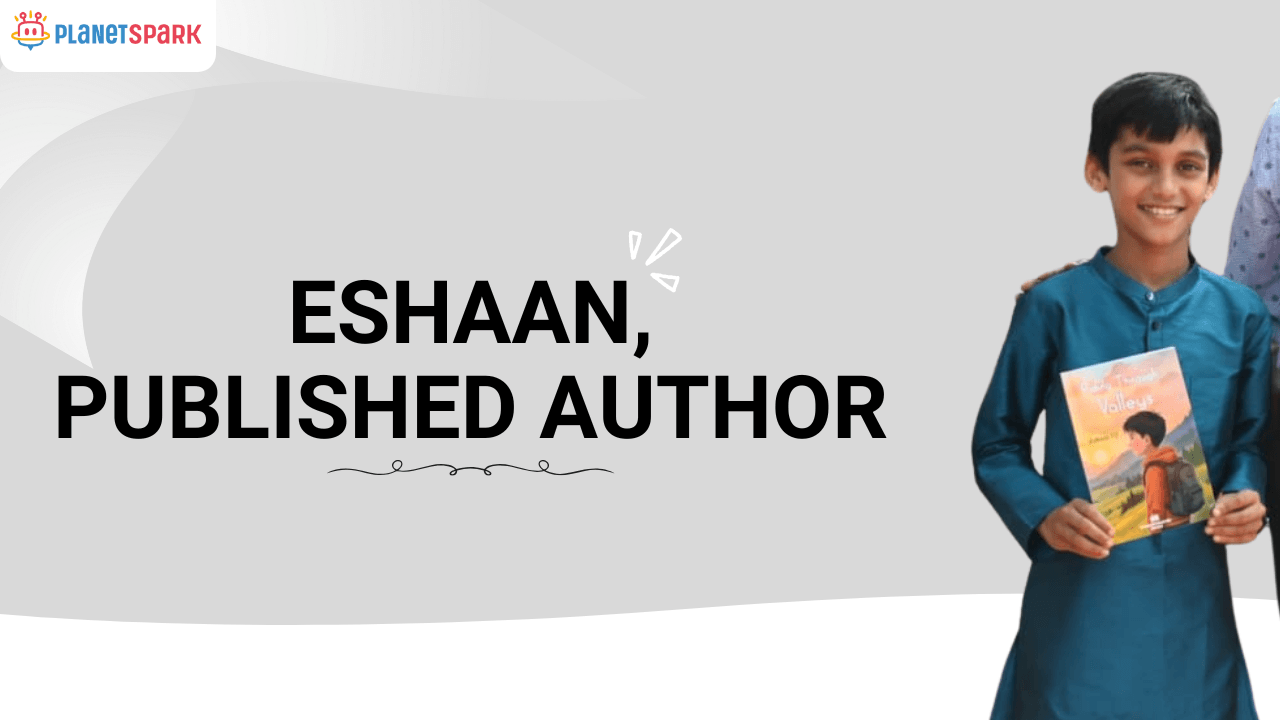
With the right support, personalised coaching, and structured writing training at PlanetSpark, your child, too, can perform and excel, just like Pranav and Eshaan.
Conclusion
Mastering the Elements of a short story helps writers transform ideas into structured narratives. By understanding the basic elements of short story writing and the seven elements of a short story, students gain confidence and creativity. Help your child become a structured and expressive storyteller with the PlanetSpark creative writing program.
Frequently Asked Questions
The Elements of a short story include plot, setting, characters, conflict, climax, falling action, and resolution.
The basic elements of short story writing include plot, character, setting, and conflict.
The seven elements of a short story are plot, setting, characters, conflict, climax, falling action, and resolution.
Understanding the elements of a short story helps writers create structured and engaging narratives.
Children can master the Elements of a short story through structured practice, reading, and expert-guided programs like PlanetSpark creative writing training.