
English Stories for Learning English: Simple Stories to Improve Skills


Learning English doesn’t have to feel like a task—it can be fun, engaging, and highly effective when done through stories. English stories for learning English are one of the most powerful tools to improve vocabulary, sentence formation, comprehension, and speaking confidence.
Whether your child is just starting or already familiar with basic English, stories help them learn naturally by observing how words and sentences are used in context. They also build imagination and encourage creative thinking.
Parents today are increasingly choosing storytelling as a method of learning because it combines education with entertainment. With structured guidance and practice, children can even start creating their own stories, improving both writing and communication skills.
Why English Stories Are Effective for Learning
Stories are not just entertaining—they are highly educational. When children read or listen to english short stories for learning english, they absorb language patterns without conscious effort.
Here’s why stories work so well:
- They improve vocabulary naturally
- Help understand grammar through usage
- Build listening and reading comprehension
- Encourage imagination and creativity
- Improve speaking confidence
Unlike rote learning, storytelling makes English relatable. Children connect with characters, understand emotions, and learn how to express ideas clearly.
Additionally, storytelling enhances memory retention. Kids are more likely to remember a word or phrase when it is part of a story rather than a standalone lesson. This makes small stories in english for learning extremely effective for long-term language development.
Programs like PlanetSpark take this approach further by combining storytelling with structured learning techniques, helping children not just understand stories but also create their own.

Simple English Stories for Learning
1. The Honest Woodcutter
A poor woodcutter was cutting wood near a river. Suddenly, his axe fell into the water. He began to cry.
A fairy appeared and showed him a golden axe. The woodcutter said it was not his. Then she showed a silver axe—again, he refused. Finally, she showed his real axe, and he happily accepted it.
The fairy rewarded him for his honesty.
Moral: Honesty is the best policy.
2. The Thirsty Crow
On a hot day, a crow was very thirsty. It found a pot with little water. The crow could not reach the water.
It picked up stones and dropped them into the pot. Slowly, the water level rose, and the crow drank it.
Moral: Where there is a will, there is a way.
3. The Lion and the Mouse
A lion once caught a mouse. The mouse begged for mercy and promised to help someday. The lion laughed but let it go.
Later, the lion was trapped in a net. The mouse came and chewed the net, freeing the lion.
Moral: Kindness is never wasted.
Visual Learning Makes Stories More Engaging
Children learn more effectively when visuals are combined with text. Images, facial expressions, and real-life classroom settings help them connect with stories on a deeper level. Visual elements make stories more interesting, easier to understand, and memorable for young learners. Instead of just reading words, children begin to imagine characters, settings, and emotions, which enhances their overall learning experience.
Visual storytelling plays a crucial role in improving multiple aspects of language development. It captures children’s attention and keeps them engaged for longer periods. When they see images along with text, they can better understand the meaning of new words and sentences. This not only improves comprehension but also helps in building a stronger vocabulary.
Visual storytelling improves:
- Attention span by keeping children engaged
- Understanding of emotions through expressions and scenes
- Memory retention by associating visuals with words
- Interest in learning by making lessons fun and interactive
That’s why combining english story books for learning english with visual aids or guided sessions creates a stronger impact. Children don’t just read—they truly experience the story, making learning both effective and enjoyable.
How Stories Improve Different English Skills
1. Reading Skills
Stories help children develop strong reading habits by exposing them to different sentence structures, vocabulary, and writing styles. As children read regularly, they become more familiar with common words and phrases, which improves their fluency. Repeated reading of stories also enhances speed, accuracy, and comprehension. Over time, children gain confidence in reading independently and understanding more complex texts.
2. Writing Skills
Reading stories regularly helps children understand how sentences are formed and how ideas are organized. They learn how to structure a beginning, middle, and end in their writing. Exposure to descriptive language and storytelling techniques also improves creativity. Gradually, children begin to write their own stories, which strengthens their grammar, vocabulary, and overall writing ability.
3. Speaking Skills
Storytelling encourages children to express their thoughts clearly and confidently. When they narrate stories, they practice pronunciation, sentence formation, and voice modulation. This helps them become more fluent speakers. Sharing stories in front of others also builds confidence and reduces hesitation while speaking in English.
4. Listening Skills
Listening to stories improves comprehension and helps children understand tone, pronunciation, and context. It also enhances their ability to focus and retain information. Active listening allows children to grasp the meaning of conversations and respond appropriately.
Balanced development of all these skills is essential for mastering English. Structured platforms like PlanetSpark focus on all four areas through personalized and interactive learning.
Tips to Use English Stories for Learning
To make the most of english stories for learning english, follow these simple tips:
- Start with short and easy stories
- Read aloud to improve pronunciation
- Ask questions to check understanding
- Encourage children to retell the story
- Introduce new vocabulary from stories
- Practice writing similar stories
Consistency is key. Even reading one short story daily can significantly improve language skills over time.
Parents can also create a storytelling routine where children share stories during family time. This builds confidence and makes learning interactive.
Role of Guided Learning in Storytelling
While self-learning is helpful, guided learning significantly accelerates a child’s progress in mastering English. Many children face common challenges when learning through stories on their own. They may struggle with forming grammatically correct sentences, expressing their ideas clearly, structuring a story logically, or speaking confidently in front of others. Without proper guidance, these gaps can slow down their overall language development.
This is where expert-led programs play a crucial role. Platforms like PlanetSpark provide personalized and interactive 1:1 sessions with expert teachers, ensuring that all aspects of communication are covered for learners of different age groups. These sessions are designed to go beyond basic reading and help children actively engage with storytelling.
In guided learning environments, children not only read stories but also:
- Create original content using their imagination
- Learn structured storytelling frameworks like beginning, middle, and end
- Practice speaking, narration, and presentation skills
- Receive real-time feedback and personalized improvement tips
This structured and supportive approach helps children gain clarity, confidence, and creativity. Over time, they become better communicators who can express their thoughts effectively in both written and spoken English.
Building a Habit of Reading Stories
Developing a daily reading habit is essential for long-term success in learning English. Consistency plays a key role in improving language skills, and even a few minutes of reading each day can make a big difference. The idea is to start small and gradually increase the level of difficulty as the child becomes more comfortable.
Here’s a simple and effective plan to build this habit:
- Begin with small stories in english for learning that are easy to understand
- Gradually move to slightly longer and more complex stories
- Introduce story-writing exercises to encourage creativity
- Encourage storytelling during daily conversations with family and friends
Creating a routine helps children see English as a part of their everyday life rather than just a school subject. Parents play a vital role in this journey by providing the right environment, motivation, and support.
With the right balance of self-practice and guided learning through platforms like PlanetSpark, children can develop strong reading, writing, and speaking skills while enjoying the process of learning through stories.
Conclusion: Turning Stories into Lifelong Skills
Stories are more than just entertainment—they are powerful tools that shape language, thinking, and confidence. By using english stories for learning english, children can develop strong communication skills that benefit them for life.
With the right guidance, storytelling can transform a child into a confident reader, writer, and speaker. Platforms like PlanetSpark ensure that children receive structured support, expert feedback, and real-world practice to excel in communication.
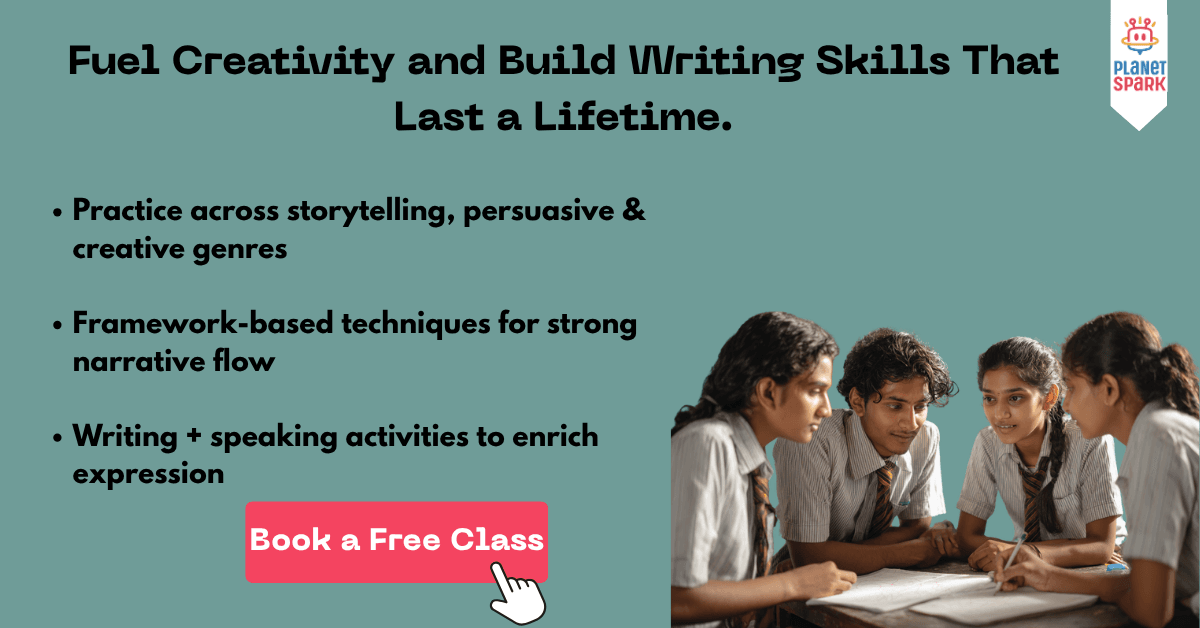
Planetspark:Creative Writing
Core Goal: Help children express creatively while mastering structure, vocabulary, and coherence.
Detailed USPs:
• Genre-Based Curriculum
◦ Covers short stories, poetry, journal writing, essays, book reviews, and persuasive letters. Each genre has its own dedicated lesson plan.
• Framework-Driven Writing Instruction
◦ Kids learn story arcs (beginning-middle-end), S.T.O.R.Y structure, 5W1H method, and the PEEL technique for essays and arguments.
• Writing + Speaking Integration
◦ Children present their written work orally to develop expressive confidence and narrative flow.
• Editing, Feedback, and Rewriting
◦ Classes focus not just on writing but revising – with real-time editing, peer review, and teacher feedback sessions.
• Real Publishing Opportunities
◦ Kids can publish their stories on PlanetSpark’s blog, e-magazine, or even in co-authored anthologies—boosting their visibility and pride.
• Creativity Stimulus Activities
◦ Story dice, prompts, image-based writing, and guided imagination exercises foster original thinking.

For more engaging stories, refer to: “Easy Small Story in English for Kids | PlanetSpark”
Frequently Asked Questions
The best english stories for learning english are short, simple, and engaging stories with clear language and meaningful lessons. Popular examples include The Thirsty Crow, The Lion and the Mouse, and other moral-based short stories that are easy to understand for beginners.
English stories improve vocabulary, sentence structure, and comprehension skills. They also help learners understand how words are used in context, making it easier to speak and write fluently.
Yes, small stories in english for learning are ideal for beginners because they use simple words and short sentences. They help build confidence and make learning less overwhelming.
You can improve storytelling skills by encouraging regular reading, asking your child to retell stories, and practicing story writing. Guided programs like PlanetSpark also help children develop structured storytelling and speaking confidence.
Start with short and interesting stories, set a daily reading routine, and gradually increase the difficulty level. Making reading fun and interactive helps children stay consistent.
Yes, reading english story books for learning english improves pronunciation, sentence formation, and confidence. When combined with speaking practice, it significantly enhances communication skills.
Guided learning provides structure, feedback, and expert support. Platforms like PlanetSpark offer personalized sessions that help children improve reading, writing, speaking, and listening skills effectively.