
Freewriting: Develop Creative Thinking and Writing Skills with PlanetSpark
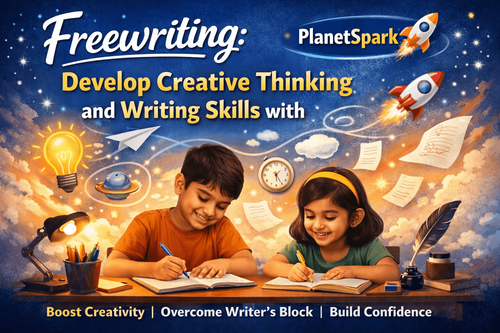

Table of Contents
- What is Freewriting?
- Key Benefits of Freewriting
- How Freewriting Enhances Creative Thinking
- Types of Freewriting Techniques
- Step-by-Step Guide to Practice Freewriting
- Common Mistakes to Avoid in Freewriting
- Practical Freewriting Examples
- Daily Practice Tips for Freewriting
- How PlanetSpark Helps Improve Freewriting Skills
Creative writing is the art of expressing thoughts, ideas, and emotions in an imaginative and engaging way. It goes beyond formal writing by allowing individuals to explore stories, opinions, and personal experiences with originality. This form of writing is important because it helps develop communication skills, critical thinking, and creativity, which are essential in both academic and real-life situations.
Thinking freely plays a key role in creative writing. When writers are not restricted by rules or fear of mistakes, they can express themselves more naturally and confidently. This freedom encourages unique ideas and helps build a strong personal voice.
One effective technique that supports this process is freewriting. It allows writers to put down their thoughts without worrying about structure or grammar, making it easier to overcome hesitation and generate ideas.
What is Freewriting?
Freewriting is a writing technique where you continuously write for a set period without worrying about grammar, structure, or correctness. The goal is to let your thoughts flow freely onto the page without stopping or editing. It focuses on expression rather than perfection, making it easier to explore ideas and improve writing fluency.
The concept of freewriting became popular through educator Peter Elbow, who introduced it as a way to help writers overcome fear and develop confidence. It is based on the idea that writing should begin as a natural flow of thoughts, which can later be refined into structured content. This approach encourages creativity and reduces the pressure often associated with formal writing.
Freewriting is different from structured writing in many ways. In contrast, freewriting is unfiltered and spontaneous, allowing ideas to develop without restrictions. While structured writing focuses on the final output, freewriting focuses on the process of generating ideas.
Key Benefits of Freewriting
Freewriting is a simple yet powerful technique that offers multiple benefits for writers at any level. It helps unlock creativity, improve writing skills, and build confidence by allowing thoughts to flow freely without restrictions.
Boosts Creativity
Freewriting encourages your mind to explore ideas without limits. Since there is no pressure to be perfect, you can experiment with different thoughts and perspectives. This process helps generate new ideas naturally, even from simple starting points. It also encourages imagination, allowing you to think beyond conventional boundaries and come up with unique and creative content.
Overcomes Writer’s Block
One of the biggest challenges writers face is getting started. Freewriting helps overcome this by removing the fear of making mistakes. When you focus only on writing continuously, you stop worrying about correctness or structure. This promotes a steady flow of ideas and makes it easier to keep writing, even when you feel stuck. Over time, it builds momentum and reduces hesitation.
Improves Writing Fluency
Regular freewriting practice improves your writing speed and flow. As you write without stopping, your brain becomes quicker at forming and expressing ideas. This enhances fluency and makes your writing more natural and smooth. It also builds confidence, as you become more comfortable putting your thoughts into words without overthinking.
Encourages Self-Expression
Freewriting creates a safe space to express your thoughts, feelings, and opinions freely. Since there are no strict rules, you can write honestly and openly. This helps in developing your personal voice and writing style. Over time, you become more confident in sharing your ideas, making your writing more authentic and impactful.
Help your child become a confident writer—start their freewriting journey with PlanetSpark today!
How Freewriting Enhances Creative Thinking
Freewriting plays a powerful role in strengthening the connection between thinking and writing. When you write freely, your thoughts begin to flow more naturally without the pressure of structure or correctness. This direct link allows your brain to process ideas faster and express them more clearly, improving both creativity and communication skills.
- It also works as an effective brainstorming tool. Instead of trying to think of ideas in your head, writing them down helps you explore multiple directions at once. As you continue writing, new ideas often emerge from existing ones, leading to deeper and more meaningful insights. This makes freewriting a practical way to generate content for essays, stories, or speeches.
- Another major benefit is that it helps break mental barriers. Many writers struggle with fear of mistakes or the pressure to be perfect. Freewriting removes these limitations by encouraging you to write without judgment. This freedom boosts confidence and allows creativity to flow without interruption.
- Over time, freewriting helps in developing original ideas. Since you are not restricted by rules, your thoughts become more unique and personal. This habit trains your mind to think independently, leading to fresh perspectives and more creative expression in your writing.
Types of Freewriting Techniques
Freewriting can be practiced in different ways depending on your goals and comfort level. Each technique helps unlock creativity, improve fluency, and build confidence in writing. Here are some effective types of freewriting techniques you can try.
Timed Freewriting
Timed freewriting involves writing continuously for a fixed duration, usually 5 to 15 minutes. You set a timer and write without stopping until the time is up. The focus is on maintaining flow rather than worrying about quality or structure. This method helps improve writing speed and reduces hesitation. It also trains your brain to think quickly and express ideas more naturally under time constraints.
Stream of Consciousness Writing
This technique focuses on writing thoughts exactly as they come to your mind. There is no specific structure, topic, or direction. You simply let your thoughts flow freely, even if they seem random or unrelated. This method is especially helpful for overcoming writer’s block and exploring your inner thoughts. It encourages honesty and spontaneity, making your writing more natural and expressive over time.
Prompt-Based Freewriting
Prompt-based freewriting uses a specific topic, question, or idea to get started. Prompts can be simple, like “Describe your favorite day,” or imaginative, like “What if you could time travel?” This technique is ideal for beginners who may struggle to start writing from scratch. Prompts provide direction while still allowing creative freedom. They also help improve storytelling and idea generation skills by encouraging you to explore different perspectives.
Loop Writing
Loop writing is a more focused form of freewriting where you repeatedly expand on a single idea. After writing freely on a topic, you identify the most interesting part and write about it again in more detail. This process can be repeated multiple times to deepen your thoughts. Loop writing helps refine ideas and gradually turn them into structured content. It is especially useful for developing essays, stories, or speeches from raw ideas.
Step-by-Step Guide to Practice Freewriting
Step 1: Choose a Topic or Go Blank
Start by selecting a simple topic, such as a memory, idea, or question. If nothing comes to mind, you can begin with a blank mind and write whatever thoughts appear. The goal is to remove pressure and just begin writing without overthinking.
Step 2: Set a Timer
Set a timer for 5–10 minutes to create a focused writing session. A fixed time limit helps you stay committed and prevents distractions. It also encourages you to write quickly and continuously without worrying about perfection.
Step 3: Write Without Stopping
Keep writing no matter what. Even if you run out of ideas, continue by repeating words or writing random thoughts. This helps maintain flow and trains your brain to think and express ideas more freely.
Step 4: Ignore Grammar and Errors
Do not worry about spelling, punctuation, or sentence structure while writing. Freewriting is about expression, not correctness. Ignoring errors allows your creativity to flow naturally without interruptions.
Step 5: Review and Reflect
Once your timer ends, read what you’ve written. Look for interesting ideas, patterns, or themes. This step helps you identify useful content that can later be refined into structured writing pieces.
Unlock creativity and communication skills with expert-led PlanetSpark classes—book a free trial now!
Common Mistakes to Avoid in Freewriting
Freewriting is meant to be a free-flowing and judgment-free process, but many learners unknowingly make mistakes that limit its effectiveness. One common mistake is overthinking while writing. When you focus too much on making sentences perfect, it interrupts the natural flow of ideas. Freewriting works best when you allow thoughts to come out spontaneously without filtering them.
Another mistake is editing during the process. Constantly correcting grammar, spelling, or structure breaks your momentum and defeats the purpose of free expression. Similarly, stopping midway can disrupt your creative flow. Even if you feel stuck, it’s important to keep writing—repeat words or write anything until new ideas emerge.
Lastly, lack of consistency can slow down progress. Practicing freewriting occasionally won’t deliver strong results. To truly improve, you need to write regularly and build a habit. Avoiding these mistakes helps you make the most of freewriting, turning it into a powerful tool for creativity, confidence, and better writing skills.
Practical Freewriting Examples
Freewriting is all about writing continuously without worrying about grammar, structure, or perfection. For example, you might start with a simple thought like, “I feel nervous before speaking in class,” and keep writing whatever comes to mind. You may jump between ideas, emotions, and random observations. The goal is not correctness but flow. This process helps unlock hidden thoughts and builds confidence in expressing ideas freely without fear of judgment.
A raw freewriting piece may look unorganised at first, but it holds valuable ideas. For instance, a student writing about fear of public speaking might mention nervousness, past experiences, and a desire to improve. These scattered thoughts can later be refined into structured content. First, identify key points such as “fear,” “reasons,” and “solutions.”
Then, arrange them into a clear format with an introduction, body, and conclusion. Add transitions, refine sentences, and remove repetition to improve clarity. Over time, this process helps writers turn unfiltered ideas into meaningful essays, stories, or speeches. Freewriting acts as the foundation, while editing shapes it into polished and purposeful content.
Daily Practice Tips for Freewriting
Freewriting is a powerful way to boost creativity, improve writing fluency, and overcome writer’s block. By practicing regularly and allowing your thoughts to flow without judgment, you can strengthen your expression skills. Simple habits like journaling, using prompts, and reading widely can make a significant difference in your writing journey.
Maintain a Writing Journal
Keeping a writing journal helps you capture thoughts, ideas, and experiences daily. It creates a safe space to express yourself freely without worrying about grammar or structure. Over time, journaling builds confidence and improves your ability to articulate ideas clearly.
A writing journal acts as your personal creative space where you can experiment with ideas, emotions, and storytelling styles. It helps track your progress and observe how your writing evolves over time.
Practice Regularly
Consistency is key to improving freewriting skills. Writing daily, even for a few minutes, helps you think faster and express ideas more naturally. Regular practice reduces hesitation and builds confidence in your writing ability.
When you practice regularly, your mind becomes more comfortable generating ideas without overthinking. It helps in improving speed, clarity, and creativity. Setting a fixed time for writing each day can turn it into a habit.
Use Creative Prompts
Creative prompts are great tools to spark ideas and overcome writer’s block. They give direction to your thoughts and encourage you to explore new topics, styles, and perspectives in your writing.
Using prompts can push you out of your comfort sone and inspire fresh ideas you might not think of otherwise. Prompts can be simple questions, images, or scenarios that trigger imagination.
Read and Learn
Reading regularly exposes you to different writing styles, vocabulary, and ideas. It helps you understand how effective writing works and inspires you to improve your own writing skills.
When you read widely, you naturally absorb sentence structures, tone, and storytelling techniques. This improves your writing quality and helps you develop your own unique voice. Reading also expands your knowledge, giving you more ideas to write about.
Give your child the power to express ideas clearly—enroll in PlanetSpark’s writing programs today!
How PlanetSpark Helps Improve Freewriting Skills
PlanetSpark uses interactive learning methods to make freewriting engaging and effective. Students participate in activities, prompts, and real-time exercises that encourage them to think freely and express their ideas without hesitation, making the learning process enjoyable and impactful.
Expert Guidance and Feedback
Learners receive support from trained mentors who provide constructive feedback. This guidance helps students understand their strengths and improve their writing without limiting creativity, which is essential for developing strong freewriting skills.
Focus on Creativity and Communication
PlanetSpark emphasises building creativity and communication skills. Students are encouraged to express their thoughts, develop original ideas, and improve storytelling, helping them become more confident and expressive writers.
Personalised Writing Sessions
Personalised sessions ensure that each student learns at their own pace. These tailored lessons address individual needs, helping learners build consistency, confidence, and continuous improvement in their freewriting practice.
Frequently Asked Questions
Freewriting is a technique where you write continuously without worrying about grammar or structure. It helps in creative thinking by allowing ideas to flow freely, improving imagination and originality.
Yes, freewriting is ideal for beginners as it removes the pressure of perfection. It helps build confidence, improve fluency, and develop a natural writing style over time.
PlanetSpark provides interactive sessions, expert feedback, and personalized guidance that help learners practice freewriting regularly while improving creativity and communication skills.
It is recommended to practice freewriting daily for at least 5–10 minutes. Regular practice helps improve speed, clarity, and idea generation.
Yes, freewriting enhances both written and verbal communication by helping you organize thoughts, express ideas clearly, and build confidence.