
Fun Art and Writing Challenges Every Creative Kid Will Love
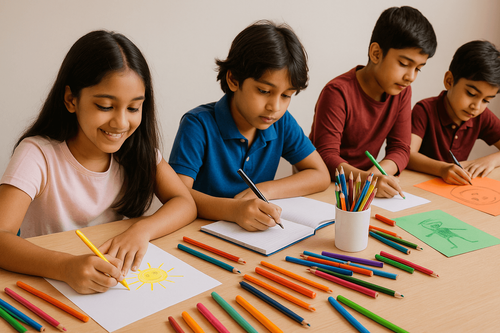

Table of Contents
- Fun Art Challenges Kids Can Try at Home
- Engaging Writing Challenges for Young Creators
- Combined Art + Writing Challenges
- Why Creative Challenges Matter for Kids
- Tips to Make Creative Challenges Fun and Consistent
- Creative Benefits of Art and Writing for Kids
- How to Set Up a Creative Corner at Home
- Age-Wise Creative Challenge Ideas
- How Parents Can Encourage Creativity Daily
- Common Mistakes Parents Should Avoid During Creative Activit
- How Creative Challenges Improve School Performance
- Weekend Creativity Boosters for Kids
- Simple Materials You Need for Daily Art & Writing Challenges
- Digital Creativity Tools and Apps for Kids
- How to Document Your Child’s Creative Journey
- Quick 5-Minute Creativity Boosters for Busy Weekdays
- How to Help Shy Kids Express Themselves Through Art and Writ
- Seasonal Art & Writing Challenge Ideas (Summer, Winter, Fest
- Collaborative Creativity Games for Siblings or Friends
- Why Choose PlanetSpark?
- Conclusion
Creativity is one of the most powerful skills a child can develop, and the best part is, it grows naturally when kids are encouraged to explore, imagine, and express freely. Fun art and writing challenges offer the perfect balance of play and learning, helping children think beyond usual patterns while strengthening important skills like observation, vocabulary, and self-expression. Whether it’s doodling a quick idea, creating a character, or writing a mini story, these challenges spark imagination without feeling like “work.” They also help kids build confidence as they turn simple ideas into something unique and meaningful. With just a few minutes a day and basic materials, children can dive into exciting tasks that make creativity a joyful, everyday habit.
Fun Art Challenges Kids Can Try at Home
Art challenges provide a fun, pressure-free way for kids to explore ideas visually. These activities are especially helpful for kids who may not feel confident speaking or writing yet, as drawing allows them to express freely. With just paper, colours, and creativity, kids can create something amazing every single day.
Here are some fun art challenges:
Daily Doodle Challenge: Kids draw a small doodle every day based on a simple prompt like “rainbow,” “a funny monster,” or “your favourite snack.” This helps build consistency and imagination.
Color-Only Artwork Challenge: Children create an artwork using just one colour. This encourages them to explore shades, patterns, and textures.
Shape-to-Art Transformation: Give kids a random shape (circle, triangle, squiggle) and ask them to turn it into anything they imagine, an animal, object, character, etc.
Nature Collage Challenge: Kids collect leaves, petals, or small sticks and turn them into a beautiful collage. This helps them observe nature closely.
Draw Your Mood Challenge: Children draw how they feel using colours and shapes. This is a great emotional expression activity.
These challenges make art simple, joyful, and accessible for every child.
Engaging Writing Challenges for Young Creators
Writing challenges help children practise forming ideas, organising thoughts, and expressing themselves clearly. They encourage creativity while strengthening grammar, vocabulary, and storytelling abilities, all essential for strong communication skills.
Here are some engaging writing challenges:
Five-Minute Story Challenge: Kids write a quick story within five minutes. The goal is speed and spontaneity, not perfection.
Picture-to-Story Prompt: Show a picture (like a forest, a dog, or a spaceship) and ask kids to write a short story about it. This enhances imagination and description skills.
One-Word Story Expansion: Give kids a single word like “rain,” “magic,” or “friendship” and ask them to write a story or paragraph inspired by it.
Rewrite Your Favorite Ending: Kids choose a favourite book or movie and rewrite the ending their way. This builds critical thinking.
Dialogue-Only Story: Children write a story using only conversations between characters. This improves clarity, tone, and understanding of speech.
With these activities, writing becomes enjoyable instead of intimidating.
Combined Art + Writing Challenges
Blending art and writing encourages kids to think creatively across two different forms of expression. These activities are perfect for enhancing storytelling, imagination, and clarity while making learning feel like play. Children feel more engaged when they can create something visually and explain it through words.
Here are some combined challenges:
Create a Comic Strip: Kids draw small boxes and turn them into a short comic with characters and dialogues. This teaches sequencing and storytelling.
Design a Character and Write Their Story: Children draw a character and then write about their personality, strengths, likes, and a short adventure.
Make a Mini Storybook: Kids fold paper into a tiny book and fill it with illustrations and a simple story.
Illustrate a Poem: Choose a child-friendly poem and let kids draw illustrations based on how they visualize it.
Create an Adventure Map and Write About It: Kids draw a treasure map or fantasy world, then write a story about what happens there.
These challenges build imagination, planning, and communication skills all at once.
Why Creative Challenges Matter for Kids
Creative challenges help children explore ideas, imagine new possibilities, and express themselves in ways typical academic tasks often don’t allow. These activities give kids a safe space to try, experiment, and even make mistakes, something that builds confidence and curiosity. When kids engage in art or writing challenges regularly, their brains learn to think more openly and flexibly. They slowly understand that there can be many solutions to a single problem, encouraging innovation from a young age.
Here’s how creative challenges benefit children:
Boost imagination: When kids draw, write, or build something, they learn to think beyond the usual and create unique ideas.
Improve fine motor skills: Activities like drawing, cutting, and colouring strengthen hand, eye coordination.
Strengthen communication: Writing strengthens clarity of expression, while art helps kids express emotions visually.
Encourage problem-solving: Kids naturally experiment when creating, helping them learn how to navigate challenges.
Build emotional expression: Art and writing allow children to express feelings they may not yet have words for.
These activities help children grow intellectually and emotionally, improving both creativity and communication.
Tips to Make Creative Challenges Fun and Consistent
Keeping creative challenges enjoyable ensures that kids stay motivated and excited rather than feeling pressured. The goal is to make creativity a habit, not a task. With a few simple adjustments at home, parents can create an environment where kids enjoy expressing themselves freely.
Here are some helpful tips:
Use easy materials: Simple tools like pencils, crayons, markers, and paper are enough.
Keep challenges short: 10–15 minutes a day is perfect.
Don’t force perfection: Let kids experiment, make mistakes, and explore freely.
Celebrate small wins: Display their artwork, share their stories, or praise their efforts.
Let kids share their work: Encourage them to show their creations to family members or friends.
Consistency helps kids become more confident, expressive, and imaginative over time.
Unlock Your Child’s Creativity – Book a Free PlanetSpark Demo Today!
Creative Benefits of Art and Writing for Kids
Art and writing are powerful tools for children’s overall development. These activities help kids explore ideas, express emotions, and build essential academic and life skills in a fun, natural way. When children draw or write, they are not just creating something, they are strengthening the way they think, observe, and communicate.
Emotional Benefits:
Art and writing allow children to express feelings they may not fully understand or cannot put into words. Drawing their mood, writing a small story, or creating characters helps them communicate emotions safely and creatively. It also boosts confidence when they see their ideas come to life.
Cognitive Benefits:
Creative tasks sharpen memory, improve focus, and encourage problem-solving. Kids learn to plan, imagine possibilities, and think beyond fixed patterns. Writing builds sequencing skills, and drawing improves visual thinking.
Academic Benefits:
Regular creativity improves vocabulary, grammar, comprehension, and writing fluency. Kids who write more naturally become better speakers as well because they learn how to organize thoughts clearly. Art enhances observation, which helps in subjects like science and math.
Together, art and writing form a foundation for stronger communication, confidence, and curiosity.
How to Set Up a Creative Corner at Home
A dedicated creative corner encourages children to draw, write, and explore anytime inspiration strikes. It doesn’t need to be expensive, just a small, comfortable, and inviting space that sparks imagination. When kids know they have their own creative spot, they naturally start spending more time expressing themselves.
Here’s how to set one up:
Choose a quiet corner: Pick a small area in the bedroom, living room, or study corner where kids can focus without distractions.
Keep materials accessible: Place crayons, markers, colouring books, plain paper, notebooks, and child-safe scissors in small bins or trays.
Use a child-friendly table: A small desk or floor mat is enough. Comfort helps kids stay engaged longer.
Add inspiration: Put up art prints, a creativity board, or a display wall where kids can hang their completed artwork.
Ensure good lighting: Natural light or a soft lamp helps kids see details clearly and stay relaxed.
Keep it mess-friendly: Use washable supplies, a mat, or old newspapers so creativity can be free of stress.
A cozy corner like this gives kids a personal space to think, imagine, and create every day.
Age-Wise Creative Challenge Ideas
Different age groups enjoy different types of challenges. Tailoring activities helps kids stay excited and ensures they learn at the right pace without feeling overwhelmed.
Ages 4–6 (Early Creators)
Kids in this age group love simple, colourful, hands-on tasks.
Colour-only drawings
Shape transformation doodles
Finger painting prompts
Short picture-based storytelling
Draw-your-favorite-toy challenges
These activities boost motor skills, imagination, and early vocabulary.
Ages 7–9 (Growing Creators)
At this stage, kids begin forming ideas more clearly.
Create a simple comic strip
Write a five-line poem
Turn a doodle into a story
Nature collage with a description
Design a superhero and write their powers
These tasks combine creativity with basic writing and communication.
Ages 10–12 (Independent Creators)
Kids enjoy bigger challenges with more structure.
Make a short storybook
Rewrite the ending of a movie
Create a detailed character sketch
Draw a fantasy map and write the backstory
Create a poem and illustrate it
These challenges encourage deeper thinking, planning, and expressive writing.
How Parents Can Encourage Creativity Daily
Parents play a big role in helping kids stay creative. The goal is not to control the process, but to inspire, encourage, and appreciate whatever the child creates. Creativity grows best in a stress-free, supportive environment.
Here are simple daily habits parents can follow:
Celebrate effort, not perfection: Focus on what the child enjoyed rather than how “neat” the work looks.
Ask open-ended questions: Instead of “What is this?” ask “Tell me about your drawing/story.”
Give free time: Kids need unstructured time to think, daydream, and explore ideas.
Limit screens before creative time: This keeps the mind fresh and active.
Provide prompts: A single word, picture, or object can spark amazing ideas.
Join them occasionally: Drawing or writing with your child shows them creativity is valued.
Display their work: Hanging their artwork boosts confidence and motivation.
With consistent encouragement, creativity becomes a natural part of a child’s day.
Let Your Child Explore Art & Writing with Expert Mentors – Schedule a Demo!
Common Mistakes Parents Should Avoid During Creative Activities
Supporting creativity also means avoiding behaviours that unintentionally restrict a child’s imagination. Many parents correct too much, give too many instructions, or expect results that look “perfect,” but this can discourage kids from trying again.
Here are common mistakes to avoid:
Overcorrecting: Kids don’t need perfect spelling, neat lines, or accurate proportions during creative time. Focus more on the idea than the accuracy.
Comparing siblings or friends: Every child has a unique style. Comparisons reduce confidence and interest.
Taking over the activity: Avoid drawing or writing for the child. Just guide gently when needed.
Expecting results quickly: Creativity takes time, kids need space to think and explore.
Forcing specific styles: Let children express ideas their own way. Don’t insist on a particular method unless they ask.
Discouraging “messy creativity”: Exploration often looks messy. Cover the area and let them enjoy.
Praising only the final work: Appreciate the process, effort, and imagination behind it.
Avoiding these mistakes helps children feel free, appreciated, and excited to keep creating.
How Creative Challenges Improve School Performance
Creative activities may seem playful, but they build core academic skills that directly improve school performance. When kids draw, write stories, plan characters, or create visual ideas, they strengthen the same skills needed for reading, comprehension, and problem-solving in school. Creativity teaches children to think differently, find connections, and express ideas clearly, skills that teachers value in every subject.
Art helps children observe details better, which improves science learning and logical thinking. Writing challenges build vocabulary, sentence formation, and structure, all of which help children perform better in English and other language subjects. Kids who practise writing regularly become better at comprehension because they learn how stories flow and how ideas connect.
Creative tasks also increase focus, patience, and confidence, making kids more prepared for classroom learning. A child who can express ideas freely in art or writing often becomes a more confident speaker and listener too. Overall, creativity strengthens both academic and emotional readiness, helping children excel in school.
Weekend Creativity Boosters for Kids
Weekends offer the perfect opportunity for slightly bigger, more immersive creative activities. These longer sessions help kids dive deeper, explore new ideas, and enjoy creativity without the rush of school days. Parents can plan fun, relaxed creativity boosters that use simple materials and spark imagination.
Here are some great weekend ideas:
Family Art Time: Spend 30–45 minutes creating art together, posters, doodles, nature drawings, or abstract art.
Story Marathon: Give kids one prompt and let them write 2–3 small stories. You can even turn it into a storytelling evening.
DIY Craft Project: Make bookmarks, paper puppets, origami animals, or simple DIY decorations.
Outdoor Art Exploration: Visit a park and let kids sketch trees, leaves, or landscapes.
Creative Baking: Kids can decorate cupcakes or cookies and then write a short description or story about them.
Weekend “Create Your World” Challenge: Kids draw a world map and write about the creatures, rules, and adventures in that world.
These weekend boosters make creativity a fun routine while building imagination and communication skills.
Simple Materials You Need for Daily Art & Writing Challenges
Creative activities don’t require expensive supplies. With a few basic materials, children can draw, write, design, and create every day. Keeping simple tools within reach encourages kids to explore ideas naturally and independently.
Essential Materials:
Plain paper or a drawing notebook
Crayons, colour pencils, or markers
Sketch pens and highlighters
Child-safe scissors
Glue stick
A small notebook or journal for writing
Sticky notes for mini prompts
Watercolours (optional)
A box or tray to store materials
Optional but fun additions:
Stickers, craft paper, glitter pens, old magazines for collage work, washi tape, and stencils.
The key is accessibility. When kids know where materials are and can use them freely, creativity becomes a natural part of their day. Even with the simplest supplies, children can create stories, draw characters, design comic strips, and express ideas without limits.
Experience Fun, Personalized Creative Learning – Book Your Demo Session!
Digital Creativity Tools and Apps for Kids
In today’s world, digital tools can support creativity just as much as traditional art and writing. These apps introduce children to modern forms of drawing, storytelling, animation, and comic-making. When used wisely and in moderation, they enhance imagination and help children develop new creative skills.
Popular Creativity Apps for Kids:
Tayasui Sketches: A simple drawing app with realistic tools.
Toonator or FlipaClip: Lets kids create simple animations and flipbook-style drawings.
Storybird: Helps kids write stories using beautiful illustrations.
Book Creator: A great tool for designing digital storybooks with drawings and text.
Comics Head / Pixton: Allows kids to create their own comic strips with characters and speech bubbles.
Google Keep / Notes apps: Perfect for daily writing prompts and mini-stories.
Digital tools encourage kids to explore new styles, digital painting, comic creation, and interactive storytelling. When balanced with offline creativity, they expand a child’s skill set and spark even more imagination.
How to Document Your Child’s Creative Journey
Documenting your child’s creativity is a wonderful way to track growth, celebrate effort, and build memories. It also boosts confidence when children see how their skills improve over time. Parents can preserve artwork and writing in simple, meaningful ways without needing expensive tools.
Ideas to document your child’s creative journey:
Create a scrapbook: Paste doodles, writings, and artwork into a book along with dates and small notes.
Make an art wall: Dedicate a section of a wall or board to display recent creations. Rotate pieces every few weeks.
Use digital folders: Take photos of artwork and save scanned writings into a labeled folder by month or age.
Build a yearly “creativity book”: Combine all work from the year into a printed photo book, easy and beautiful.
Create a memory box: Store crafts, mini booklets, postcards, and special drawings.
Record short videos: Let kids explain their artwork or stories. These videos become precious memories later.
Documenting creativity not only preserves childhood moments but also motivates kids to keep exploring, imagining, and expressing every day.
Quick 5-Minute Creativity Boosters for Busy Weekdays
Busy weekdays often leave parents with little time for long activities, but short bursts of creativity can still make a huge impact on a child’s imagination. Five-minute boosters keep kids energized, curious, and mentally refreshed without needing any setup. These small exercises fit perfectly between homework sessions, meal prep, or bedtime routines and help children think freely while having fun.
Here are some quick ideas that always work:
One-Word Story: Take turns adding one word to build a silly, unexpected story.
Blind Doodle: Kids draw with eyes closed for 10 seconds and then transform the scribble into a picture.
Object Twist: Pick any item, like a key or spoon and ask, “What else could this be?”
Speed Sketch: Draw anything you can think of in 30 seconds.
Emotion Doodles: Draw a shape that matches a feeling, happy, excited, sleepy, curious.
These fast, no-prep activities spark imagination instantly and help children end their day feeling creative, confident, and inspired.
How to Help Shy Kids Express Themselves Through Art and Writing
Shy kids often feel pressured when asked to speak, but art and writing give them a safe, quiet space to express what they’re thinking. Creative outlets help them open up gradually and comfortably, without fear of being judged or interrupted. Start by offering simple, open-ended tools like crayons, notebooks, or doodle pads and let them create freely.
Ways to gently support shy children include:
Use non-intrusive prompts: “Draw your day” or “Write about a place where you feel calm.”
Avoid asking direct questions about their artwork: Instead try, “Tell me more if you want to.”
Celebrate effort, not perfection: Focus on colours, creativity, and ideas.
Give choice: Let them pick materials, topics, or themes.
Build routine: A short 10-minute daily art or writing time reduces hesitation over time.
With patience and encouragement, shy children slowly develop the confidence to express themselves, first on paper, and then in real life.
Seasonal Art & Writing Challenge Ideas (Summer, Winter, Festivals)
Seasonal activities add freshness to a child’s creative routine by tying their art and writing to special moments throughout the year. Each season brings its own colours, emotions, and celebrations, making creativity richer and more meaningful.
Summer Ideas:
Draw favourite summer memories
Write about an imaginary ocean adventure
Paint sunsets, beaches, or ice-cream themes
Winter Ideas:
Create cosy winter scenes or snow creatures
Write stories about magical winter lands
Make gratitude lists during festival time
Festival Themes:
Diwali lights and rangoli patterns
Christmas ornaments and holiday stories
Eid feasts, family moments, and cultural reflections
You can even create a Seasonal Challenge Board with 10–15 tasks your child can complete anytime. Seasonal activities help kids observe the world more closely, appreciate traditions, and stay creatively excited all year long.
Collaborative Creativity Games for Siblings or Friends
Creativity becomes even more exciting when kids create together. Collaborative games encourage teamwork, communication, and problem-solving while keeping playtime fun and unpredictable. Whether indoors on rainy days or during weekend playdates, these activities help kids work as a team without pressure or competition.
Some engaging collaborative ideas include:
Pass-the-Doodle: One child starts a doodle; others continue it.
Group Story Chains: Each child adds one sentence to build a funny story.
Build-a-Creature: Kids combine their ideas to design a new imaginary animal.
Treasure Map Making: Children create a map and decide clues together.
Sketch & Switch: Kids start drawings, switch papers halfway, and complete each other’s work.
These activities help children learn how to listen, share ideas, and appreciate each other’s creativity. The results are always unique and the process is even more enjoyable than the final artwork.

Why Choose PlanetSpark?
Nurturing creativity and self-expression in children requires the right guidance, encouragement, and structured environment. PlanetSpark offers all three through its engaging online programs designed for young learners.
Personalized Learning: PlanetSpark understands that every child learns differently. Lessons are tailored to each child’s current skill level, interests, and goals, ensuring steady progress without pressure.
Interactive Art & Writing Sessions: Children participate in creative challenges, storytelling, and imaginative tasks that keep learning fun. Activities are designed to make expression natural, whether through drawing, journaling, or collaborative projects.
Skill-Building for Real-Life Communication: Beyond creativity, PlanetSpark helps children improve vocabulary, sentence formation, storytelling skills, and emotional expression, laying the foundation for confident communication.
Expert Mentors: Trained educators provide consistent guidance, constructive feedback, and encouragement, helping children overcome hesitation and explore their imagination freely.
Flexible Online Learning: PlanetSpark’s virtual sessions allow children to learn from home at their own pace, making creativity accessible and convenient.
Conclusion
Creative expression through art and writing is more than just fun, it’s a powerful tool for a child’s overall development. Regular engagement in creative challenges helps children build imagination, confidence, communication skills, and problem-solving abilities. Whether it’s a quick five-minute doodle, a collaborative storytelling game, or a seasonal art challenge, each activity nurtures curiosity, emotional expression, and cognitive growth.
By integrating both structured and spontaneous creative activities into daily routines, parents can help children develop a love for self-expression that lasts a lifetime. Encouraging creativity in a supportive, pressure-free environment allows children to explore their unique ideas, learn from mistakes, and grow into confident thinkers and communicators.
Frequently Asked Questions
PlanetSpark programs are designed for children aged 4 to 12 years, with activities tailored to different age groups and skill levels.
No! Most activities use simple, everyday items like paper, pencils, crayons, and household objects. Some optional art supplies can enhance creativity but aren’t necessary.
Sessions typically last 30–45 minutes, perfect for keeping children engaged while fitting easily into daily routines.
Absolutely. PlanetSpark provides a supportive and interactive environment where shy children can express themselves through art, writing, and guided activities.
Yes. Children actively participate in challenges, storytelling, collaborative activities, and receive real-time guidance and feedback from expert mentors.
Parents receive feedback on creativity, communication, and skill development. Children’s work can also be documented to track growth over time.