Have you ever read a story
or listened to a speech where the writer or speaker asks a question and then immediately answers it? This clever technique is called hypophora, and it is one of the most effective tools in creative writing and communication. Using hypophora, writers can grab the reader’s attention instantly, build curiosity, and guide the audience to important ideas in a fun and interactive way.
For students, learning what is hypophora
is not just about memorizing a definition. It’s about understanding how this figure of speech can make writing and speaking more engaging, persuasive, and expressive. From essays and speeches to storytelling and even social media posts, hypophora helps make your content lively and memorable.
In this blog, we will cover the hypophora meaning, explore why hypophora is used, look at hypophora examples in writing, and learn how you can use hypophora in your own stories to captivate readers. By the end, you will have a clear understanding of how this simple yet powerful technique can transform your creative writing.
Introduction to Hypophora
What is Hypophora? Hypophora is a literary and rhetorical technique in which the speaker or writer asks a question and immediately provides the answer. It is a type of figure of speech that keeps readers or listeners engaged because it creates curiosity and then satisfies it instantly.
Why is Hypophora Important in Writing?
Grabs Attention: A well-placed question can hook the reader from the first line.
Guides the Reader: By providing the answer, the writer controls the flow of information.
Emphasizes Key Points: It highlights the most important ideas in a story or speech.
Engages the Audience: People love to see a question answered - they feel involved in the text.
How Hypophora Works in Stories and Speeches: Imagine you are writing a story: "Why did the hero enter the dark forest alone? Because he had to save his village from the dangerous monster."
Here, the question builds suspense, and the answer provides clarity and keeps the story moving forward.
Key Features of Hypophora
Involves both question and answer.
Usually used to introduce a topic or idea.
Helps in making arguments clear in essays or speeches.
Can be used to entertain or educate.
Table: Hypophora vs Rhetorical Question
Feature
Hypophora
Rhetorical Question
Question Asked
Yes
Yes
Answer Provided
Yes
No
Purpose
Explain or emphasize
Make audience think
Example
Why should we care about teamwork? Because working together achieves better results.
Isn’t teamwork important?
Fun Examples in Real Life:
"Why do we brush our teeth every day? To keep them healthy and strong."
"What makes a story exciting? Fun characters and unexpected events."
Students can use hypophora in essays, speeches, and creative writing to make their work more dynamic and persuasive.
Hypophora Meaning
The hypophora meaning is simple but powerful: it is the act of asking a question and immediately answering it yourself. Unlike ordinary questions, hypophora is deliberate - the writer or speaker uses it to guide the reader’s attention to an important point or idea.
Different Ways to Understand Hypophora Meaning:
Basic Definition: Asking a question and then answering it.
Creative Definition: A way to spark curiosity in the reader and satisfy it quickly.
Practical Definition: A tool to highlight key points in essays, stories, and speeches.
Why Learning Hypophora is Important for Students:
Enhances Writing Skills: Makes essays, stories, and reports more engaging.
Improves Speaking Skills: Helps in presentations and class speeches.
Encourages Critical Thinking: Students learn how to ask questions and provide clear answers.
Boosts Reader Engagement: Makes the audience curious and eager to read more.
Hypophora in Everyday Life: Even outside the classroom, hypophora can make communication interesting:
"Why should we recycle? Because recycling helps protect the environment for everyone."
"What is the best way to prepare for exams? By studying regularly and practicing questions."
Key Elements of Hypophora
Question: Relevant to the topic and creates curiosity.
Answer: Informative, clear, and engaging.
Purpose: Guides the reader and emphasizes important ideas.
Placement: Can be used at the beginning of a paragraph, story, or speech to hook attention.
Mini Example: "Why do birds sing early in the morning? Because singing helps them communicate and claim their territory."
Fun Fact: Many famous speakers and writers use hypophora to make their audience listen carefully and remember key points. For instance, in classic speeches, leaders often start with questions that grab attention and then give strong answers that inspire people.
Tip for Students: Try using hypophora in your next story or essay. Start with a question that your readers might have and then answer it in a way that adds value. This will make your writing more interactive and memorable.
Understanding Hypophora Many students often ask, "what is hypophora?" Simply put, hypophora is a writing and speaking technique where a question is posed and immediately answered. It is not just any question but a purposeful one that guides the reader or listener toward the main idea. By using hypophora, writers make their content more interactive, engaging, and clear.
Key Points to Remember:
Hypophora combines curiosity with clarity.
The question usually introduces a topic or highlights an important point.
The answer helps emphasize the idea in a concise and interesting way.
Why Students Should Learn What Hypophora Is:
Enhances creative writing skills.
Makes essays and stories fun and easy to read.
Helps in speaking and presentation activities.
Encourages thinking from the reader’s perspective, anticipating their questions.
Examples of Hypophora in Simple Writing:
"Why do we read books? Because books take us on amazing adventures and teach us new things."
"What makes a good team player? Someone who listens, helps others, and shares ideas."
"Why should we care about nature? Because every plant and animal plays a role in keeping our world balanced."
How Hypophora Works in Stories: Hypophora can be used in stories to create suspense and provide answers immediately, keeping the reader engaged: "Why did the little girl enter the mysterious cave? She wanted to find the lost treasure hidden inside."
Benefits of Knowing What Hypophora Is
Makes writing interactive.
Helps highlight key messages.
Boosts confidence in public speaking.
Encourages analytical thinking by asking and answering questions.
Mini Table: Hypophora vs Normal Question
Feature
Normal Question
Hypophora
Question Asked
Yes
Yes
Answer Provided
Sometimes
Always
Purpose
Seek information
Explain and engage
Example
Do you like reading?
Why should you read? Because reading makes you smart.
Fun Tip for Students: Try starting your next essay or story with a question that you know your readers might ask and then answer it. This will immediately grab attention and make your writing more lively and creative.
Hypophora as a Figure of Speech
What Makes Hypophora a Figure of Speech? Hypophora as a figure of speech is used to enhance communication. A figure of speech is a writing tool that adds style, clarity, or emphasis, and hypophora does this by combining questioning and answering in a single technique. It makes the writing persuasive, interesting, and easy to follow.
Key Features of Hypophora as a Figure of Speech:
Combines a question and immediate answer.
Creates interest and curiosity.
Helps clarify complex ideas in simple words.
Makes writing more persuasive and engaging.
Examples of Hypophora as a Figure of Speech:
"Why is honesty important? Because honesty builds trust and makes relationships stronger."
"Why do we need rules in school? Rules keep everyone safe and help us learn better."
"Why should we recycle? Recycling reduces waste and protects our planet."
Why Hypophora is Powerful in Writing
Encourages readers to think along with the writer.
Makes arguments stronger and more memorable.
Adds creativity and style to essays and stories.
Helps in classroom speeches and presentations.
Mini Example in Storytelling: "Why did the dragon guard the treasure? Because it was the only way to protect the magic crystal from falling into the wrong hands."
Tip for Students: When you want to explain a big idea in a story, essay, or speech, using hypophora as a figure of speech is very effective. Start with a question your readers might ask and then answer it clearly. It makes your writing fun, clear, and convincing.
Comparison Table: Hypophora vs Other Figures of Speech
Figure of Speech
How it Works
Example
Hypophora
Question + Answer
Why read books? Because books take us on adventures.
Simile
Compares using like/as
Brave as a lion
Metaphor
Direct comparison
Time is a thief
Personification
Gives human traits
The wind whispered
By learning hypophora as a figure of speech, students can make their writing more interactive, memorable, and fun while also improving communication skills.
Understanding Why Hypophora is Important One of the most common questions students ask is, "why is hypophora used?" The answer lies in its ability to make writing and speaking more engaging, clear, and persuasive. Hypophora is not just a stylistic tool; it is a strategic method to guide readers, emphasize ideas, and make complex topics easier to understand.
Key Reasons for Using Hypophora:
To Grab Attention: By asking a question at the start, the reader becomes curious and wants to know the answer. This makes them more attentive to your writing.
To Highlight Important Ideas: Hypophora emphasizes key points. When a question is followed by an answer, it ensures that the main idea is clearly communicated.
To Engage Readers Actively: Instead of passively reading, the audience is mentally involved - they are thinking about the answer while reading.
To Make Writing Persuasive: In speeches, essays, or presentations, hypophora convinces the audience by answering objections or questions before they are asked.
Examples Showing Why Hypophora is Used:
"Why should we study history? Because understanding the past helps us make better choices today."
"What makes a team successful? Cooperation, respect, and shared goals."
"Why do we need to eat healthy food? To stay strong, active, and focused in school."
Benefits of Using Hypophora
Keeps readers interested from the start.
Helps in explaining complex ideas simply.
Strengthens arguments in essays and speeches.
Makes storytelling more interactive and lively.
Mini Table: Benefits of Hypophora in Writing and Speaking
Purpose
How Hypophora Helps
Example
Grab Attention
Sparks curiosity
Why read books? Because books open new worlds.
Highlight Ideas
Focuses on key points
Why recycle? To protect the environment.
Persuasion
Answers reader questions
Why be honest? Because trust matters most.
Engagement
Active reader participation
Why exercise? To stay fit and happy.
Fun Tip for Students: Whenever you write a story, essay, or speech, think about the questions your audience might have. Use hypophora to ask these questions and provide clear answers. It makes your writing dynamic and easy to follow.
Hypophora Examples in Writing
Why Examples Are Important Learning hypophora examples helps students understand how this technique works in real writing. Seeing multiple examples allows you to practice using it in different contexts, from storytelling to essays and speeches.
Types of Hypophora Examples:
A. Simple Hypophora for Stories
"Why did the little boy climb the hill? Because he wanted to see the sunrise from the top."
"What makes the garden so beautiful? The colorful flowers and singing birds."
B. Hypophora for Essays
"Why is reading important? Reading improves knowledge and imagination."
"Why should we save water? Because every drop counts for our future."
C. Hypophora for Speeches
"What can we do to protect our planet? We can plant trees, reduce waste, and save energy."
"Why do we need teamwork? Because together, we can achieve more than alone."
Tips for Using Hypophora Examples
Keep questions short and clear.
Ensure answers are informative and engaging.
Use examples relevant to students’ daily life.
Mix storytelling, essay writing, and speeches for practice.
Mini Table: Hypophora Examples Across Different Contexts
Context
Example
Story
Why did the rabbit hide? Because the fox was nearby.
Essay
Why learn science? To understand how the world works.
Speech
Why be kind? Because kindness makes the world better.
Practice Activity for Students:
Think of a topic like “school,” “friendship,” or “nature.”
Write one question your reader might ask.
Immediately write the answer using clear and simple words.
Check if your hypophora makes the reader curious and informed.
Fun Fact: Famous authors and speakers, including J.K. Rowling and Barack Obama, often use hypophora in their writing and speeches to guide the audience and emphasize key points. Students can learn from these examples to make their own writing more engaging.
Using hypophora in stories is a creative way to grab your readers’ attention and make your writing more interactive. By asking a question and immediately answering it, you can guide readers through the story, create suspense, and explain ideas clearly.
Step-by-Step Guide to Using Hypophora in Stories
Start With a Question: Begin a paragraph or scene with a question that makes the reader curious.
Example: "Why did the young knight enter the dark forest alone?"
Provide an Immediate Answer: Give a clear and engaging answer to the question to keep the story moving.
Example: "Because he needed to find the magical sword to save his kingdom."
Use Hypophora to Highlight Key Moments: Ask questions at important points to emphasize the hero’s choices, challenges, or discoveries.
Keep It Short and Simple: The question and answer should be easy to understand, especially for younger readers.
Examples of Hypophora in Storytelling:
"Why was the treasure hidden in the cave? Because it was protected by a powerful dragon."
"What made the garden magical? The sparkling flowers and talking animals."
"Why did the students work together on the project? Because teamwork makes everything easier."
Benefits of Using Hypophora in Stories
Keeps readers interested and curious.
Helps in explaining important plot points.
Makes storytelling interactive and lively.
Enhances creative thinking by combining questions and answers.
Mini Table: Hypophora Placement in Stories
Placement
Example
Purpose
Beginning
Why was the forest dark? Because night had fallen.
Hook the reader
Middle
Why did the hero hesitate? Because the path was dangerous.
Build suspense
End
Why did they win? Because they never gave up.
Emphasize lesson
Fun Tip for Students: Try using hypophora for your next story challenge. Think of questions your readers might have at each stage of your story and answer them creatively. This will make your story engaging and easy to follow.
Tips for Practicing Hypophora
Learning hypophora is easy if you practice regularly. Students can improve their writing, speaking, and storytelling skills by using this figure of speech creatively and thoughtfully.
Tips to Practice Hypophora:
Start Small: Use simple questions and answers in your daily writing or diary.
Example: "Why do I like my school? Because I learn new things every day."
Read Examples: Study stories, essays, and speeches where hypophora is used. This will help you understand different styles and placements.
Mix It With Creative Writing: When writing a story, ask questions your characters or readers might have and answer them clearly.
Use in Speeches: Practice asking a question in a presentation or speech and then answering it to engage your audience.
Write Hypophora Lists: Pick a topic and write 5–10 hypophora questions and answers. This helps improve thinking and writing skills.
Examples for Practice:
"Why is friendship important? Because friends make life happier and easier."
"Why should we recycle? Because it protects our planet and saves resources."
"Why do we play sports? To stay healthy and learn teamwork."
Quick Tips for Students
Keep questions relevant and simple.
Answers should be clear, short, and informative.
Use hypophora in stories, essays, speeches, and daily writing.
Try creative and fun examples to make learning enjoyable.
Mini Table: Daily Hypophora Practice Ideas
Activity
Example
Diary Writing
Why did today feel special? Because I helped a friend.
Story Writing
Why did the dragon guard the treasure? Because it was magical.
Classroom Speech
Why should we read books? Because reading improves our imagination.
Social Media Post
Why share kind words? Because kindness spreads happiness.
Fun Fact: Regular practice of hypophora improves both creative writing and public speaking skills. Even answering your own questions in daily writing helps train your mind to think critically and express ideas clearly.
PlanetSpark Creative Writing: Spark Your Child’s Imagination
Unlock your child’s creative potential with PlanetSpark’s Creative Writing Program. Designed to make writing fun and expressive, this program helps children master storytelling, structure, and vocabulary while encouraging confidence in presenting their ideas. Through guided lessons and interactive exercises, kids learn to craft compelling stories, poems, essays, and more, building skills that go beyond the classroom.
Why Choose PlanetSpark Creative Writing:
Genre-Based Curriculum: Explore short stories, poetry, journal writing, essays, book reviews, and persuasive letters.
Framework-Driven Instruction: Learn story arcs, S.T.O.R.Y structure, 5W1H method, and PEEL technique for essays.
Writing + Speaking Integration: Present written work orally to boost expressive confidence and narrative flow.
Editing, Feedback, and Rewriting: Focus on revision through real-time editing, peer reviews, and teacher feedback.
Real Publishing Opportunities: Publish stories on PlanetSpark blogs, e-magazines, or co-authored anthologies.
Creativity Stimulus Activities: Story dice, prompts, image-based exercises, and guided imagination activities spark original thinking.
Yuvyansh’s Creative Journey: From Ideas to Achievement
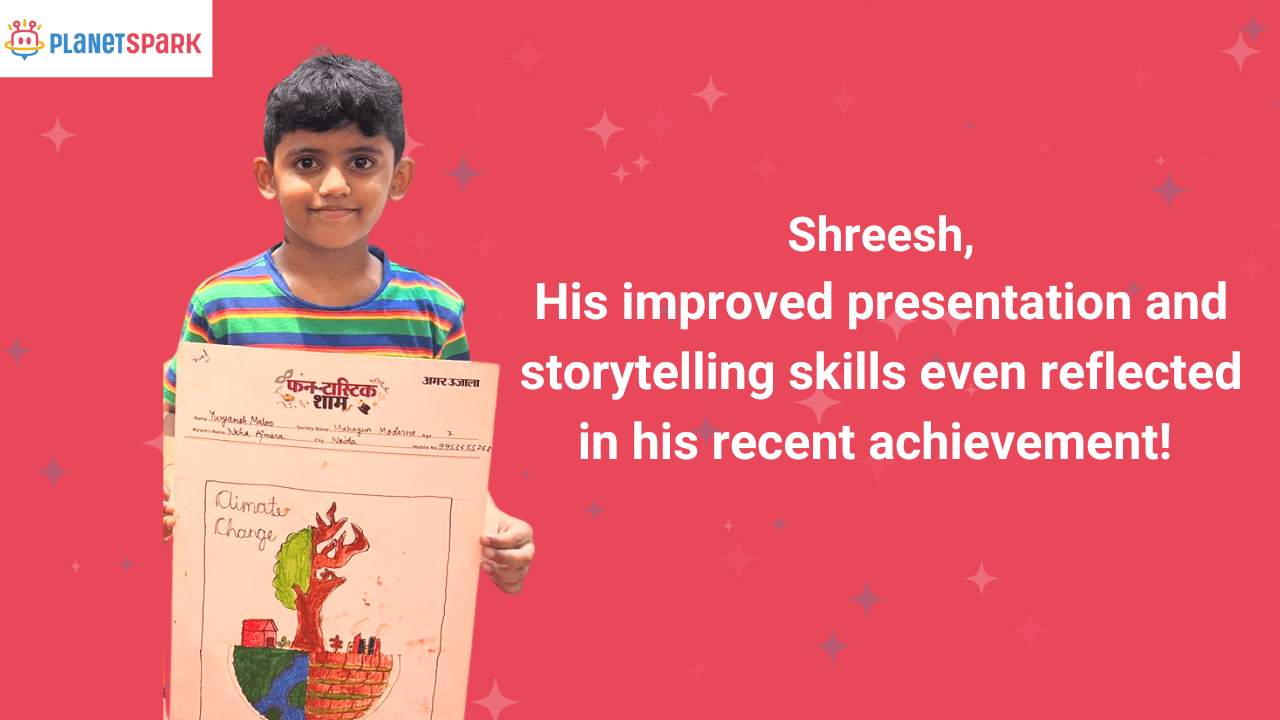
PlanetSpark helped Shreesh express his ideas creatively and confidently. With improved presentation and storytelling skills, he recently showcased his talent by winning second place in the Junior Category of a drawing competition on ‘Climate Change’ organized by the Amar Ujala team. His journey reflects how guided learning can nurture both creativity and confidence.
Master Hypophora: Make Your Writing Engaging and Fun
Hypophora is a simple yet powerful technique that makes writing and storytelling more engaging. By asking a question and immediately answering it, students can capture attention, emphasize key points, and make their ideas clear. Practicing hypophora not only improves creative writing but also boosts speaking skills, critical thinking, and confidence. Using this figure of speech in stories, essays, or speeches helps young writers communicate effectively while keeping their audience curious and involved.
Hypophora is a figure of speech where a writer or speaker asks a question and immediately answers it. It is used to make writing or speeches more engaging and clear.
The hypophora meaning is simply asking a question and answering it yourself. It helps emphasize key points, guide readers, and spark curiosity.
Hypophora is used to grab attention, explain ideas clearly, and make writing or speeches interactive. It helps readers or listeners stay interested and understand important points.
Yes! Examples include:
“Why do we recycle? Because it protects our planet and saves resources.”
“What makes a story exciting? Interesting characters and unexpected events.”
Students can start a paragraph or scene with a question and then provide an answer. This adds suspense, explains key points, and keeps the reader engaged.
No! Hypophora is also used in speeches, presentations, and everyday communication to make ideas clear and engaging.