Imagery poetic device helps children create
vivid, emotionally rich descriptions that make poems and creative writing more expressive and memorable. Parents searching for the imagery poetic device meaning or imagery examples want their child to move beyond flat descriptions and write with clarity, depth, and imagination. When children understand how imagery works in poetry and creative writing, their ideas become easier to visualize and far more impactful for readers and listeners.
PlanetSpark teaches imagery poetic device step
by step, helping young writers transform simple ideas into powerful, sensory-driven writing that communicates emotion, meaning, and intent with confidence.
Understanding Imagery Poetic Device and Why It Matters
Imagery poetic device plays a foundational role in creative writing because it allows writers to show ideas instead of merely explaining them. Through imagery, children learn how to use language that appeals to the senses, helping readers see, feel, and emotionally experience what is happening in a poem or story.
When imagery is taught meaningfully, children begin to make intentional writing choices. They understand that strong imagery supports emotion, mood, and theme rather than decorating sentences with extra words. This clarity helps them organize thoughts and communicate ideas more confidently.
How Imagery Shapes Emotion and Meaning in Writing
Imagery helps children express emotions without naming them directly. Instead of writing that a character feels scared, happy, or lonely, children learn to describe moments, settings, or sensations that allow the reader to feel those emotions naturally. This shift moves writing away from explanation and toward experience, making it more engaging and emotionally resonant.
When children practice imagery regularly, they begin to understand how small details influence emotional tone. A quiet room, fading light, or sudden sound can communicate mood far more effectively than abstract emotional labels. This awareness helps children create writing that feels layered and thoughtful rather than flat or repetitive.
Over time, imagery strengthens meaning by guiding how readers interpret a scene. Children learn that every image sends a signal to the reader about how a moment should feel. This understanding allows them to shape emotion intentionally, improving both creative expression and clarity in writing.
Why Imagery Is More Than Description
Imagery is not about describing everything in a scene. It is about selecting the details that matter most. When children rely on excessive description, writing becomes cluttered and confusing. When they choose imagery carefully, writing becomes focused, purposeful, and easier to follow.
Understanding this distinction helps children develop judgment in writing. They learn to ask which details support the idea or emotion they want to convey and which can be removed. This skill improves organization and prevents overuse of adjectives or repetitive sensory language.
As children refine imagery, their writing gains direction and flow. Each image supports meaning, emotion, and narrative movement rather than distracting from it. This clarity helps young writers communicate ideas confidently and creates writing that feels intentional, expressive, and impactful.
What Imagery Poetic Device Means for Young Writers
For young writers, imagery poetic device means learning how to transform thoughts, feelings, and abstract ideas into clear pictures using words. It teaches children that writing is not just about listing events but about creating an experience the reader can step into and feel. When children understand this shift, their writing becomes more expressive and meaningful rather than mechanical or rushed.
By visualizing scenes before they begin writing, children gain stronger mental clarity. They know where the scene takes place, what surrounds the characters, and how the moment should feel. This mental preparation reduces hesitation, improves sentence flow, and helps children maintain consistency throughout a poem or story. Writing becomes smoother because ideas are already organized in the mind before they reach the page.
When children can clearly imagine what they want to describe, writing feels less intimidating and more natural. Imagery helps them anchor their ideas in specific scenes, allowing thoughts to unfold in a logical and structured way rather than jumping randomly from one point to another. This structure makes their writing easier for readers to follow and understand.
Clear mental pictures also strengthen confidence. Children feel more certain about the words they choose because they know exactly what they want the reader to see or feel. This confidence reduces self doubt during writing and encourages children to express ideas more freely. Over time, this skill helps young writers communicate with clarity, creativity, and assurance across different forms of creative writing.
How Imagery Builds Confidence in Writing and Speaking
Strong imagery supports not only writing but also oral expression. Children feel more confident reading poems aloud or narrating stories when they fully understand and can visualize what they have written.
This connection between imagery and confidence improves classroom participation, recitation skills, and overall communication.
Why Children Struggle to Use Imagery Effectively
Many children can define imagery poetic device correctly but struggle to use it in their own writing because it is often taught as a concept to remember rather than a skill to practice. In classrooms, imagery is usually explained through definitions and examples, but children are rarely shown how to apply it step by step in their own poems or stories.
Without guidance, children feel unsure about how much description is appropriate and which details actually matter. They may not understand how imagery supports emotion or meaning, so they either overuse it or avoid it altogether. This uncertainty creates hesitation and reduces confidence, making descriptive writing feel difficult and frustrating rather than creative.
As a result, many children either rely on safe, generic descriptions or stop experimenting with imagery completely, limiting the depth and expressiveness of their writing.
Over Description and Lack of Focus
One of the most common struggles is over description. Children may try to include every sensory detail they can think of, believing that more description will automatically improve their writing. This often leads to long, unfocused sentences that overwhelm the reader and dilute the core idea.
When too many details compete for attention, the main emotion or message becomes unclear. Without feedback, children do not know which images strengthen the scene and which distract from it. This lack of clarity makes their writing feel cluttered and confusing instead of vivid and engaging.
With structured guidance, children learn how to select only the most meaningful details. They begin to understand that strong imagery comes from focus and intention, not from describing everything at once.
Confusion Between Imagery and Adjectives
Another challenge is the belief that imagery simply means adding more adjectives. Children may think that longer descriptions filled with descriptive words automatically create strong imagery. In reality, this often results in repetitive, vague, or exaggerated language that adds little value.
This confusion prevents children from developing true imagery skills. Instead of creating pictures through actions, settings, or sensations, they rely on surface level description that feels forced or predictable.
Guided instruction helps children see that imagery is about precision and choice. They learn how to build images through carefully selected details that support meaning and emotion. This understanding leads to clearer writing, stronger expression, and greater confidence in using imagery effectively.
How Imagery Poetic Device Improves Writing When Guided Properly
When imagery poetic device is taught through structured guidance, children begin to write with clear intention rather than guessing what sounds descriptive. They learn that imagery is not about adding details randomly, but about choosing sensory elements that strengthen emotion, meaning, and reader understanding. This shift helps children move from uncertain writing to purposeful expression.
Expert guidance plays a critical role because children rarely recognize on their own which images work and which weaken clarity. With feedback, they understand how imagery should support the message of a poem or story instead of distracting from it. As a result, writing becomes sharper, more focused, and easier for readers to connect with emotionally.
Turning Sensory Details into Emotional Impact
Children learn that strong imagery connects sensory details to feeling. Instead of describing what something looks like alone, they begin to explore how a moment feels, sounds, or affects a character emotionally. A scene becomes meaningful not because it is detailed, but because it communicates an experience.
This understanding helps children move beyond surface level description. They realize that a single well chosen image can express fear, excitement, or calm more effectively than multiple generic descriptions. Writing starts to carry emotional weight, allowing readers to feel the moment rather than simply observe it.
As children practice this skill, their writing becomes more expressive and engaging. They gain confidence knowing that their words can create an emotional response, which motivates them to experiment more thoughtfully with language.
Strong imagery is rarely perfect in the first draft. Revision is essential, and this is where expert feedback makes a significant difference. Children learn how to review their writing and identify images that feel unclear, repetitive, or unnecessary.
With mentor guidance, they practice removing extra description and strengthening the images that truly matter. This process teaches them that editing is not about fixing mistakes, but about improving clarity and impact. Over time, children develop better judgment about their own writing.
This habit of refinement builds confidence and resilience. Children understand that good writing evolves through practice and revision, helping them approach creative writing with patience, clarity, and a stronger sense of control.
Types of Imagery Children Learn Through Creative Writing Practice
Imagery poetic device includes multiple forms that work together to create vivid, meaningful writing. For children, understanding these forms requires structured exposure rather than isolated definitions. When imagery is introduced gradually through guided creative writing practice, students learn how and when to use different types without feeling overwhelmed.
Through regular writing exercises, children explore imagery in a natural way. They begin to recognize how different sensory elements serve different purposes in writing, helping them build clarity, emotion, and depth step by step.
Visual and Sensory Imagery
Visual imagery helps children create clear and memorable scenes by showing readers what a place, moment, or action looks like. Sensory imagery deepens this experience by adding elements of sound, touch, and physical feeling, making the scene feel more real and immersive.
When children learn to combine visual and sensory imagery thoughtfully, their writing becomes richer and more engaging. Readers can imagine not only what is happening, but how it feels to be in that moment. This combination improves descriptive clarity and strengthens the reader’s connection to the writing.
With guidance, children also learn restraint. They understand that strong imagery comes from selecting the right sensory details rather than describing everything they see or feel.
Emotional Imagery in Poetry
Emotional imagery allows children to communicate feelings without directly naming them. Instead of stating emotions, they learn how to create images or moments that naturally evoke those feelings in the reader. This approach makes poetry feel more powerful and authentic.
Through practice, children discover how subtle word choices influence emotional tone. A quiet setting, a change in light, or a small action can convey sadness, excitement, or tension more effectively than explicit explanation. This awareness helps young writers develop poetry that feels expressive, thoughtful, and emotionally engaging.
Imagery examples clearly show the difference that guided practice makes in a child’s writing. Without coaching, many descriptions stay broad and predictable because children rely on familiar words and safe phrases. While these descriptions may be correct, they often fail to create a strong picture or emotional connection for the reader.
With structured feedback, children learn how to refine imagery so it becomes more precise and meaningful. They begin to understand that effective imagery comes from thoughtful word choice and focus rather than adding more description. This guidance helps children move beyond surface level writing and develop a more expressive creative voice.
From Basic Description to Vivid Expression
Through examples, students see how small adjustments in language can dramatically improve clarity and impact. Replacing a general phrase with a specific action, sensation, or image helps writing feel more vivid and memorable.
As children practice this process, they gain confidence in experimenting with language. They realize that they have control over how their writing sounds and feels, which increases motivation and encourages creative risk taking.
How Feedback Improves Imagery Quality
Feedback plays a critical role in improving imagery because it helps children see their writing from the reader’s perspective. They learn which images communicate clearly and which ones feel unclear, repetitive, or unnecessary.
Over time, this feedback develops stronger judgment. Children become more capable of evaluating their own work and making thoughtful revisions. This control over imagery leads to writing that feels intentional, polished, and emotionally engaging.
Practicing Imagery at Home Through Simple Writing Exercises
Parents can support imagery development effectively through short, consistent activities that fit naturally into daily routines. These simple exercises encourage children to observe their surroundings more closely, think creatively, and become aware of how experiences feel, not just how they look. When imagery practice feels regular and low pressure, children are more willing to experiment with descriptive writing.
Consistent practice helps children internalize imagery as a natural part of writing rather than a technique they have to remember consciously. Over time, they begin to include imagery instinctively in poems, stories, and even school assignments, improving both clarity and expression.
Daily Sensory Observation Activities
Daily sensory observation activities help children slow down and notice details they might otherwise overlook. Parents can ask children to describe an object, place, or moment using different senses such as sight, sound, touch, or emotion. For example, a simple walk outside can become an opportunity to notice how the air feels, what sounds are present, or how light changes during the day.
These activities strengthen descriptive clarity by teaching children to focus on specific details rather than vague descriptions. As children practice observing and articulating these details, their imagination grows stronger and their writing becomes more vivid and precise.
Short Writing Prompts for Imagery Practice
Short writing prompts give children a safe space to experiment with imagery without the pressure of producing a long or perfect piece of writing. Prompts such as describing a room at night, imagining the feeling of rain, or writing about a favourite place at a different time of day encourage creative exploration.
Because these prompts are brief and manageable, children are more likely to engage with them regularly. Over time, this habit improves writing fluency and builds confidence. Children learn that imagery is not intimidating, but an accessible and powerful way to express ideas clearly and creatively.
Why Guided Creative Writing Coaching Makes a Difference
Many children have strong ideas and imagination but struggle to organize and express them clearly through imagery. They may know what they want to say, yet feel unsure about how to translate those ideas into clear, vivid writing. Without structure, imagery often feels confusing or inconsistent, which can lead to frustration and self doubt.
Guided coaching provides the clarity and direction children need. PlanetSpark mentors help students understand how imagery supports meaning and emotion rather than existing as an isolated technique. Through structured guidance, children learn how to shape ideas, choose the right details, and communicate experiences in a way that readers can easily understand and connect with.
How Expert Feedback Accelerates Improvement
Expert feedback plays a crucial role in accelerating improvement because it helps children correct mistakes at the moment they occur. Live feedback allows mentors to explain why certain images work well and why others may feel unclear or excessive. This immediate clarification prevents confusion from settling in and helps children apply learning right away.
By receiving consistent feedback, children gain a clearer sense of direction. They spend less time guessing and more time improving. This reduces frustration and builds momentum, making creative writing feel achievable rather than overwhelming.
From Practice to Confident Expression
With regular guidance and practice, children gradually move from hesitant writing to confident expression. They begin to trust their ability to choose effective imagery and express ideas clearly. Writing no longer feels like trial and error, but a skill they can control and improve.
As confidence grows, children become more willing to experiment with language and explore creative ideas. They understand how to use imagery with purpose and clarity, resulting in writing that feels expressive, intentional, and emotionally engaging. This confidence extends beyond writing, strengthening overall communication and self expression.
PlanetSpark: Building Expressive and Confident Young Writers
PlanetSpark helps children master creative writing through live one to one sessions and structured learning.
1:1 Expert Coaching Children receive personalized guidance from certified communication mentors.
Step by Step Creative Writing Instruction Students learn poetry, storytelling, and structured writing frameworks.
Real Time Feedback and Practice Children revise writing with expert support.
AI Based Writing and Speaking Analysis SparkX evaluates clarity, structure, vocabulary, and expression.
Continuous Progress Tracking Parents receive clear insights into writing growth and confidence.
Thaksh’s Creative Writing Win: Turning Imagination into Excellence
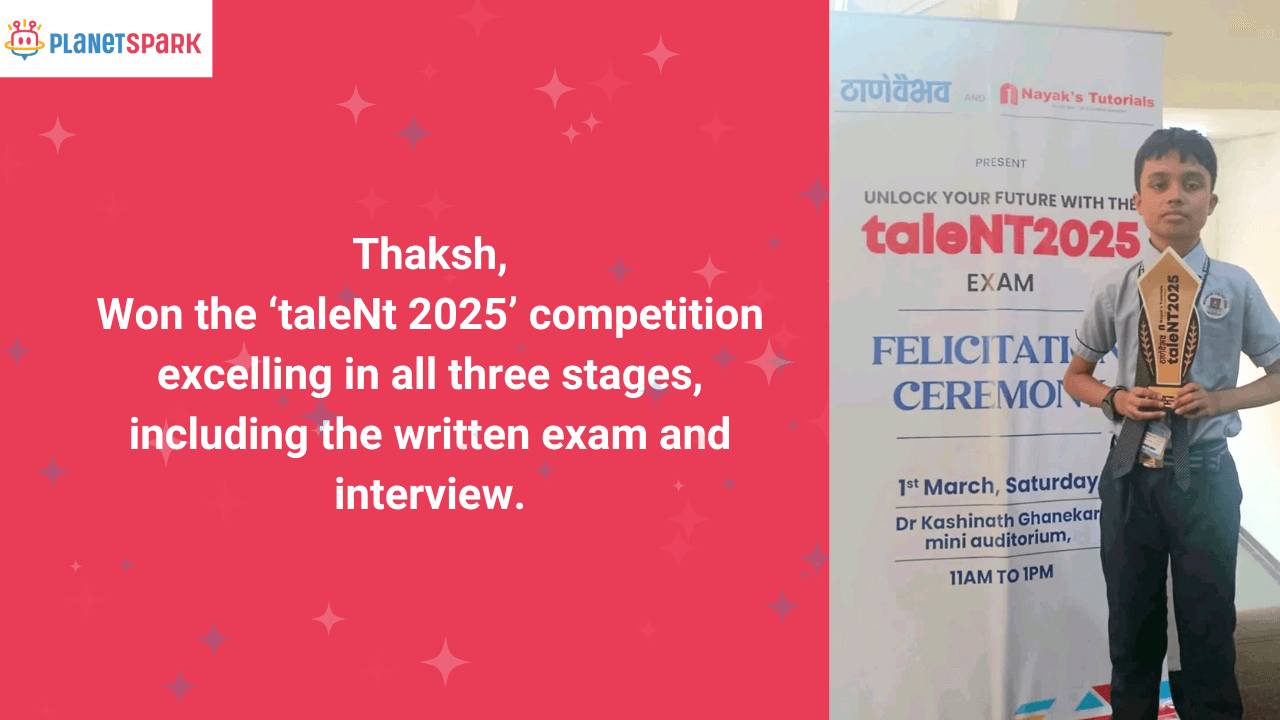
Thaksh, a talented Grade 6 learner aged 11, emerged as the winner of the taleNt 2025 competition in Thane after excelling across all three stages, including the written exam and interview. His success reflects strong creative writing skills, where clear ideas, structured expression and imaginative thinking came together to create impactful narratives. Through consistent practice, Thaksh learned how to shape his thoughts into well-crafted stories that stood out for their originality and clarity.
Final Thoughts on Imagery Poetic Device in Creative Writing
Imagery poetic device teaches children how to transform imagination into meaningful expression. It helps them move beyond scattered or surface level description and write with clarity, emotion, and purpose. When children understand how imagery works, their writing becomes easier to visualize, more engaging to read, and more confident in its message.
With expert guidance, imagery becomes a powerful creative tool rather than a confusing concept. Children learn how to choose the right details, express emotions naturally, and communicate ideas with intention. PlanetSpark’s structured coaching ensures these skills are developed step by step, helping children grow into confident writers and communicators who can express themselves clearly across creative and academic contexts.
Imagery poetic device is a writing technique that uses descriptive language to create vivid pictures and emotions in the reader’s mind, helping readers see, feel, and experience what is happening rather than just reading facts. By engaging the senses, imagery makes poetry and creative writing more expressive, memorable, and emotionally engaging for the reader.
Yes, imagery is a poetic device as well as a literary technique commonly used in poetry and creative writing to express emotions, mood, and meaning through sensory details. It helps writers show experiences clearly, making writing more engaging, impactful, and easier for readers to connect with.
The meaning of imagery poetic device is using words to help readers imagine scenes, feelings, or experiences clearly so writing feels alive instead of plain or factual. It helps readers understand emotions more deeply and creates a stronger connection between the writer and the audience.
Children struggle with imagery because it is often taught as a definition rather than a practical writing skill, which leaves them unsure how to apply it. Without guided feedback, they may overdescribe, use vague language, or lose confidence, making descriptive writing feel confusing or frustrating.
Imagery examples include describing how something looks, sounds, or feels to show emotion, such as describing silence, darkness, or physical sensations instead of saying “it was scary.” These details help readers feel the emotion naturally and visualize the experience more clearly.
Parents can help by encouraging short daily writing exercises, sensory observation activities, and regular practice in a supportive environment. Guided creative writing programs like PlanetSpark also help children learn how to use imagery confidently, clearly, and with purpose over time.