
Journaling for Kids: Benefits and Easy Ideas

What if a blank notebook could become your child's favourite thing? Not a tablet, not a toy, just a simple notebook and a pen. That is what journaling can do. It turns everyday thoughts into something exciting, something worth reading back.
Journaling is not about writing essays or getting grammar right. It is about putting thoughts on paper, no rules, no red marks, no pressure. Whether your child draws a funny face, writes about their pet hamster, or makes up a wild story about dragons living under the bed, it all counts. Every single word counts.
The best part? Kids who journal regularly become better thinkers, better readers, and better communicators. And they actually have fun doing it. In this blog, we will walk you through the real benefits of journaling for kids, share simple ideas your child can start using today, and show you how this one small habit can make a big difference in their life.
Why Should Kids Start Journaling?
Journaling gives kids a space that is completely theirs. No one is grading it. No one is correcting it. No one is telling them what to write or how to write it. It is a place where they can think out loud on paper, and that kind of freedom is rare for most children.
When kids journal, they learn to organise their thoughts. Instead of everything floating around in their heads, they start making sense of what they feel and think. A bad day at school becomes a story they can process. A happy moment becomes something they can revisit later. Over time, this builds a habit of reflection, something that helps them in school, friendships, and everyday life.
Journaling also builds patience. Writing takes time, and kids learn to slow down and focus on one thing. In a world full of screens, notifications, and constant distractions, that quiet moment with a notebook can be incredibly calming. It teaches kids that they do not always need to be entertained. Sometimes, their own thoughts are interesting enough.
And here is the thing, kids actually enjoy it once they start. The resistance usually only lasts the first day or two. All they need is a fun prompt or a creative idea to kick things off, and then the notebook starts filling up on its own.
How Journaling Helps Kids Build Confidence
One of the biggest things journaling does is build confidence. When a child writes something and reads it back, they feel proud. They created something that did not exist before, and it came entirely from their own mind. That pride grows over time.
Kids who struggle to speak up in class often find their voice through writing first. Journaling lets them say what they want without the fear of being judged or laughed at. They can be silly, serious, imaginative, or brutally honest, and it is all okay. Nobody is reading over their shoulder unless they choose to share.
Writing regularly also helps kids see their own growth. When they look back at journals from a few months ago, they notice how much better their writing has become, how their sentences got longer, how their ideas got more interesting. That is a powerful feeling for a young mind. It proves to them that effort leads to improvement, and that lesson goes far beyond writing.
Confidence in writing leads to confidence in speaking, presenting, and even making new friends. A child who can express themselves clearly on paper will eventually do the same out loud. It starts small, with a notebook and a pen, and grows from there into something they carry with them for life.
The Real Benefits of Journaling for Kids
Let us break it down. Journaling for kids is not just a fun after-school activity. It comes with real, lasting benefits that help in the classroom, at home, and well beyond.
Better writing skills: The more kids write, the better they get. Journaling builds vocabulary, sentence structure, and the ability to express ideas clearly. Kids who journal regularly tend to score better in language and composition because they have already been practising without even realising it.
Stronger memory: Writing things down helps kids remember what they have learned. It is one of the simplest study tools out there. When a child journals about something they learned in science class, that concept sticks far better than if they just listened and moved on.
Emotional awareness: Journaling helps kids name their feelings. Instead of bottling things up or acting out, they learn to process emotions on paper. A child who writes about feeling angry or sad is already taking the first step towards understanding and managing those feelings.
Creativity boost: When kids are free to write whatever they want, their imagination takes over. Stories, poems, lists, sketches, comic strips, song lyrics, the possibilities are truly endless. Journaling removes the walls that structured assignments sometimes put up.
Focus and discipline: Sitting down to write every day, even for ten minutes, teaches kids the value of routine and commitment. It is a small act of discipline that builds a much bigger habit over time.
These benefits add up quickly. A child who journals regularly for even a few weeks will show noticeable improvement in how they think, how they communicate, and how they approach challenges. And the beauty of it is that none of it feels like work.
Want your child to become a confident writer? Book a free trial class with PlanetSpark and watch their creativity soar!
Easy Journaling Ideas Kids Will Actually Love
The trick to getting kids excited about journaling is making it fun. If it feels like homework, it will not last. Here are some ideas that work well for different ages, and most of them take less than ten minutes.
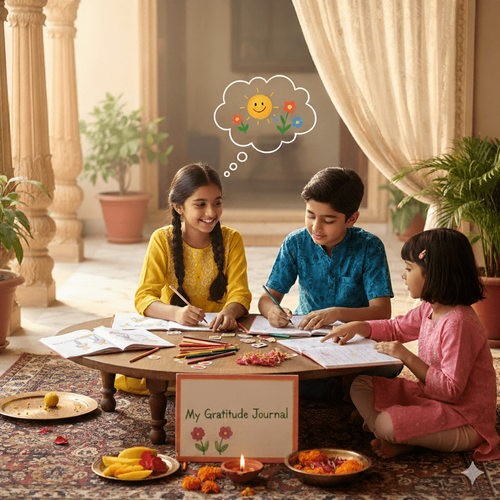
Gratitude journal: Ask your child to write three things they are thankful for each day. It can be as simple as "I liked the pizza at lunch" or "My friend shared crayons with me." Gratitude journaling shifts a child's focus towards the positive, and it is a wonderful habit that sticks.
Story starters: Give them the first line of a story and let them take it anywhere. For example, "The cat opened the door and walked into a jungle." Kids love the freedom of making up what happens next, and you will be amazed at where their stories go.
Draw and write: Kids can draw a picture first and then write a few lines about it. Great for younger children who are still building their writing skills. The drawing gets their creative brain going, and the writing flows naturally after.
Letters to their future self: Have them write a letter to themselves one year from now. What do they hope to achieve? What do they want to remember? What advice would they give their future self? It is a beautiful exercise in self-reflection.
Would you rather: Fun prompts like "Would you rather fly or be invisible?" or "Would you rather live underwater or in space?" get kids thinking and writing with excitement. The sillier the question, the more they want to answer it.
My best day ever: Ask them to describe the best day they can imagine, from morning to night, with as many details as possible. What would they eat? Where would they go? Who would they bring along? It gets their imagination working overtime.
The goal is to make journaling feel like play, not a chore. Once kids associate writing with fun and freedom, they will keep coming back to it without being asked.
How to Build a Journaling Habit That Sticks
Starting a journal is the easy part. Keeping it going is where most kids need a bit of help from their parents. Here are a few tips to make the habit stick for the long run.
First, pick a time. Whether it is right after school, before bed, or on a lazy Sunday morning, having a set time makes journaling part of the daily routine instead of something extra. When it has a fixed place in the day, kids stop seeing it as optional.
Second, keep it short. Five to ten minutes is enough for younger kids. Older kids can write longer if they want, but there is absolutely no pressure to fill pages. The point is consistency, not word count. A child who writes three lines every day is doing better than one who writes two pages once a month.
Third, never correct their journal. Journals are not assignments. If your child misspells a word, writes in fragments, or uses made-up words, let it be. The freedom to write without being corrected is what keeps journaling fun. The moment it starts feeling like a test, the magic disappears.
Fourth, join in. If your child sees you journaling too, they are far more likely to stick with it. Write alongside them, even if it is just a few lines about your own day. Kids mirror what they see, and a parent who writes sends a powerful message.
Fifth, celebrate small wins. Did they write every day for a week? That deserves a high five, maybe even a small treat. Positive reinforcement goes a long way in keeping kids motivated, especially in the early days when the habit is still forming.

Give Your Child the Gift of Creative Writing
Journaling is a wonderful first step, but imagine what happens when your child gets proper guidance in creative writing. When they learn not just to write freely, but to write with structure, purpose, and technique. That is where PlanetSpark comes in.
PlanetSpark's Creative Writing programme is designed to help kids aged 6 to 16 become confident, expressive writers who love what they do. Here is what makes it special:
Live 1:1 classes: Every session is personalised to your child's age, interests, and skill level. They get individual attention from a trained instructor who understands their pace and knows how to keep them engaged.
Structured curriculum: From storytelling and poetry to persuasive writing and blogging, the programme covers a wide range of formats. Kids never get bored because there is always something new to try.
Real feedback: Kids do not just write and move on. They learn to revise, improve, and take pride in their finished work. The feedback loop is what turns good writers into great ones.
Creativity-first approach: Lessons are built around fun prompts, games, and interactive exercises, so kids genuinely look forward to every session. Writing never feels like a task.
Confidence building: Regular writing practice combined with expert coaching helps kids find their voice and use it boldly, whether on paper, in class, or on stage.
If your child already enjoys journaling, creative writing classes can take that spark and turn it into a lifelong skill. And if they have not started writing yet, a structured programme can give them the push and the excitement they need to fall in love with words.

Conclusion
Journaling for kids is one of the simplest, most rewarding habits a child can pick up. It costs almost nothing, takes just a few minutes a day, and the benefits stretch across writing, thinking, emotional health, and confidence. All your child needs is a notebook, a pen, and a little encouragement to get started.
Start with a fun prompt tonight. Let them write about their favourite superhero, their weirdest dream, or the best meal they have ever had. Do not worry about spelling. Do not worry about neatness. Just let them write.
And when they are ready to take that love for writing to the next level, PlanetSpark's Creative Writing programme is here to guide them every step of the way. From journaling to storytelling to finding their own unique voice, the journey starts with one page.
Frequently Asked Questions
Kids can start journaling as early as age 4 or 5 with drawing-based journals. By age 6 or 7, most children can write short sentences and enjoy simple prompts.
Five to ten minutes is a great starting point. The focus should be on consistency rather than length. Let them write more if they want, but never force it.
Use fun prompts like "If you could have any superpower, what would it be?" or "What was the funniest thing that happened today?" Prompts remove the pressure of coming up with a topic.
Journaling encourages brainstorming, storytelling, and free expression. Mind-mapping, prompts, and doodles can spark innovative ideas.
Mix words with sketches, vision boards, or prompts. Reflect on experiences while adding creative elements like doodles or collages.