

Jumbled Questions for Practice
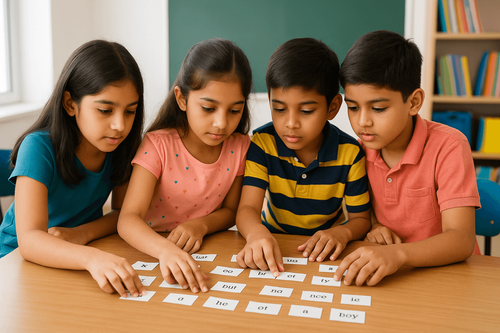
Jumbled questions are another exciting way for Class 3 students to practice English. These exercises help children learn how to ask and form questions correctly using question words such as what, where, who, why, and how. By rearranging jumbled words into meaningful questions, students improve their grammar, sentence order, and communication skills.
Here are some fun jumbled question examples with answers for practice:
Jumbled: “you / are / how / today?”
Correct: How are you today?Jumbled: “your / name / what / is?”
Correct: What is your name?Jumbled: “going / you / are / where?”
Correct: Where are you going?Jumbled: “time / what / it / is / now?”
Correct: What time is it now?Jumbled: “birthday / your / when / is?”
Correct: When is your birthday?Jumbled: “doing / you / what / are?”
Correct: What are you doing?Jumbled: “to / want / you / eat / do / something?”
Correct: Do you want to eat something?Jumbled: “why / late / you / are?”
Correct: Why are you late?Jumbled: “like / you / do / ice cream?”
Correct: Do you like ice cream?Jumbled: “favorite / who / is / teacher / your?”
Correct: Who is your favorite teacher?Jumbled: “homework / finish / you / did / your?”
Correct: Did you finish your homework?Jumbled: “to / go / want / you / school / do?”
Correct: Do you want to go to school?
These jumbled question exercises make learning interactive and enjoyable. Teachers can use them as short oral practice sessions, while parents can turn them into fun quiz games at home. Over time, children naturally learn how to form grammatically correct and meaningful questions, boosting their spoken and written English fluency.
What Are Jumbled Sentences?
Jumbled sentences are sentences in which the words are mixed up, and students have to rearrange them to make a meaningful statement. They help children understand the correct order of words in a sentence while improving their grammar and thinking skills.
For example:
Jumbled: “is / the / sky / blue.”
Correct Sentence: “The sky is blue.”
Here, children learn that every sentence follows a specific order, generally Subject + Verb + Object. Once they understand this pattern, it becomes easier to form correct sentences and express thoughts clearly.
Jumbled sentence exercises are commonly used in Class 3 English lessons to test a child’s grasp of sentence structure. They encourage active learning, as students must read carefully, think logically, and then rearrange the words correctly.
Teachers and parents often use these exercises as classroom warm-ups or fun home activities. They are not only educational but also help children develop confidence in reading and writing English naturally.
Boost your child’s grammar vocabulary and fluency by scheduling a Free Class Today.
Benefits of Practicing Jumbled Sentences
Practicing jumbled sentences offers several benefits for Class 3 students as they begin building a strong foundation in English. It helps children not only learn grammar but also understand how words fit together to make sense. Rearranging mixed-up words encourages students to think carefully before writing, which strengthens both their reading and writing skills.
Working on jumbled sentences regularly improves grammar and vocabulary, allowing children to use new words correctly in different contexts. It also enhances logical and critical thinking, as students must analyze the words and figure out the right order. This process boosts problem-solving ability and sharpens focus.
Moreover, these activities encourage reading comprehension and writing fluency, helping young learners grasp sentence structure naturally. Most importantly, they make English learning fun and interactive — turning grammar practice into an exciting puzzle rather than a dull task. Whether done in classrooms or at home, jumbled sentences make language learning enjoyable and effective for every child.
Types of Jumbled Sentences for Class 3
Jumbled sentences can be of different types, and each type helps students practice specific English skills such as sentence order, grammar, and comprehension. Here are the main types of jumbled sentences that Class 3 students can learn and enjoy:
1. Simple Jumbled Sentences
These are short and easy sentences that follow the Subject + Verb + Object pattern. They are perfect for beginners who are just starting to form correct sentences.
Examples:
Jumbled: “apple / an / eating / is / he.”
Correct: He is eating an apple.Jumbled: “the / on / sits / cat / mat / the.”
Correct: The cat sits on the mat.
2. Question-Based Jumbled Sentences
These involve rearranging mixed-up words to form meaningful questions. They help students understand question formation and the use of helping verbs.
Examples:
Jumbled: “you / are / where / going?”
Correct: Where are you going?Jumbled: “name / your / what / is?”
Correct: What is your name?
3. Story-Based Jumbled Sentences
In these exercises, sentences from a short story are given in random order. Students have to rearrange them to form a logical story. This helps build comprehension and sequencing skills.
Example:
Jumbled Story:
He played with his friends.
Rahul went to the park.
He returned home happy.
Correct Order: Rahul went to the park. He played with his friends. He returned home happy.
4. Grammar-Based Jumbled Sentences
These focus on specific grammar concepts such as tenses, prepositions, or conjunctions. Students learn how grammar affects sentence meaning and order.
Examples:
Jumbled: “was / yesterday / it / raining.”
Correct: It was raining yesterday.Jumbled: “the / under / hiding / cat / is / table / the.”
Correct: The cat is hiding under the table.
These four types of jumbled sentences make English practice more versatile and enjoyable, helping Class 3 students strengthen grammar, vocabulary, and sentence-building skills step by step.
Mini Story Jumbled Sentences for Class 3
Mini story jumbled sentences are a fun and creative way to help Class 3 students practice English while improving their sequencing and comprehension skills. In this activity, sentences from a short story are given in the wrong order, and students must rearrange them to make a meaningful story. It helps children learn how events flow logically and how to connect ideas into complete stories.
Here are some simple and engaging examples:
Story 1: A Visit to the Zoo
Jumbled:
“He / to / went / the / zoo.”
“Elephant / saw / he / the.”
“Bananas / ate / monkey / the.”
“Fun / was / it / very.”
Correct Order:
He went to the zoo. He saw the elephant. The monkey ate bananas. It was very fun.
Story 2: The Lost Pencil
Jumbled:
“Pencil / his / Rohan / lost.”
“For / it / he / looked / everywhere.”
“Under / table / the / found / he / it.”
“Happy / was / he / very.”
Correct Order:
Rohan lost his pencil. He looked for it everywhere. He found it under the table. He was very happy.
Story 3: A Rainy Day
Jumbled:
“It / raining / was / heavily.”
“Ananya / an / took / umbrella.”
“To / went / school / she.”
“Enjoyed / weather / she / the.”
Correct Order:
It was raining heavily. Ananya took an umbrella. She went to school. She enjoyed the weather.
Give your child a head start in English by trying a Free Class at PlanetSpark Now.
Tips for Teachers and Parents
Helping Class 3 students learn through jumbled sentences can be both fun and effective when done creatively. With the right approach, teachers and parents can make English lessons more interactive and enjoyable. Here are some helpful tips to make the most of this learning activity:
1. Make Learning a Game
Turn jumbled sentences into a classroom or home game. You can write mixed-up sentences on cards and let students rearrange them. Activities like “Sentence Race” or “Word Jumble Challenge” keep children excited and engaged.
2. Use Visual Aids and Flashcards
You can use colorful flashcards with words printed separately. Children can physically move the cards to create correct sentences. This method encourages visual learning and helps them remember sentence patterns.
3. Encourage Daily Practice
Even 10 minutes of daily jumbled sentence practice can help children develop strong grammar and vocabulary skills. Parents can include these exercises in homework or bedtime learning routines.
4. Motivate Students to Create Their Own Jumbled Sentences
Ask children to write their own jumbled sentences and exchange them with classmates or siblings to solve. This builds creativity and reinforces learning through peer practice.
5. Use Worksheets and Online Tools
Teachers can provide printable worksheets or use online tools that automatically generate jumbled sentences. Many educational websites and apps have interactive exercises suitable for Class 3 learners.
When taught in a playful and consistent way, jumbled sentences not only improve grammar but also boost children’s confidence in forming and speaking correct English sentences naturally.
Common Mistakes Students Make
While practicing jumbled sentences, Class 3 students may encounter some common mistakes. Being aware of these errors can help teachers and parents guide children more effectively.
1. Mixing Subject and Verb Placement
Students sometimes place the verb before the subject incorrectly.
Example:
Jumbled: “is / playing / the / boy / football.”
Incorrect: “Is playing the boy football.”
Correct: “The boy is playing football.”
2. Ignoring Punctuation and Capitalization
Children may forget to capitalize the first word or add a full stop at the end.
Example:
Incorrect: “the dog is running”
Correct: “The dog is running.”
3. Rushing Without Reading Carefully
Students often rearrange words too quickly without understanding the meaning, which leads to incorrect sentences. Encouraging them to read the words thoroughly before arranging helps prevent mistakes.
4. Confusing Tenses
Sometimes, students place verbs in the wrong tense when forming sentences.
Example:
Jumbled: “yesterday / playing / cricket / was / he.”
Incorrect: “He playing cricket was yesterday.”
Correct: “He was playing cricket yesterday.”
Why Choose PlanetSpark?
Jumbled sentences help children build a strong foundation in English, improving grammar, vocabulary, and sentence formation. At PlanetSpark, we make this learning process engaging and effective through interactive programs designed for young learners.
Personalized Learning: PlanetSpark offers lessons tailored to each child’s level, ensuring they master sentence structure, grammar, and vocabulary at their own pace.
Interactive Sessions: Fun online classes turn learning into an engaging activity, allowing kids to solve jumbled sentences, form stories, and participate in quizzes.
Focus on English Fluency for Kids: Lessons are designed to strengthen reading, writing, and expression, helping students communicate confidently in English.
Practical Worksheets and Activities: Children practice concepts through worksheets, exercises, and hands-on activities that reinforce learning.
Expert Mentors: Experienced teachers guide students, providing support and feedback while encouraging curiosity and creativity.
Flexible Learning: Online sessions allow kids to learn from the comfort of home, making education convenient without compromising quality.
Confidence and Creativity: PlanetSpark programs not only teach English but also foster confidence, critical thinking, and creative expression in children.
Conclusion
Jumbled sentences are a fun and effective way for Class 3 students to improve their English skills, including grammar, vocabulary, and sentence formation. By practicing regularly, children develop logical thinking, reading comprehension, and creative expression, all while enjoying the learning process.
With engaging exercises, mini stories, and interactive activities, students can strengthen their understanding of English in a playful and meaningful way. Encouraging daily practice at home or in the classroom ensures that children become confident writers and speakers.