Microfiction is one of the most
exciting ways to introduce young learners to creative writing. In a world where attention spans are shrinking and expression matters more than ever, microfiction helps students share powerful ideas using very few words. These short yet meaningful narratives encourage imagination, clarity, and confidence without overwhelming young writers.
Unlike long essays or traditional stories,
microfiction allows students to focus on one idea, one emotion, or one moment. This makes writing feel achievable and fun. For young creative writers, especially beginners, microfiction removes the fear of blank pages and replaces it with curiosity and creativity.
Microfiction stories also work beautifully for skill-building. Students learn how word choice, tone, and structure can completely change meaning. Every sentence matters. Every word has a purpose. This sharpens storytelling skills while keeping learning enjoyable.
Throughout this blog, we will explore the meaning of microfiction, its benefits, teaching methods, required skills, and how structured learning can help students master this art form. Each section is designed to be easy to read, practical, and helpful for both learners and educators.
What is Microfiction?
Microfiction is a form of storytelling where a complete story is told using very few words, often under 100 words. Despite its short length, microfiction still includes essential story elements such as character, setting, conflict, and resolution.
Microfiction Meaning Explained Simply
The microfiction meaning can be understood as telling a big idea in a very small space. Instead of long descriptions, the writer focuses on:
A single moment
A strong emotion
An unexpected twist
A clear message
This style encourages young writers to think deeply about what truly matters in a story.
Key Characteristics of Microfiction
Extremely short length
Clear beginning and implied ending
Strong emotional or imaginative impact
Minimal characters and setting
Powerful final line
Microfiction does not mean incomplete writing. It means precise writing.
How Microfiction is Different from Short Stories
Feature
Microfiction
Short Stories
Word Count
Under 100 words
1,000+ words
Focus
One idea or moment
Multiple events
Description
Minimal
Detailed
Time to Read
Seconds
Minutes or hours
This makes microfiction ideal for young learners who are still developing writing stamina.
Why Students Enjoy Microfiction
Students enjoy microfiction because:
It feels achievable
It sparks creativity quickly
It allows freedom of imagination
It encourages experimentation
Writing microfiction stories helps students feel like real authors from the very first attempt.
What Are the Benefits of Writing Microfiction?
Writing microfiction offers powerful learning benefits beyond storytelling. It supports academic growth, emotional expression, and communication skills in a simple and engaging way.
Boosts Creative Thinking
Microfiction pushes students to think creatively within limits. With fewer words, they must use imagination wisely. This improves originality and problem-solving skills.
Improves Language and Vocabulary Skills
When every word matters, students naturally:
Choose stronger vocabulary
Avoid unnecessary words
Understand sentence structure better
Learn the impact of tone
These skills strengthen overall writing ability.
Builds Confidence in Writing
Many students struggle with long writing tasks. Microfiction removes that pressure. Completing a story quickly helps students feel successful and motivated.
Enhances Focus and Clarity
Microfiction teaches students how to:
Stay on topic
Express ideas clearly
Avoid confusion
Write with purpose
These skills are valuable across all subjects.
Encourages Emotional Expression
Microfiction stories often explore feelings such as joy, fear, surprise, or hope. Writing about emotions in a short format helps students express themselves safely and creatively.
Academic and Life Skill Benefits
Strengthens comprehension skills
Improves storytelling structure
Develops critical thinking
Encourages thoughtful communication
Microfiction examples show that even the shortest stories can leave a lasting impression.
Teaching microfiction to children is highly effective because it combines creativity with simplicity. Since microfiction focuses on short storytelling, it feels less intimidating and more engaging for young learners. The key is to make the learning process interactive, guided, and imaginative rather than instructional and rigid.
Start with Reading Microfiction Stories
Before students write, they should read. Exposure builds understanding.
Share age-appropriate microfiction stories
Read stories aloud to highlight emotion and tone
Discuss what the story is about in one sentence
Ask students what they think happens before or after the story
This helps children understand that even a few lines can tell a complete story.
Explain the Microfiction Meaning Through Examples
Instead of definitions, use examples.
Activity idea:
Show a 30–50 word story
Ask students to identify:
Who is the character?
What is happening?
What feeling does the story create?
This approach makes the microfiction meaning clear without complex explanations.
Use Visual and Imaginative Prompts
Children respond well to visuals and imagination.
You can use:
Pictures
One-line situations
Emotional words
Sounds or objects
Example prompt:
“A door that should never be opened”
Let students imagine and write freely. There are no wrong answers in microfiction.
Break Writing into Small Steps
Teaching microfiction works best when broken into clear stages.
Choose one idea or emotion
Decide one character
Write 3–5 sentences
Remove extra words
End with a strong final line
This structured approach keeps students focused and confident.
Encourage Sharing and Discussion
Sharing builds motivation.
Let students read their microfiction aloud
Encourage peer feedback using simple questions
Celebrate creativity, not perfection
This creates a safe space where children feel proud of their writing.
Make It a Regular Creative Habit
Microfiction works best when practiced often.
Use it as a warm-up activity
Include it in journaling time
Turn it into a weekly creative challenge
Consistent practice helps students naturally improve their storytelling skills.
Although microfiction is short, it develops and requires several important writing and thinking skills. These skills grow gradually with practice and guidance.
Creative Thinking Skills
Microfiction demands imagination. Writers must think creatively to express big ideas in small spaces.
Students learn to:
Visualize scenes quickly
Think beyond obvious ideas
Create surprise or emotion
This strengthens overall creative writing ability.
Strong Vocabulary and Word Choice
In microfiction, every word matters.
Students develop:
Precise vocabulary usage
Understanding of word impact
Awareness of tone and mood
They learn that replacing one word can change the entire meaning of a story.
Clarity and Focus
Microfiction teaches students to stay focused on one idea.
Key focus skills include:
Avoiding unnecessary details
Staying on topic
Writing clear sentences
This improves both writing and thinking clarity.
Basic Storytelling Structure
Even the shortest stories need structure.
Students practice:
Beginning a story quickly
Showing conflict subtly
Ending with impact
Understanding structure through microfiction makes longer writing easier later.
Editing and Self-Review Skills
Microfiction naturally teaches editing.
Students learn to:
Remove extra words
Improve sentence flow
Strengthen endings
This builds strong self-editing habits early on.
Emotional and Expressive Skills
Many microfiction examples rely on emotion.
Students develop:
Emotional awareness
Expressive language
Empathy through characters
This helps them connect better with readers and with their own feelings.
Confidence and Communication Skills
Completing short stories builds confidence.
Students feel successful quickly
They are more willing to share ideas
Communication becomes clearer and more purposeful
These skills benefit academic learning and real-life expression.
What Other Resources Could PlanetSpark Use to Help Teach Children About Microfiction?
Using the right resources makes teaching microfiction more engaging, structured, and effective. Since microfiction is short and creative, resources should spark imagination while guiding students toward better storytelling.
Age-Appropriate Microfiction Examples
One of the best resources is well-written microfiction examples created for young learners.
These examples help students:
Understand story flow in a short format
Learn how endings create impact
Observe how emotions are expressed briefly
Teachers and parents can collect simple microfiction stories and discuss them together to break down meaning and structure.
Visual and Creative Prompts
Visual resources are highly effective for teaching microfiction.
Useful visual tools include:
Illustrations or photographs
Story cards with characters or settings
Emotion charts
One-word or one-line prompts
These resources help students form ideas quickly and turn imagination into words.
Story Framework Templates
Simple templates help beginners start writing without fear.
Example framework:
Element
Prompt
Character
Who is the story about?
Situation
What is happening?
Emotion
How does the character feel?
Ending
What changes or surprises?
Using frameworks supports clarity while allowing creative freedom.
Reading and Writing Journals
Encouraging students to maintain a creative journal helps build consistency.
Journals can be used for:
Daily microfiction writing
Collecting story ideas
Editing practice
Reflecting on writing progress
This habit improves both creativity and discipline.
Audio and Storytelling Activities
Storytelling does not always begin with writing.
Other helpful activities include:
Listening to short stories
Retelling stories in fewer words
Turning spoken stories into written microfiction
These activities strengthen comprehension and expression together.
Guided Learning Programs
Structured programs designed for creative writing help students progress systematically.
Such resources focus on:
Story structure
Vocabulary building
Writing confidence
Continuous feedback
With the right guidance, students learn to write meaningful microfiction stories with ease.
Writing microfiction becomes simple and enjoyable when broken into clear steps. This method helps students focus on creativity while maintaining structure and clarity.
Step 1: Choose One Clear Idea
Microfiction starts with one strong idea.
Students should decide:
One emotion
One moment
One situation
Trying to include too many ideas makes the story confusing.
Step 2: Select a Character and Setting
Even in microfiction, stories need context.
Keep it simple:
One character
One setting
No long descriptions
The reader should quickly understand who and where the story is about.
Step 3: Write a Short First Draft
Encourage students to write freely first.
At this stage:
Focus on storytelling
Do not worry about length
Let creativity flow
This helps ideas take shape naturally.
Step 4: Cut Down and Refine
This is the most important step in microfiction writing.
Students should:
Remove extra words
Replace weak words with strong ones
Shorten sentences without losing meaning
This teaches precision and clarity.
Step 5: Create a Strong Ending
Microfiction endings are powerful.
A good ending can:
Surprise the reader
Change the meaning of the story
Leave an emotional impact
Many strong microfiction examples rely on memorable final lines.
Step 6: Review and Improve
Encourage students to read their story aloud.
This helps them:
Identify unclear sentences
Improve flow
Strengthen expression
Editing builds confidence and writing maturity.
Step 7: Share and Reflect
Sharing microfiction stories builds motivation.
Students can:
Read stories aloud
Receive positive feedback
Learn from others’ ideas
Reflection helps them understand what worked and what can improve next time.
Coming up with ideas is often the hardest part of writing. Microfiction makes this easier because stories are built around one moment, one feeling, or one twist. With the right prompts, students can start writing confidently and creatively.
Emotion-Based Story Ideas
Emotion is a strong starting point for microfiction.
Students can write stories based on:
Fear
Joy
Surprise
Loneliness
Hope
Example idea: A character feels brave for the first time but does not know it yet.
This helps students focus on feelings rather than long events, which is ideal for microfiction stories.
One-Sentence Situation Prompts
Short situations work well for sparking imagination.
A letter arrives with no name on it
A door opens that was never meant to be opened
A promise is broken in silence
A smile hides a secret
Students can expand these into 40–90 word microfiction examples.
Object-Based Microfiction Ideas
Everyday objects can inspire powerful stories.
Use objects like:
A watch
A key
A school bag
A mirror
A photograph
Ask students to imagine:
Who owns it
Why it matters
What memory it holds
This encourages observation and storytelling skills.
Beginning or Ending Prompts
Sometimes giving only the start or the end helps creativity.
Beginning prompt: “She never expected the silence to answer back.”
Ending prompt: “And that was when the truth finally made sense.”
Students build the rest of the story around it, learning structure naturally.
Twist-Based Story Ideas
Microfiction often shines with a twist.
Encourage students to:
Change expectations at the end
Reveal a hidden truth
Show a different perspective
Twist-based writing improves critical thinking and engagement.
Quick Writing Challenges
Turn microfiction into a fun challenge.
Write a story in 50 words
Write a story without naming emotions
Write a story using only one character
These activities make microfiction writing exciting and skill-focused.
While microfiction is short, students often make a few common mistakes when learning this form of writing. Identifying and correcting these mistakes helps improve storytelling quality quickly.
Trying to Tell Too Much
One of the biggest mistakes is including too many ideas.
Students may try to:
Add multiple characters
Explain long backgrounds
Describe unnecessary details
Microfiction works best when focused on one clear idea.
Over-Explaining the Story
Microfiction relies on suggestion, not explanation.
Common issues include:
Explaining emotions instead of showing them
Telling the moral directly
Giving too much information
Encourage students to trust the reader’s imagination.
Weak or Abrupt Endings
Endings matter greatly in microfiction.
Weak endings often:
Stop suddenly without impact
Explain the story again
Feel unfinished
Students should aim for endings that surprise, move, or make readers think.
Ignoring Editing and Revision
Because microfiction is short, students may skip editing.
This leads to:
Repeated words
Unclear sentences
Missed opportunities to improve
Editing is a key learning benefit of microfiction writing.
Using Complex Language Unnecessarily
Some students think good writing means difficult words.
This can:
Reduce clarity
Confuse readers
Weaken emotional impact
Microfiction values simple, powerful language over complexity.
Lack of Emotional Connection
Stories without emotion feel empty.
Students should be encouraged to:
Focus on feelings
Show small but meaningful moments
Create connection with readers
Strong microfiction stories leave an emotional impression, even in a few lines.
How PlanetSpark Helps Students Master Microfiction
PlanetSpark’s creative writing approach is designed to help children express their ideas with confidence while developing strong writing foundations. The program focuses on balancing creativity with structure, so learners not only imagine powerful stories but also learn how to organize thoughts clearly, choose the right words, and maintain coherence across different forms of writing. This structured yet creative environment helps young writers grow steadily and enjoy the writing process.
Genre-Based Curriculum Covers short stories, poetry, journal writing, essays, book reviews, and persuasive letters, with each genre taught through a dedicated lesson plan.
Framework-Driven Writing Instruction Introduces story arcs, S.T.O.R.Y structure, the 5W1H method, and the PEEL technique to help students write with clarity and purpose.
Writing + Speaking Integration Encourages children to present their written work orally, strengthening expressive confidence and narrative flow.
Editing, Feedback, and Rewriting Focuses on revision through real-time editing, peer reviews, and detailed teacher feedback sessions.
Real Publishing Opportunities Enables students to publish their work on PlanetSpark’s blog, e-magazine, or co-authored anthologies, building pride and motivation.
Creativity Stimulus Activities Uses story dice, writing prompts, image-based tasks, and guided imagination exercises to spark original thinking.
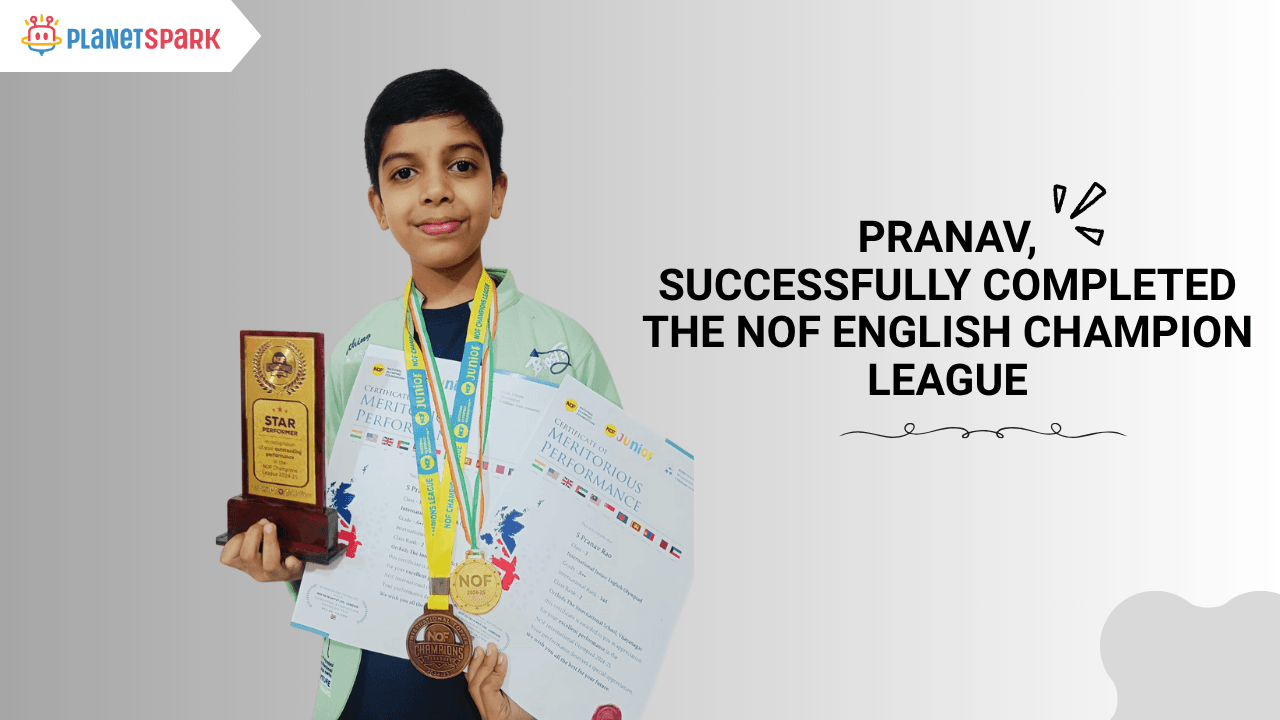
Pranav’s Success Story: A Young Champion in English Excellence
Pranav emerged as a shining performer by successfully completing the NOF English Champion League, demonstrating remarkable talent and dedication. His journey reflects strong growth in public speaking and creative writing, where he showcased clarity of thought, confidence, and expressive communication.
Through consistent practice and guided learning, Pranav developed the ability to present ideas confidently and craft creative content with structure and imagination. His achievement stands as a proud milestone, highlighting how the right learning environment can nurture language skills and help young learners unlock their true potential.
Why Microfiction Matters in Creative Writing
Microfiction offers young writers a powerful way to explore creativity without feeling overwhelmed by length or complexity. By focusing on clarity, emotion, and precise word choice, students learn how impactful even the shortest stories can be. With the right guidance, structured frameworks, and creative practice, microfiction becomes more than a writing exercise. It becomes a tool for building confidence, imagination, and strong communication skills that support overall creative writing growth.
Microfiction is a complete story told in very few words, often under 100, focusing on one idea, character, or moment. It emphasizes clarity, emotion, and creativity in a short, impactful format.
Writing microfiction helps children develop creativity, vocabulary, focus, storytelling structure, and confidence. It encourages expressing big ideas concisely and improves overall communication skills.
Microfiction stories typically range between 40–100 words. The key is quality, not quantity, focusing on impact, emotion, and a clear narrative.
Children improve creative thinking, vocabulary, clarity, story structure, editing, and emotional expression. They also learn confidence in sharing ideas and concise communication.
Yes. Microfiction is ideal for beginners because its short format reduces pressure, encourages experimentation, and allows them to complete stories quickly.
Provide prompts, examples, visual cues, story frameworks, guided exercises, and opportunities for sharing. Encourage editing, peer feedback, and creative discussions.