
Use Note Taking Techniques at Workplace for Accuracy & Efficiency
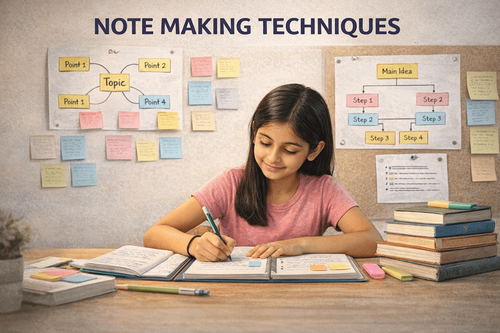

Table of Contents
- What is Note-Making and Why It Matters at Work
- Key Benefits of Using Note-Making Techniques
- Types of Note-Making Techniques for the Workplace
- How to Choose the Right Note-Making Technique
- Step-by-Step Guide to Effective Note-Making at Work
- Tools and Apps for Note-Making in the Workplace
- Common Mistakes to Avoid in Note-Making
- Tips to Improve Note-Making Skills at Work
- Role of Note-Making in Different Workplace Scenarios
- How PlanetSpark Helps Improve Note-Making Skills
In today’s fast-paced work environment, information flows constantly—through meetings, emails, calls, and collaborative tools. Yet, one of the biggest challenges professionals face is not the lack of information, but the inability to capture and use it effectively. Missed details, unclear instructions, and forgotten action points often lead to delays, errors, and unnecessary rework.
This is where note-making becomes essential. Unlike casual note-taking, note-making focuses on organizing and refining information so it becomes easy to understand, recall, and act upon. It helps professionals stay aligned with tasks, communicate better with teams, and make informed decisions without repeatedly revisiting the same information.
Whether you are a manager handling multiple projects or an employee attending daily meetings, structured note-making can significantly improve your efficiency. In this blog, we’ll explore practical techniques, benefits, and strategies that help you use note-making as a powerful workplace tool.
What is Note-Making and Why It Matters at Work
Note-making is the process of capturing information in a structured, concise, and meaningful way. Instead of writing everything word-for-word, it focuses on identifying key ideas, summarizing them, and organizing them logically. This approach transforms raw information into actionable insights.
At work, this means converting long discussions, instructions, or data into clear points that can be quickly reviewed and applied.
Note-Making vs Note-Taking
Many people confuse note-making with note-taking, but there is a clear difference:
- Note-taking is simply writing down everything you hear or read
- Note-making involves processing that information and restructuring it
For example, in a meeting:
- Note-taking = writing full sentences from the discussion
- Note-making = capturing key decisions, tasks, and deadlines
This distinction is crucial because note-making saves time and improves clarity.
Why Note-Making Matters in the Workplace
In a professional setting, even small errors can lead to bigger consequences. Structured note-making helps reduce these risks by ensuring important details are not overlooked.
It plays a critical role in:
- Maintaining accuracy in tasks and communication
- Supporting quick decision-making
- Improving memory and understanding
- Keeping track of responsibilities and deadlines
When done correctly, note-making becomes a productivity tool rather than just a habit.
Key Benefits of Using Note-Making Techniques
Improved Accuracy and Clarity
One of the biggest advantages of note-making is that it reduces confusion. When information is clearly structured, there is less room for misunderstanding. Employees can refer back to notes and confidently execute tasks without second-guessing instructions.
Enhanced Productivity
Well-organized notes save time. Instead of searching through long emails or trying to recall discussions, you can quickly access the exact information you need. This leads to faster task completion and fewer interruptions.
Better Time Management
Structured notes help prioritize tasks effectively. When action items, deadlines, and key points are clearly listed, it becomes easier to manage your schedule and avoid last-minute stress.
Stronger Communication
Clear notes improve communication within teams. Whether you are sharing meeting summaries or project updates, structured information ensures everyone stays on the same page.
Increased Accountability
When responsibilities and decisions are documented, it becomes easier to track who is responsible for what. This creates accountability and helps teams stay organized and focused.
Help your child learn smarter, not harder—book a PlanetSpark demo class
Types of Note-Making Techniques for the Workplace
Different work situations require different note-making styles. Choosing the right technique can make a significant difference in how effectively you capture and use information.
The Cornell Method
The Cornell method is one of the most effective techniques for structured note-making. It divides your page into three sections: notes, cues, and summary.
- Notes section: main content from meetings or discussions
- Cues section: keywords or questions for quick revision
- Summary section: brief overview of key points
This method works particularly well for meetings, training sessions, and lectures. It allows you to quickly revisit important details without reading everything again.
Mind Mapping
Mind mapping is a visual technique that organizes information around a central idea. Instead of writing in a linear format, you create branches that represent different concepts.
This method is useful for:
- Brainstorming ideas
- Planning projects
- Understanding complex topics
It encourages creative thinking and helps you see connections between different ideas.
Outline Method
The outline method organizes information in a hierarchical structure, using headings and subheadings. It is ideal for situations where information needs to be detailed yet organized.
For example:
- Main topic
- Sub-point
- Supporting detail
- Sub-point
This method is widely used for reports, documentation, and structured meetings where clarity is essential.
Charting Method
The charting method involves organizing information into tables. This makes it easier to compare data or track multiple elements at once.
It is especially useful for:
- Tracking project progress
- Comparing options or data
- Recording repetitive information
By presenting information in columns and rows, it becomes easier to scan and analyze.
Sentence Method
The sentence method involves writing each point as a separate sentence. It is simple and quick, making it ideal for fast-paced meetings where there is little time to organize information during the discussion.
While it may not be as structured as other methods, it ensures that no important detail is missed. You can later convert these sentences into a more organized format.
How to Choose the Right Note-Making Technique
Choosing the right note-making technique is not about following a single method everywhere—it’s about adapting your approach based on the nature of your work. Different situations demand different styles, and understanding this can significantly improve how useful your notes actually are.
Based on the Type of Work
Your work context should guide your choice of technique. For example, structured environments like meetings or training sessions benefit from methods like Cornell or the outline format because they allow you to capture key points and action items clearly. On the other hand, creative tasks such as brainstorming or campaign planning work better with mind maps, as they help visualize connections between ideas.
Based on Personal Learning Style
Some professionals prefer visual layouts, while others process information better in text form. If you are someone who understands concepts through diagrams and relationships, mind mapping can be highly effective. If you prefer clarity and sequence, the outline method may work better.
Based on Time Constraints
In fast-paced situations, you may not have the time to structure everything perfectly. In such cases, the sentence method works well for quickly capturing information. You can always refine and organize these notes later.
Digital vs Manual Note-Making
Digital tools like Notion or OneNote offer flexibility, searchability, and collaboration, while handwritten notes can improve focus and retention. The best approach is often a combination—capture quickly in the moment and organize digitally afterward for long-term use.
Improve note-making and learning skills with expert guidance—try a Planet Spark demo class today.
Step-by-Step Guide to Effective Note-Making at Work
Effective note-making is not just about writing—it’s a process that begins before the task and continues even after it ends. Following a structured approach ensures your notes are actually useful.
Before the Task
Preparation plays a key role in effective note-making. Before attending a meeting or starting a task, you should:
- Identify the purpose of the discussion
- Prepare a basic structure or template
- Keep your tools ready (notebook or app)
This helps you stay focused and capture only relevant information.
During the Task
While taking notes, the goal is to capture key ideas, not everything being said. Focus on:
- Important points and decisions
- Action items and deadlines
- Names, responsibilities, and timelines
Using abbreviations, symbols, or keywords can help you write faster without missing important details. Most importantly, stay attentive—good note-making depends on active listening.
After the Task
This is the most overlooked step, yet it is where note-making truly becomes effective. After the meeting or task:
- Review your notes immediately
- Organize scattered points
- Highlight key takeaways
- Add a short summary
This ensures that your notes are clear, complete, and ready for future use.
Storage and Accessibility
Even the best notes are useless if you cannot find them later. Organizing your notes is essential:
- Use folders or categories
- Add tags or labels
- Maintain a consistent naming system
This makes retrieval quick and hassle-free, especially when dealing with multiple projects.
Tools and Apps for Note-Making in the Workplace
With the rise of digital workspaces, note-making has become more efficient and collaborative. The right tools can help you organize, edit, and share notes seamlessly.
Digital Note-Making Tools
- Notion: Ideal for combining notes, tasks, and databases in one place
- Microsoft OneNote: Great for structured and categorized notes
- Evernote: Useful for quick capture and organization
These tools allow you to access notes from anywhere and integrate them with your workflow.
Collaboration Tools
- Google Docs: Enables real-time collaboration during meetings
- Slack integrations: Allow quick note sharing within teams
These tools ensure that everyone involved has access to the same information.
Traditional Methods
Despite digital advancements, traditional tools still have value. Notebooks, planners, and sticky notes can be effective for quick thinking and personal use, especially when you want to avoid digital distractions.
Common Mistakes to Avoid in Note-Making
Even with the right techniques, certain mistakes can reduce the effectiveness of your notes. Being aware of these can help you improve quickly.
Writing Too Much Information
Trying to capture everything often leads to cluttered and confusing notes. Focus on key points instead of full conversations.
Lack of Structure
Unorganized notes are difficult to revisit. Without clear headings or sections, you may struggle to find important details later.
Not Reviewing Notes
If you don’t revisit and refine your notes, they lose their value. Reviewing helps reinforce understanding and fill any gaps.
Ignoring Key Points
Sometimes people focus on minor details and miss critical decisions or action items. Always prioritize what matters most.
Poor Organization
Scattered notes across different platforms or notebooks can create confusion. Keeping everything organized in one system improves efficiency.
Build strong study habits early—reserve your free Planet Spark demo class now.
Tips to Improve Note-Making Skills at Work
Improving note-making is a gradual process, but small changes can make a big difference.
Use Keywords Instead of Full Sentences
Writing in keywords saves time and makes your notes more concise and easier to scan.
Use Symbols and Abbreviations
Simple symbols like → (leads to), ↑ (increase), or * (important) can speed up your writing and highlight key points.
Highlight Important Information
Using colors, bold text, or underlining helps important details stand out, making revision quicker.
Practice Active Listening
Good note-making starts with understanding. Focus on what is being said instead of trying to write everything down.
Regularly Update Notes
Your notes should evolve with your work. Updating them ensures they remain relevant and accurate.
Role of Note-Making in Different Workplace Scenarios
Note-making is not limited to one type of task—it plays a role across various workplace situations.
Meetings
During meetings, notes help capture:
- Key decisions
- Action items
- Responsibilities
This ensures that everyone knows what needs to be done after the meeting.
Training Sessions
In training environments, note-making helps summarize key learnings and makes it easier to apply new knowledge later.
Project Management
Structured notes help track:
- Tasks and deadlines
- Progress updates
- Team responsibilities
This keeps projects organized and reduces confusion.
Client Communication
Maintaining notes of client interactions ensures that important requirements and feedback are not missed.
Performance Reviews
Documenting feedback and goals helps track progress and improves future performance.
How PlanetSpark Helps Improve Note-Making Skills
In many cases, ineffective note-making is not just about technique—it’s about a lack of clarity in thinking and communication. This is where platforms like PlanetSpark play an important role.
Structured Learning for Clear Thinking
PlanetSpark focuses on helping learners organize their thoughts before expressing them. This directly improves how individuals process and record information, making their notes more structured and meaningful.
Building Core Skills
The platform emphasizes:
- Active listening
- Summarization
- Logical structuring of ideas
These are the same skills required for effective note-making in professional environments.
Practical Application
Through interactive sessions and real-life scenarios, learners practice capturing and presenting information clearly. This makes it easier to apply note-making techniques in real workplace situations.
Benefits for Professionals
- Better clarity in communication
- Improved productivity
- Stronger documentation skills
Why It Stands Out
With expert trainers and a focus on real-world applications, PlanetSpark helps individuals build skills that go beyond academics and directly impact workplace performance.