Writing is one of the most
important skills every child can build at an early age. It helps children express ideas, improve communication, and become more confident in school and daily life. A simple and effective way to build this habit is through one page english writing. Writing just one page every day gives kids enough space to think, create, and organize thoughts without feeling overwhelmed.
Many parents look for fun ways
to improve their child’s English skills. That is where english one page writing becomes useful. It is easy to start, needs only a notebook and pencil, and can be practiced at home. Children can write about their day, favorite animal, dream holiday, or anything they enjoy. This regular practice improves vocabulary, grammar, creativity, and sentence formation.
Unlike long writing tasks that may feel tiring, one page english writing keeps the activity short and manageable. Kids stay interested because the goal is clear and simple. Over time, they begin to write faster, think better, and enjoy the learning process.
In this blog, you will learn how one-page writing practice helps children improve writing skills, what abilities it develops, and how parents can guide them in the right way.
Introduction to One Page English Writing for Kids
One page english writing means writing a full page on one topic in simple English. It can be a story, opinion, diary note, description, or imagination-based topic. This activity is useful because it gives children daily writing practice in a structured way.
Children often know many ideas but struggle to put them into words. Regular writing solves this challenge. When kids practice writing one page daily, they learn how to start sentences, connect ideas, and end properly. They also learn to think clearly before writing.
Why It Works Well for Kids
Kids learn faster when tasks are small and consistent. Writing one page feels achievable. It does not create pressure like long essays.
Benefits include:
Builds a daily writing habit
Improves sentence-making skills
Expands vocabulary naturally
Encourages imagination
Increases confidence in English
Examples of Topics Kids Can Write About
Easy Topic Ideas
Creative Topic Ideas
Personal Topic Ideas
My Best Friend
If I Could Fly
My Family
My School Bag
A Talking Tree
My Weekend
My Pet
A Day on the Moon
My Favorite Food
These simple topics help children enjoy the process while learning.
How Often Should Kids Practice
The best method is short daily practice. Even 15 to 20 minutes can create strong results over time. Parents can choose a fixed time such as:
After homework
Early morning
Before bedtime
Weekend learning hour
Consistency matters more than long sessions.
What Kids Need to Start
Children do not need expensive tools. They only need:
Notebook
Pencil or pen
A topic idea
Quiet place to focus
Encouragement from parents
With these basics, english one page writing can begin immediately.
Why Parents Love This Method
Parents prefer learning methods that are simple and effective. One-page writing is easy to manage at home. It improves language skills while keeping children productive.
It also helps parents understand their child’s strengths and weak areas such as grammar mistakes, spelling errors, or lack of ideas. This makes guidance easier.
Daily writing can become a positive family routine that supports learning in a natural way.
Why One Page English Writing Helps Improve Writing Skills
One page english writing is powerful because it combines thinking, language, grammar, and creativity in one activity. Every time a child writes one page, the brain practices many skills together. This leads to faster improvement than occasional writing practice.
Children become stronger writers when they repeat the process regularly. They think of ideas, organize them, write sentences, and review mistakes. This complete learning cycle helps them grow step by step.
1. Improves Sentence Formation
Many children struggle with incomplete or confusing sentences. Daily writing teaches them how to write full and meaningful sentences.
For example:
I like mango.
My favorite fruit is mango because it is sweet.
The second sentence is clearer and stronger. Practice helps children move from basic to better writing.
2. Builds Vocabulary Naturally
Kids learn new words while writing. When they want to express ideas, they search for better words. Parents and teachers can also introduce synonyms.
Instead of writing:
Good day
They may learn:
Wonderful day
Exciting day
Memorable day
This natural word learning is more effective than memorizing lists.
3. Strengthens Grammar Skills
When children write daily, they repeatedly use grammar rules such as:
Capital letters
Full stops
Tenses
Pronouns
Subject and verb agreement
Mistakes reduce with correction and repetition.
4. Develops Logical Thinking
Writing one page requires children to think in order. They learn how to begin, explain, and finish a topic clearly.
A simple writing structure becomes:
Introduction
Main ideas
Ending
This logical flow helps not only in writing but also in speaking and learning.
5. Increases Confidence
Many children hesitate to write in English. They worry about mistakes. With regular english one page writing practice, fear decreases. Confidence grows because writing becomes familiar.
Quick Comparison
Without Practice
With Daily One Page Writing
Limited ideas
More creative thinking
Weak grammar
Better grammar control
Small vocabulary
Stronger word choice
Low confidence
Higher confidence
Slow writing
Faster writing speed
Why Small Practice Wins
Long writing tasks can feel difficult. One page is enough to challenge children without tiring them. It creates progress without stress.
That is why one page english writing is one of the smartest ways to improve writing skills in kids.
“Every great writer starts with a single page.” Unlock your child’s creativity with PlanetSpark Creative Writing Course.
Skills Kids Develop Through One Page English Writing
When children practice one page english writing regularly, they do much more than fill a notebook page. They train the mind to think clearly, express ideas, and communicate better. Writing is a combination of many small skills working together. The more children practice, the stronger these skills become.
Many parents focus only on grammar, but writing growth includes creativity, confidence, vocabulary, structure, and reasoning. That is why english one page writing is such a useful daily habit for kids.
1. Creative Thinking Skills
Children naturally have imagination. Writing gives them a space to use it. When they write stories, dream situations, or fun experiences, they learn how to turn thoughts into words.
Examples:
If I had a magic pencil
My trip to a candy world
A day with a talking dog
Creative topics make writing exciting and help children enjoy practice.
2. Vocabulary Development
Every page introduces opportunities to use new words. Children often repeat simple words like nice, good, happy, or big. With guidance, they learn stronger alternatives.
Basic Word
Better Word Choices
Good
Excellent, Wonderful
Big
Huge, Giant
Happy
Joyful, Cheerful
Fast
Quick, Rapid
As vocabulary grows, writing becomes more interesting and expressive.
3. Sentence Building Skills
Many kids know words but struggle to form proper sentences. Daily writing teaches them sentence flow and punctuation.
Example:
I went park.
I went to the park with my family.
The second sentence is complete and clearer. Repetition builds accuracy.
4. Reading and Comprehension Support
Good writing improves reading too. Children who write often understand how sentences are formed, which helps them read better and understand passages faster.
5. Confidence in Communication
Writing regularly removes fear. Kids become more comfortable expressing thoughts in English. This confidence often helps in:
School assignments
Speaking activities
Storytelling
Presentations
6. Focus and Discipline
Completing one page every day teaches patience and routine. Children learn to sit, think, and finish a task with attention.
Skill Growth Over Time
Week
Visible Progress
1
More interest in writing
2
Better sentence length
3
Improved vocabulary
4
Faster writing speed
5+
Stronger confidence
Why These Skills Matter
Writing is not only for exams. It supports communication for life. Children who build writing skills early often perform better in many subjects because they can explain answers clearly.
That is why one page english writing is a smart and simple habit. It develops multiple abilities together without making learning feel heavy.
“Writing is the painting of the voice on paper.” Join PlanetSpark Creative Writing Course and build powerful writing skills in kids.
Simple Method to Start One Page English Writing Daily
Many parents want children to write daily but do not know where to begin. The good news is that starting one page english writing is simple. It does not require advanced lessons or expensive tools. With the right routine, children can begin today.
The best method is to keep writing easy, fun, and consistent. Children learn faster when the process feels enjoyable instead of stressful.
Step 1: Choose a Fixed Writing Time
A daily routine helps children stay regular. Pick a time when the child feels fresh and focused.
Best options:
After school break
Evening study hour
Early morning
Weekend practice session
Even 15 to 20 minutes is enough.
Step 2: Pick One Interesting Topic
Children write better when the topic matches their interests. Avoid difficult or boring topics in the beginning.
Easy topic ideas:
My favorite game
A rainy day
My best memory
If I were a superhero
My pet animal
Interesting topics make english one page writing more natural.
Step 3: Use a Simple Structure
Teach children to divide the page into three parts:
Part
What to Write
Beginning
Introduce the topic
Middle
Add details and examples
Ending
Finish with final thought
This helps children organize ideas clearly.
Step 4: Allow First Draft Freedom
Do not stop children after every mistake. Let them complete the page first. Too many interruptions can reduce confidence.
After writing, review:
Spelling mistakes
Missing punctuation
Grammar corrections
Better word choices
Step 5: Appreciate Effort
Children continue habits when they feel encouraged. Praise progress such as:
Nice idea
Better handwriting today
Great use of new words
Strong opening sentence
Positive feedback builds motivation.
Weekly Writing Plan
Day
Activity
Monday
Personal topic
Tuesday
Story topic
Wednesday
Picture description
Thursday
Opinion topic
Friday
Fun imagination topic
Saturday
Rewrite best page
Sunday
Light review
Mistakes to Avoid While Starting
Choosing very hard topics
Forcing long writing sessions
Correcting every line immediately
Comparing with other children
Skipping practice for many days
Why This Method Works
Children improve through small daily action. One page is manageable, clear, and rewarding. Over time, this simple habit creates better grammar, faster thinking, and stronger confidence.
That is the power of one page english writing when started the right way.
Best Topics for One Page English Writing Practice
One of the biggest reasons children lose interest in writing is boring topics. When kids enjoy the subject, they write more freely, think creatively, and stay focused longer. That is why choosing the right topics is important for successful one page english writing practice.
Interesting topics make children curious. They help kids generate ideas naturally instead of struggling to fill the page. A good topic should be simple, age-friendly, and connected to imagination or daily life.
Parents can rotate topics every day to keep writing fresh and fun. This method makes english one page writing something children look forward to.
1. Personal Experience Topics
Children enjoy writing about their own lives because they already know the details.
Examples:
My favorite day
My best friend
My family picnic
A gift I loved
My school trip
These topics help children describe events, emotions, and memories.
2. Imagination Topics
Creative prompts help children think beyond routine life.
Examples:
If I could fly
My robot helper
A house in the clouds
If animals could talk
A magic pencil story
These topics improve storytelling and creativity.
3. Nature and Environment Topics
Children observe the world around them. Nature topics build awareness and descriptive writing.
Examples:
A rainy day
My favorite season
The beauty of trees
Why birds are special
Morning in the garden
4. Opinion-Based Topics
Opinion writing teaches children how to think and explain reasons.
Examples:
Why games are important
Should homework be shorter?
Why kindness matters
Why books are better than screens
My dream school
Topic Bank for 30 Days
Day
Topic
1
My favorite toy
2
A day at the park
3
If I had wings
4
My dream vacation
5
My favorite food
6
A talking tree
7
Why I love weekends
Parents can continue this list by mixing personal and creative prompts.
How to Choose the Right Topic
Use these quick rules:
Pick topics children understand
Match topics with their hobbies
Keep prompts positive and exciting
Change topic types regularly
Let children choose once a week
What to Do If a Child Gets Stuck
Sometimes children say, “I don’t know what to write.” Try asking:
What happened first?
How did you feel?
What did it look like?
What happened next?
What would you change?
These questions unlock ideas quickly.
Why Good Topics Matter
The right topic turns writing into play. Children write longer, use better details, and enjoy practice more. That is why topic selection is a powerful part of one page english writing success.
“One page today can build a storyteller for life.” Enroll in PlanetSpark Creative Writing Course and boost your child’s imagination.
Common Mistakes Kids Should Avoid While Writing
Children improve faster when they know what mistakes to avoid. During one page english writing practice, mistakes are natural and part of learning. The goal is not perfection on day one. The goal is progress through regular correction and practice.
Parents and teachers should guide children gently. Too much criticism can reduce confidence, while smart correction helps growth.
1. Starting Without Thinking
Many children begin writing immediately and lose direction midway. They repeat ideas or stop early.
Better method:
Spend one minute thinking before writing:
What is my topic?
What will I write first?
What examples can I add?
How will I end?
This creates smoother writing.
2. Using Very Short Sentences Only
Some children write only basic lines such as:
I like mango.
It is sweet.
It is yellow.
These are correct but limited. Encourage longer sentences.
Better version:
I like mango because it is sweet, juicy, and delicious.
3. Forgetting Punctuation
Missing punctuation makes writing confusing.
Common issues:
No full stop
No capital letters
Random commas
Question marks missing
Quick Reminder Table
Mistake
Correct Habit
no capital letter
Start sentence with capital
no full stop
End each sentence properly
long confusing line
Break into clear sentences
4. Repeating the Same Words
Children often repeat words like good, nice, fun, happy many times.
Help them replace repeated words with:
Amazing
Exciting
Cheerful
Interesting
Wonderful
This improves vocabulary in english one page writing.
5. Ignoring Spelling Review
Many children finish writing and close the notebook. Teach them to reread once.
Final check list:
Did I spell common words correctly?
Did I miss any word?
Does each sentence make sense?
Is handwriting readable?
6. Writing Without Details
Weak sentence:
I went to the zoo.
Better sentence:
I went to the zoo with my parents and saw lions, monkeys, and elephants.
Details make writing stronger and more enjoyable.
7. Fear of Making Mistakes
Some children stop writing because they worry about errors. Remind them that mistakes help learning. Writing improves through practice, not by waiting for perfection.
How Parents Can Correct Smartly
Use this order:
Praise one good thing
Correct one major mistake
Suggest one improvement
Example:
Great idea about your trip.
Check spelling of “beautiful.”
Add more details about the beach.
Why Avoiding These Mistakes Helps
When children correct common errors early, they grow faster in grammar, vocabulary, and confidence. One page english writing becomes more effective when practice includes review and improvement.
How Parents Can Help Children Practice Writing at Home
Parents play a major role in building writing habits. Children often learn faster when practice happens in a supportive home environment. Even a few minutes of guidance each day can make one page english writing easier, more enjoyable, and more consistent.
Many parents think they need to be English experts to help. That is not true. Children mainly need encouragement, routine, and simple direction. A positive atmosphere matters more than perfect grammar knowledge.
1. Create a Daily Writing Routine
Children improve when writing becomes part of normal life. Choose a fixed time every day so the habit feels natural.
Good routine options:
After homework
Early morning practice
Evening learning hour
Weekend writing time
Consistency is more valuable than long sessions.
2. Build a Comfortable Writing Space
A calm and clean space helps children focus better.
Simple setup ideas:
Table and chair
Good lighting
Notebook and pencils ready
No loud distractions
Water bottle nearby
A ready space reduces excuses and helps children start quickly.
3. Give Fun Topic Ideas
Sometimes children avoid writing because they cannot think of a topic. Parents can solve this by giving exciting prompts.
Examples:
If I had a magic bag
My happiest memory
A picnic with dinosaurs
My dream room
Why I love holidays
Interesting prompts make english one page writing enjoyable.
4. Praise Effort, Not Only Perfection
Children need motivation. If parents focus only on mistakes, writing may feel stressful.
Better praise examples:
Great imagination today
Nice opening sentence
Your handwriting improved
I like the details you added
Good effort finishing the page
Positive feedback builds confidence.
5. Read What They Write
When parents read children’s work with interest, children feel valued. Ask simple questions:
What happened next?
Why did you choose this topic?
Which part do you like most?
Can you add more details here?
This shows that writing matters.
Weekly Parent Support Plan
Day
Parent Role
Monday
Give topic idea
Tuesday
Read completed page
Wednesday
Help with spelling review
Thursday
Appreciate progress
Friday
Suggest better words
Saturday
Fun creative topic
Sunday
Light revision
6. Use Rewards Carefully
Small rewards can help consistency.
Examples:
Sticker chart
Extra story time
Favorite snack after weekly goal
Praise board at home
Rewards should support the habit, not replace motivation.
7. Be Patient With Progress
Some children improve quickly. Others need time. Avoid comparing with siblings or friends. Writing growth is personal.
Why Home Support Matters
When parents stay involved, children feel safe to learn, try, and improve. One page english writing becomes a positive routine instead of a forced task. Strong home support often creates lasting confidence in writing.
“Good writing begins with daily practice.” PlanetSpark Creative Writing Course helps kids write better, faster, and smarter.
Why Guided Writing Practice Improves Results Faster
Children can improve through self-practice, but guided learning often speeds up results. Guidance helps children understand mistakes, learn stronger writing methods, and stay motivated. That is why structured support can make one page english writing more effective.
Without guidance, children may repeat the same errors for weeks. With support, they learn corrections early and grow faster.
1. Children Learn Correct Structure
Many children write random ideas without order. Guided practice teaches a clear format:
Part of Writing
Purpose
Beginning
Introduce topic
Middle
Explain ideas with details
Ending
Close the topic clearly
Once children learn this pattern, their writing becomes more organized.
2. Faster Grammar Improvement
Children often make repeated grammar mistakes such as:
Wrong tense
Missing articles
Incorrect sentence order
Subject and verb mismatch
A guide can identify these quickly and explain corrections in simple ways. This saves time and improves accuracy faster than guessing.
3. Better Vocabulary Choices
During regular practice, children may use the same words repeatedly. Guided learning introduces richer vocabulary.
Example:
Nice → Pleasant
Good → Excellent
Big → Enormous
Happy → Delighted
Better word choices improve overall writing quality.
4. Personal Feedback Builds Growth
Every child has different needs. Some need grammar help, some need creativity support, and some need confidence.
Guided writing provides personal feedback such as:
Add more details here
Strong opening sentence
Use punctuation at the end
Try a better describing word
Great imagination, continue this style
Personal feedback creates faster progress.
5. Motivation Stays Higher
Children often lose interest when learning alone. Guided sessions create accountability and energy. When someone checks their work, children stay more committed.
6. Common Problems Solved Quickly
Problem
Guided Solution
Child writes too little
Teach idea expansion
Child repeats words
Introduce synonyms
Child avoids writing
Use fun prompts
Child fears mistakes
Build confidence slowly
7. Long-Term Confidence
As children receive support and see improvement, confidence grows naturally. They begin to write more independently over time.
Why Guidance Works Best
Guided practice does not mean pressure. It means smart direction, useful correction, and regular encouragement. When children receive this support, one page english writing turns into faster skill development and stronger confidence.
How PlanetSpark Helps Kids Master Writing Skills
PlanetSpark helps children build strong writing skills through structured, interactive, and personalized learning. Instead of random practice, kids follow a clear system that improves their one page english writing step by step. Each child is guided based on their individual strengths and areas of improvement, which makes learning more effective and focused. The platform ensures that children do not just write, but also understand how to write better with correct grammar, improved vocabulary, and clear sentence formation. With expert guidance, kids gradually become more confident in expressing their thoughts in English.
The learning experience is designed to make writing fun and engaging so that children do not feel pressured. Regular practice sessions, creative topics, and real-time feedback help them stay consistent and motivated. Over time, children develop the habit of english one page writing with better structure, creativity, and clarity. This guided approach helps them improve faster compared to self-practice alone and builds long-term confidence in writing and communication.
Key Benefits of PlanetSpark Writing Program
Personalized writing guidance based on child’s level
Regular practice to build strong writing habits
Expert feedback to improve grammar and vocabulary
Fun and creative writing topics for engagement
Focus on sentence structure and clarity
Confidence building through positive reinforcement
Improved creativity and idea expression skills
Better consistency in one page english writing practice
Pranav Becomes an English Champion
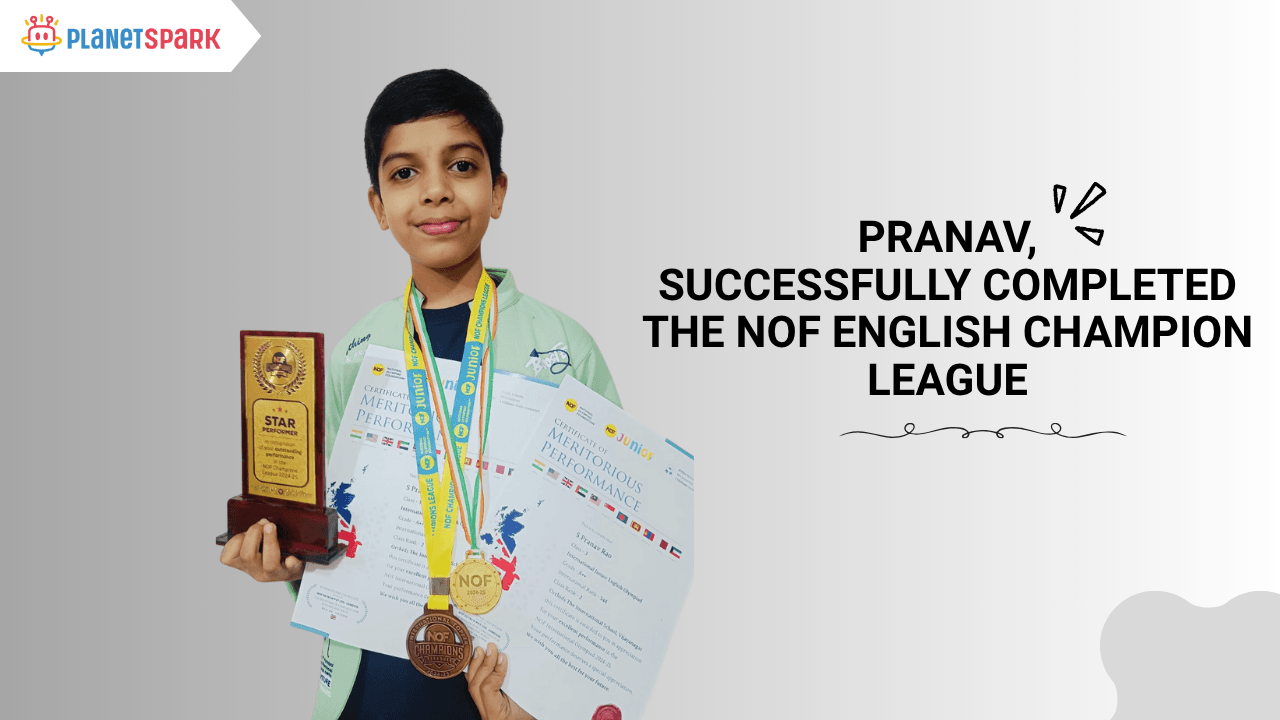
Pranav, a Grade 3 student, successfully completed the NOF English Champion League, showcasing excellent skills in Public Speaking and Creative Writing. His confidence and creativity stood out throughout the competition, making him a young achiever with strong communication abilities.
Final Thoughts on Building Confidence With Daily Writing Practice
Building writing confidence in children is a gradual process that happens through consistent effort, not one-time learning. When kids practice one page english writing daily, they slowly learn how to express their thoughts in a clear and structured way. This simple habit helps them become more comfortable with English, reduces hesitation, and improves their ability to form meaningful sentences. Over time, writing stops feeling like a task and becomes a natural way for children to communicate ideas.
Daily practice also helps children develop discipline and patience. Even writing a single page every day creates a strong foundation for better grammar, vocabulary, and creativity. With regular effort, kids start noticing their own improvement, which builds motivation and confidence. As they grow more comfortable with english one page writing, they begin to write longer, better, and more expressive content without fear of mistakes.
“Words have power when children learn to use them well.” Develop strong writing and speaking skills with PlanetSpark Creative Writing Course.
One page english writing is a simple practice where children write one full page on a given topic in English. It helps them improve grammar, vocabulary, sentence formation, and creative thinking through daily writing practice.
English one page writing helps kids by giving them regular practice in expressing ideas clearly. It improves sentence structure, builds vocabulary, reduces grammar mistakes, and increases confidence in writing.
Children should practice one page english writing daily or at least 4–5 times a week. Regular practice is more effective than long but irregular writing sessions.
Simple and interesting topics work best, such as daily life experiences, imagination topics, favorite things, stories, or opinion-based questions. Topics should be fun and easy to understand for kids.
It develops multiple skills like creativity, vocabulary building, grammar accuracy, logical thinking, focus, and confidence in English communication.
Kids should avoid skipping punctuation, repeating the same words, writing without structure, ignoring spelling mistakes, and not reviewing their work after completion.