
How to Overcome Writer’s Block in Kids With PlanetSpark


Table of Contents
- What Is Writer’s Block in Kids
- Why Do Children Experience Writer’s Block
- How Writer’s Block Affects a Child’s Confidence
- 7 Amazing Ways to Beat Writer’s Block in Kids
- How PlanetSpark Helps Children Overcome Writer’s Block
- Success Story: Ashwin Sathish, Age 13
- When Should Parents Seek Expert Help
- Simple Daily Habits Parents Can Practice at Home
- How Writer’s Block Is Different From Poor Writing Skills
- Common Mistakes Parents Make While Handling Writer’s Block
- How Schools and Exams Can Trigger Writer’s Block
- The Role of Speaking Skills in Overcoming Writer’s Block
- Age-Wise Writing Challenges Parents Should Know
- How Long Does It Take to Overcome Writer’s Block
- Why One-to-One Learning Works Better for Writing Improvement
- How Writing Confidence Impacts Overall Academic Success
- How PlanetSpark Creates Long-Term Writing Habits
- Conclusion
If your child stares at a blank page and says, “I don’t know what to write,” you are not alone. Many parents face this exact challenge, especially during exams, homework, or creative writing tasks. This struggle is often due to writer’s block, a condition where a child has ideas but finds it hard to express them in words.
In this article, you will discover 7 amazing ways to beat writer’s block in kids, along with expert-backed strategies used at PlanetSpark. You will also learn how structured writing support and one-to-one mentoring can help your child write with clarity, confidence, and ease.
What Is Writer’s Block in Kids
Writer’s block in kids is a situation where a child struggles to start or continue writing, even when they understand the topic. In simple terms, the child has ideas in their mind but cannot convert those thoughts into written words. This is the true writer’s block meaning for children. It is not laziness and it is not a lack of intelligence. It is a gap between thinking and expressing.
Unlike adults, children are still learning how to organize thoughts, choose the right words, and build sentences. When these skills are not fully developed, writing can feel overwhelming. A child may know the answer orally but freeze when asked to write it down. This is why writer’s block in kids often appears during exams, homework, or creative writing tasks.
Parents commonly notice writer’s block at home when children delay homework, complain about writing tasks, or rush through answers with minimal effort. At school, teachers may observe incomplete answers or poor expression despite good understanding. Recognizing writer’s block early helps parents take the right steps before it affects confidence and academic growth.
Early Signs Parents Should Not Ignore
One of the earliest signs of writer’s block is avoidance. Children may delay homework or ask for frequent breaks when writing is involved. Another common sign is writing extremely short answers, even for questions that require explanation. Some children take a very long time to start writing because they feel unsure about the first sentence.
Fear of spelling or grammar mistakes is another strong indicator. The child may repeatedly erase words or ask if every sentence is correct. These signs show that the child is overthinking the process instead of focusing on ideas. Addressing these early signals prevents long-term writing anxiety.
Why Do Children Experience Writer’s Block
Children experience writer’s block for a mix of emotional, cognitive, and skill-based reasons. Writing is one of the most complex skills a child learns. It requires thinking, organizing, vocabulary, grammar, and confidence at the same time. When even one of these areas feels weak, writing becomes stressful.
Many parents are surprised to see bright and intelligent children struggle with writing. This happens because intelligence alone does not guarantee expression skills. A child may understand concepts clearly but lack the structure to explain them in writing. School pressure also plays a role. Timed exams, strict marking, and fear of low scores can make children anxious about writing.
Emotional factors such as fear of failure or comparison with peers can block creativity. Some children want their writing to be perfect from the start. This perfectionism stops them from writing anything at all. Others struggle because they have not been taught how to break writing into manageable steps. Without guidance, writing feels like a big task with no clear starting point.

Fear of Making Mistakes
Fear is one of the biggest causes of writer’s block. Children often worry about spelling, grammar, and handwriting. They may feel that one mistake will lead to poor marks or criticism. This fear creates hesitation and slows down thinking.
Lack of Structure and Guidance
Many children do not know how to begin writing. They are not taught how to plan, outline, or organize ideas. Without structure, the blank page feels confusing.
Limited Vocabulary or Expression Skills
Some children know what they want to say but cannot find the right words. Limited vocabulary makes writing frustrating and slow.
How Writer’s Block Affects a Child’s Confidence
Writer’s block does not just affect marks. It deeply impacts a child’s confidence and self-belief. When children struggle repeatedly with writing, they begin to think they are bad at studies. This belief slowly affects participation in class and willingness to try new tasks.
Academically, writer’s block leads to incomplete answers, poor presentation, and lower scores in subjects that require explanation. Over time, children may stop putting effort into writing because they expect failure. Emotionally, this creates frustration, anxiety, and self-doubt.
Writer’s block can also affect communication skills beyond school. Children may hesitate to express opinions, write stories, or share ideas. If not addressed early, this hesitation can continue into higher classes where writing becomes even more important.
Success Story: Vivansh, Age 10
Struggled to start essays and creative writing tasks
Learned how to organize ideas through structured writing sessions
Became an author and published his own book
Sold 17 copies and gained confidence with one-to-one coaching
Vivansh’s journey shows that writer’s block can be overcome with the right support and guidance.
7 Amazing Ways to Beat Writer’s Block in Kids
Helping children overcome writer’s block requires patience, structure, and the right methods. Small changes can make a big difference when applied consistently.
Start With Talking Before Writing
Speaking helps children organize thoughts naturally. When children talk about a topic, ideas flow freely without fear of mistakes. This reduces pressure and builds clarity before writing begins.
Break Writing Into Small Steps
Writing becomes easier when broken into steps. Start with brainstorming ideas, then create a simple outline, and finally write one paragraph at a time. This approach makes writing manageable.
Encourage Free Writing Without Corrections
Allow children to write freely without correcting grammar or spelling initially. The focus should be on ideas first. Corrections can come later.
Use Prompts That Spark Curiosity
Visual prompts, personal experiences, and story starters make writing interesting. Curiosity reduces fear and increases engagement.
Build Vocabulary Naturally Through Speaking
Daily conversations and guided storytelling help children learn new words naturally. A strong vocabulary makes writing smoother.
Create a Safe, Judgment-Free Writing Space
Avoid red marks and negative feedback at the start. Praise effort and ideas. This builds confidence.
Learn From Trained Writing Mentors
Expert guidance provides structure and personalized feedback. This accelerates progress and removes confusion.
CTA: Want personalised writing guidance for your child? Explore PlanetSpark’s one-to-one writing programs.
How PlanetSpark Helps Children Overcome Writer’s Block
PlanetSpark focuses on skills before scores and confidence before correction. Children are not rushed into writing long answers. They are first taught how to think clearly and express ideas step by step.
The PlanetSpark approach uses guided frameworks instead of random practice. Children learn how to plan, structure, and refine their writing. This removes fear and builds consistency.
Structured Writing Framework
Children are taught how to create clear openings, logical flow, and strong endings. Writing becomes predictable and less stressful.
One-to-One Expert Mentorship
Personal attention allows trainers to understand each child’s challenges. Children feel safe to express ideas without judgment.
Integration of Speaking and Writing Skills
The Talk, Think, Write method helps children verbalize ideas before writing. This makes expression natural.
Success Story: Ashwin Sathish, Age 13
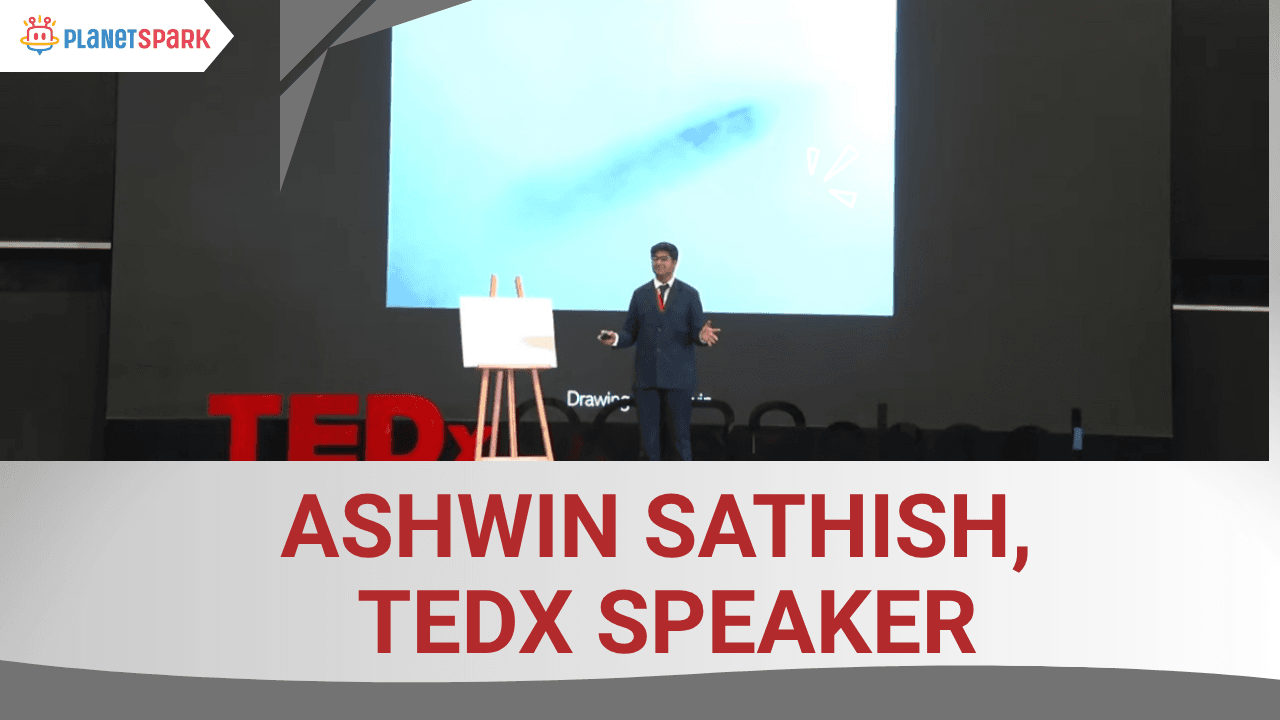
Grade 8 student from New Delhi
Struggled earlier with confidence in expressing ideas clearly
Developed strong articulation and structured thinking through guided practice
Emerged as a TEDx Speaker, sharing ideas that sparked meaningful conversations
Transitioned from classroom hesitation to confidently addressing a global audience
Built clarity, courage, and a powerful voice with consistent mentorship
Ashwin Sathish’s journey shows how the right guidance can help children find their voice. With structured support and confidence-building practice, children can move beyond hesitation and express ideas that truly matter.
When Should Parents Seek Expert Help
If writer’s block lasts for several months, expert help is recommended. A consistent struggle indicates a deeper skill gap. When children start losing confidence or avoiding schoolwork, timely intervention is important.
Teachers’ feedback about poor expression or incomplete answers is another sign. Expert guidance helps children rebuild skills and confidence together.
CTA: Book a free writing skills demo for your 7 to 12 year old with PlanetSpark.
Simple Daily Habits Parents Can Practice at Home
Parents play a key role in supporting writing development. Encourage children to maintain a simple journal. Even a few lines daily build habit and comfort.
Discuss stories, opinions, and daily experiences. This strengthens thinking and expression. Most importantly, praise effort, not perfection. Positive reinforcement builds confidence and reduces fear.
With the right habits and expert support, writer’s block in kids can be transformed into confident expression and lifelong writing skills
How Writer’s Block Is Different From Poor Writing Skills
Many parents assume that if a child struggles to write, it means the child is weak in writing. This is not always true. Writer’s block and poor writing skills are two different challenges, and understanding the difference helps parents respond correctly. Writer’s block is often temporary. It happens when a child has ideas but feels mentally stuck while writing. Poor writing skills, on the other hand, develop over time due to gaps in learning basics like sentence formation, vocabulary, or grammar.
A child with writer’s block may speak confidently and explain answers clearly during conversations. However, when asked to write the same answer, the child freezes or writes very little. This shows that thinking skills exist, but expression feels blocked. In contrast, a child with poor writing skills may struggle both while speaking and writing.
Treating writer’s block as a permanent weakness can harm confidence. Instead, parents should see it as a skill gap that can be fixed with the right approach. When children receive structured guidance and reassurance, writer’s block often reduces quickly. This understanding helps parents choose supportive strategies rather than pressure-based ones.
Common Mistakes Parents Make While Handling Writer’s Block
Parents always want the best for their children, but certain well-intended actions can unintentionally increase writer’s block. One common mistake is correcting every spelling or grammar error while the child is writing. This constant interruption shifts focus from ideas to mistakes, making children afraid to write freely.
Another mistake is comparing children with classmates or siblings. Statements like “Your friend writes so well” can damage self-esteem. Writing is a personal skill, and every child develops at a different pace. Comparison creates pressure instead of motivation.
Forcing long writing sessions is another issue. When children are already struggling, pushing them to write more often leads to resistance and frustration. Writing should feel achievable, not exhausting. Parents also sometimes focus only on marks, ignoring effort and improvement.
Understanding these mistakes helps parents create a safer environment. Encouraging ideas, praising effort, and allowing mistakes during practice help children feel supported. A calm and patient approach plays a major role in overcoming writer’s block.
How Schools and Exams Can Trigger Writer’s Block
School systems often focus heavily on speed, accuracy, and presentation. While these are important, they can unintentionally trigger writer’s block in children. Timed exams leave little space for planning thoughts. Many children know the answer but panic when the clock starts ticking.
Strict marking schemes can also make children cautious. When children feel that one small mistake can reduce marks, they hesitate to experiment with ideas. Over time, this fear builds into mental blocks. Writing becomes a stressful task rather than a tool for expression.
Homework pressure adds another layer. Multiple assignments, deadlines, and corrections can overwhelm children. This is especially true for children who need more time to think and organize ideas.
Parents often confuse this pressure-driven hesitation with lack of ability. In reality, many children simply need strategies to manage exam writing. Teaching planning, outlining, and time management helps reduce fear. With the right support, children learn to write confidently even under academic pressure.
The Role of Speaking Skills in Overcoming Writer’s Block
Speaking and writing are closely connected skills. Children often find it easier to speak than write because speaking feels natural and less permanent. When children talk, ideas flow without fear of spelling or grammar mistakes. This makes speaking a powerful tool for overcoming writer’s block.
When children are encouraged to explain answers aloud, they automatically organize their thoughts. This clarity can then be transferred to writing. Many children struggle because they try to write without first thinking clearly. Speaking bridges this gap.
Regular discussion, storytelling, and opinion sharing improve vocabulary and sentence formation. These skills directly impact writing quality. Children who speak confidently are more likely to write confidently.
PlanetSpark uses this connection by helping children move from talk to thought to text. This approach reduces pressure and builds confidence. When writing starts from spoken clarity, children feel less stuck and more in control of their ideas.
Age-Wise Writing Challenges Parents Should Know
Writer’s block does not look the same at every age. Younger children may struggle to form complete sentences or stay on topic. They often know what they want to say but cannot structure it properly. This can make writing feel confusing and tiring.
As children grow older, challenges change. Middle school students may struggle with paragraph structure, logical flow, or idea expansion. They may worry about marks, presentation, and language accuracy. This pressure often increases writer’s block.
Teenagers face even higher expectations. Analytical writing, long answers, and creative tasks require clarity and depth. Without proper guidance, students may feel overwhelmed and stuck.
Understanding age-wise challenges helps parents set realistic expectations. It also ensures children receive age-appropriate support. When guidance matches a child’s developmental stage, improvement becomes faster and more sustainable.
How Long Does It Take to Overcome Writer’s Block
One of the most common parent questions is how long writer’s block lasts. The answer depends on consistency, guidance, and the child’s comfort level. Writer’s block does not disappear overnight, but with the right approach, improvement can begin within weeks.
Children who receive structured support often show progress faster. Learning how to plan, organize, and express ideas reduces confusion. Small wins, like completing a paragraph confidently, build momentum.
Delaying support can make writer’s block more deeply rooted. When children repeatedly struggle without guidance, fear increases. Early intervention prevents this cycle.
Parents should focus on steady progress rather than quick fixes. With patience and consistent practice, children gradually develop confidence. Over time, writing shifts from a stressful task to a manageable and even enjoyable activity.
Why One-to-One Learning Works Better for Writing Improvement
Writing is a personal skill. Every child struggles with different aspects of writing. Group learning often cannot address individual gaps effectively. One-to-one learning allows mentors to focus on a child’s specific challenges.
Personalized feedback helps children understand mistakes without feeling judged. Children feel safe to ask questions and try new ideas. This comfort is essential for overcoming writer’s block.
One-to-one sessions also allow flexible pacing. Children can spend more time on areas they find difficult. This targeted approach leads to faster improvement.
At PlanetSpark, expert mentors adapt lessons based on each child’s needs. This personal attention builds trust and confidence. As children gain clarity and structure, writer’s block gradually reduces.
How Writing Confidence Impacts Overall Academic Success
Writing is not limited to language subjects. Almost every subject requires explanation, reasoning, and clarity. When writing confidence improves, academic performance improves across subjects.
Children who write confidently perform better in science, social studies, and even mathematics. They explain answers clearly and present ideas logically. This leads to better scores and classroom participation.
Writing confidence also affects communication skills. Confident writers express opinions, ask questions, and participate actively in discussions. This boosts overall learning.
When children stop fearing writing, they approach studies with a positive mindset. Writing becomes a strength rather than a barrier. Building writing confidence supports long-term academic success.
How PlanetSpark Creates Long-Term Writing Habits
PlanetSpark focuses on building habits, not shortcuts. Children are taught how to plan, write, review, and improve consistently. These habits help children become independent writers.
Instead of memorizing formats, children learn frameworks that work across topics. This reduces confusion and builds consistency. Writing no longer feels unpredictable.
Regular practice, expert feedback, and confidence-building activities create lasting change. Over time, children stop fearing blank pages. They approach writing with clarity and structure.
These long-term habits support children beyond exams. They help in presentations, projects, and real-world communication. PlanetSpark’s approach ensures that writing skills grow with the child, creating confident communicators for life.
Conclusion
Writer’s block in kids is more common than most parents realize, and it does not reflect a lack of intelligence or creativity. In most cases, children struggle because they do not know how to organize thoughts, fear making mistakes, or feel pressured by academic expectations. When these challenges are understood early, writer’s block becomes easier to manage and overcome.
With the right approach, children can move from hesitation to clarity. Simple strategies like encouraging speaking before writing, breaking tasks into steps, and creating a judgment-free environment make a real difference. Consistent guidance helps children build confidence and enjoy expressing their ideas.
PlanetSpark supports children at every stage of this journey. Through structured writing frameworks, one-to-one expert mentorship, and confidence-first learning, children learn how to think clearly and write with ease. When writing feels manageable, children stop fearing the blank page and start expressing ideas confidently.
Frequently Asked Questions
Writer’s block meaning for kids refers to a situation where a child has ideas but feels stuck while writing. The child may struggle to start, organize thoughts, or continue writing. It does not mean the child lacks ability. It usually happens due to fear of mistakes, lack of structure, or low confidence.
Yes, writer’s block is very common among school-going children. Many children face it during exams, homework, or creative writing tasks. Academic pressure, time limits, and fear of scoring low marks often trigger writer’s block in kids.
Parents can help by encouraging children to talk about ideas before writing, breaking writing tasks into small steps, and avoiding constant corrections. Praising effort instead of focusing on mistakes helps children feel safe and confident while writing.
Yes, writer’s block can affect exam performance. Children may know the answers but struggle to express them clearly within time limits. This often leads to incomplete or poorly structured answers, which can impact scores.
The time required to overcome writer’s block depends on consistency and guidance. With structured support and regular practice, many children show improvement within a few weeks. Early intervention helps achieve faster results.