
Personification Figure of Speech: Examples, Uses & Writing Guide


Table of Contents
- What Is Personification?
- Characteristics of the Personification Figure of Speech
- Examples of Personification in Literature, Everyday Speech &
- How to Use Personification Effectively in Writing
- Why Writers Use the Personification Figure of Speech?
- Difference Between Personification and Other Figures of Spee
- Tips to Practice Personification in Your Writing
- Why Learn Creative Writing With PlanetSpark?
- Conclusion
Language becomes powerful when writers bring their ideas to life in a vivid and relatable way. One of the most captivating tools that allows this transformation is the personification figure of speech. Whether you read poetry, narratives, speeches, advertisements, or everyday descriptions, personification adds imagination, drama, and emotional depth to communication.
This blog explores the meaning of personification, how it works, why writers use it, and how you can apply it in your creative writing journey.
What Is Personification?
Personification is a figure of speech in which human qualities, emotions, or actions are given to non human objects, ideas, or natural forces. It helps readers connect emotionally with something abstract or lifeless by presenting it as if it were a real human character.
For example:
The wind whispered through the trees.
Time marches on relentlessly.
Opportunity knocked at my door.
Each of these examples turns something non human into something that behaves like a person. Because of this imaginative twist, writing becomes more expressive and engaging. Personification is widely used in poetry, stories, novels, inspirational speeches, and advertising content.

Characteristics of the Personification Figure of Speech
The personification figure of speech has a few unique features that distinguish it from other forms of figurative language.
Adds Human Traits
Personification always begins by attributing human qualities to something that is not human. These qualities may include emotions like anger, joy, sadness, or fear. They can also involve actions such as whispering, dancing, shouting, or smiling. Even physical characteristics like having a face, heart, or voice can be assigned to non human elements.
Anthropomorphic Representation
In personification, objects, abstract ideas, and natural forces are imagined as if they have human thoughts, emotions, or personalities. This does not mean they truly become human, but they are illustrated in a way that mimics human experience. For example, an approaching storm may be described as plotting its arrival, or the sun might be portrayed as generous and warm.
Enhances Mood
Personification plays a significant role in shaping the mood of a scene. When non human elements express emotions, the entire atmosphere of the writing becomes more intense and immersive. Saying the night is brooding or the wind is playful immediately sets a tone without needing lengthy explanations.
Supports Storytelling
By giving life to objects and natural forces, personification allows writers to turn them into characters within a narrative. This enriches storytelling by adding layers of meaning, symbolism, and interaction. A river that guides a traveler or a mountain that challenges a climber becomes more than scenery; it becomes part of the story’s emotional journey.
Builds Poetic Rhythm
In poetry, personification contributes significantly to rhythm and musicality. When inanimate elements perform human actions, they help create movement within lines. For instance, describing leaves as dancing or waves as singing introduces a lyrical quality that supports the poem’s flow.
Learn from expert mentors and practice real world writing techniques.
If you want to learn how to use personification and other literary devices to strengthen your writing, explore PlanetSpark Creative Writing Classes.
Start with a free trial class!
Examples of Personification in Literature, Everyday Speech & Media
Studying examples helps deepen your understanding of how the personification figure of speech functions across contexts.
In Literature
The sun smiled down on the village.
The thunder roared in protest.
The leaves danced in the cold air.
Writers like Shakespeare, Wordsworth, Keats, and modern authors often use personification to create compelling imagery.
In Everyday Language
My phone died today.
Justice is blind.
The alarm clock screamed at me this morning.
We use personification unconsciously in daily communication, proving how natural and effective it is.
In Advertising
Furniture that hugs you back.
Let your hair decide.
Your car knows what you need.
Brands use personification to build emotional bonds and make products memorable.
How to Use Personification Effectively in Writing
To master the personification figure of speech, writers should follow these key guidelines:
- Understand the Context: Make sure the personification matches the tone, setting, and purpose of your writing. When used in the wrong context, it can distract readers or make the description feel forced.
- Keep It Natural: The human trait you assign should feel believable for the object or idea you are describing. Even though personification is imaginative, it should never sound unnatural or awkward.
- Avoid Overdoing It: Using personification repeatedly within the same paragraph can overwhelm readers and reduce the impact of your message. Keep it balanced so each instance stands out effectively.
- Use It to Express Feelings: Personification is most powerful when it conveys emotion or mood, helping readers connect with the scene on a deeper level. Choose it when you want your writing to evoke a specific feeling.
- Combine With Other Tools: Personification blends well with devices like metaphors, similes, and imagery to create richer descriptions. Use them together carefully so your writing remains clear and cohesive.
Discover how creative techniques like personification, alliteration, and metaphor can elevate your writing voice.
Join PlanetSpark Creative Writing Courses and start your journey as a confident writer.
Why Writers Use the Personification Figure of Speech?
The personification figure of speech is not just a decorative element. It serves several meaningful purposes in writing.
1. To Create Imagery: Personification makes descriptions vivid. When objects behave like humans, the reader can imagine the scene more clearly.
2. To Add Emotional Connection: Readers relate more to emotions expressed by human like elements. For example, saying the sky is angry allows the reader to sense mood instantly.
3. To Simplify Abstract Ideas: Abstract concepts like time, fear, hope, or fate are difficult to describe literally. Personification makes them easier to understand.
4. To Add Depth and Beauty: Writers use personification to enhance the beauty of language. It adds elegance and artistic value to a line.
5. To Influence Readers: In advertisements and motivational writing, personification helps create a strong emotional appeal. It makes the message more persuasive.
Difference Between Personification and Other Figures of Speech
Understanding what personification is also means knowing what it is not. Here is how it differs from other commonly used devices.
- Personification vs Anthropomorphism
Personification assigns human traits figuratively.
Anthropomorphism gives non humans actual human behavior, often in stories such as fables or animated films.
- Personification vs Metaphor
Metaphor compares two things directly.
Personification specifically gives human qualities to non human objects.
- Personification vs Simile
Simile uses like or as for comparison, while personification transforms the object into a human like figure.
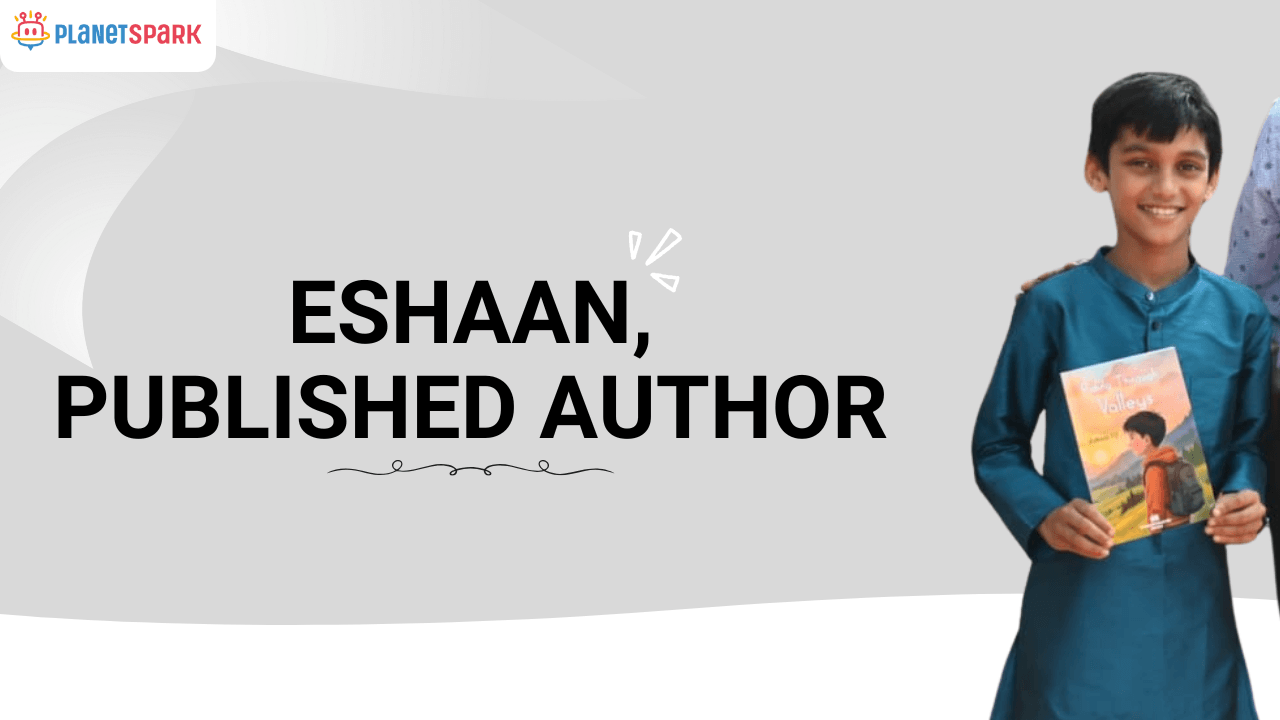
Eshaan has officially became a published author, turning classroom activity into a captivating storybook.
Make your own story like him. Try a free demo class with PlanetSpark today!
Tips to Practice Personification in Your Writing
Here are simple ways to improve your skill at using the personification figure of speech.
- Observe Your Surroundings: Look at objects, nature, or abstract ideas and imagine what human trait would fit them.
- Start With Short Lines: Try personifying one object in one sentence before expanding into paragraphs.
- Use Personification in Journaling: Describe your day using at least one line of personification.
- Read Poetry and Descriptive Writing: Study how professional authors incorporate personification naturally.
- Get Feedback: Share your personification based writing with others to understand its impact.
Why Learn Creative Writing With PlanetSpark?
PlanetSpark offers a structured and interactive learning experience for anyone who wants to sharpen their creative writing skills. Here is what sets PlanetSpark apart.
- Live Interactive Classes: Every class is taught live, allowing learners to interact, ask questions, and receive instant feedback.
- Expert Mentors: Writers and communication specialists guide students through structured content and writing practice.
- Creative Assignments: Learners work on real world writing exercises that include personification, storytelling, descriptive writing, and poetry.
- Personalized Feedback: Each assignment is reviewed with detailed suggestions to help learners grow as confident writers.
- Progressive Curriculum: The curriculum covers all aspects of writing including literary devices, grammar, style, structure, and narrative development.
- Performance Tracking: Learners receive regular progress insights to understand their improvement areas.
Start with a free demo class today!
Conclusion
The personification figure of speech is one of the most expressive tools available to writers. It turns lifeless elements into lively characters, deepens meaning, and helps readers connect emotionally with the message. Whether you are writing poetry, fiction, speeches, academic insights, or everyday descriptions, personification brings imagination and clarity into your work.
Mastering personification takes practice, observation, and guidance. With structured learning and expert feedback, any writer can learn to use this device with confidence and creativity.
Frequently Asked Questions
It is a figure of speech that gives human qualities, emotions, or actions to non human objects, ideas, or forces to make descriptions more vivid and relatable.
Personification is used to create imagery, develop mood, simplify abstract ideas, and build emotional connection with the reader.
Yes, but sparingly. It should support explanation or create imagery without reducing clarity or formality.
No. A metaphor makes a direct comparison between two things. Personification specifically gives human attributes to something non human.
Yes. It enhances narrative flow, builds themes, sets emotional tone, and makes writing more expres
Start by selecting a non human object and assigning one human action or feeling to it. Expand gradually into full descriptive lines or paragraphs.