
Create a Strong Professional Summary for Resume with Proven Tips
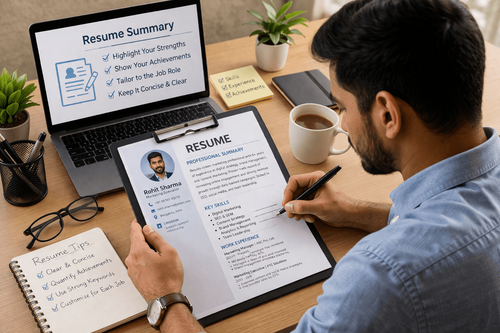

Table of Contents
- What is a Professional Summary for Resume and Why It Matters
- Components of a Strong Professional Summary
- Proven Tips To Create Professional Summary for Resume in 202
- Professional Summary Resume Examples for Different Roles
- Things to Avoid in a Professional Summary for Resume
- Tips to Improve Your Professional Summary for Resume
- PlanetSpark Workplace Communication Programs
- Build a Resume That Reflects Your True Potential
Do you ever think why your resume did not get you through the first call? Many working professionals struggle to make their resumes stand out in a competitive job market. Recruiters often spend just a few seconds scanning each resume, which means your first impression matters more than ever. This is where a strong professional summary for resume can make a real difference.
A professional summary is a short section at the top of your resume that highlights your key skills, experience, and career goals. It acts as a snapshot of your profile and helps recruiters quickly understand your value.
Here, you will learn how to write a professional summary for resume, explore practical examples, and discover proven tips to improve your chances of getting noticed. We will also cover common mistakes and ways to refine your summary for better results.
What is a Professional Summary for Resume and Why It Matters

A professional summary for resume is a brief introduction that appears at the top of your resume. It highlights your experience, key achievements, and skills in a concise and impactful way.
What is a professional summary?
A professional summary is usually 3 to 5 sentences long and focuses on:
- Your job title or professional identity
- Years of experience
- Core skills and strengths
- Key achievements
- Career focus or goals
It gives recruiters a quick overview of who you are as a professional.
Why a professional summary is important?
In today’s fast-paced hiring process, recruiters do not read every detail immediately. They scan resumes to shortlist candidates quickly.
Here is why a strong summary matters:
- It creates a strong first impression
- It highlights your most relevant skills
- It helps your resume stand out
- It saves time for recruiters
- It increases your chances of being shortlisted
Professional summary vs. objective statement
Many people confuse a professional summary with a resume objective.
- A resume objective focuses on what you want
- A professional summary focuses on what you offer
For working professionals, a summary is more effective because it showcases experience and value.
Example
“Results-driven marketing professional with 5 years of experience in digital campaigns, content strategy, and brand growth. Proven track record of increasing engagement and driving revenue through targeted campaigns.”
This example clearly shows value, experience, and expertise.
"Build a resume that stands out. Book a free PlanetSpark demo class and learn creative writing from experts."
Components of a Strong Professional Summary
Writing a compelling professional summary requires clarity, relevance, and precision. It should be tailored to the job you are applying for.
Step 1: Start with your professional identity
Begin with your job title and years of experience.
Example:
- “Experienced software engineer with 7 years of expertise in web development”
This sets the context immediately.
Step 2: Highlight key skills
Focus on skills that are relevant to the job role.
- Technical skills
- Soft skills
- Industry-specific expertise
Avoid listing too many skills. Choose the most impactful ones.
Step 3: Add measurable achievements
Numbers make your summary more credible.
- Increased sales by 30 per cent
- Managed a team of 10 members
- Reduced costs by 15 per cent
These details show real impact.
Step 4: Align with the job role
Customise your summary based on the job description.
- Use keywords from the job posting
- Focus on relevant experience
- Match employer expectations
Step 5: Keep it concise and clear
A professional summary should be short and easy to read.
- Use simple language
- Avoid jargon
- Keep it within 3 to 5 sentences
Common mistakes to avoid
- Writing long paragraphs
- Using generic statements
- Including irrelevant details
- Not customising for each job
Example
“Detail-oriented financial analyst with 6 years of experience in data analysis, forecasting, and budgeting. Skilled in improving financial performance and reducing risks through strategic insights.”

Proven Tips To Create Professional Summary for Resume in 2026
Customise Your Summary for Every Job
Tailor your summary for each job you apply to. Use keywords from the job description so your resume matches what recruiters and ATS systems are looking for.
Highlight Results, Not Just Duties
Focus on what you achieved instead of just listing responsibilities.
For example, instead of saying “responsible for managing a team,” say “Led a team of 10 and increased output by 15%.”
Keep Your Summary Short and Clear
Your summary should be easy to read and to the point. Stick to 3 to 5 lines and avoid long paragraphs.
Avoid Generic and Overused Words
Do not rely on common words like “go-getter,” “detail-oriented,” or “people person” unless you support them with real examples.
Use a Summary Instead of an Objective
If you have work experience, choose a summary instead of an objective. A summary shows your value, while an objective only talks about your goals.
"Want expert guidance? Try a free PlanetSpark demo class and improve your creative writing skills today."
Professional Summary Resume Examples for Different Roles
Understanding professional summary resume examples can help you create your own effectively. Here are examples across different professions.
Marketing professional
“Creative marketing specialist with 4 years of experience in digital campaigns and brand management. Skilled in SEO, content strategy, and social media growth. Successfully increased online engagement by 40 per cent.”
IT professional
“Dedicated software developer with 5 years of experience in building scalable web applications. Proficient in Java, Python, and cloud technologies. Known for delivering high-quality solutions on time.”
Human resources professional
“Experienced HR manager with 8 years of expertise in recruitment, employee engagement, and performance management. Strong ability to build positive workplace culture and improve retention rates.”
Sales professional
“Results-driven sales executive with 6 years of experience in B2B sales and client relationship management. Consistently exceeded sales targets and expanded customer base.”
Freshers transitioning to professional roles
Even professionals early in their careers can write strong summaries.
“Motivated business graduate with internship experience in market research and data analysis. Strong communication and problem-solving skills with a passion for business growth.”
Key takeaways from examples
- Use clear and specific language
- Highlight achievements
- Focus on relevant skills
- Keep it concise
These professional summary resume examples show how to present your strengths effectively.

Things to Avoid in a Professional Summary for Resume
While writing a professional summary for resume, many professionals unknowingly include elements that reduce its effectiveness. Avoiding these mistakes can significantly improve your chances of making a strong first impression.
Using vague and generic statements
Phrases like “hardworking individual” or “team player” are overused and do not add real value.
- They do not show proof
- They sound repetitive
- They fail to differentiate you
Instead, focus on specific achievements and skills.
Writing too much information
A professional summary should be concise. Writing long paragraphs can:
- Reduce readability
- Lose recruiter interest
- Hide key strengths
Stick to 3 to 5 clear sentences.
Including irrelevant details
Adding unrelated skills or experiences can confuse recruiters.
- Focus only on job-relevant points
- Remove outdated information
- Align with the role you are applying for
Not tailoring the summary
Using the same summary for every job is a common mistake.
- Different roles require different skills
- Customisation improves relevance
- It shows effort and professionalism
Overusing buzzwords
Words like “dynamic,” “go-getter,” or “self-motivated” sound impressive but lack substance unless supported with examples.
Avoiding these mistakes will help you create a cleaner, stronger, and more impactful summary.

Tips to Improve Your Professional Summary for Resume
Once you know how to write a professional summary for resume, the next step is improving it for maximum impact.
Tailor your summary for every job
Avoid using the same summary everywhere.
- Read the job description carefully
- Identify key requirements
- Adjust your summary accordingly
Use action-oriented language
Strong words make your summary more impactful.
- Led
- Managed
- Developed
- Achieved
These words show confidence and initiative.
Focus on value, not responsibilities
Instead of listing tasks, highlight what you achieved.
- Not “Responsible for managing projects”
- But “Successfully managed projects that improved efficiency by 20 percent”
Keep it relevant
Remove outdated or irrelevant information.
- Focus on recent experience
- Align with current career goals
Get feedback
Sometimes, you may miss areas of improvement.
- Ask mentors or peers
- Use professional tools
- Revise based on suggestions
Update regularly
Your summary should evolve with your career.
- Add new achievements
- Update skills
- Reflect growth
Quick checklist
Before finalising your summary:
- Is it clear and concise
- Does it highlight key strengths
- Is it tailored to the job
- Does it include measurable results
A strong summary can significantly improve your chances of getting noticed.
PlanetSpark Workplace Communication Programs
Do you want to turn your experience into an impactful career story? Then PlanetSpark is the place for you. A strong resume is not just about listing your experience. It is about presenting your story in a way that captures attention and builds credibility. For working professionals, expressing ideas clearly and presenting yourself effectively can directly impact career growth. Many struggle with writing impactful professional summaries, structuring thoughts, or communicating achievements confidently. This is where structured learning becomes essential.
PlanetSpark’s creative writing and personality development programs help professionals improve clarity, articulation, and self-expression, which are crucial for crafting strong resumes, and overall career presence. .
Key features include:
- Live, interactive classes
- Expert teachers with industry knowledge
- Real-world communication practice
- Career and resume-building guides
- Workplace communication and professional writing resources
- Skill-development tools curated for working professionals
- Personalised coaching for career growth

Build a Resume That Reflects Your True Potential
Your resume is more than a document. It is your opportunity to tell your professional story in a powerful and concise way. A strong professional summary for resume helps you present your value clearly and confidently.
With consistent practice and thoughtful refinement, you can create a summary that truly reflects your skills and achievements. Keep improving, stay focused, and take charge of your career growth with confidence and clarity.
Frequently Asked Questions
A professional summary is a short section at the top of your resume that highlights your key skills, experience, and achievements. It gives recruiters a quick overview of your profile and what you bring to the role. This section helps create a strong first impression within a few seconds.
A professional summary should be concise and easy to read. Ideally, it should be 3 to 5 sentences or around 50 to 100 words. Keeping it short ensures that recruiters can quickly understand your strengths without losing interest.
Start with your job title and years of experience, then highlight your key skills and achievements. Make sure to include measurable results wherever possible to show your impact. Always tailor your summary to match the job role you are applying for.
Yes, professional summary resume examples are very helpful for understanding the right structure and tone. They give you a clear idea of how to present your skills and achievements effectively. You can use them as a guide to create a strong and well-written summary.
Yes, customizing your summary for each job is highly recommended. It helps you align your skills and experience with the specific requirements of the role. This increases your chances of getting noticed by recruiters and passing applicant tracking systems.
Avoid using generic statements, long paragraphs, or irrelevant information in your summary. These can make your resume look unclear and less impactful. Instead, focus on specific achievements and keep your content relevant to the job.
Yes, freshers can also write an effective professional summary. They can highlight their skills, internships, academic projects, and career goals. A well-written summary can help freshers present their potential and stand out to recruiters.
Download Free Worksheets
Personalized Communication Roadmaps
Record a video to get a AI generated personalized communication reports