
Rephrase Sentence: How to Express Ideas Better with PlanetSpark


Table of Contents
- What Does It Mean to Rephrase Sentences?
- Why Is Rephrasing Important for Kids?
- How to Rephrase a Sentence: Step-by-Step Guide for Kids
- Simple Examples of Rephrasing for Kids
- Fun Ways Kids Can Practice Rephrasing
- Common Mistakes Kids Should Avoid
- Tips for Parents to Help Kids Practice Rephrasing
- The Long-Term Benefits of Learning to Rephrase Sentences
- How PlanetSpark Helps Kids Learn Rephrasing
- Why Choose PlanetSpark
- Help Your Child Master Creative Writing Skills with PlanetSp
"Ever wanted to say something in a cooler, smarter way but didn’t know how?” Sometimes in class or when talking to friends, you know what you want to say, but the words just don’t come out right. That’s where learning how to rephrase a sentence can help! Rephrasing means saying the same idea in a different way so it’s clear, fun, and interesting. At PlanetSpark, kids get guided practice to turn their thoughts into words that shine, making writing, storytelling, and speaking more creative, confident, and exciting. With practice, every idea can sound amazing!
What Does It Mean to Rephrase Sentences?
To rephrase sentences means rewriting or saying the same message using different words while keeping the original meaning the same.
For example:
Original sentence:
The dog ran quickly across the park.
Rephrased sentence:
The dog dashed swiftly through the park.
Both sentences describe the same situation, but they use different words.
Rephrasing is not about copying or repeating the exact same sentence. Instead, it involves using synonyms, changing sentence structure, or rearranging words.
Children often practice rephrasing when they:
- Write essays
- Answer comprehension questions
- Summarize stories
- Avoid repeating the same words
- Improve their vocabulary
Learning how to rephrase a sentence helps kids become more flexible with language and more confident in expressing their ideas.
Why Is Rephrasing Important for Kids?
Rephrasing is a powerful language skill that helps children improve both speaking and writing.
Here are some reasons why learning to rephrase sentences is important:
1. Improves Writing Skills
When children know how to rephrase sentences, their writing becomes more interesting and engaging. Instead of repeating the same words again and again, they can use different expressions.
For example, instead of writing:
The movie was good. The movie was exciting.
They can rephrase it as:
The movie was exciting and enjoyable.
This makes the writing smoother and more fun to read.
2. Builds Strong Vocabulary
To rephrase sentences, kids must learn new words and synonyms. This naturally improves their vocabulary.
For example:
Happy → joyful, cheerful, delighted
Big → huge, enormous, massive
Fast → quick, speedy, rapid
The more words children learn, the easier it becomes to express ideas in different ways.
3. Helps Avoid Repetition
Repetition can make writing boring. Rephrasing helps children say the same idea differently.
Example:
Original:
I like playing games. I like playing football. I like playing chess.
Rephrased:
I enjoy playing different games like football and chess.
Now the sentence sounds more natural and interesting.
4. Boosts Communication Skills
Sometimes people do not understand what we say the first time. Rephrasing helps children explain ideas more clearly.
For example:
First sentence:
I felt nervous before the competition.
Rephrased explanation:
I was a little scared and worried before the competition started.
Now the idea becomes clearer.
5. Encourages Creative Thinking
Rephrasing teaches kids that there are many ways to express the same idea. This encourages creativity and flexible thinking.
Instead of one fixed sentence, children learn multiple ways to communicate their thoughts.
Help your child master creative writing skills while learning how to rephrase a sentence effectively.
How to Rephrase a Sentence: Step-by-Step Guide for Kids
Learning how to rephrase a sentence may seem difficult at first, but it becomes easy with practice.
Here is a simple step-by-step method kids can follow.
Step 1: Understand the Original Sentence
Before rephrasing, children must fully understand the sentence.
Example:
The teacher praised the student for completing the project.
Ask yourself:
- Who is involved?
- What happened?
- What is the main idea?
Main idea: The teacher appreciated the student for finishing the project.
Step 2: Identify Important Words
Find the key words in the sentence.
Example keywords:
- Teacher
- Praised
- Student
- Completing the project
These are the main elements that should stay in the sentence.
Step 3: Use Synonyms
Replace some words with synonyms.
Original:
The teacher praised the student.
Rephrased:
The teacher appreciated the student.
Another option:
The teacher congratulated the student.
Step 4: Change Sentence Structure
Sometimes changing the order of words helps create a new sentence.
Original:
The teacher praised the student for completing the project.
Rephrased:
The student was praised by the teacher for finishing the project.
Step 5: Check the Meaning
After rephrasing, make sure the sentence still has the same meaning.
Incorrect example:
The teacher punished the student for completing the project.
This changes the meaning, so it is not a correct rephrase.
Correct example:
The teacher appreciated the student for finishing the project.
Enroll your child in PlanetSpark’s communication program today and help them improve writing, vocabulary, and public speaking skills through expert guidance and engaging activities.
Simple Examples of Rephrasing for Kids
Here are a few easy examples children can learn from.
Example 1
Original: The sun is very bright today.
Rephrased: The sun is shining brightly today.
Example 2
Original: She was very tired after the game.
Rephrased: She felt exhausted after the game.
Example 3
Original: The boy ran fast to catch the bus.
Rephrased: The boy hurried quickly to catch the bus.
Example 4
Original: The story was very interesting.
Rephrased: The story was extremely engaging.
Example 5
Original: The cat slept on the sofa.
Rephrased: The cat rested on the sofa.
These examples show how small changes can create a new sentence while keeping the same meaning.
Fun Ways Kids Can Practice Rephrasing
Learning to rephrase sentences can be fun when practiced through activities and games.
Here are some enjoyable methods for kids.
1. The Synonym Game
Write a sentence and challenge kids to replace some words with synonyms.
Example:
Original:
The big dog barked loudly.
Possible rephrased sentences:
The large dog barked loudly.
The huge dog barked noisily.
This helps expand vocabulary.
2. Story Rewriting
Kids can take a short story and rewrite parts of it using different words.
Example:
Original sentence:
The princess lived in a beautiful castle.
Rephrased version:
The princess lived in a magnificent castle.
This activity builds creativity and language skills.
3. Sentence Transformation
Teachers or parents can give children a sentence and ask them to write two different versions.
Example:
Original:
The rain started suddenly.
Rephrased options:
It suddenly began to rain.
Rain started falling all of a sudden.
4. Group Challenges
Children can work in teams and try to create the best rephrased sentence.
The group with the clearest and most creative sentence wins.
This makes learning interactive and exciting.
Common Mistakes Kids Should Avoid
When learning how to rephrase a sentence, children sometimes make small mistakes.
Here are a few things to watch out for.
Changing the Meaning
The biggest mistake is altering the meaning of the sentence.
Example:
Original:
The boy was happy about the surprise.
Wrong rephrase:
The boy was angry about the surprise.
The meaning changes completely.
Using Incorrect Synonyms
Some synonyms do not fit every situation.
Example:
Original:
The baby slept quietly.
Incorrect:
The baby slept silently like a rock.
Always choose words that fit naturally.
Repeating the Same Sentence
Sometimes kids only change one word and keep everything else the same.
Example:
Original:
The dog barked loudly.
Rephrase:
The dog barked very loudly.
This is only a small change. A better rephrase would be:
The dog barked noisily.
Give Your Child the Power of Better Expression
Tips for Parents to Help Kids Practice Rephrasing
Parents play an important role in helping children improve language skills. Here are some simple ways parents can support kids.
Encourage Reading
Reading books exposes children to different ways of expressing ideas. The more they read, the easier it becomes to rephrase sentences.
Ask Kids to Explain Things Differently
If a child explains something, ask them to say it in another way.
Example:
“Can you say that in a different way?”
This encourages flexible thinking.
Play Word Games
Games like synonym matching or sentence transformation can make learning fun. Children enjoy challenges that involve creativity.
Practice Daily Writing
Encourage kids to write small paragraphs or journal entries and try rephrasing some sentences. Even five minutes of daily practice can make a big difference.
The Long-Term Benefits of Learning to Rephrase Sentences
Mastering the skill of rephrasing sentences provides benefits that go far beyond school.
Children who learn this skill early often develop stronger communication abilities later in life.
Some long-term advantages include:
- Better essay writing
- Stronger public speaking
- Improved comprehension skills
- Higher confidence in communication
- Greater creativity in storytelling
Whether children want to become writers, speakers, teachers, scientists, or entrepreneurs, strong language skills will always help them succeed.
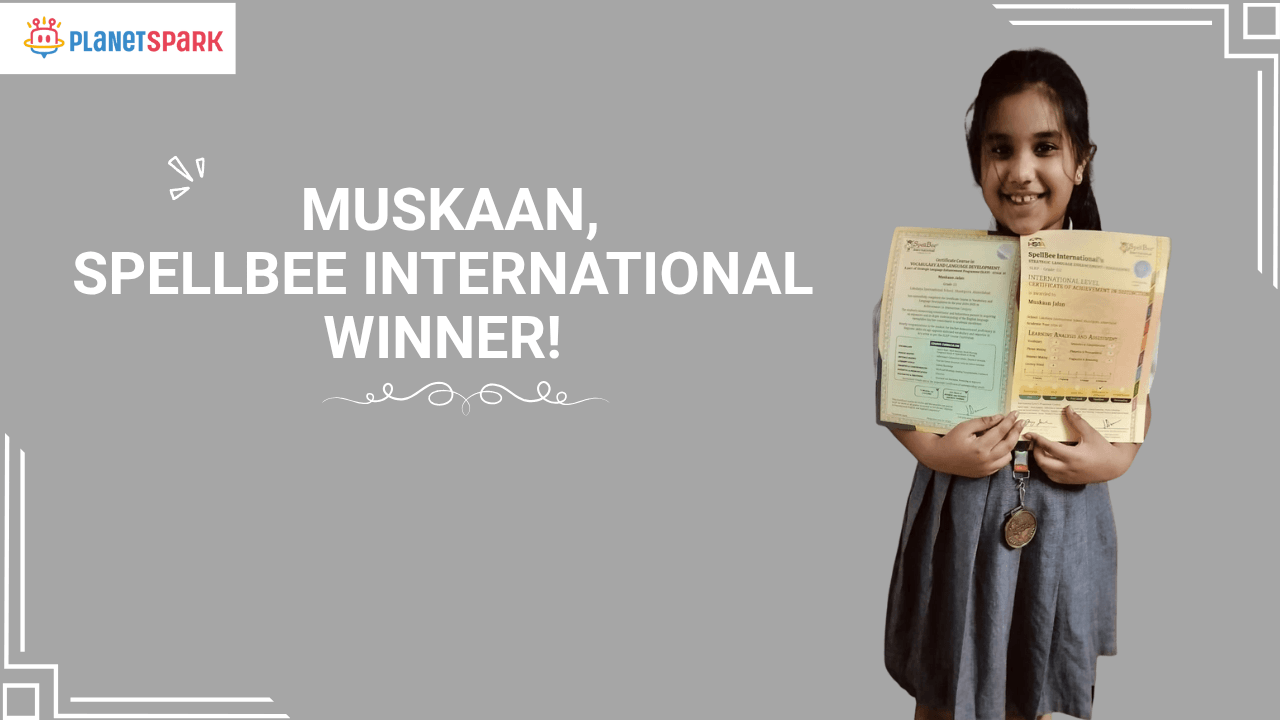
"We are beyond proud of Muskaan from PlanetSpark, who showcased her spelling brilliance at the Spell Bee International Program !"
How PlanetSpark Helps Kids Learn Rephrasing
PlanetSpark is an online learning platform that focuses on improving creative writing skills for children. It helps kids practice rephrasing sentences, storytelling, public speaking, and creative writing.Here’s how it supports young learners.
1. Interactive Writing Lessons
Children learn how to express ideas clearly and creatively through guided writing exercises.Teachers show kids how to improve sentences and make them more engaging.
2. Vocabulary Development
Students are introduced to new words, synonyms, and expressions that help them rephrase sentences more effectively. A stronger vocabulary makes writing and speaking easier.
3. Speaking Practice
Rephrasing is also useful in conversations. PlanetSpark encourages kids to explain ideas in different ways, which improves communication confidence.
4. Personalized Feedback
Students receive feedback on their writing and speaking. This helps them understand how they can improve sentence structure and clarity.
5. Confidence Building
When kids learn how to express their thoughts clearly, they feel more confident in school, presentations, and conversations. This confidence is one of the biggest benefits of learning strong communication skills.
Why Choose PlanetSpark
- Expert-Led Live Classes: Children learn from trained teachers who guide them step by step in improving communication and writing skills.
- Focus on Rephrasing and Expression: Students practice rephrasing sentences to express ideas more clearly and creatively.
- Interactive Learning: Fun activities like storytelling, debates, and writing challenges keep children engaged while learning.
- Personalized Feedback: Teachers provide individual tips and suggestions to help students improve continuously.
- Confidence Building: Regular speaking and writing practice helps children become confident communicators.
- Strong Curriculum: A structured program designed to improve vocabulary, grammar, creativity, and public speaking skills.
- Real-Life Skill Development: Children learn skills that help them communicate better in school, presentations, and everyday conversations.
Help Your Child Master Creative Writing Skills with PlanetSpark
PlanetSpark is an interactive learning platform that helps children build strong communication skills. One important skill kids learn is how to rephrase sentences, which helps them express ideas more clearly and creatively. Through live, expert-led classes, children practice writing, storytelling, public speaking, and creative thinking. Fun activities like storytelling games, debates, and writing challenges give students real-life opportunities to rephrase sentences and improve vocabulary. Teachers provide helpful tips and feedback so kids can improve step by step. With its playful and engaging approach, PlanetSpark makes learning enjoyable while helping children become confident speakers and writers in school and everyday conversations.
Frequently Asked Questions
Rephrasing sentences means saying the same idea in different words without changing its meaning. It can involve swapping words for synonyms, changing sentence structure, or rearranging phrases. Rephrasing makes writing clearer, more engaging, and easier to understand.
Rephrasing helps kids express ideas clearly, improve their vocabulary, and become more confident in writing and speaking. It also makes their essays, stories, and presentations more creative and avoids repetitive language.
Kids can practice by rewriting sentences from storybooks, trying different ways to say homework sentences, playing synonym games, or creating multiple versions of a single sentence. Explaining ideas in different ways is another fun way to practice.
Rephrasing helps kids use a wider range of words, make sentences more interesting, and communicate more clearly. It also boosts confidence in speaking because they can express the same idea in multiple ways if someone doesn’t understand initially.
Rephrasing focuses on changing the wording of a single sentence while keeping the meaning the same. Paraphrasing usually involves rewriting a longer piece of text, like a paragraph, in your own words. Both skills strengthen writing and comprehension.
PlanetSpark provides fun, structured exercises, interactive lessons, and guided feedback to help kids practice rephrasing. With creative activities and one-on-one support, children learn to express ideas clearly, confidently, and in multiple ways.
Yes! PlanetSpark uses games, storytelling, and real-life examples to teach rephrasing. Kids stay engaged while improving communication skills, making learning both effective and enjoyable.
Kids can start learning as early as 6–8 years old, as they begin building vocabulary and expressing ideas. With consistent practice, these skills grow stronger over time.
Common mistakes include changing the meaning, using incorrect synonyms, copying too much from the original, or writing sentences that don’t sound natural. Guided practice, like on PlanetSpark, helps kids avoid these errors.
Parents can encourage reading, practice rewriting sentences together, ask children to explain ideas in different ways, and use platforms like PlanetSpark for structured learning and fun activities