
Master Sensory Writing Improvement for Creative Kids


Table of Contents
- What Is Sensory Writing?
- Why Sensory Writing Matters for Students
- How to Teach Sensory Details in Writing
- Sensory Writing Improvement Examples
- Effective Sensory Writing Improvement Activities
- Common Mistakes Students Make (and How to Fix Them)
- Advanced Tips for Sensory Writing Improvement
- Short Sensory Writing Prompts
- Why PlanetSpark Is the Best Place to Build Exceptional Skill
- Inspire Your Child’s Creative Future with PlanetSpark
Sensory writing improvement is the art of turning simple words into vivid scenes that readers can see, hear, smell, taste, and feel. In this guide, you will learn creative techniques, examples, and activities that transform dull descriptions into immersive storytelling. And with PlanetSpark’s engaging, skill-building classes, young writers can sharpen these sensory skills, enrich their imagination, and craft stories that sparkle with life and emotion.
What Is Sensory Writing?
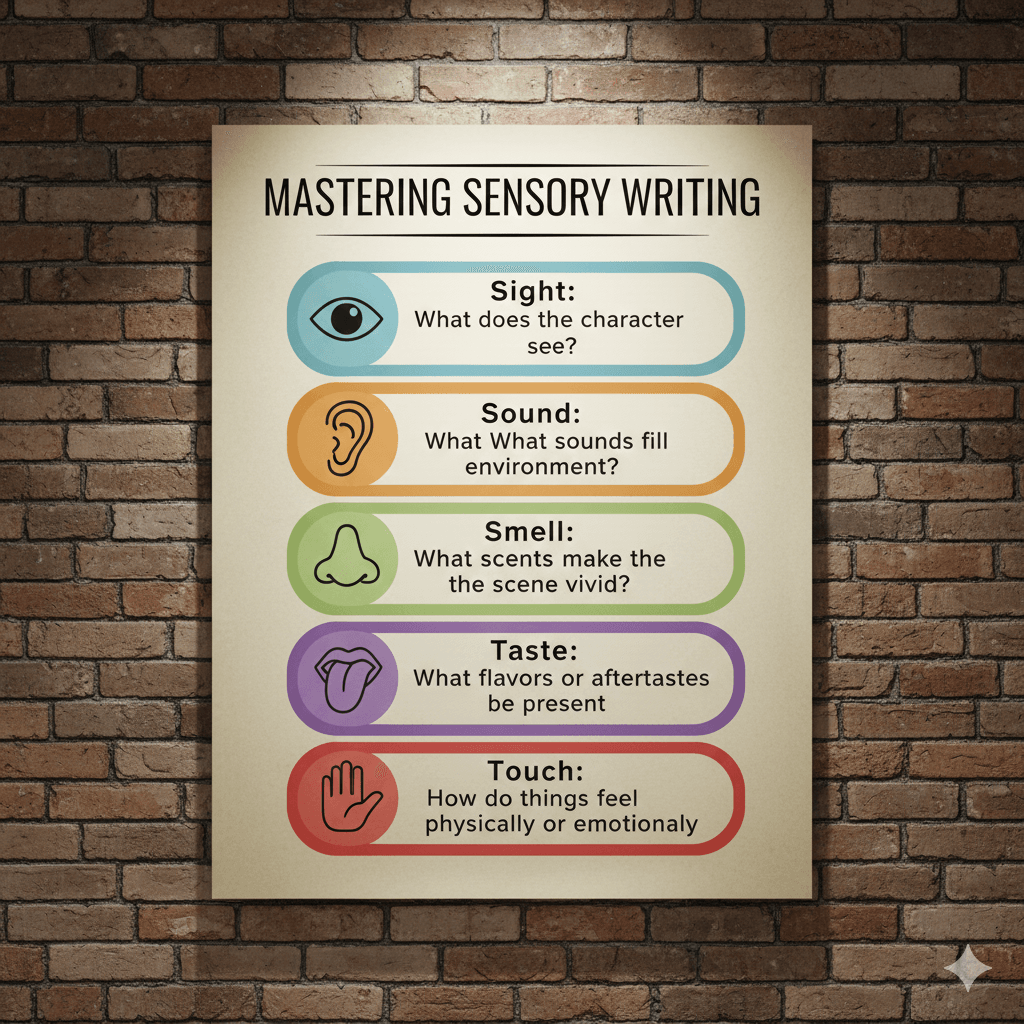
Sensory writing means adding descriptions connected to the five senses:
- Sight: What does the character see?
- Sound: What sounds fill the environment?
- Smell: What scents make the scene vivid?
- Taste: What flavors or aftertastes are present?
- Touch: How do things feel physically or emotionally?
Good sensory detail transforms a flat sentence like:
The park was nice.
Into something deeply immersive:
Golden sunlight spilled across the quiet park as the warm breeze carried the sweet smell of blooming hibiscus.
This transformation is what sensory writing improvement aims to accomplish.

Why Sensory Writing Matters for Students
Sensory writing helps students bring their ideas to life by adding vivid details that appeal to sight, sound, smell, taste, and touch. It makes descriptions clearer, emotions stronger, and scenes more immersive.
- Builds a stronger emotional connection: Readers feel more attached to characters and events when they can imagine the scene clearly.
- Makes writing vivid and memorable: Sensory details create imagery, helping readers visualize the story like a movie.
- Strengthens observational skills: Students learn to slow down, notice their environment, and express it creatively.
- Enhances academic writing too: Even essays and descriptive paragraphs become more impactful with sensory precision.
How to Teach Sensory Details in Writing
Teaching sensory writing does not mean encouraging students to over-describe every sentence. Instead, it involves helping them use precise sensory clues that elevate clarity and atmosphere.
Here’s a step-by-step teaching approach that works across all grades:
1. Start With Each Sense Separately
Before combining details, help students understand each sense individually.
Teaching Strategy: Sensory Breakdown
Ask students to observe an object (like a fruit or flower) and describe it using only:
- Sight (color, shape, size)
- Sound (crunch, rustle, squish)
- Smell (sweet, earthy, sharp)
- Taste (sour, spicy, salty)
- Touch (rough, slippery, warm)
Mini-Activity
Give each student a lemon. Ask them to describe it without saying “yellow,” “sour,” or “citrus.”
This forces them to expand their vocabulary and describe more creatively.
2. Teach ‘Show, Don’t Tell’ Using Sensory Triggers
“Show, don’t tell” becomes easier through sensory cues.
Example: Telling
She was nervous.
Showing using sensory detail
Her palms became sweaty, and her voice trembled as she stepped onto the stage.
Teaching students to express emotion through sensory signals strengthens narrative clarity.
3. Use Mentor Texts & Sensory Passages
Provide students with high-quality descriptive paragraphs from stories. Highlight sensory phrases for them.
Demonstration
The old library smelled of dusty pages and forgotten stories. Wooden floors creaked softly with every step, echoing the whispers of the past.
Ask students:
Which senses can you identify? How does each detail affect your imagination?
Watch them write confidently as they explore genres, prompts, and storytelling techniques with PlanetSpark experts.
4. Build a Sensory Word Bank
Students often have ideas but struggle to find strong vocabulary. A sensory word bank encourages variety.
Examples to add to a word bank:
- Sight: shimmering, glowing, shadowy, faded
- Sound: humming, crackling, rustling, thudding
- Smell: smoky, minty, rotten, floral
- Taste: tangy, peppery, bitter, creamy
- Touch: velvety, gritty, icy, sticky
Keep an expanding chart in the classroom.
5. Use the “5-Senses Wheel” for Paragraph Writing
Students draw a circle divided into five parts (one per sense). Before writing, they fill in at least one descriptive element per section.
This graphic organizer ensures multi-sensory writing without overwhelming the student.
6. Encourage Revision Through Sensory Enhancement
Students often write plain drafts initially. During revision, encourage them to:
- Add one sensory detail per paragraph
- Replace weak adjectives with precise ones
- Use action-based sensory imagery (e.g., “crackled” instead of “made noise”)
Revising for sensory detail builds long-term writing improvement. Here, students can also learn how to write about their day creatively than clicking this link.
Sensory Writing Improvement Examples
Below are examples that clearly demonstrate transformation through sensory techniques.
Example 1: Basic to Sensory-Rich
Before:
The kitchen was messy.
After (sensory writing improvement):
Dirty dishes were stacked like leaning towers as the sharp smell of burnt garlic clung to the air. Grease crackled softly on the stove, and sticky flour dust coated the counter.
Example 2: Emotion Through Sensory Detail
Before:
He was excited.
After:
His heart thumped so loudly he could hear it in his ears, and a warm rush of energy tingled through his fingers.
Example 3: Setting Description
Before:
It was raining.
After:
Cold droplets slapped against the window while the wind howled like an angry whistle. The smell of wet soil drifted into the room.
PlanetSpark teaches children to observe, imagine, and express creatively through proven writing frameworks and activities.
Example 4: Taste-Based Description
Before:
The soup tasted good.
After:
The warm soup wrapped her tongue in rich, buttery flavors with a hint of peppery spice that lingered pleasantly after each sip.
Example 5: Building Atmosphere
Before:
The forest was dark.
After:
Shadows tangled between the trees, and the musty scent of damp leaves filled the air. A soft crunch echoed underfoot with every hesitant step.
These examples model exactly how students can transform simple sentences into memorable descriptions. Students interested to learn the best strategies for writing to improve clarity, creativity, & impact by click this link.
Effective Sensory Writing Improvement Activities
Below are classroom-tested activities that help students practice and enjoy sensory writing.
1. The Mystery Box Challenge
Place objects inside sealed boxes. Students reach in and describe the item using only touch, texture, temperature, shape, and weight before guessing what it is. This builds tactile vocabulary and detailed observation.
2. Sound Story Builders
Play audio clips: crackling fire, rainstorm, busy street, ocean waves.
Students write a descriptive paragraph using only sound clues and mood. This helps them understand how sound influences atmosphere.
3. Taste Testing & Creative Writing
For older students or with parental approval:
Provide tiny samples: chocolate, lemon, mint, or crackers.
Students write:
- What the taste reminds them of
- What emotions or memories does it trigger
- Sensory metaphors (e.g., “The lemon exploded like a bright sunrise in my mouth.”)
4. Sensory Walk or Observation Walk
Take students outside for a “sensory hunt.”
They must note down:
- 5 things they see
- 4 things they hear
- 3 things they feel
- 2 things they smell
- 1 thing they taste (optional or replaced with a memory taste)
Later, they turn the notes into a descriptive scene.
5. Photo-to-Sensory Writing
Show a picture—beach, market, forest, city street—and ask students to write:
- What sounds do they imagine
- What smells do they think exist
- What textures might they feel
This builds imaginative sensory association.
PlanetSpark’s personalised program strengthens every writing element through fun, interactive learning.
6. Rewrite the Bland Sentence
Give students dull sentences and ask them to rewrite using sensory detail.
Examples:
- The room felt cold.
- The street was busy.
- She was scared.
This is one of the most effective sensory writing improvement activities for building creative confidence.
7. Memory-Based Sensory Journaling
Ask students to recall:
- Their favorite meal
- A festival celebration
- A visit to a beach or hill station
- Their classroom during break
- A rainy-day experience
And write using all five senses. Memory unlocks strong sensory imagery naturally.
Common Mistakes Students Make (and How to Fix Them)
Students often struggle with balancing sensory details, choosing precise words, and aligning descriptions with emotion. Understanding these mistakes helps them write clearer, more engaging, and meaningful scenes.
1. Overloading sensory detail
Too much description becomes distracting.
Fix: Use 1–3 strong sensory details per scene.
2. Using vague adjectives
Words like “nice,” “good,” “bad,” “weird” weaken writing.
Fix: Encourage specific, sensory-based vocabulary.
3. Forgetting emotional sensory cues
Sensory details should reflect mood, not just environment.
Example: the same forest can feel peaceful or frightening depending on the details.
4. Mixing senses randomly
Sensory writing should feel natural, not forced.
Fix: Prioritize senses appropriate to the setting.
Advanced Tips for Sensory Writing Improvement
Strong sensory writing goes beyond basic description. It blends figurative language, emotion, perspective, and movement to create scenes that feel alive, immersive, and meaningful to the reader.
Use figurative language with sensory focus
Metaphors and similes enhance sensory impact.
“The air smelled like freshly cut sugarcane.”
Add movement to sensory details
Action makes scenes alive.
“Leaves crackled under her boots.”
Tie sensory detail to character perspective
A frightened character notices different details than a relaxed one.
Layer senses gradually
Start with sight, then add sound or smell, building the scene naturally.
Short Sensory Writing Prompts
The quick prompts help students activate their imagination and practice using vivid sensory details. They encourage creativity, sharpen observation, and make descriptive writing more engaging and expressive.
Use these for practice:
- Describe a marketplace using all five senses.
- Write about entering a dark cave.
- Describe the first bite of your favorite snack.
- Explain how a monsoon morning feels.
- Imagine walking into a room full of balloons and describing it.
These prompts strengthen sensory creativity quickly.

Why PlanetSpark Is the Best Place to Build Exceptional Skills?
PlanetSpark offers a complete learning ecosystem that helps children become confident, expressive, and imaginative writers. With expert-led classes, AI-powered tools, and engaging activities, students don’t just learn writing—they master the art of storytelling, clarity, structure, and creativity. Here’s how PlanetSpark transforms every child into a skilled young author:
What PlanetSpark Offers for Creative Writing Excellence
- 1:1 Personal Trainers who guide children through grammar, storytelling, vocabulary, and expression
- Personalised Writing Curriculum tailored to your child’s level, goals, and pace
- Spark Diary for daily writing practice that builds consistency and creativity
- Genre-Based Learning covering stories, poems, essays, book reviews, speeches, and more
- Creative Stimulus Activities like story dice, picture prompts, and imagination games
- Real Publishing Opportunities through blogs, e-magazines, anthologies, and showcases
- SparkX AI Video Analysis to refine delivery when presenting written work
- Gamified Tools like SparkBee and quizzes that strengthen grammar, vocabulary, and spelling
PlanetSpark ensures your child not only writes better but thinks sharper, imagines deeper, and communicates with confidence that lasts a lifetime.
Inspire Your Child’s Creative Future with PlanetSpark
Sensory writing improvement is one of the most powerful skills a writer can develop. It transforms plain sentences into rich imagery that pulls the reader into the heart of the story. Teaching sensory details in writing is not just about telling students to “describe more,” it is about helping them observe, feel, hear, and experience the world thoughtfully.
With the right approach by using sensory-focused activities, real examples, and step-by-step guidance that students can quickly master the art of writing that shines with emotion and atmosphere. From mystery boxes to sensory walks, from soundscapes to taste-based descriptions, every activity strengthens a different aspect of sensory intelligence.
Writers who integrate sensory detail effectively craft narratives that stay in the reader’s memory long after the page is closed. Whether you're a teacher, student, or aspiring storyteller, improving sensory writing is a journey worth taking—one sense at a time.
Frequently Asked Questions
Sensory writing improvement is the process of helping students strengthen descriptive skills using the five senses. It enhances imagery, emotion, clarity, and reader engagement in stories, essays, and creative writing.
Sensory details make writing vivid and immersive. They help readers visualise scenes, feel emotions, and connect with characters. This skill makes stories stronger, clearer, and far more memorable for readers.
Teachers can start with single-sense activities, observation exercises, object descriptions, and “show, don’t tell” practices. Gradually adding multi-sensory layers helps students develop confidence and descriptive precision effectively.
Simple activities include mystery boxes, sound prompts, sensory walks, taste-based descriptions, image-based writing, and rewriting bland sentences. These exercises boost creativity and strengthen descriptive vocabulary in enjoyable ways.
PlanetSpark trainers teach students to use sensory-rich language through structured creative writing lessons, personalised guidance, and engaging prompts. Kids learn to observe deeply and create vivid, detailed writing effortlessly.
Yes! PlanetSpark provides story prompts, picture-based writing, daily Spark Diary practice, and fun gamified tasks that help children master sensory details while building creativity, clarity, vocabulary, and narrative confidence.