Have you ever seen your child
prepare a speech and thought, “Why isn’t it sounding confident, even after so much practice?”Speech writing for Class 8 often feels challenging because students struggle to organise ideas, write clearly, and create strong openings or endings.
This blog makes the process easy with simple, step-by-step guidance and short examples children can follow. You’ll learn how to start with a hook, use simple language, stick to three main points, add smooth transitions, and end with a memorable message. And if your child needs personalised support, PlanetSpark’s expert trainers help build confident writing and speaking skills.
What is Speech Writing?
Speech writing is the simple process of putting your ideas into words so you can speak confidently in front of an audience. It means understanding your topic, knowing who will listen, and sharing your thoughts in a clear and organised way.
In Class 8, students learn different types of speeches like informative, persuasive, and descriptive which help them express opinions, explain concepts, and talk about real-life issues.
Why this skill matters today: Strong speech writing helps students communicate better in school, participate in competitions, and build confidence for real-world situations like debates, presentations, and public speaking events and life skill.
Why Do Many Children Struggle with Creative Writing?
Many students find paragraph writing difficult because schools often focus more on memorisation than actual creative expression. As a result, children may:
Repeat the same simple vocabulary
Make grammar and sentence structure mistakes
Feel nervous during exams
Struggle to organise ideas properly
Lack confidence in English writing
With proper guidance and regular practice, children can become more confident writers and communicate their ideas clearly both in academics and daily life.
Why Class 8 Students Must Learn Speech Writing?
Speech writing is more than just an English chapter it’s a life skill your child will use again and again. At this age, students start forming stronger opinions, handling bigger school responsibilities, and participating in activities that require clear communication. Learning speech writing supports them in all these areas.
Here’s why it’s important:
Helps children express ideas clearly: Kids often know what they want to say but struggle to put it into words. Speech writing teaches them how to organise their thoughts.
Boosts public speaking confidence: When children know what to speak, they speak with confidence — whether in class or on stage.
Strengthens exam writing skills: Structured thinking and clarity directly improve performance in English writing sections.
Makes creative thinking sharper: Choosing words, building arguments, and crafting messages enhances creativity.
Prepares them for debates, elocution & competitions: A well-written speech makes a huge difference in how students perform in school competitions.
Want personalised guidance?
Your child can build strong writing skills and speak with confidence through structured, expert-led sessions of PlanetSpark
How to Write a Speech: Step-by-Step (with quick examples)
Start with a hook — grab attention in one line. How to do it: Ask a question, share a surprising fact, or use a short anecdote. Examples:
Question: “Have you ever wondered why trees are called the lungs of the Earth?”
Fact: “Every day, one healthy tree can produce enough oxygen for two people.”
Short anecdote: “When I planted my first sapling, it taught me patience.” Try this: Ask your child to write two different one-line hooks and pick the strongest.
Keep language simple — use short sentences and familiar words. How to do it: Replace long words with clear ones and avoid complicated phrases. Example: Instead of “utilise resources efficiently,” write “use things wisely.” Tip for parents: Read a sentence aloud with your child — if it sounds clumsy, simplify it.
Stick to 3 main points — organise the body around three clear ideas. How to do it: Pick the three things you want your audience to remember, and put one idea in each paragraph. Example for topic “Save Water”:
Point 1: Why water is precious.
Point 2: Easy ways to save water at home.
Point 3: How students can spread the message. Quick exercise: Ask your child to list three points in a single line each.
Use transitions smartly — guide the listener from one idea to the next. How to do it: Start paragraphs with linking words: “Firstly,” “Next,” “Finally,” or “Another reason is…”. Examples:
“Firstly, let’s talk about why this matters.”
“Next, here are simple steps you can try.”
“Finally, remember this one rule…” Tip: Teach your child one transition for each main point — it makes the speech flow.
End with a strong message — finish with something memorable. How to do it: Sum up your message and add a call to feel, think, or act. Use a short line that sticks. Examples:
“Let’s save water today so we have a greener tomorrow.”
“If each of us helps a little, together we can make a big difference.” Practice: Have your child write three different closing lines and choose the most powerful.
Small checklist for parents (5 minutes)
Is there a one-line hook? ✅
Are there exactly three clear points? ✅
Do transitions connect the points? ✅
Is the language simple and spoken aloud smoothly? ✅
Is the ending memorable? ✅
Help your child avoid these common pitfalls with PlanetSpark’s Creative Writing Courses.
Good morning! Today, I want to share my thoughts on a topic that is very close to my heart: "The Importance of Reading."
Reading helps us gain knowledge, build imagination, and improve our vocabulary. It allows us to explore different cultures, understand emotions, and think critically. Books are our best friends. They never judge or abandon us.
In today’s digital world, students are spending more time on screens than on books. I believe that reading at least 30 minutes a day can change our lives. Whether it's fiction, non-fiction, or comics, reading makes us better thinkers and speakers.
So let us all make a habit of reading every day. Thank you!
2. Speech on Climate Change
Respected Principal, teachers, and my dear classmates,
Good morning! I stand before you today to speak about an issue that affects all of us: "Climate Change."
Our planet is facing rising temperatures, melting glaciers, and unpredictable weather. All of this is happening because of pollution, deforestation, and excessive use of resources.
We, as students, can make a difference. We can save electricity, use less water, plant trees, and say no to plastic. Every small action counts. Together, we can save the planet for ourselves and future generations.
Let’s act now and spread awareness. Thank you!
3. Speech on the Importance of Discipline
Respected Principal, teachers, and friends,
Discipline is the bridge between goals and achievement. It is the key to success in every area of life.
In school, discipline means following rules, being punctual, respecting teachers, and focusing on studies. At home, it means helping our parents, managing time, and being responsible.
Without discipline, success becomes difficult. Let’s all promise to stay disciplined and set a good example for others. Thank you!
4. Speech on Social Media and Teenagers
Good morning, everyone,
Today, I am going to talk about social media and its impact on teenagers like us.
Social media can be both good and bad. On the one hand, it connects us to friends and helps us learn new things. On the other hand, it can cause distractions, anxiety, and even cyberbullying.
We must use social media responsibly. Set time limits, avoid comparing yourself to others, and never share personal information online. Let’s use it as a tool for learning and not for wasting time. Thank you!
Template 1: Persuasive Speech Outline
Topic Example: “Why Every Student Should Learn Coding”
Introduction
Greet the audience
State the topic clearly.
Grab attention with a fact or question.
State your opinion/thesis.
Body Paragraph 1 – The Problem
Describe the issue or why the topic matters.
Provide real-life examples
Body Paragraph 2 – Your Argument
Present your argument with supporting details.
Include statistics or examples if possible.
Body Paragraph 3 – Address the Opposing View
Acknowledge a counterargument
Refute it logically
Conclusion
Restate your main point.
End with a call to action or an inspiring closing line
Template 2: Informative Speech Outline
Topic Example: “The History and Significance of the Internet”
Introduction
Welcome the audience
Introduce the topic and why it’s important.
Give a brief overview of the points you’ll cover
Body Paragraph 1 – Background
Share historical facts or origins.
Use a simple timeline if needed.
Body Paragraph 2 – Key Features or Aspects
Break down the topic into sub-parts (e.g., usage, impact, development)
Use examples that students can relate to
Body Paragraph 3 – Future Implications
What changes or growth can we expect?
Why should the audience care?
Conclusion
Summarize the key points.
End with a thought-provoking statement
Don’t just write speeches, own the stage!
PlanetSpark’s structured program helps Class 8 students organize thoughts, write clearly, and speak confidently.
Why PlanetSpark Is the Best Place to Learn Speech Writing?
At PlanetSpark, we specialize in transforming young learners into confident communicators and writers. Our expert-led live classes help Class 8 students:
Learn the fundamentals of speech and essay writing
Master grammar, sentence structure, and vocabulary
Practice public speaking and delivery
Receive real-time feedback from experienced mentors
Participate in engaging writing prompts and exercises
Let Your Child Learn From Expert Mentors
Speech writing in Class 8 isn’t just about stringing words together; it’s about expression, structure, and confidence. By practicing regularly, choosing topics wisely, and using the right framework, students can become powerful speakers and writers.
For parents and students seeking structured support, PlanetSpark offers personalized learning journeys that combine grammar, writing, and public speaking, all tailored for Class 8 learners.
Let your child’s voice be heard: strong, clear, and impactful.
FAQs
1. What are the best speech topics for Class 8?
Topics like time management, mental health, my favorite book, gender equality, and why books are better than screens are great choices.
2. How do I start writing a speech for Class 8?
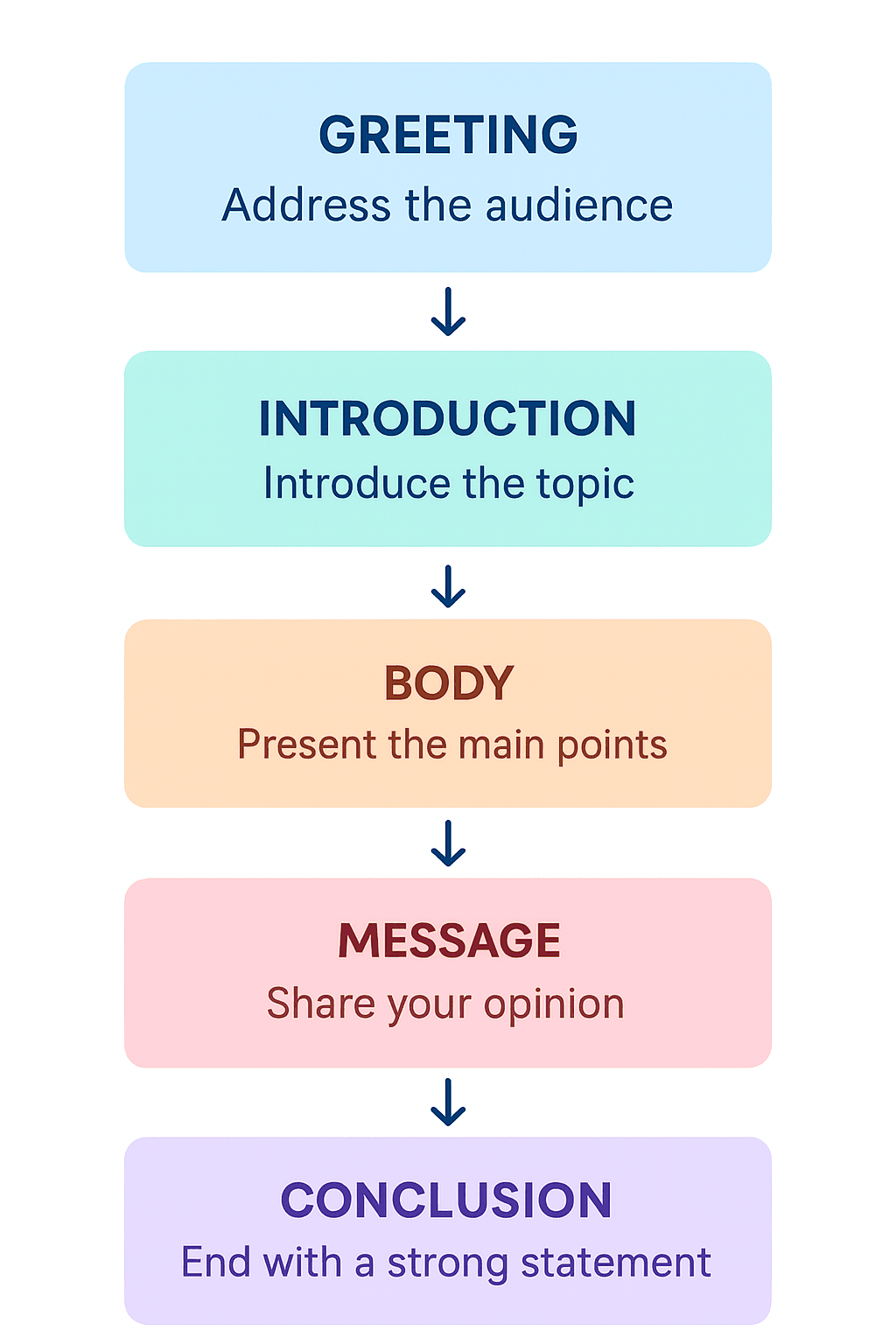
Start with a greeting, introduce the topic, and grab attention using a quote or question.
3. How long should a speech for Class 8 be?
Ideally, 2–4 minutes or about 300–500 words, depending on the school’s requirement.
4. How can I make my speech interesting?
Add personal stories, use humor, and ask rhetorical questions.
5. Should I memorize my Class 8 speech?
You should understand and internalize your speech rather than memorize it word-for-word.
6. Can PlanetSpark help with speech writing?
Yes, PlanetSpark offers dedicated courses in creative writing and public speaking that include speech writing.
7. Are there free classes available at PlanetSpark?
Yes! You can sign up for a free trial class for both creative writing and grammar courses.
Frequently Asked Questions
Topics like time management, mental health, my favorite book, gender equality, and why books are better than screens are great choices.
Start with a greeting, introduce the topic, and grab attention using a quote or question.
Ideally, 2–4 minutes or about 300–500 words, depending on the school’s requirement.
To make a speech engaging, use personal stories, relatable school-life examples, or inspiring quotes. Students can also ask simple questions to involve the audience and keep them attentive. Changing voice tone, adding expressions, and using pauses effectively makes the delivery more impactful.
Yes, PlanetSpark offers dedicated courses in creative writing and public speaking that include speech writing.
Yes! You can sign up for a free trial class for both creative writing and grammar courses.