Story writing exercises are a fun
and powerful way to help children and even working professionals improve their creativity, imagination, and thinking skills. Writing stories is not just about words. It helps the mind think clearly, express feelings, and build confidence.
For kids, story writing feels like
play. For adults, it becomes a creative break from routine work. When both practice together, learning becomes more enjoyable. In this blog, we will explore story writing exercises in a very simple way so even a small child can understand and enjoy reading.
These exercises help learners create their own stories, understand characters, and express ideas in a clear way. With regular practice, story writing becomes easy and exciting instead of difficult.
This blog is designed to guide readers step by step. We will explain what story writing exercises are, why story writing is fun for kids, and how these exercises help build important life skills.
What Are Story Writing Exercises?
Story writing exercises are simple activities that help children and adults practice writing stories. These exercises guide the mind to think creatively and turn ideas into words. They are like small games that help improve writing skills without pressure.
Understanding Story Writing Exercises in Simple Words
Story writing exercises mean writing short stories using prompts, pictures, words, or situations. These activities help learners understand how to start, build, and end a story.
Some common forms include:
Writing a story using given words
Completing an unfinished story
Creating a story from a picture
Writing a short story on a simple topic
These activities are also known as an exercise of story writing because they train the brain regularly.
Why Story Writing Exercises Are Important
Story writing exercises help in many ways, not just in writing.
Key benefits include:
Better imagination and creativity
Improved vocabulary and sentence formation
Clear thinking and expression
Better confidence while sharing ideas
For working professionals, these exercises help improve communication skills. For kids, they make learning fun and engaging.
Types of Story Writing Exercises
There are many types of story writing exercises that suit different learners.
Type of Exercise
How It Helps
Picture-based stories
Improves imagination
Word-based stories
Builds vocabulary
Story starters
Helps begin writing easily
Moral stories
Teaches values
Each story writing activity focuses on a different skill while keeping learning enjoyable.
Story Writing Examples Used in Exercises
Story writing examples play an important role in learning. Examples show how a story should flow and how ideas can be expressed.
A simple example: Once upon a time, a small bird could not fly. One day, it met a kind squirrel who helped it practice every day.
Such story writing examples help learners understand structure and creativity.
Who Can Do Story Writing Exercises?
Story writing exercises are not only for kids.
Kids enjoy them as fun activities
Parents use them to bond with children
Working professionals use them to improve creativity
A story for writing practice can be short and simple or detailed and imaginative.
Story writing is fun because it allows kids to create their own world. They can imagine animals talking, superheroes flying, and magical lands full of adventure.
Story Writing Feels Like Play
For kids, story writing does not feel like homework. It feels like playing with ideas and words. A writing a story exercise often starts with fun prompts such as:
Imagine your toy comes alive
Write about a talking tree
Create a story about a happy monster
These prompts make children excited to write.
How Story Writing Builds Confidence
When kids complete a story, they feel proud. This confidence helps them speak better, think better, and express feelings clearly.
Benefits include:
Better self expression
Improved reading and writing skills
Strong imagination
Positive thinking
A story writing activity encourages kids to share ideas without fear of mistakes.
Learning Through Story Writing Activities
Story writing activities help children learn important life lessons in a gentle way.
Some examples:
Stories teach honesty and kindness
Characters show problem-solving skills
Stories help kids understand emotions
This makes story writing exercises both educational and enjoyable.
Story Writing Practice at Home
Parents can easily support story writing at home. A story for writing practice can be created using daily life situations.
Simple ideas include:
Write a story about your day
Create a story using three objects at home
Write about your favorite animal
These exercises help kids practice writing naturally.
Why Kids Love Story Writing Exercises
Kids love story writing exercises because:
There are no right or wrong answers
They can use imagination freely
Writing feels like storytelling
An exercise of story writing gives kids freedom to think and create, making learning joyful.
Writing a story exercise helps learners practice storytelling in a simple and guided way. These exercises make writing less confusing and more enjoyable for both kids and working professionals.
What Is a Writing a Story Exercise?
A writing a story exercise is a small task where you write a story using clear instructions. It may include a topic, words, or a situation. This type of exercise supports creative thinking and helps organize thoughts.
Such story writing exercises are useful for daily practice and skill building.
Step by Step Writing a Story Exercise
Follow these easy steps for a smooth writing experience:
Think of one main idea
Choose one character
Decide where the story happens
Write a beginning, middle, and end
This exercise of story writing helps learners stay focused and confident.
Sample Writing a Story Exercise
Try this simple exercise today:
Topic: A rainy day surprise
Write about what happened, who was there, and how it ended. Keep the story short and fun.
This story for writing practice encourages imagination and expression.
Benefits of Writing a Story Exercises
Writing a story exercises help in many ways:
Improves storytelling skills
Builds vocabulary
Develops logical thinking
Enhances creativity
These story writing exercises are helpful for learners at all levels.
How Often Should You Practice?
Even practicing a writing a story exercise two to three times a week can show improvement. Regular practice builds confidence and makes writing easier.
A fun story writing activity helps kids enjoy writing without feeling stressed. When learning feels playful, kids naturally become more interested and expressive. These activities turn story writing exercises into joyful experiences.
Why Fun Activities Improve Story Writing
Kids learn better when they enjoy the process. Fun story writing activities encourage them to think freely and use imagination without fear.
Key advantages include:
Better creative thinking
Stronger vocabulary usage
Improved sentence flow
Increased interest in writing
A well designed story writing activity makes practice feel like a game.
Creative Story Writing Activities Kids Love
Here are some engaging story writing exercises that kids enjoy:
Story dice activity Roll dice with characters, places, and actions, then write a story.
Word jar activity Pick random words from a jar and create a short story.
Picture story activity Look at images and write what happens next.
Story chain activity Each line adds a new twist to the story.
These story writing exercises keep kids excited and involved.
Story Writing Activity Using Daily Life
Using daily life makes writing easier and more relatable.
Examples:
Write a story about a school day
Create a story about a family outing
Write about a favorite festival
This story for writing practice helps kids connect writing with real experiences.
Group Based Story Writing Activities
Group activities make writing more interactive.
Group activity ideas:
One child writes the beginning
Another adds the middle
A third completes the ending
This exercise of story writing improves teamwork and idea sharing.
How Fun Activities Build Strong Writing Skills
Fun story writing activities help kids learn naturally. They improve imagination, thinking ability, and communication skills while enjoying the process. These story writing exercises make writing a happy habit.
How PlanetSpark Supports Creative Writing
PlanetSpark helps children express ideas creatively while learning proper structure, vocabulary, and clarity. Its creative writing approach combines imagination with strong writing fundamentals, making story writing exercises meaningful and effective.
Genre Based Creative Writing Learning
PlanetSpark follows a genre based curriculum that introduces children to different writing forms. Learners practice short stories, poetry, journal writing, essays, book reviews, and persuasive letters. Each genre has a dedicated lesson plan, helping children understand purpose and style through guided story writing activities.
Framework Driven Writing Instruction
Children learn clear writing frameworks that make storytelling easier. These include beginning middle end structure, S.T.O.R.Y framework, 5W1H method, and the PEEL technique. These tools improve coherence and help children organize ideas during writing a story exercise.
Writing and Speaking Together
PlanetSpark integrates writing with speaking. Children present their stories aloud, which improves confidence, expression, and narrative flow. This approach strengthens communication alongside story writing practice.
Editing, Feedback, and Rewriting Support
Classes focus on improving work through editing and rewriting. Real time feedback, peer review, and teacher guidance help learners refine their story writing examples and build better writing habits.
Creativity Stimulus and Publishing Opportunities
Creative tools like story dice, prompts, and image based writing spark imagination. Children also get opportunities to publish their work, making story writing exercises rewarding and motivating.
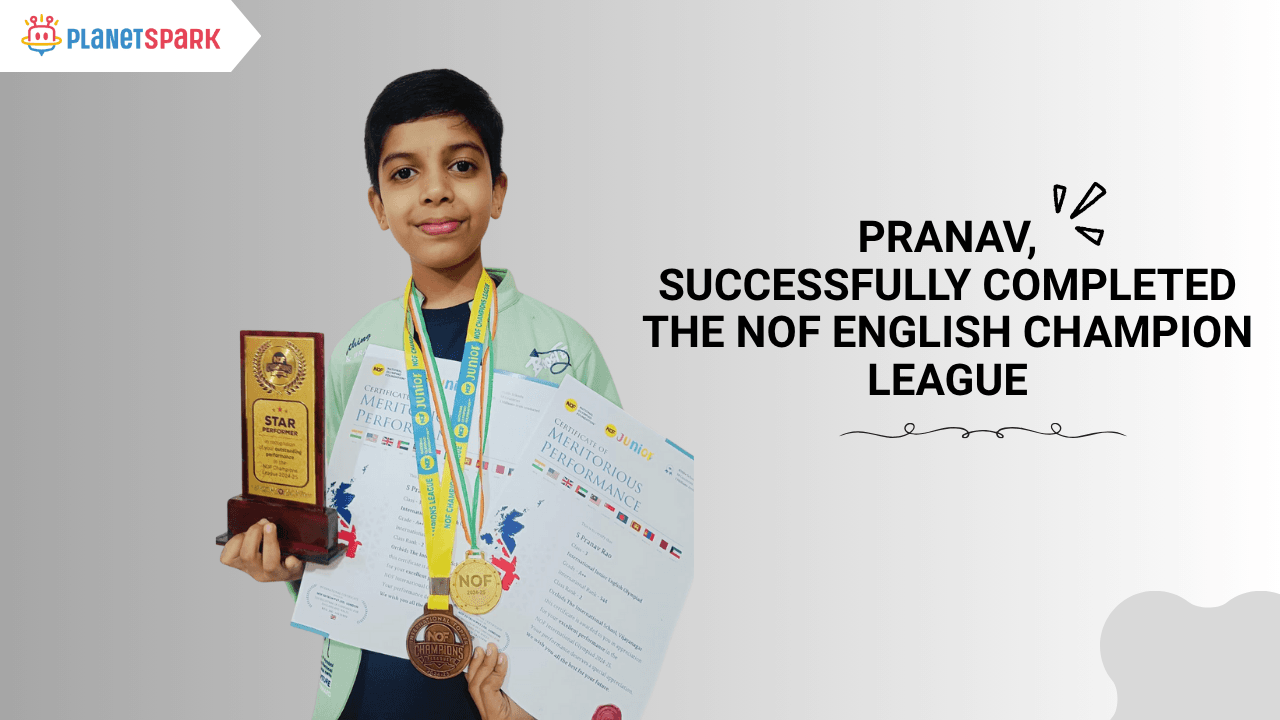
Pranav Shines in NOF English Champion League
Pranav, a talented Grade 3 learner, successfully completed the NOF English Champion League, demonstrating exceptional skills in Public Speaking and Creative Writing. His performance highlighted his confidence, creativity, and strong command over language, making him a proud achiever.
Conclusion: Why Story Writing Exercises Matter for Creative Growth
Story writing exercises help children and adults build creativity, confidence, and clear thinking in a simple and enjoyable way. When writing feels fun and structured, learners express ideas freely and develop strong communication skills over time.
For kids, story writing exercises turn learning into play. Activities like story writing examples, guided prompts, and creative story writing activities help them understand structure while enjoying imagination. Each exercise of story writing teaches how to begin, develop, and end a story clearly.
For working professionals, a writing a story exercise works as a creative refresh. A short story for writing practice improves clarity, expression, and storytelling skills useful in daily communication.
With consistent practice, clear frameworks, and engaging activities, story writing becomes easier and more confident. Story writing is not about perfection. It is about expression, imagination, and growth through regular practice.
Story writing exercises are fun activities that help kids and beginners practice creating stories. They include prompts, pictures, or words to inspire creativity and improve writing skills.
These exercises enhance imagination, improve vocabulary, and build confidence in expressing ideas. They also make writing fun and engaging for kids.
Yes! Working professionals can use story writing exercises to boost creativity, storytelling, and communication skills. A short story for writing practice helps refresh the mind.
A writing a story exercise is a guided task where learners write a story using prompts, topics, or words. It helps organize thoughts and develop clear storytelling skills.
Kids can try simple exercises like: writing about a favorite toy, creating a story from three objects, or completing an unfinished story. Daily practice improves skill over time.
Activities like story dice, picture-based stories, story chains, and prompt-based writing make learning enjoyable while practicing storytelling.