
Story Writing Format: Learn Structure, Tips & PlanetSpark
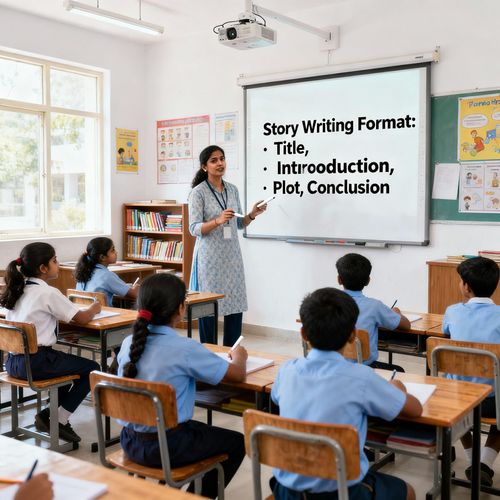

Table of Contents
Storytelling is an art , and every great story follows a clear story writing format. Whether you’re writing for school, competitions, or personal growth, understanding how to structure your ideas makes all the difference. This blog explores what story writing format means, its elements, types, and expert tips to write effectively. You’ll also learn how PlanetSpark’s Creative Writing Course helps kids build storytelling confidence and publish their work.
Understanding Story Writing Format
Story writing is more than putting words together , it’s about crafting a sequence that captivates readers. A story writing format provides structure, guiding writers from an idea to a finished narrative that flows smoothly.
What Is a Story Writing Format?
A story writing format refers to the framework that defines how a story begins, develops, and ends. It ensures coherence, emotional engagement, and reader satisfaction. Every great narrative , from folktales to novels , follows this structure consciously or intuitively.
A typical story writing format includes:
Title – Reflects the theme or main idea.
Introduction – Sets the tone, introduces characters, and establishes setting.
Plot/Body – Builds the conflict and suspense.
Climax – The turning point of the story.
Conclusion – Resolves the story and gives a moral or closure.
This structure helps writers stay focused, ensuring that every event connects to the core theme.
The Essential Elements of a Story
A story’s format becomes powerful when its core elements work together seamlessly.
1. Characters
Characters are the lifeblood of any story. They drive the plot and help readers relate emotionally. Create characters with clear motivations, flaws, and goals.
2. Setting
The setting provides context , time, place, and atmosphere. Whether it’s a magical land or a real city, the setting must support the mood and theme.
3. Plot
The plot is the sequence of events. A good plot follows a logical order, keeping readers hooked from beginning to end.
4. Conflict
Conflict fuels the story. It can be internal (within the character) or external (between characters or forces). Without conflict, the story lacks purpose.
5. Theme
Every story communicates an underlying message , the theme. It could be about love, courage, revenge, or discovery.
6. Resolution
The resolution ties loose ends and brings emotional closure.
Types of Story Writing Formats
Story writing formats vary by purpose and style. Here are the major types every writer should know:
1. Narrative Story Format
Used for school essays or creative assignments, this follows a simple chronological sequence , beginning, middle, and end.
2. Descriptive Story Format
Focuses on vivid imagery and emotions, appealing to the reader’s senses.
3. Expository Story Format
Explains ideas or situations clearly, often used in reflective or factual stories.
4. Persuasive Story Format
Used to convince the reader of a point of view while still telling a story.
5. Dialog-Based Format
Common in short plays or dramatic stories, this format brings realism through character conversations.
Each type follows the same foundational elements but differs in tone and purpose.
How to Write a Story Step by Step
A well-organized story follows a process. Here’s how you can write your own using a structured format:
Step 1: Brainstorm Ideas
List possible story themes , adventure, mystery, friendship, or self-discovery.
Step 2: Create Characters
Build character profiles. Give them goals, fears, and unique voices.
Step 3: Define the Setting
Choose when and where the story happens. The setting adds mood and relevance.
Step 4: Outline the Plot
Plan how the story moves from beginning to end. Divide it into:
Exposition (introduction)
Rising Action (conflict building)
Climax (turning point)
Falling Action (events after climax)
Resolution (ending)
Step 5: Write the First Draft
Don’t aim for perfection. Focus on creativity and flow.
Step 6: Edit and Revise
Review grammar, clarity, and structure. Refine dialogues and tighten sentences.
Step 7: Add a Moral or Message
Every good story leaves readers thinking.
Common Mistakes to Avoid in Story Writing
Weak characters: Avoid flat, predictable personalities.
Unclear plot: Every event should connect logically.
No emotional depth: Readers engage when they feel something.
Overuse of narration: Show through action, not just words.
Skipping revision: Editing turns a draft into a masterpiece.
PlanetSpark Creative Writing Course: Building the Authors of Tomorrow
PlanetSpark’s Creative Writing Course transforms how children express themselves through writing and storytelling. It’s not just a writing class , it’s a creative ecosystem that nurtures imagination, confidence, and communication skills.
Genre-Based Curriculum
Students explore short stories, poetry, essays, journals, and book reviews , each with focused lesson plans. This genre-based curriculum ensures balanced exposure to different writing styles.
Writing + Speaking Integration
Through the LSRW approach (Listening, Speaking, Reading, Writing), students learn to express their stories both on paper and aloud. Presenting their written work enhances clarity, fluency, and stage confidence.
Editing, Feedback, and Rewriting
PlanetSpark focuses on revision and real-time feedback. Every child gets peer reviews and teacher guidance to improve their drafts.
Real Publishing Opportunities
Students can publish their work in PlanetSpark’s e-magazine, blog, or anthologies , an incredible confidence booster!
Creativity Stimulus Activities
With tools like story dice, image prompts, and guided imagination tasks, kids develop original thinking naturally.
AI Tools for Real-Time Analysis
The SparkX tool uses AI to evaluate voice modulation, grammar, and presentation skills, ensuring measurable growth.
AI-Led Practice Sessions
Students practice storytelling or speeches independently with AI feedback, making learning engaging and self-driven.
Spark Diary
A digital journaling tool where students write daily reflections, improving consistency and creative clarity.
Gamified Learning
From Word Wisdom quizzes to Grammar Guru Challenges, PlanetSpark keeps learning fun and interactive.
Progress Reports and PTMs
Parents receive detailed progress reports evaluating grammar, content, delivery, and confidence , ensuring transparency and measurable growth.
Ignite the Author Within: Your Child’s Story Begins Here
Story writing is not just about words , it’s about building imagination, empathy, and communication. A strong story writing format gives children the foundation to express their creativity with confidence.
PlanetSpark’s Creative Writing Course empowers young storytellers through structured guidance, publishing opportunities, AI-based learning, and personalized mentorship.
You may also read :
Frequently Asked Questions
A story writing format is a structured way of organizing a story — including the title, introduction, plot, climax, and conclusion.
It enhances imagination, vocabulary, grammar, and critical thinking while improving communication skills.
PlanetSpark offers one-on-one creative writing lessons, real publishing platforms, and AI tools to improve storytelling and expression.
The main elements include characters, setting, plot, conflict, theme, and resolution.
Yes, students can publish their work in PlanetSpark’s e-magazine, blog, or anthologies, gaining recognition and confidence.