


Fun Synesthesia Examples
Synesthesia examples are fun because they help children imagine the world in new and exciting ways. Instead of describing things in a boring or simple manner, synesthesia lets writers mix senses to create magical pictures in the reader’s mind.
Easy Synesthesia Examples Kids Can Understand
Here are some simple and fun synesthesia examples that children can easily relate to:
“The drum made loud orange sounds.”
“Her laughter tasted like sugar candy.”
“The night felt cold and blue.”
“His angry words were sharp like needles.”
Each sentence uses synesthesia by blending two senses together.
Everyday Synesthesia Examples
Children unknowingly use synesthesia in daily life. These examples come from common situations:
A school bell that feels “sharp and silver”
A cartoon voice that feels “soft and fluffy”
Rain that sounds “dark and sad”
These examples help explain what is synesthesia in a very natural way.
Synesthesia Examples Using Different Senses
| Main Sense | Mixed With | Example |
|---|---|---|
| Hearing | Sight | Bright music |
| Taste | Emotion | Sweet happiness |
| Touch | Sound | Soft whisper |
| Smell | Memory | Warm smell of home |
This table helps children understand how synesthesia works by mixing senses.
Why Fun Synesthesia Examples Matter
Using synesthesia examples:
Makes writing lively
Helps readers imagine clearly
Adds emotion to sentences
Instead of writing:
The day was happy.
A synesthetic sentence becomes:
The day tasted bright and sweet.
Practice Through Fun Synesthesia Examples
Children can practice by:
Closing their eyes and listening to sounds
Thinking about what color or feeling the sound gives
Writing one sentence using two senses
This playful practice helps children understand the synesthesia meaning better and builds confidence in writing.
"Every story deserves to be magical."
Learn storytelling with PlanetSpark’s Creative Writing Course.
Synesthesia Examples in Literature
Synesthesia examples in literature show how famous writers use sensory mixing to make their writing powerful and memorable. Many stories, poems, and songs use synesthesia to help readers feel emotions deeply.
Understanding Synesthesia Examples in Literature
Writers use synesthesia in literature to:
Show emotions instead of telling them
Create strong imagery
Make scenes unforgettable
These writers know that mixing senses helps readers connect with the story.
Simple Synesthesia Examples from Literature
Here are easy, child-friendly examples inspired by literature:
“The silence was loud and heavy.”
“Her voice was warm and golden.”
“The words fell like cold rain.”
These are classic synesthesia examples in literature where senses overlap.
Why Authors Use Synesthesia in Stories and Poems
Authors use synesthesia because:
Emotions are hard to explain
Sensory words make emotions clearer
Readers remember sensory descriptions
For example, instead of writing:
He was nervous.
A literary synesthesia example would be:
Fear buzzed loudly in his chest.
Famous Types of Synesthesia Examples in Literature
Sound + Color: Musical poems
Taste + Emotion: Emotional scenes
Touch + Sight: Descriptions of weather or mood
These techniques appear often in poems and storybooks.
How Synesthesia Examples in Literature Help Young Writers
When children read synesthesia examples in literature:
They learn creative sentence building
They understand emotions better
They improve storytelling skills
Reading such examples also helps children understand what is synesthesia and how it can be used naturally in writing.
Learning from Literary Synesthesia
By noticing synesthesia examples in literature, young writers can:
Copy the style in their own writing
Experiment with sensory words
Enjoy reading more deeply
Synesthesia turns stories into experiences, making literature more exciting and meaningful for young minds.
"Turn your ideas into adventures!"
Start writing with PlanetSpark’s Creative Writing Course today.
How to Use Synesthesia as a Literary Device
Using synesthesia as a literary device means mixing two or more senses on purpose to make writing more expressive. Writers use this technique to help readers feel the story instead of just reading it.
Understanding Synesthesia as a Writing Tool
Synesthesia is not random. Writers think carefully about:
What they want the reader to feel
Which sense fits that feeling best
How to combine senses smoothly
For example:
Happiness can feel sweet
Anger can feel sharp
Fear can feel cold
These ideas help writers apply the synesthesia meaning correctly in sentences.
Steps to Use Synesthesia in Writing
Young writers can follow these easy steps:
Choose a moment
Pick a scene with emotion, sound, or action.Pick one main sense
Example: sound, sight, or touch.Mix it with another sense
Add taste, color, or feeling.Write a simple sentence
Keep it clear and playful.
Example:
“The thunder shouted dark fear.”
This sentence uses sound and emotion together.
Common Sense Combinations in Synesthesia
| First Sense | Second Sense | Example |
|---|---|---|
| Sound | Color | Blue silence |
| Emotion | Taste | Bitter anger |
| Sight | Touch | Soft sunlight |
| Sound | Touch | Sharp noise |
These combinations appear often in synesthesia examples found in stories and poems.
Mistakes to Avoid While Using Synesthesia
Children should avoid:
Using too many senses in one sentence
Writing confusing descriptions
Forcing synesthesia where it does not fit
Good synesthesia feels natural and smooth.
Why This Literary Device Is Powerful
Using synesthesia as a literary device:
Makes writing creative
Improves imagination
Helps describe emotions clearly
It teaches children what is synesthesia and how to use it wisely in writing.
"Your voice can inspire the world."
Develop storytelling skills in PlanetSpark’s Creative Writing Course.
Why Synesthesia Helps in Writing
Synesthesia helps young writers turn simple ideas into strong and colorful sentences. It adds emotion, depth, and creativity to writing.
Synesthesia Improves Descriptive Skills
Instead of writing plain sentences like:
The room was quiet.
Synesthesia helps write:
The room was filled with soft, grey silence.
This shows why synesthesia meaning is important in descriptive writing.
How Synesthesia Helps Express Feelings
Feelings are sometimes hard to explain. Synesthesia helps by:
Turning emotions into sensory words
Making feelings easy to understand
Helping readers connect emotionally
Examples:
“Fear tasted sour.”
“Joy felt warm and bright.”
These are strong synesthesia examples that explain emotions clearly.
Benefits of Using Synesthesia in Writing
Synesthesia helps writers:
Build imagination
Avoid boring sentences
Create strong imagery
It also helps readers remember the story longer.
Synesthesia Builds Creative Confidence
When children learn what is synesthesia:
They feel free to experiment with words
They enjoy writing more
They become confident storytellers
Synesthesia encourages children to trust their imagination.
How Teachers and Writers Use Synesthesia
Teachers often teach synesthesia because:
It improves vocabulary
It strengthens storytelling
It supports creative thinking
This is why synesthesia meaning is taught early in writing lessons.
"Creativity begins with a single word."
Unlock your potential with PlanetSpark’s Creative Writing Course.
Using Synesthesia in Stories
Using synesthesia in stories helps young writers make their storytelling more colorful and emotional. When senses mix in a story, readers feel like they are inside the scene.
How Synesthesia Makes Stories More Interesting
Stories become exciting when writers describe:
How a place feels
How a sound looks
How emotions taste
Instead of writing:
The forest was scary.
A synesthetic sentence becomes:
The forest felt dark and cold, tasting of fear.
This shows clearly what is synesthesia in storytelling.
Where to Use Synesthesia in Stories
Synesthesia works best in:
Story openings
Emotional moments
Descriptions of settings
Character feelings
Writers should use it carefully so the story stays clear.
Story Example Using Synesthesia
Here is a short story-style example:
The wind whispered sharp secrets in my ears. The sky looked heavy and grey, and fear tasted bitter as I walked alone.
This example mixes sound, sight, emotion, and taste smoothly.
How Synesthesia Helps Characters Feel Real
When writers use synesthesia:
Characters feel alive
Emotions become visible
Readers understand feelings better
For example:
“Her anger burned red inside her.”
This is a strong synesthesia example used in character writing.
Tips for Using Synesthesia in Stories
Use simple words
Mix only two senses at a time
Match senses with emotions
This helps young writers understand the synesthesia meaning clearly.
"Stories are meant to be felt."
Master sensory writing in PlanetSpark’s Creative Writing Course.
Simple Practice Activity for Kids
Practicing synesthesia helps children improve sensory writing step by step. Fun activities make learning easy and enjoyable.
Activity 1: Sound to Color Game
Ask children to:
Close their eyes
Listen to a sound
Choose a color for that sound
Example:
A bell may sound silver
Rain may sound blue
This activity teaches what is synesthesia naturally.
Activity 2: Feeling to Taste Exercise
Children think of an emotion and answer:
What does happiness taste like
What does fear taste like
Possible answers:
Happiness tastes sweet
Fear tastes sour
These are easy synesthesia examples.
Activity 3: Sentence Building Practice
Give children a simple sentence:
The night was quiet.
Ask them to rewrite it using synesthesia:
The night was filled with soft, blue silence.
Why Practice is Important
Practice helps children:
Understand synesthesia meaning
Use senses correctly
Write confidently
How These Activities Improve Writing
These exercises:
Build imagination
Improve vocabulary
Strengthen storytelling
Regular practice makes synesthesia easy to use in writing.
Creative Writing with PlanetSpark
PlanetSpark’s Creative Writing program helps children express their thoughts confidently while building strong writing foundations. The course is designed to balance imagination with structure, so learners do not just write creatively but also write clearly, logically, and effectively. Each lesson focuses on improving vocabulary, sentence flow, and idea clarity while encouraging original thinking. Children learn how to organize ideas, develop stories step by step, and communicate their thoughts with confidence in both written and spoken form.
The program goes beyond basic writing. It trains children to think like writers, revise like editors, and present like storytellers. With guided practice, feedback, and real publishing opportunities, learners see their writing grow into something they can be proud of.
Why Choose PlanetSpark for Creative Writing
- Genre-Based Curriculum
Covers short stories, poetry, journal writing, essays, book reviews, and persuasive letters with dedicated lesson plans for each genre. - Framework-Driven Writing Instruction
Teaches story arcs, beginning-middle-end structure, S.T.O.R.Y framework, 5W1H method, and PEEL technique for clear and organized writing. - Writing and Speaking Integration
Encourages children to present their written work orally, improving confidence, expression, and narrative flow. - Editing, Feedback, and Rewriting
Focuses on revising through real-time editing, peer reviews, and teacher-led feedback sessions. - Real Publishing Opportunities
Allows children to publish their work on PlanetSpark’s blog, e-magazine, or co-authored anthologies. - Creativity Stimulus Activities
Uses story dice, prompts, image-based writing, and guided imagination exercises to spark originality.
Shreesh’s Creative Journey with PlanetSpark
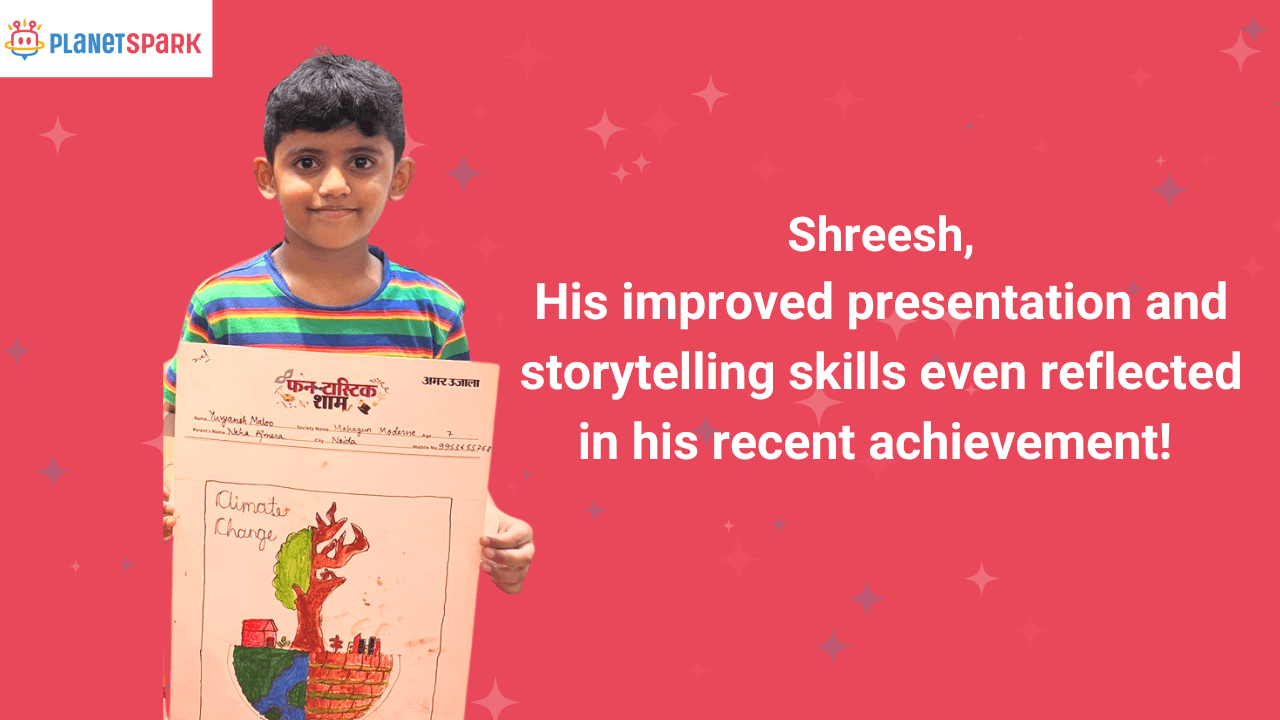
PlanetSpark has helped Shreesh express his ideas with creativity and confidence. His enhanced storytelling and presentation skills shone brightly, leading him to secure second place in the Junior Category of a drawing competition on ‘Climate Change’, organized by the Amar Ujala team. This achievement reflects how PlanetSpark nurtures both imagination and communication in young learners.
Unlocking Creativity with Synesthesia
Synesthesia is a powerful and playful literary tool that helps young writers bring their words to life. By understanding what is synesthesia and learning the synesthesia meaning in simple ways, children can mix senses to describe feelings, sounds, and scenes more clearly. Through fun synesthesia examples, stories become more colorful, emotional, and easy to imagine. When used thoughtfully, synesthesia strengthens sensory writing, builds creativity, and helps writers express ideas with confidence and imagination.
"Write. Imagine. Shine."
Transform your ideas in PlanetSpark’s Creative Writing Course.