
Vignette Meaning Explained: Learn Storytelling With PlanetSpark


Table of Contents
- Explaining Vignette Meaning and Purpose
- Understanding What a Vignette Truly Represents
- Role of Vignettes in Literary Works Explained
- Understanding Vignette Usage in Creative Writing
- How Vignettes Function in Storytelling Narratives
- Effective Vignette Examples Used in Storytelling
- Key Structural Elements Found in Strong Vignettes
- Why Vignette Writing Is Important for Students
- Success Story: Growing Confidence Through Learning
- Improving Writing Skills Through Consistent Practice
- Developing Creative Expression Through Observation
- Why PlanetSpark Is the Best Place to Build Exceptional Skill
- Supporting Creative Growth Through PlanetSpark Learning
Vignette meaning describes a short piece of writing that focuses on one moment, feeling, or idea instead of a full story. It helps writers express thoughts clearly using simple details. This guide explains the concept in an easy way, shares how it is used in writing, and offers helpful examples. With PlanetSpark’s guided creative writing support, students build confidence, improve expression, and learn to communicate ideas effectively through short and meaningful writing.
Explaining Vignette Meaning and Purpose
Vignette meaning refers to a short, focused piece of writing that captures a single moment, scene, idea, or emotion rather than telling a full story with a beginning, middle, and end. Unlike traditional narratives, a vignette does not rely on complex plot development. Instead, it uses imagery, mood, and detail to leave a lasting impression on the reader.
Vignettes often feel like snapshots taken from a larger story. They highlight a specific experience or observation and invite readers to interpret its deeper meaning. This makes them especially effective in creative writing, reflective essays, and literary works where emotional depth matters more than action.
Key characteristics that shape Vignette meaning include:
Focus on a single moment or impression
Strong sensory description
Emotional or thematic emphasis
Absence of a clear resolution
Because of their brevity and depth, vignettes are valuable tools for helping students develop observation skills and expressive language.
Understanding What a Vignette Truly Represents
What is Vignette is a common question among students exploring short-form writing. A vignette is a brief descriptive piece of writing that focuses on a particular scene, character, or idea. Rather than explaining everything, it allows readers to infer meaning through carefully chosen details. Vignettes are commonly found in literature, memoirs, and modern storytelling formats.
Unlike short stories, vignettes do not require conflict or resolution. They exist to highlight significance in everyday moments. Writers often use vignettes to slow down the narrative and explore emotions, memories, or symbolic imagery.
Vignettes can take different forms, such as:
A descriptive paragraph about a childhood memory
A moment of realisation experienced by a character
A detailed observation of a place or object
This flexibility makes vignettes accessible to students, encouraging creativity without the pressure of building a full storyline. Students interested in metafiction can click this link to get reliable guidance .
Role of Vignettes in Literary Works Explained
What is a vignette in literature becomes clear when examining how authors use short descriptive passages to add depth and emotional context. In literature, vignettes enrich storytelling by highlighting character development, cultural themes, or symbolic moments. These passages provide insight without interrupting the overall narrative flow.
Many classic and contemporary literary works rely on vignettes to:
Reveal a character’s inner thoughts
Show social or cultural realities
Emphasise mood and atmosphere
For example, novels written in episodic formats often include vignette-like chapters that stand independently yet contribute to the broader theme. Studying what is a vignette in literature helps students understand how writers create impact using fewer words.
Help Your Child Become a Powerful Young Storyteller!
Understanding Vignette Usage in Creative Writing
What is a vignette in writing focuses on how writers use description rather than narration to convey meaning. In writing, a vignette serves as a creative tool that emphasises imagery, tone, and language choice. Since vignettes do not require strict structure, they allow freedom of expression while still demanding precision.
Students often practice vignette writing to improve:
Descriptive vocabulary
Sentence variation
Emotional expression
A well-written vignette relies on showing rather than telling. Instead of explaining emotions directly, it presents images and actions that suggest meaning. Understanding what is a vignette in writing strengthens overall writing clarity and expression.
How Vignettes Function in Storytelling Narratives
In storytelling, vignettes function as meaningful fragments that contribute to a larger emotional or thematic picture. They may not advance the plot directly, but they enrich the story by deepening understanding of characters and settings.
Storytellers use vignettes to:
Capture turning points in emotion
Highlight personal memories
Create symbolic moments
This approach is especially useful in personal narratives and reflective writing. Vignette examples in storytelling show how brief scenes can create lasting emotional impact.
Build Strong Writing Skills That Last a Lifetime!
Effective Vignette Examples Used in Storytelling
Vignette examples in storytelling often focus on ordinary moments presented with extraordinary detail. A simple scene, such as a child waiting at a bus stop or an elderly person tending a garden, becomes powerful through thoughtful description.
Common elements found in strong vignette examples include:
Sensory imagery such as sound, smell, or texture
Emotional undercurrents rather than direct statements
A clear focal point or image
Studying examples in storytelling helps students understand how minimal text can still convey deep meaning.
Key Structural Elements Found in Strong Vignettes
Although vignettes are flexible, most share common elements that give them clarity and impact. Understanding these elements helps students write more purposeful and effective pieces.
These elements reinforce vignette meaning by guiding how short-form writing communicates emotion and insight.
Turn Everyday Experiences Into Extraordinary Stories!
Why Vignette Writing Is Important for Students
Vignette writing helps students develop observation, creativity, and emotional intelligence. It encourages them to notice details, reflect on experiences, and express ideas concisely. These skills support academic writing, storytelling, and communication across subjects.
Benefits include:
Improved descriptive skills:
Vignette writing trains students to observe small details and describe scenes vividly, making their writing more engaging and realistic.Stronger emotional expression:
Writing vignettes helps students explore feelings deeply, express emotions clearly, and connect personal experiences with readers.Greater confidence in creative writing:
Short, focused writing builds confidence by allowing students to complete pieces successfully and experiment freely with ideas and styles.
Because vignettes are short, students feel less overwhelmed and more willing to experiment with language.
Success Story: Growing Confidence Through Learning
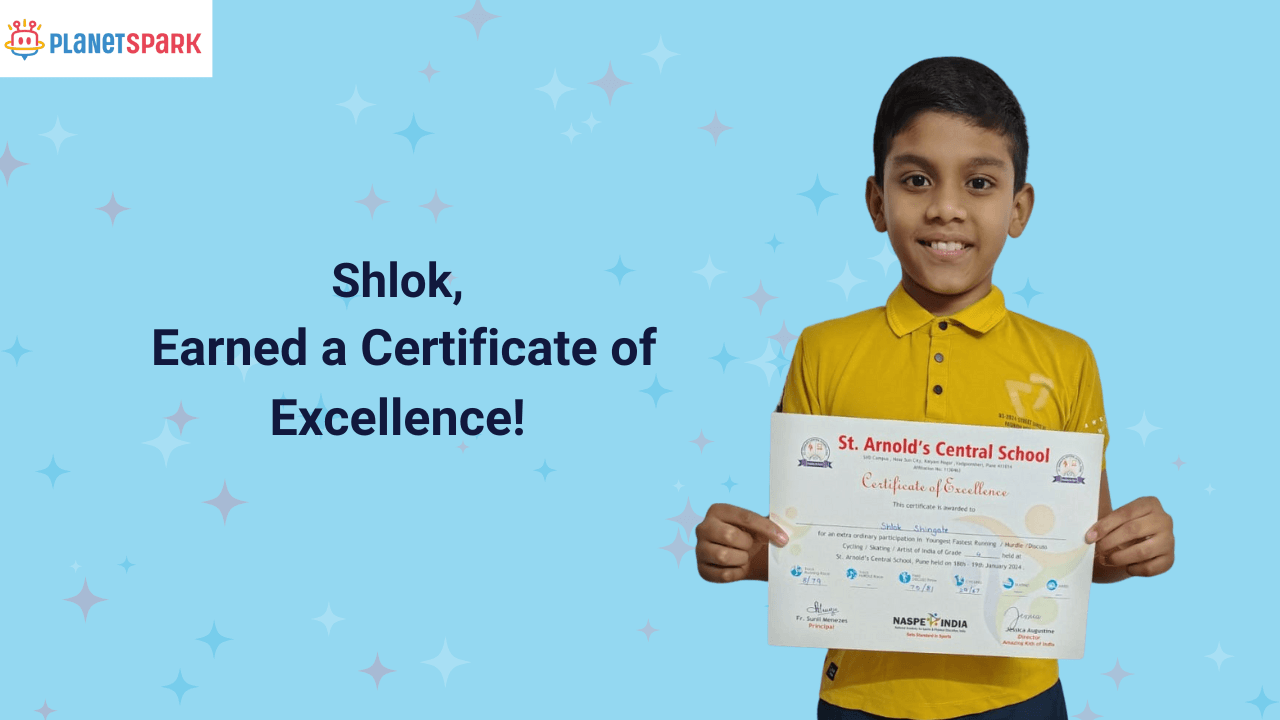
“Earned a Certificate of Excellence, showcasing his growing confidence and skills nurtured at PlanetSpark.”
This achievement highlights how the right guidance and consistent practice can help students grow academically and personally. With supportive learning and focused skill development, many more students can achieve similar success. Join PlanetSpark to help your child build confidence, sharpen skills, and reach their full potential.
Improving Writing Skills Through Consistent Practice
Consistent practice strengthens writing by helping learners develop clarity, confidence, and control over language. Regular short exercises allow writers to experiment without pressure and gradually improve expression.
Builds strong vocabulary through repeated usage in context
Improves sentence structure and flow over time
Enhances ability to express ideas clearly and creatively
Encourages attention to detail, tone, and word choice
Develops discipline and confidence in writing regularly
With steady effort, students become more comfortable translating thoughts into words, leading to noticeable improvement across academic and creative writing tasks. Students can click this link to learn the basic of dramaturgy for their creative writing from the PlanetSpark experts.
Developing Creative Expression Through Observation
Observational skills play a key role in improving the quality of writing. Paying attention to small details helps writers describe ideas more clearly and vividly.
Encourages noticing emotions, actions, and surroundings
Improves use of sensory details such as sight and sound
Strengthens descriptive vocabulary and imagery
Helps convey meaning without overexplaining
Promotes originality and thoughtful expression
Regular observation-based writing practice helps students create engaging content that feels realistic, expressive, and meaningful to readers.
Why PlanetSpark Is the Best Place to Build Exceptional Skills
PlanetSpark offers a complete learning ecosystem that helps children become confident, expressive, and imaginative writers. With expert-led classes, AI-powered tools, and engaging activities, students don’t just learn writing—they master the art of storytelling, clarity, structure, and creativity. Here’s how PlanetSpark transforms every child into a skilled young author:
What PlanetSpark Offers for Creative Writing Excellence
1:1 Personal Trainers who guide children through grammar, storytelling, vocabulary, and expression
Personalised Writing Curriculum tailored to your child’s level, goals, and pace
Spark Diary for daily writing practice that builds consistency and creativity
Genre-Based Learning covering stories, poems, essays, book reviews, speeches, and more
Creative Stimulus Activities like story dice, picture prompts, and imagination games
Real Publishing Opportunities through blogs, e-magazines, anthologies, and showcases
SparkX AI Video Analysis to refine delivery when presenting written work
Gamified Tools like SparkBee and quizzes that strengthen grammar, vocabulary, and spelling
PlanetSpark ensures your child not only writes better but thinks sharper, imagines deeper, and communicates with confidence that lasts a lifetime.
Supporting Creative Growth Through PlanetSpark Learning
Strong writing develops through patience, awareness, and regular engagement with language. When students focus on clarity and thoughtful expression, they begin to understand how words shape meaning. This awareness helps them communicate ideas more effectively across different writing contexts.
Consistent exposure to descriptive and reflective writing strengthens imagination and confidence. By practicing observation and expression, learners become more comfortable experimenting with language and organising thoughts clearly. Over time, writing becomes less about effort and more about natural flow.
Developing these skills supports academic success and personal expression. As students refine their ability to convey ideas concisely and creatively, they build a lasting connection with language that enhances communication in both educational and everyday situations.
Frequently Asked Questions
Regular writing practice helps students improve clarity, structure, and confidence. It trains them to express ideas effectively, organise thoughts better, and develop stronger language skills over time.
Observation improves writing by encouraging students to notice details, emotions, and settings. This leads to richer descriptions, clearer imagery, and more engaging content that connects better with readers.
Short-form writing builds vocabulary, sharpens sentence construction, enhances creativity, and improves focus. It allows students to experiment with language while learning how to convey meaning concisely and effectively.
Yes, consistent practice helps struggling writers gain confidence and control over language. Regular exposure reduces fear of writing, strengthens basics, and gradually improves overall expression and fluency.
PlanetSpark supports students through structured writing programs, guided practice, and expert feedback that help children develop clarity, creativity, and confidence while improving overall communication and language abilities.
PlanetSpark’s writing programs benefit students of all levels by offering age-appropriate guidance, interactive lessons, and personalized support that strengthen writing skills and encourage confident self-expression.