
Master Visual Imagery Examples to Strengthen Your Writing
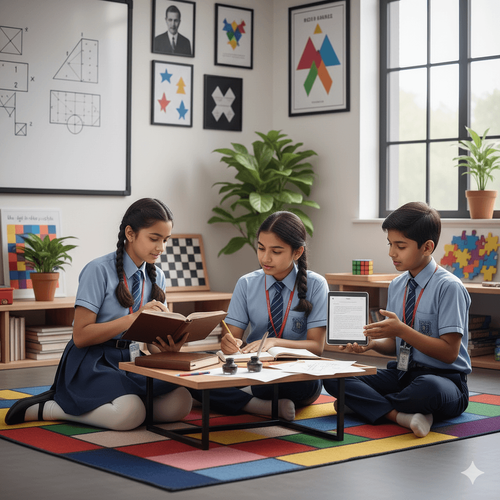

Visual imagery is a crucial part of writing that helps readers not just understand but experience your words. By using visual imagery, writers can create mental pictures that make stories, poems, and essays more engaging, lively, and memorable. When you describe a scene, character, or object in detail, your readers can visualize it in their minds, almost like watching a movie. This makes your writing more effective and enjoyable. In this blog, we will explore what is visual imagery, its meaning, why it is important, practical examples, and how you can use it in your writing. Whether you are working on short stories, poems, or descriptive paragraphs, learning visual imagery can make your writing stand out. By practicing these techniques, students can also improve their observation skills, creativity, and ability to communicate ideas clearly. Throughout this blog, we will include visual imagery examples to make the concepts easy to understand and apply.
Introduction to Visual Imagery
What is Visual Imagery?
Visual imagery is a type of descriptive writing that focuses on creating mental pictures for readers. It allows them to see the scenes, objects, or characters in their mind, making the story more engaging. Whenever you use words that describe color, shape, size, or movement, you are using visual imagery. For example, writing “The sunset glowed orange and pink across the horizon” lets the reader picture the sky vividly, rather than just knowing it is evening. Using visual imagery makes reading an interactive experience, allowing readers to imagine themselves inside the story.
Visual Imagery Meaning
At its core, visual imagery meaning revolves around transforming words into images. Every adjective, descriptive phrase, or action helps readers form a clear picture. Visual imagery is not just about describing objects; it is about painting scenes that evoke emotions. For instance, describing a garden as “a sea of blooming tulips swaying gently in the breeze” gives a stronger image than simply saying “the garden had flowers.”
How Visual Imagery Helps Readers
Using visual imagery has many benefits for writing:
Engages the senses: Readers can visualize and experience what you describe.
Makes writing memorable: Stories and poems become more vivid and stick in the reader’s mind.
Clarifies ideas: Readers can see exactly what you mean without guessing.
Example Table – Visual Imagery in Simple Writing
| Description | Imagery Created | Effect on Reader |
|---|---|---|
| A red balloon floating away | Small red balloon in the sky | Sense of freedom and lightness |
| Sparkling stream under sunlight | Glittering water, sunlight reflections | Adds calmness and beauty |
| Dark, misty forest | Shadows, twisted trees, fog | Builds suspense and curiosity |
Through these examples, you can see how visual imagery transforms simple sentences into vivid, memorable pictures that readers can enjoy and imagine easily.
Why Use Visual Imagery?
Engaging the Reader’s Imagination
The main reason to use visual imagery is to draw readers into your writing. Without imagery, stories or poems may feel flat or dull. By describing colors, shapes, movements, and surroundings, you allow readers to imagine themselves in the scene. For instance, instead of writing “The forest was scary,” you could use visual imagery: “The trees twisted like claws under a gray, misty sky, and shadows danced along the forest floor.” This makes readers feel the suspense and excitement of the forest.
Making Stories and Poems More Memorable
Visual imagery helps make your writing stick in the reader’s mind. A poem about a beach becomes much more impactful when you describe it with imagery: “Golden sand stretched endlessly, and waves lapped softly under the pink sunset sky.” Readers can picture the scene clearly, and it evokes emotions such as calmness or happiness. Using visual imagery consistently throughout a story or poem strengthens its impact and keeps readers engaged.
Visual Imagery in Everyday Writing
You don’t have to use visual imagery only in stories or poems. It can enhance everyday writing, including:
Diary entries: Describe experiences vividly to make them memorable.
Letters and messages: Make your communication more expressive and interesting.
Essays and assignments: Use descriptive words to clearly explain experiments, observations, or events.
Practical Tips for Using Visual Imagery
Use specific adjectives to describe colors, shapes, and sizes.
Describe movements and actions to bring scenes alive.
Focus on small, unique details to make writing realistic.
Combine visuals with emotions to engage readers more deeply.
Mix short and long sentences to maintain a natural flow.
Using visual imagery effectively requires observation and creativity. By practicing these techniques, you can make your writing more engaging, imaginative, and impactful. Students who master visual imagery not only improve their writing but also develop a stronger ability to observe and express ideas clearly.
“Every child has a story waiting to be told.”
Unlock your child’s creativity with PlanetSpark’s Creative Writing course.
How to Use Visual Imagery
Using visual imagery in writing is about painting pictures with words so your readers can imagine the scene clearly. When done correctly, it makes your writing engaging, exciting, and memorable. Writers use different techniques to create visual imagery, and understanding these can improve your stories, poems, and essays.
Using Descriptive Words
The first step is choosing specific, vivid adjectives rather than generic words. For example:
Instead of saying “The flower is pretty,” say “The bright red rose bloomed gracefully in the sunlight.”
Instead of “The sky is nice,” use “The sky glowed in shades of pink and gold as the sun set.”
Descriptive words help readers see and feel what you are describing. Using colors, shapes, textures, and sizes adds richness to your writing.
Painting Pictures with Sentences
It’s not just words but how you arrange them. Use sentences to show action and movement, creating a dynamic scene. For instance:
“The leaves rustled and danced as the cool wind swept through the forest.”
“A tiny butterfly fluttered over the bright yellow flowers, pausing on each petal.”
Here, readers can visualize movement, making the scene more alive.
Combining Senses for Stronger Imagery
Even though visual imagery focuses on sight, combining it with other senses can enhance the effect. You can describe sounds, smells, and textures along with visual details:
“The crimson apples hung low on the tree, their sweet fragrance filling the air.”
“The crystal-clear stream sparkled in the sunlight, while the soft rustle of leaves echoed through the forest.”
This approach makes readers feel present in the scene, not just observe it.
Step-by-Step Tips to Use Visual Imagery:
Observe carefully: Notice details in your surroundings.
Choose descriptive words: Focus on color, size, shape, and texture.
Combine senses: Add sounds, smells, or movement to create depth.
Use figurative language: Similes and metaphors can enhance visualization.
Edit for clarity: Avoid overloading with unnecessary details.
Mini Table – Visual Imagery Techniques
| Technique | Example | Effect on Reader |
|---|---|---|
| Descriptive words | Bright blue sky, golden sand | Creates clear mental picture |
| Action and movement | Leaves danced in the wind | Adds liveliness and motion |
| Combining senses | Sweet-smelling flowers, buzzing bees | Makes the scene immersive |
| Figurative language | Sun dipped like a glowing orange ball | Adds imagination and creativity |
By practicing these techniques, students can strengthen their writing and make it more engaging for readers. Visual imagery transforms ordinary sentences into vivid, unforgettable scenes.
Visual Imagery Examples
Seeing examples is one of the best ways to understand visual imagery and learn how to use it in your writing. Here are several types of examples suitable for beginners, stories, and poems.
Simple Examples for Beginners
Beginner writers can start by describing everyday objects and scenes. Examples include:
“The yellow school bus rumbled down the street, leaving a trail of dust behind.”
“The ginger cat stretched lazily on the sunny windowsill, its tail flicking slowly.”
“A blue kite soared high in the clear sky, dancing in the wind.”
These examples focus on color, movement, and clarity, which are easy to visualize.
Examples in Short Stories
In stories, visual imagery helps readers picture characters and settings:
“The ancient castle stood on the cliff, its gray stones covered in ivy, while waves crashed violently below.”
“A tiny village lay nestled between rolling green hills, with smoke curling from the chimneys.”
Here, imagery creates a strong sense of place and sets the mood.
Visual Imagery in Poems
Poets often use visual imagery to evoke emotions and imagination. Examples:
“The silver moon reflected on the calm lake, as fireflies twinkled around the shore.”
“The autumn leaves, red and gold, danced along the empty path.”
These examples not only paint a picture but also connect visually with readers’ emotions.
Famous Examples from Literature
From Alice in Wonderland: “The grassy meadow was dotted with bright, colorful flowers, swaying gently in the breeze.”
From The Lion, the Witch, and the Wardrobe: “The forest sparkled with frost, and the snow crunched under every step.”
Tips to Analyze Visual Imagery in Examples:
Identify the colors, shapes, and movements.
Notice how adjectives and verbs create the picture.
See how visual imagery supports the story or poem’s mood.
By looking at these examples, students can understand how to use visual imagery effectively, making their own writing vivid, engaging, and memorable.
“Imagination is the first step to great writing.”
Help your child master storytelling with PlanetSpark’s Creative Writing program.
Common Mistakes in Using Visual Imagery
While visual imagery is a powerful tool, many writers make mistakes that can weaken their writing or confuse readers. Understanding these common errors can help students improve their descriptive writing and make their stories, poems, and essays more engaging.
Overloading the Reader with Details
Adding too many details at once can overwhelm the reader and distract from the main idea. For example:
“The garden had roses, tulips, sunflowers, lilies, marigolds, orchids, daisies, violets, and daffodils, all with different colors, smells, and shapes.”
This sentence is too long and packed with details. Instead, focus on key elements that create a vivid picture:
“The garden bloomed with bright tulips and golden sunflowers, their fragrance filling the air.”
Using Vague or Generic Descriptions
Using words like “nice,” “big,” or “beautiful” does not help readers visualize the scene. For instance:
“The house was big and nice.”
Instead, use specific adjectives and imagery:
“The stone house had tall, narrow windows and a sloping red roof that glowed in the sunlight.”
Ignoring the Flow of the Story
Adding visual imagery is important, but too much description can slow down the story. Writers should balance imagery with action. For example:
Poor flow: “The dragon had shiny scales, sharp claws, blazing eyes, long wings, and a spiked tail. Then it roared and breathed fire.”
Better flow: “The dragon roared fiercely, its blazing eyes and sharp claws ready to strike.”
Other Common Mistakes:
Repeating the same visual imagery words multiple times.
Using images that don’t match the mood of the scene.
Forgetting to combine movement and action, making descriptions feel static.
Tips to Avoid Mistakes:
Focus on quality over quantity: Choose the most impactful details.
Be specific: Use adjectives, verbs, and sensory words.
Read aloud: Check if the imagery feels natural and flows with the story.
Edit and refine: Remove unnecessary or confusing details.
By being aware of these mistakes, students can use visual imagery effectively to make their writing engaging without overwhelming readers. Good visual imagery guides the reader’s imagination rather than confusing it.
Practice Exercises for Students
Practice is the key to mastering visual imagery. By working on small exercises, students can improve their descriptive skills, learn to use sensory details, and make their writing more vivid and memorable.
Writing Your Own Visual Imagery Sentences
Start with simple objects or scenes and write detailed sentences:
Example object: A cup of tea
Visual imagery sentence: “The steaming cup of tea glowed in the morning light, its rich amber color inviting her to take a sip.”
Analyzing Imagery in Poems
Choose a short poem and identify the visual imagery used:
Look for colors, shapes, and actions described.
Note how imagery conveys mood or emotion.
Example: In “The autumn leaves danced along the path,” notice how movement and color create a lively visual.
Fun Creative Activities
Picture Description: Look at a photo and describe it using vivid adjectives and sensory details.
Story Building: Write a short story using at least five visual imagery elements.
Imagery Swap: Rewrite a plain sentence using more descriptive words to create imagery.
Original: “The dog ran in the park.”
Imagery version: “The golden retriever leapt joyfully across the green grass, its ears flapping in the wind.”
Tips for Consistent Practice:
Keep a visual imagery journal: Write one descriptive sentence daily.
Observe your surroundings carefully and note details others may miss.
Read books and poems, identify imagery, and try to use similar techniques in your own writing.
With regular practice, students can enhance their writing skills and make their stories and poems more vivid, engaging, and enjoyable. Visual imagery not only improves writing but also strengthens creativity and observation skills.
Unlock Your Child’s Creativity with PlanetSpark Creative Writing
At PlanetSpark, we believe every child has a story to tell. Our Creative Writing program is designed to help children express themselves confidently and creatively while mastering essential writing skills such as structure, vocabulary, and coherence. Through engaging lessons and hands-on activities, students learn not just to write, but to think, present, and refine their ideas, building a strong foundation for lifelong communication skills.
Why Choose PlanetSpark Creative Writing?
Genre-Based Curriculum
Covers short stories, poetry, journal writing, essays, book reviews, and persuasive letters.
Each genre has its own dedicated lesson plan, ensuring focused skill development.
Framework-Driven Writing Instruction
Learn story arcs (beginning-middle-end), S.T.O.R.Y structure, and 5W1H method.
Use the PEEL technique for essays and arguments to structure thoughts logically.
Writing + Speaking Integration
Children present their written work orally, enhancing expressive confidence.
Develop narrative flow and storytelling skills through guided presentations.
Editing, Feedback, and Rewriting
Focus on real-time editing, peer review, and teacher feedback.
Emphasis on revision and improvement, teaching students the power of rewriting.
Real Publishing Opportunities
Publish stories on PlanetSpark’s blog, e-magazine, or co-authored anthologies.
Boosts confidence, visibility, and pride in creative achievements.
Creativity Stimulus Activities
Engage with story dice, prompts, image-based writing, and guided imagination exercises.
Encourage original thinking and imagination, making learning fun and interactive.
PlanetSpark’s Creative Writing program ensures that children not only become better writers but also confident communicators and imaginative thinkers. By integrating structured writing techniques with creativity and real-world applications, we make the writing journey both educational and enjoyable.
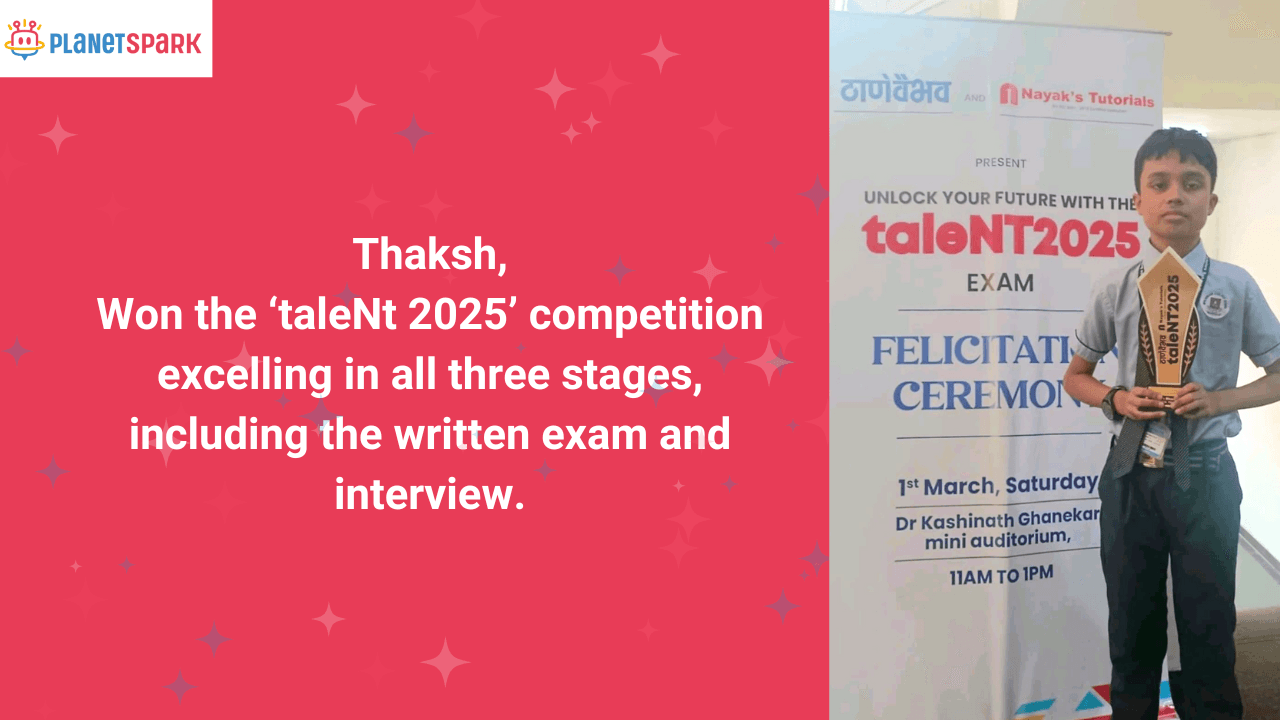
Thaksh Shines at ‘taleNt 2025’ Competition
Thaksh achieved remarkable success by winning the ‘taleNt 2025’ competition in Thane. He excelled across all three stages, including the written exam, creative tasks, and personal interview, showcasing his talent, dedication, and confidence.
Mastering Visual Imagery for Engaging Writing
Visual imagery helps young writers bring their words to life, making stories, poems, and essays more vivid and memorable. By understanding what is visual imagery and practicing it through examples and exercises, students can engage readers’ imagination, express creativity, and improve storytelling skills. With careful word choice and consistent practice, writing becomes immersive, clear, and impactful.
“Great writers are made, not born.”
Boost your child’s confidence and skills with PlanetSpark Creative Writing classes.
Frequently Asked Questions
Visual imagery is the use of descriptive language to create mental pictures for the reader, making stories, poems, and essays more vivid and engaging.
It engages the reader’s imagination, makes writing memorable, and helps convey emotions, scenes, and actions more clearly.
Use specific adjectives, colors, shapes, and movements, combine senses like sound and smell, and arrange sentences to paint a clear picture for readers.
Yes! Visual imagery is especially effective in poems and stories, helping readers visualize scenes, characters, and emotions vividly.
- Overloading readers with too many details
- Using vague or generic words like “nice” or “big”
- Ignoring the story flow and slowing down the narrative
- Write descriptive sentences about everyday objects
- Analyze poems or stories for imagery
- Use creative exercises like picture description or rewriting plain sentences with vivid details
Yes, practicing visual imagery improves creativity, observation, descriptive ability, and storytelling skills, making your writing more engaging and expressive.
Visual imagery focuses on sight and descriptive detail, while other imagery types, like auditory or tactile, focus on sound, touch, smell, or taste to enrich writing.