
What is a Rheotrical Device? Know Purpose, Types and Elements
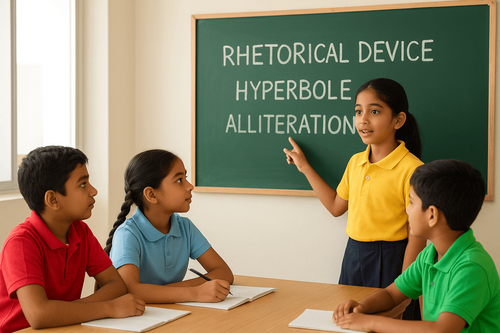

Words can inform, but the right words can influence. That’s the magic of rhetorical devices, they turn everyday language into artful expression. From a speech that gives you goosebumps to a story that lingers in your mind, rhetorical devices shape how we feel and respond. Let’s explore their purpose, types, and elements to see how they make communication unforgettable.
What is a Rhetorical Device?
A rhetorical device is a technique used in writing or speaking to make communication more persuasive, engaging, and memorable. Instead of just delivering plain information, it helps the speaker or writer express ideas in a way that captures attention and stirs emotion. These devices are often used in speeches, debates, essays, and storytelling to strengthen the overall message.
For example, when a teacher says, “Practice makes perfect,” that’s a rhetorical device known as alliteration, using repeated sounds to make a phrase catchy and easy to remember. Similarly, when someone asks, “Who doesn’t want success?”, it’s a rhetorical question, asked not to get an answer, but to make the listener think.
In simple terms, rhetorical devices turn ordinary communication into powerful expression. They help students speak with impact, write with confidence, and connect with their audience emotionally, which is why mastering them early can significantly improve presentation and writing skills.
What's the Purpose of a Rhetorical Device?
The main purpose of a rhetorical device is to make communication more powerful and memorable. When someone uses the right rhetorical techniques, their message doesn’t just inform, it inspires, convinces, or connects emotionally with the listener or reader.
In everyday life, we hear rhetorical devices all the time, in advertisements, speeches, and even classroom debates. They help the speaker create a stronger impact by shaping how ideas sound and feel.
For instance, a motivational speaker saying “You are not just learning, you are growing, evolving, and transforming!” uses repetition and rhythm to motivate the audience. The words sound energetic and inspiring because the structure builds emotion.
So, rhetorical devices are not just language tricks, they are tools of effective communication. They help:
- Capture attention and keep the audience engaged
- Emphasise important ideas or emotions
- Build credibility and trust through polished expression
- Make messages sound persuasive and confident
In short, the purpose of rhetorical devices is to help speakers and writers express their thoughts in a way that stays with the audience long after they finish speaking or reading.
Unlock your voice and let your ideas shine.
Enrol in PlanetSpark’s Communication and Public Speaking Course today to build confidence that lasts a lifetime.
What are the Elements of a Rhetorical Device?
Every rhetorical device is built on key elements that make communication persuasive, emotional, and impactful. These rhetorical elements form the foundation of great speeches, essays, and presentations. Understanding them helps students structure their ideas more effectively and influence their audience with clarity and confidence.
The three main elements of a rhetorical device are Ethos, Pathos, and Logos, originally introduced by the Greek philosopher Aristotle. Let’s explore each one with simple explanations and examples.
Ethos – The Element of Credibility
Ethos refers to the credibility or trustworthiness of the speaker or writer. It answers the question, “Why should the audience believe you?”
When you use Ethos, you build confidence in your message by showing authority, experience, or moral values. Teachers, leaders, and experts often use Ethos to gain respect and attention.
Example:
A doctor giving a health talk and saying, “With 10 years of medical experience, I’ve seen how regular exercise changes people’s lives,” uses Ethos. The qualification and experience make the statement believable and credible. For students, developing Ethos means presenting facts correctly, speaking confidently, and maintaining a respectful tone during presentations or debates.
Pathos – The Element of Emotion
Pathos appeals to the audience’s feelings. It helps you connect emotionally, by using stories, expressions, or examples that trigger empathy, excitement, or motivation. Speakers often use Pathos when they want their audience to care deeply about a topic. Emotional appeal makes the message memorable and helps persuade the listener’s heart, not just their mind.
Example:
In a school speech on kindness, saying “Imagine how a single kind word could brighten someone’s worst day” is a use of Pathos. It paints a picture that touches emotions and encourages compassion.
Using Pathos effectively in communication or writing helps students express passion and make their ideas relatable.
Logos – The Element of Logic
Logos is all about reasoning and facts. It appeals to the audience’s sense of logic and rationality by using evidence, data, examples, or statistics.
A strong argument always includes Logos because it proves that your ideas are not just emotional, they are supported by truth and reasoning.
Example:
In a debate about online education, a student might say, “According to a recent study, 78% of learners reported better flexibility and focus with online classes.” This statement uses data to support an argument, making it logical and convincing.
Developing Logos helps children think critically, structure their points clearly, and present information confidently during class discussions or competitions.
Rhetorical Device vs. Literary Device
Rhetorical devices come in many forms, each serving a unique purpose in making speech or writing more persuasive and memorable. By learning these techniques, students can improve how they express ideas, convince audiences, and add rhythm and emotion to their words. Here are some of the most effective types of rhetorical devices in English communication.
Rhetorical Questions
A rhetorical question is asked not to get an answer, but to make the listener reflect or agree silently. It’s one of the most common rhetorical devices in communication, often used in debates, advertisements, and motivational speeches.
Example:
- “Do we really appreciate what we have before it’s gone?”
- “Isn’t education the strongest tool for change?”
These questions engage the audience emotionally and intellectually. Instead of giving information directly, they make people think and connect with the speaker’s message.
Repetition
Repetition means using the same word or phrase multiple times to stress a point or make it memorable. This rhetorical device in speeches helps build rhythm and keeps the audience focused on the main idea.
Example:
Martin Luther King Jr.’s famous line “I have a dream” is repeated several times to reinforce hope and equality.
In student presentations or school debates, repeating key phrases like “We must act now” or “Change begins with us” can strengthen emotional appeal and make the message stick.
Alliteration
Alliteration is the repetition of initial sounds in closely connected words. It’s a stylistic rhetorical device that makes sentences sound pleasing and easy to remember.
Example:
- “She sells seashells by the seashore.”
- “Practice, patience, and persistence lead to progress.”
Using alliteration in speeches or essays makes language rhythmic and impactful. It’s especially useful when teaching children how to use rhetorical techniques in communication that keep listeners engaged.
Parallelism
Parallelism involves using similar grammatical structures or patterns in a sentence to give ideas equal importance. This rhetorical device in English writing improves flow and makes speech sound organised and powerful.
Example:
- “Tell me and I forget. Teach me and I remember. Involve me and I learn.” – Benjamin Franklin
In classroom presentations or competitions, students can use parallelism to sound confident and structured. It shows clear thinking and enhances the professional tone of communication.
Metaphor
A metaphor is one of the strongest rhetorical and literary devices. It compares two different things directly to make an idea more vivid and relatable. Unlike a simile, it doesn’t use words like “as” or “like.”
Example:
- “Time is a thief.”
- “Her voice was music to my ears.”
Metaphors make ideas easier to understand by linking them to familiar experiences. In communication, they help speakers turn abstract ideas into concrete images that audiences can visualise and remember.
Don’t just speak, stand out!
Join PlanetSpark’s expert-led courses and learn how to present with clarity, confidence, and impact.
Types of Rhetorical Devices
Rhetorical devices are powerful tools that enhance communication, persuasion, and writing. They make speech more impactful and help readers or listeners connect emotionally. Let’s explore the main types of rhetorical devices used in English writing and public speaking, with examples.
Persuasive Rhetorical Devices
These devices aim to influence opinions and make the audience agree with your viewpoint. They’re often used in speeches, essays, and advertisements.
Common examples:
- Ethos (Credibility): Appeals to authority or trust.
Example: “As a doctor, I can assure you this treatment is safe.” - Pathos (Emotion): Appeals to feelings.
Example: “Think of the children who suffer every day.” - Logos (Logic): Appeals to reason and facts.
Example: “Statistics show that 80% of people prefer this brand.”
Using ethos, pathos, and logos in writing or speaking helps build a strong, convincing argument, essential for presentation and debate skills.
Figurative Rhetorical Devices
These make language more creative and memorable through comparisons or exaggerations.
Common examples:
- Metaphor: A direct comparison between two things.
Example: “Time is a thief.” - Simile: A comparison using “like” or “as.”
Example: “Her smile was as bright as the sun.” - Personification: Giving human qualities to non-human things.
Example: “The wind whispered secrets.”
Such figurative devices are key in creative writing and storytelling, helping the speaker or writer paint vivid mental images.
Structural Rhetorical Devices
These focus on the arrangement of words or ideas to create rhythm or emphasis.
Common examples:
- Anaphora: Repeating a phrase at the start of sentences.
Example: “We will fight for justice. We will fight for freedom.” - Parallelism: Using similar sentence structures for balance.
Example: “Easy come, easy go.” - Antithesis: Contrasting ideas in a balanced way.
Example: “Speech is silver, but silence is golden.”
Such structures make your speech sound rhythmic, clear, and persuasive, an essential element of strong communication.
Emotional Rhetorical Devices
These devices trigger emotional responses that help the audience feel connected.
Common examples:
- Imagery: Descriptive language appealing to the senses.
Example: “The aroma of freshly baked bread filled the air.” - Hyperbole: Exaggeration to make a point.
Example: “I’ve told you a million times!” - Anecdote: A short personal story to illustrate a point.
Example: “When I first started school, I too was nervous.”
Such emotive language techniques help speakers engage audiences, especially useful for public speaking, debates, and storytelling.
Sound-Based Rhetorical Devices
Sound can influence how ideas are remembered. These devices rely on repetition and rhythm to make words catchy and powerful.
Common examples:
- Alliteration: Repetition of consonant sounds.
Example: “Peter Piper picked a peck of pickled peppers.” - Assonance: Repetition of vowel sounds.
Example: “The rain in Spain stays mainly in the plain.” - Onomatopoeia: Words that imitate sounds.
Example: “Buzz,” “bang,” or “crash.”
These sound devices add musicality to speech and make public speaking and creative writing more engaging and memorable.
How PlanetSpark Helps Students Master Rhetorical Devices in Communication
Mastering rhetorical devices is essential for confident and persuasive communication. PlanetSpark empowers students to use these techniques effectively through its structured and engaging learning model. From understanding figures of speech to applying them in speeches, debates, and storytelling, the program ensures children express ideas with clarity, confidence, and creative impact.
- Live 1:1 Coaching by Expert Trainers: Students receive personalized guidance from certified mentors during interactive sessions, making the use of rhetorical devices like analogies, metaphors, and rhetorical questions clear and accessible.
- Structured Curriculum with Rhetoric-Focused Modules: The curriculum includes focused units on public speaking, persuasive writing, presentation skills and communication techniques, where rhetorical devices are taught as part of “persuasive communication” and “impactful delivery”.
- Activity-Based Practice & Real-World Application: Through debates, mock speeches, storytelling and role-plays, students apply rhetorical devices in simulated real-world situations, making the learning practical, not just theoretical.
- Continuous Feedback & Progress Tracking: With AI-powered reports and trainer feedback, students see how well they are using rhetorical techniques (like repetition, parallelism, or rhetorical questions) and receive suggestions to refine their delivery.
- Confidence-Building and Audience Awareness: Beyond the technique, PlanetSpark helps students understand their audience, adapt their tone, tone and body language, and use rhetorical devices with awareness, so their speeches sound natural and persuasive rather than rehearsed.
Want to speak fearlessly in front of your class?
PlanetSpark’s fun and interactive sessions can help you master presentation skills with ease and confidence.
Conclusion
By mastering rhetorical devices with PlanetSpark, students don’t just learn to speak, they learn to influence, inspire, and lead. Each session builds their confidence and command over language, turning everyday speech into impactful communication. It helps your child unlock the power of words today. Join PlanetSpark’s Communication Skills Program and watch them speak with clarity, confidence, and conviction!
Frequently Asked Questions
After completing the course, children gain better articulation, creative thinking, and presentation confidence. They learn to use rhetorical techniques effectively, making their communication polished, persuasive, and audience-ready.
Rhetorical devices make public speaking more engaging by adding rhythm, clarity, and emotion to speech. They help speakers emphasise key points, connect with the audience, and leave a lasting impression during debates, storytelling, or stage performances.
PlanetSpark offers communication and public speaking courses for children aged 4 to 14 years. The curriculum is designed to match each child’s learning level, helping them develop strong speaking and presentation skills step by step.
PlanetSpark uses interactive 1:1 classes, storytelling, and real-life speaking activities to help students understand and apply rhetorical devices naturally. Trainers guide children through examples, feedback sessions, and exercises that make communication powerful and expressive.
Learning rhetorical devices helps students improve their public speaking, writing, and debating skills. It teaches them how to organise thoughts, express emotions effectively, and make their words sound confident and impactful in front of any audience.
Rhetorical devices are techniques used to make speech or writing more persuasive, engaging, and memorable. They include tools like metaphors, repetition, and rhetorical questions that help speakers express ideas clearly and connect emotionally with their audience.