
Why to Choose Picture for Storytelling: Fun Ways for Students
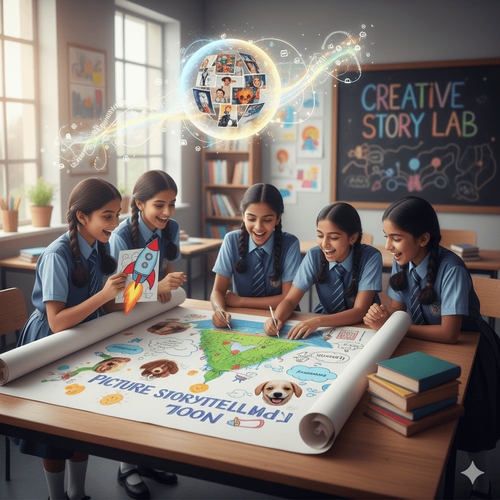

Table of Contents
Ever wondered why comic books are easier to understand than thick novels? That's the magic of picture storytelling! Learning why to choose picture for storytelling can transform your school projects from boring to brilliant. Pictures help you explain ideas faster, grab attention instantly, and make everyone remember your work. At PlanetSpark, we teach students exactly how to master this powerful skill through engaging courses that turn you into a confident storyteller using words and visuals together!
Why to Choose Picture for Storytelling
Here are the top reasons why to choose picture for storytelling to get detailed knowledge:
1. Pictures Help Everyone Understand
Imagine you have a classmate who just moved to your school from another country. They might not understand all the English words you use yet, but they can definitely understand a picture! If you are planning to write an adventure story with creative pictures, click here.
Pictures are like a universal language. A photo of someone smiling means happiness everywhere in the world. A picture of rain means the same thing whether you're in India, America, or Japan. When you use pictures in your stories, everyone in your class can understand your message – no matter who they are or where they come from.
2. You Remember Pictures Better
Here's a cool fact: your brain can remember pictures much better than words! Scientists have found that three days after learning something, people only remember about 10% of what they read. But when you add a picture to those same words, people remember 65%!
Think about your favorite textbook. Which parts do you remember best? I bet it's the pages with colorful diagrams, photos, or illustrations, right? That's because your brain loves pictures!
When you add pictures to your school projects, your teachers and classmates will remember your work much longer. This means better grades and more appreciation for your hard work!
3. Pictures Make People Feel Something
Words can describe feelings, but pictures make you actually feel them. Have you ever seen a photo that made you happy, sad, or excited? That's the power of visual storytelling!
Let's say you're doing a project about helping stray animals. You could write "Many dogs don't have homes and they are sad." Or you could show a picture of a lonely puppy sitting in the rain. Which one would make people want to help more? The picture, of course!
When your audience feels something, they pay more attention to your story. They care more about what you're saying, and they're more likely to remember it.
4. Pictures Make Hard Things Easy
Some topics in school are really complicated. Science concepts, math problems, history timelines – they can all feel confusing when you're just reading about them. But add some pictures, and suddenly everything becomes clearer!
Imagine trying to explain how plants make food without any pictures. It would take so many words! But with a simple diagram showing the sun, leaves, water, and arrows pointing to different parts – boom! Everyone gets it right away.
Pictures break down complicated ideas into simple, easy-to-understand pieces. They're like shortcuts for your brain!
5. Pictures Grab Attention
Be honest – when your teacher puts up a slide full of words, do you feel excited? Probably not! But when a slide has a cool picture or an interesting image, everyone suddenly looks up and pays attention.
We live in a world full of distractions. Phones buzz, friends whisper, and minds wander. Pictures are attention magnets! They make people stop and look. They break up boring text and keep your audience interested in what you're saying.
When you use pictures in your presentations or projects, you're basically saying, "Hey! Look at this! This is important!" And people actually will look.
Help your child master storytelling, poetry, and essays!
See the magic in action – Book a Trial Class at No Cost.
Telling a Story Through Pictures Ideas
Now that you know why pictures are so powerful, let's talk about how you can use them in your schoolwork. Here are some simple ideas. Before writing a story, it is important to know the S.T.O.R.Y Framework, which you can go through by clicking this link.
Photo Stories: Take a series of photos that tell a story from beginning to end. You could photograph your science experiment steps, document a school event, or show how something changes over time.
Comic Strips: Draw or create panels that show your story like a comic book. This works great for book reports, historical events, or explaining cause and effect.
Posters with Pictures: Make a poster that combines a few key words with powerful images. Perfect for campaigns, book reviews, or summarizing topics.
Before and After Pictures: Show how something changed using two pictures. Great for science projects, growth documentation, or comparing different things.
Picture Collections: Gather related pictures that all tell parts of one bigger story. Like creating a collage of different animals for a habitat project.
Tips for Using Pictures in Your Stories
It is important to know the tips for using pictures to present a more relatable story.
Pick Pictures That Match Your Story
Don't just add random pictures because they look cool! Every picture should help tell your story. Ask yourself: "Does this picture help explain my point?" If the answer is no, find a different one.
If you're talking about recycling, use pictures of recycling bins, recyclable materials, or the Earth. Don't use a picture of pizza just because you like pizza!
Use Clear, Good Quality Pictures
Blurry pictures are hard to see and understand. Always try to use clear, bright photos that everyone can see easily – even from the back of the classroom. If you're taking photos with your phone, make sure there's enough light and your hand isn't shaking.
Don't Steal Pictures
This is really important! You can't just take any picture from the internet and use it. Many pictures are protected by copyright, which means they belong to someone else.
Instead, use pictures from free websites like Unsplash or Pexels, take your own photos, or draw your own pictures. And always say where you got the picture from – write "Photo by John Smith" or "Image from Unsplash" under your pictures.
Mix Pictures and Words
Pictures are amazing, but they work best when you use them WITH words, not instead of words. Use pictures to support what you're saying, not replace it completely.
Think of it like a peanut butter and jelly sandwich. The peanut butter (words) and jelly (pictures) are both good on their own, but together they're even better!
Keep It Simple
You don't need to fill every inch of your project with pictures. Sometimes one powerful picture is better than ten okay ones. Choose your pictures carefully and give them space to shine. Bring creativity and structure together in your child’s writing!
Bring creativity and structure together in your child’s writing!
Try it out today – Reserve a Free Trial Lesson.
How to Get Better at Picture Storytelling
Like riding a bike or playing a video game, picture storytelling gets easier with practice. Here's how you can improve:
Look Around You: Start noticing how pictures are used everywhere – in books, websites, advertisements, and videos. What makes some pictures work better than others?
Try Different Types: Experiment! Sometimes use photos, sometimes use drawings. Try diagrams, charts, or even memes. See what works best for different types of stories.
Take Your Own Photos: You don't need a fancy camera. Your phone works great! Practice taking clear, interesting photos. Try different angles and lighting.
Ask for Feedback: Show your picture stories to friends, family, or teachers. Ask them what they understood from your pictures. Their feedback will help you improve.
Start Small: Don't feel like you need to create a masterpiece right away. Start with simple projects. Add one or two pictures to your next assignment and see how it goes.
Common Worries (And Why They're Okay!)
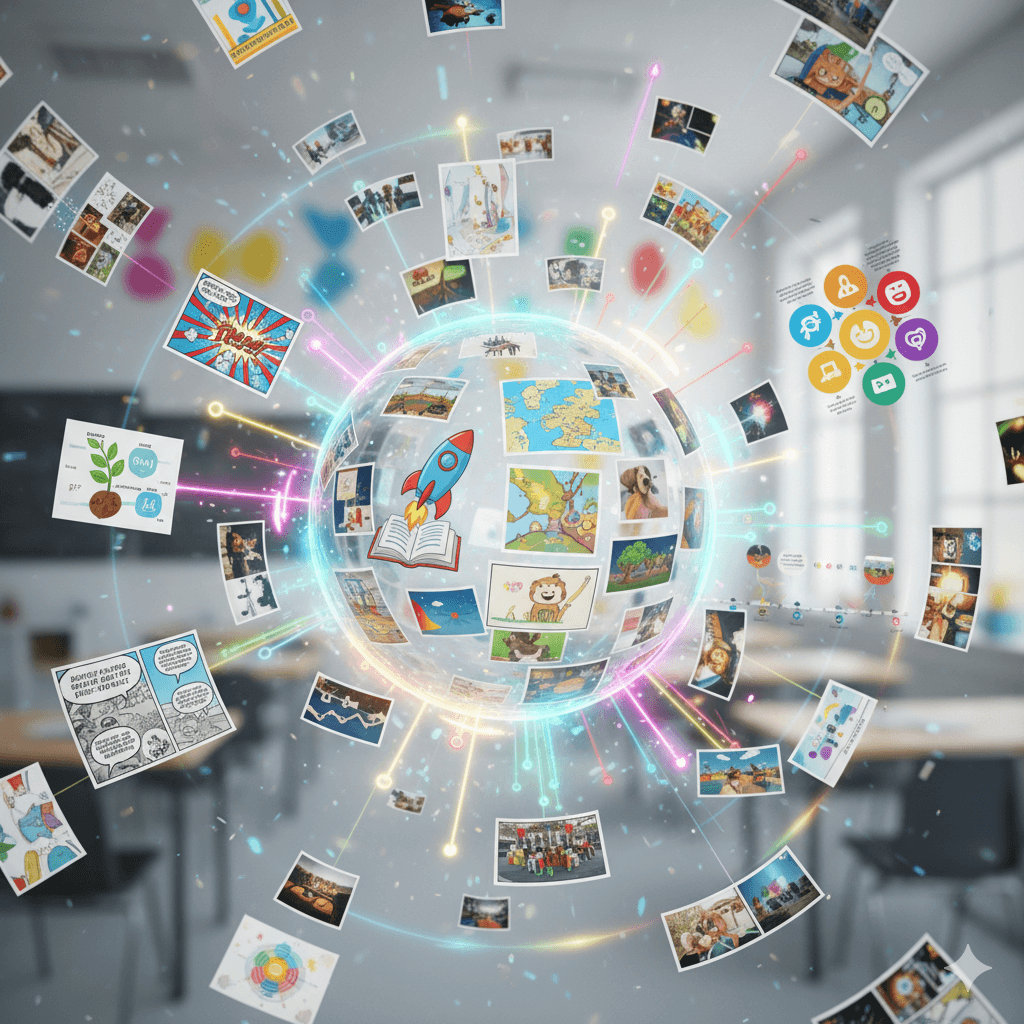
Common worries are normal. Students often feel unsure, but challenges are part of learning and help build confidence and creativity.
"I'm not good at drawing!" That's totally fine! You don't need to be an artist. You can use photos, cut out pictures from magazines, use free online images, or use simple shapes and stick figures. Your ideas matter more than perfect art.
"Finding pictures takes too much time!" At first, it might take a little longer. But once you know where to look (free photo websites, your own camera, simple drawing apps), it gets much faster. Plus, the extra time is worth it because your work will be so much better!
"What if I can't find the perfect picture?" Sometimes the perfect picture doesn't exist, and that's okay! Find something close, or create your own version. Even a simple drawing or a photo you take yourself can work great.
Watch your child grow into a confident writer and speaker!
Experience it firsthand – Sign Up for a Free Demo Class.
Real Ways to Use This at School
Let me give you specific examples of how you can use picture storytelling in your everyday schoolwork:
For English Class: Instead of just writing a book report, create a visual summary with pictures representing the main characters, setting, and important scenes.
For Science Class: Take photos of each step when you experiment. Your project report will be so much clearer!
For History Class: Create a timeline with pictures showing important events. It's way more interesting than just listing dates.
For Math Class: Use diagrams and visual examples to show how you solved a problem. Your teacher will love seeing your thinking process.
For Presentations: Add one good picture to each slide. Your classmates won't fall asleep, and your teacher will be impressed!
Why This Matters for Your Future
Learning to tell stories with pictures isn't just about getting good grades now (though it definitely helps with that!). It's a skill you'll use for your whole life.
Think about jobs of the future – almost everything involves communicating with others. Businesspeople use presentations with visuals. Scientists use diagrams. Doctors use medical images. Teachers use pictures to help students learn. Even social media influencers tell stories with pictures and videos!
By learning picture storytelling now, you're preparing yourself for success in whatever you want to do later. You're learning how to share your ideas in a way that people actually want to listen to. That's a superpower!
Your Turn to Try!
Now you know why to choose pictures for storytelling and how to use them. The best way to get better is to start trying it today!
Here's a simple challenge: Look at your next school assignment. Where could you add one picture to make it better? Maybe it's a photo, a simple drawing, or a diagram. Add that picture and see what happens. I bet your teacher will notice, and I bet you'll get better feedback than usual.
Remember, every expert was once a beginner. Every amazing visual storyteller started with their first picture. Your first attempts might not be perfect, and that's completely okay! The important thing is to start and keep practicing.
Spark Your Child’s Creativity with PlanetSpark’s Creative Writing
At PlanetSpark, we help children become confident writers and storytellers. Our Creative Writing program nurtures imagination while building essential language and communication skills. Designed for young learners, it combines structured learning with fun, engaging activities to make writing an enjoyable journey.
Program Highlights:
Genre-Based Curriculum: Explore short stories, poetry, journals, essays, book reviews, and persuasive letters.
Framework-Driven Writing: Learn story arcs, S.T.O.R.Y structure, 5W1H method, and PEEL technique.
Writing + Speaking Integration: Present written work orally to boost confidence and narrative flow.
Editing & Feedback: Real-time teacher feedback, peer reviews, and rewriting sessions.
Creativity Boosters: Story dice, prompts, and image-based exercises stimulate original thinking.
Publishing Opportunities: Share stories on blogs, e-magazines, and anthologies.
With PlanetSpark, your child transforms ideas into expressive, structured, and confident storytelling.
Final Thoughts
Pictures make your stories stronger, clearer, and more memorable. They help you explain difficult ideas, keep people interested, and make your schoolwork stand out. When you choose pictures for storytelling, you're not just making things look pretty – you're becoming a better communicator.
So next time you have a project, presentation, or assignment, remember the power of pictures. Think about what you want to say, then find or create images that help you say it. Mix your pictures with your words, and watch how much better your work becomes.
Your stories matter. Your ideas are important. And with pictures to help you share them, everyone will understand just how great they really are. So grab that camera, pick up that pencil, or search for that perfect image – it's time to let your stories shine through the power of pictures!
Happy storytelling!
Frequently Asked Questions
Yes! Students present their written work orally, developing expressive confidence, narrative flow, and public speaking skills alongside creative writing proficiency.
PlanetSpark offers publication on blogs, e-magazines, co-authored anthologies, and contests, giving children real-world recognition for their writing achievements.
Trainers provide structured feedback, peer review sessions, and editing guidance, ensuring children learn to revise, refine, and enhance their writing skills continuously.
The program is designed for children aged 6–16, with age-appropriate lessons, activities, and challenges that help build writing, storytelling, and communication skills progressively.
The program includes short stories, poetry, essays, journals, book reviews, and persuasive writing, each with tailored lessons for creativity, structure, and vocabulary development.
PlanetSpark combines gamified exercises, story prompts, creative challenges, and publishing opportunities to keep children engaged while building confidence, imagination, and structured writing skills interactively.