
Tips for Writing a Superhero Story for Kids


What if your imagination could create a hero the world has never seen before? Many kids have amazing ideas but struggle to turn them into full stories. They may imagine powers and costumes, but feel stuck when building a plot or ending.
This guide on writing a superhero story will help you solve that problem. You will learn how to create relatable heroes, craft exciting plots, design villains, and use tools such as creative story-building games and image-based writing prompts.
By the end, you will be ready to write a complete superhero story with confidence and creativity.
What Makes a Great Superhero Story
Writing a superhero story for kids is not just about exciting fights or cool powers. It is about telling a story that feels real, meaningful, and inspiring. A great superhero story connects with readers on an emotional level while also entertaining them.
At its core, a superhero story should teach values like bravery, responsibility, kindness, and problem-solving. When kids see these qualities in a character, they not only enjoy the story but also learn from it.
Let’s understand the key elements in more detail:
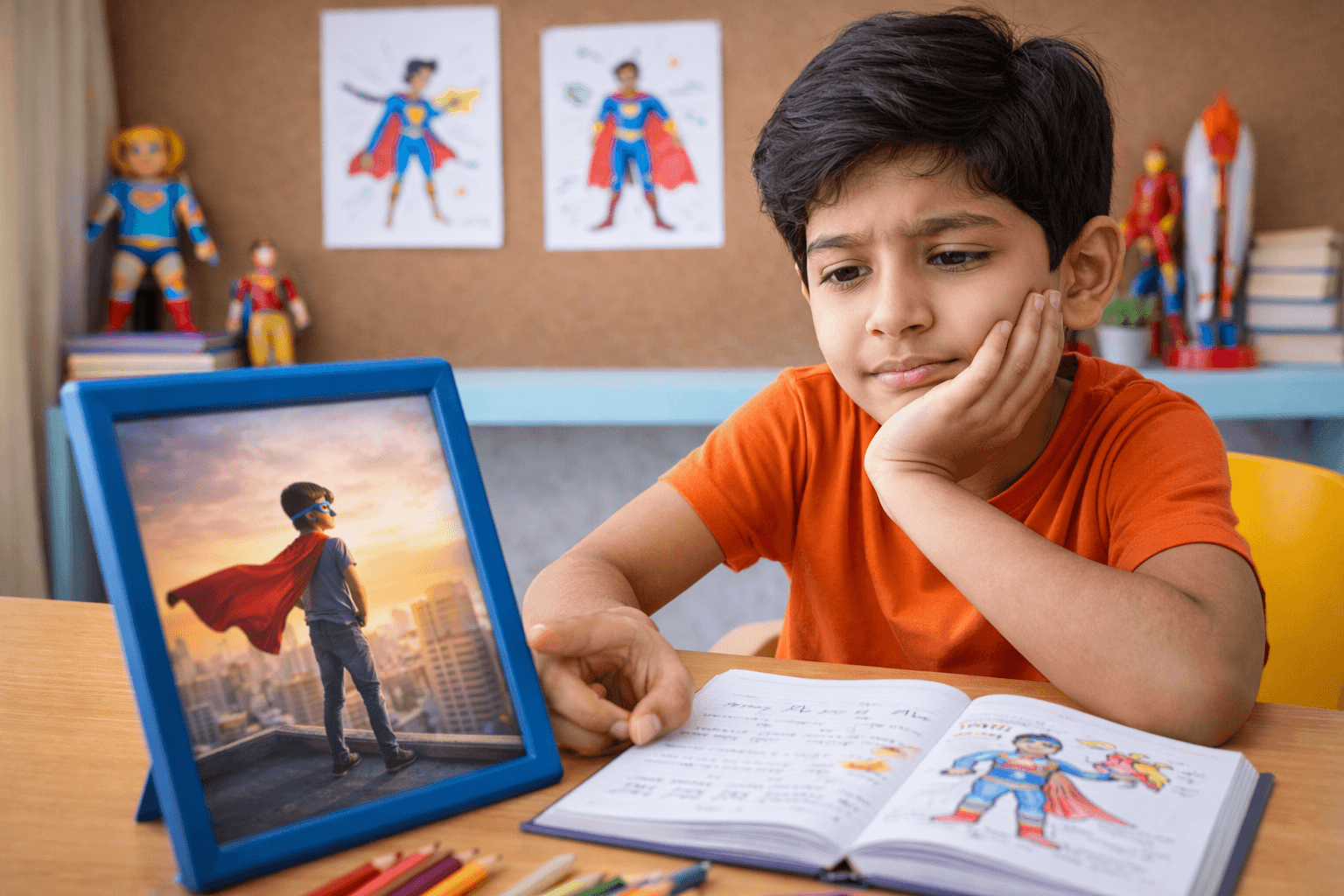
1. A Relatable Hero with Real-Life Challenges
A superhero becomes interesting when they feel like a real person. If your hero goes to school, forgets homework, argues with friends, or feels nervous before a test, readers can relate to them easily.
For example, a superhero who struggles to speak in class but later saves the day teaches children that courage comes in many forms.
Relatability helps readers think, “This could be me.”
2. Unique Powers That Connect to Personality
Superpowers should not feel random. The best powers reflect who the hero is inside.
A shy child might become invisible
A creative child might bring drawings to life
A fast thinker might have super speed
This connection makes the character feel more natural and believable.
It also adds depth because the power becomes part of the character’s identity.
3. A Fun but Meaningful Conflict
Every story needs a problem. Without a challenge, there is no excitement.
The conflict could be:
- A villain causing trouble
- A misunderstanding between friends
- A problem the hero created by mistake
What makes it meaningful is how the hero solves it. The solution should involve thinking, courage, or teamwork rather than just fighting.
4. A Journey of Growth and Learning
The hero should not stay the same from start to finish. They should learn something important.
For example:
A careless hero learns responsibility after making a mistake.
This growth is what makes the story satisfying. It shows that mistakes are part of learning.
5. A Satisfying Resolution with a Lesson
At the end, the problem should be solved clearly. The reader should feel happy and fulfilled.
The story should also leave a message like:
- Helping others is important
- Being brave means facing fears
- Mistakes can make you stronger
This makes the story memorable and impactful.
Example to Understand Better
Imagine a superhero who always forgets things but has the power to control time.
At first, their forgetfulness causes problems. But later, they learn to use their power wisely to fix mistakes and help others.
This creates humour, tension, and a meaningful lesson. When writing a superhero story, always ask yourself:
What lesson will my story teach? This simple question can turn a basic story into something powerful and unforgettable.
Tips for Writing a Good Superhero Story
Tip 1: Creating a Relatable Hero with a Strong Character Arc for Kids
A strong character arc for kids is one of the most important parts of storytelling. It shows how the hero changes over time. This change makes the story meaningful and engaging.
Let’s break it down step by step:
Start with an Ordinary Life
Before becoming a superhero, your character should have a normal life.
They might be:
- A student going to school
- A sibling helping at home
- A friend dealing with small problems
This normal beginning helps readers understand who the hero is before everything changes.
For example, a child who struggles to make friends will feel very real to readers.
Add Human Flaws
No one is perfect, and your hero should not be either.
Flaws make characters interesting and relatable.
Some simple flaws could be:
- Being shy and afraid to speak
- Getting angry quickly
- Not believing in themselves
These flaws create challenges that the hero must overcome.
Without flaws, there is no growth.
Build Strong Motivation
Motivation is the reason why your hero chooses to act.
Ask yourself:
Why does the hero want to help others?
Some examples include:
- Protecting friends from danger
- Standing up against bullying
- Fixing a mistake they made
A strong motivation makes the story emotional and meaningful.
It helps readers understand the hero’s choices.
Show Growth Through Challenges
The hero should face problems that test them.
These challenges should connect to their flaw.
For example:
- A shy hero must speak in front of others
- A careless hero must take responsibility
- A fearful hero must face danger
Each challenge helps the hero grow stronger.
Simple Character Arc Structure
You can follow this easy structure:
Beginning: The hero has a weakness or fear
Middle: They face challenges and struggle
End: They grow, learn, and become stronger
Example for Better Understanding
A shy child who is afraid to speak becomes a superhero who must warn people about danger.
At first, they hesitate. But when they realise others depend on them, they find courage.
By the end, they become confident and brave.
Why Character Arcs Matter
Character arcs teach important life lessons:
- Growth is possible
- Mistakes help us learn
- Courage comes from within
They make the story not just entertaining but also meaningful.
When creating your superhero, focus on who they are as a person first, and their powers second. This is what makes readers care about the story.
Tip 2: Designing Unique Powers and Meaningful Weaknesses
Superpowers are one of the most exciting parts of any superhero story. They grab attention and make the story fun. But what truly makes a superhero unforgettable is how creative and meaningful those powers are.
Instead of choosing common abilities, try to think differently. Unique ideas make your story stand out and feel fresh.
Think Beyond Common Powers
Many stories feature powers such as super strength, speed, or flight. While these are fun, they can feel repetitive if not used creatively.
Try to explore unusual and imaginative powers:
- Controlling plants and making forests grow instantly
- Turning drawings into real objects
- Talking to machines or controlling technology
- Reading emotions or sensing feelings
These kinds of powers open up new story possibilities. For example, a hero who controls plants can save forests or stop pollution, making the story meaningful as well.
Link Power to Personality
The best superpowers match the hero’s personality. This makes the character feel natural and believable.
For example:
- A shy child might become invisible because they prefer to stay unnoticed
- A creative child might bring art to life because they love drawing
- A curious child might read minds because they always want to understand others
When powers connect to personality, they feel like an extension of the hero's identity. This also helps in building a stronger emotional connection with readers.
Add Meaningful Weaknesses
A superhero without weaknesses can quickly become boring. If the hero can solve every problem easily, there is no suspense.
Weaknesses make the story exciting by creating challenges.
Some interesting weaknesses could be:
- Powers only work during the day
- Powers stop when the hero feels scared
- Limited energy, so powers can only be used a few times
- Powers sometimes go out of control
For example, imagine a hero who can control electricity but loses control when they are angry. This creates tension and forces the hero to learn self-control.
Weaknesses make readers wonder, “Will the hero succeed this time?”
Add Learning Elements
You can also make your story educational by adding simple STEM ideas.
For example:
- A hero who uses magnetism to move objects
- A hero who bends light to become invisible
- A hero who uses sound waves to communicate
These ideas make the story both fun and informative. Kids not only enjoy the story but also learn something new.
Finding it hard to turn creative ideas into a complete story? Book a FREE PlanetSpark trial class now and start building powerful stories. Limited seats available!
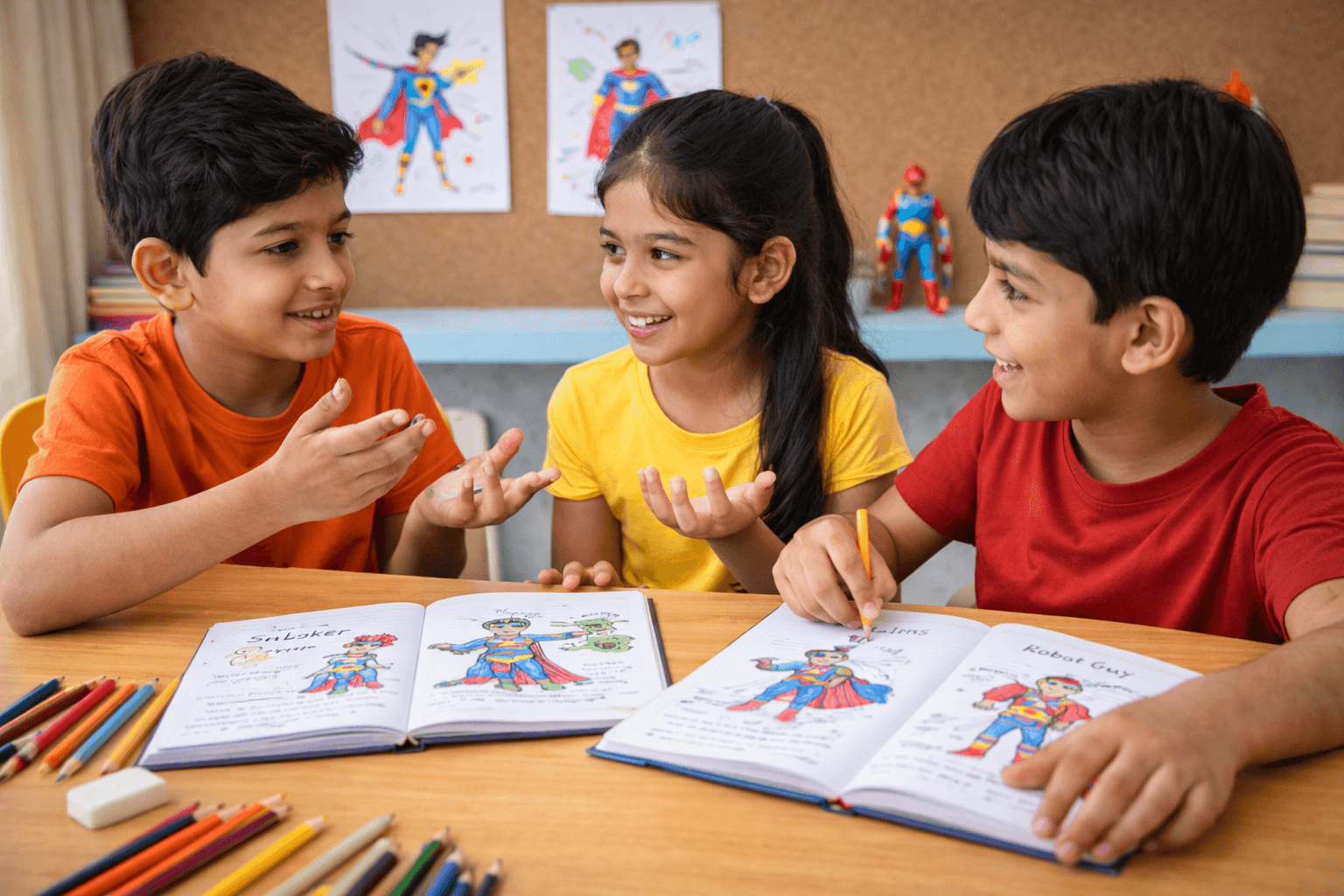
Tip 3: Building a Fun World and Memorable Characters
A superhero story is not just about the hero. The world around them plays a big role in making the story exciting and believable.
A well-built world makes readers feel like they are part of the story.
Create a Fun Villain
A strong villain makes the story more interesting. Instead of making them simply “bad,” give them a reason for their actions.
Some ideas include:
- A bully who wants control because they feel ignored
- A trickster who enjoys creating chaos for fun
- A character who believes they are doing the right thing, but causes harm
When a villain has a reason, the story becomes deeper and more engaging.
Also, for kids’ stories, villains should feel fun or playful rather than too scary. This keeps the story enjoyable.
Give Catchy and Memorable Names
Names are important because they make characters easy to remember.
Keep names:
- Short
- Simple
- Descriptive
Examples:
- Captain Clean is a hero who fights pollution
- The Scribbler is a villain who uses drawings
- Shadow Kid for a mysterious hero
A good name instantly gives an idea about the character.
Add Side Characters for Fun and Support
Side characters make stories livelier and more entertaining.
They can include:
- A best friend who helps the hero
- A pet with special abilities
- A robot assistant with funny behaviour
These characters can:
- Add humor
- Help solve problems
- Support the hero emotionally
For example, a talking dog sidekick can bring both fun and clever ideas to the story.
Design Costumes That Reflect Personality
Costumes are not just about looks. They show who the hero is.
Encourage kids to imagine or draw their superhero’s outfit.
Think about:
- Bright colours for cheerful and friendly heroes
- Dark shades for mysterious or serious characters
- Symbols or logos that represent their powers
For example, a hero who controls water might wear blue with wave patterns.
Designing costumes also helps kids visualise their characters better, making writing easier and more creative.
When designing your superhero world, remember that every detail matters. Powers, weaknesses, villains, and even costumes work together to create a story that feels exciting and real.
The more thoughtful your choices, the more engaging your superhero story will become.
Tip 4: Structuring the Story Step by Step
A clear structure is like a roadmap for your story. It helps kids organise their ideas so the story does not feel confusing or incomplete. When you follow a simple structure, your superhero story becomes easier to write and more enjoyable to read.
Let’s break it down into simple parts:
The Origin Story
The origin story explains how your superhero got their powers. This is where everything begins, so it should be interesting and creative.
Some common ideas include:
- Accident: The hero gets powers from a science experiment gone wrong
- Magic: A magical object or spell gives them abilities
- Inheritance: Powers are passed down from the family
- Technology: Gadgets or inventions give special skills
But you can also mix ideas to make your story unique.
For example:
A child finds a glowing plant in a forest and gains nature powers.
The origin story should also show how the hero feels about their powers. Are they excited, scared, or confused? This emotional reaction makes the story more relatable.
The Conflict
Every story needs a problem to solve. This is called the conflict, and it should appear early in the story to grab attention.
Some types of conflict include:
- A villain is creating trouble in the city
- A natural disaster that needs to be stopped
- A personal challenge, like fear or self-doubt
The conflict should matter to the hero. It should feel important and urgent.
For example:
If the hero’s best friend is in danger, the conflict becomes more emotional and powerful.
A strong conflict keeps readers interested and makes them want to know what happens next.
The Turning Point
The turning point is the most exciting part of the story. It is the moment when everything changes.
At this stage, the hero might:
- Learn a new way to use their powers
- Face failure and feel like giving up
- Discover an important truth
This moment often tests the hero the most.
For example:
A hero who is afraid of heights must fly to save someone. This forces them to face their fear.
The turning point builds suspense and prepares the story for its final moment.
The Resolution
The resolution is the ending of the story. This is where the hero solves the problem, and everything comes together.
A good resolution should:
- Clearly solve the main conflict
- Show how the hero has changed
- Leave the reader with a lesson
For example:
A careless hero learns responsibility and saves the day by thinking carefully.
The ending should feel satisfying, not rushed. It should show growth and give a sense of completion.
Why This Structure Works
This simple structure helps kids:
- Stay organised while writing
- Build a clear and logical story
- Keep readers engaged from start to finish
Once kids understand this pattern, they can use it again and again to easily create new stories.
Tip 5: Using Creative Story Building Games
Creative story-building games make writing fun instead of difficult. They help kids think more quickly, generate new ideas, and enjoy the storytelling process.
These games are especially helpful when you feel stuck or do not know what to write next.
Game 1: Random Word Challenge
In this game, you pick three random words and create a story using them.
For example:
Words: robot, jungle, lightning
Now, build a story in which all three elements connect.
This game improves creativity by forcing you to think in unexpected ways.
Game 2: Power Switch
In this game, you change your hero’s power and see how the story changes.
For example:
If your hero originally has super speed, what happens if they suddenly have invisibility instead?
This helps kids understand how powers affect the story and encourages flexible thinking.
Game 3: Twist Ending
Add a surprising twist to your story.
For example:
- The villain turns out to be a friend
- The hero caused the problem without knowing
- The sidekick saves the day
Twists make stories more exciting and memorable.
Game 4: Group Story
This is a fun activity to do with friends or family.
Each person adds one part of the story. For example:
- One person writes the beginning
- Another writes the middle
- Another finishes the ending
This game builds teamwork and introduces new ideas that you might not think of alone.
Why These Games Help
Creative story-building games:
- Boost imagination
- Improve storytelling skills
- Make writing enjoyable
- Help overcome writer’s block
They turn writing into a playful activity instead of a task.
Want your child to build creativity and confidence every day? Book a PlanetSpark demo class now and unlock their storytelling potential before seats fill up!
Tip 6: Exploring Image-Based Writing Prompts
Image-based writing prompts are powerful tools that help kids turn simple visuals into exciting stories. Sometimes, it is hard to start writing because you do not know what to imagine. Images solve this problem by giving you a starting point.
How They Work
When you look at an image, do not just see it. Try to observe and imagine.
Ask yourself simple questions like:
- Who is in the picture?
- What is happening right now?
- Where is this taking place?
- What might happen next?
- What happened before this moment?
These questions help you build a full story from a single image.
For example, if you see a picture of a child flying, you can imagine how they got their powers, where they are going, and what problem they are trying to solve.
Example to Understand Better
Imagine this image:
A child standing on a rooftop wearing a superhero costume.
Now ask:
- Did they just discover their powers?
- Are they about to save someone?
- Who is the villain they are facing?
- Are they nervous or confident?
From just one picture, you can create a complete story with a beginning, middle, and end.
Why Image Prompts Are Helpful
- They make it easier to start writing
- They improve imagination and visualisation
- They help add more details to your story
- They make writing more fun and less stressful
Using image-based writing prompts regularly can help kids become more confident and creative writers.
Tip 7: Rewrite the Ending of a Movie for Practice
One of the most fun ways to improve storytelling is to rewrite a movie's ending. This activity helps kids understand how stories are built and encourages them to think differently.
Why It Works
Rewriting endings is powerful because it:
- Builds creativity by encouraging new ideas
- Improves understanding of story structure
- Helps kids think beyond what they see
- Encourages original thinking
Instead of just watching a story, kids become creators.
How to Practice
Pick any movie you like and imagine a different ending.
You can change:
- The hero’s final decision
- The outcome of the story
- The role of the villain
- The lesson at the end
Example
What if the villain wins but later realises their mistake and changes?
What if the hero loses at first but comes back stronger?
These changes help kids explore different possibilities and better understand storytelling.
Why This Activity Is Effective
It teaches that stories are flexible. There is no single “correct” way to end a story. This builds confidence and creativity in young writers.
Tip 8: Writing Action Scenes That Feel Real
Action scenes are one of the most exciting parts of a superhero story. But if they are not written clearly, they can confuse readers.
Good action writing helps readers imagine the scene step by step.
Tips for Writing Action
- Use short and clear sentences
- Show what is happening instead of just telling
- Focus on movement and details
Example
Instead of writing:
“He fought bravely”
Try:
“He jumped forward, blocked the attack, and pushed the villain back.”
This makes the scene more vivid and exciting.
Add Emotion
Action is not just about movement. It is also about feelings.
Show what the hero feels:
- Fear before a big moment
- Excitement while using powers
- Determination to save others
For example:
“My hands are shaking, but I have to do this,” he thought.
This makes the scene more powerful and relatable.
Keep It Logical
Even in a fantasy story, actions should make sense.
For example:
- If a hero is tired, they should not suddenly become stronger without reason
- If powers have limits, those limits should be followed
Logical action makes the story believable.
Tip 9: Dialogue That Brings Stories to Life
Dialogue is what your characters say, and it helps bring your story to life. It makes characters feel real and allows readers to understand their thoughts and emotions.
Tips for Writing Dialogue
- Keep sentences natural and simple
- Avoid long speeches
- Let characters sound like real people
- Show emotions through words
Example
Instead of:
“I am scared”
Write:
“I don’t know if I can do this,” she said softly.
This sounds more natural and expressive.
Why Dialogue Matters
- It makes stories more engaging
- It shows relationships between characters
- It helps reveal emotions and personality
Good dialogue makes readers feel like they are part of the story.
Tip 10: Editing, Feedback, and Rewriting
Writing is just the first step. Great stories are created through editing and improvement.
Editing Checklist
After writing your story, check:
- Spelling and grammar mistakes
- Sentence clarity
- Smooth flow of events
- Clear beginning, middle, and end
Get Feedback
Ask others to read your story:
- Friends
- Parents
- Teachers
They might notice things you missed and give helpful suggestions.
Rewrite and Improve
Do not be afraid to make changes.
- Add more details
- Improve weak parts
- Fix confusing sections
Rewriting helps turn a good story into a great one.
Why This Step Is Important
Editing teaches patience and improves writing skills over time. It also helps kids become more confident in their work.
Is your child ready to turn ideas into published stories? Book a PlanetSpark trial class today and help them shine before the limited seats fill up!
Common Mistakes to Avoid
Even creative writers can make mistakes. Knowing these helps you improve faster.
1. Making the Hero Too Powerful
If the hero can do everything easily, the story becomes boring. Add challenges and limits to keep it interesting.
2. Skipping the Character Arc
If the hero does not change or learn anything, the story feels incomplete. Always show growth.
3. Writing a Confusing Plot
If events are unclear or disconnected, readers may lose interest. Follow a simple structure.
4. Ending Too Quickly
A rushed ending can make the story feel unfinished. Take time to resolve the problem properly.
Avoiding these mistakes will make your story clearer, more engaging, and more enjoyable to read. Every mistake is also a chance to learn and improve.
Why PlanetSpark Creative Writing Classes Help Kids Become Confident Storytellers
PlanetSpark creative writing classes are designed for children who want to turn imagination into powerful stories. Many kids struggle with structuring ideas, building vocabulary, and expressing thoughts clearly. These classes address that with a guided, engaging learning system.
Here is what makes PlanetSpark unique:
- 1:1 personal trainers who understand each child’s learning style
- Personalised curriculum with a clear growth roadmap
- AI-powered SparkX video analysis for communication feedback
- AI-led practice sessions for storytelling and speaking
- Spark Diary to build daily writing habits
- Gamified learning tools like SparkBee and quizzes
- Real publishing opportunities for kids’ stories
- Creative activities like prompts, story games, and imagination exercises
Additional benefits include:
- Regular parent-teacher meetings
- Detailed progress reports with actionable feedback
- Access to clubs like the Story Writing Club and the Debate Club
- Safe sharing platform called Sparkline
These features ensure that children not only learn to write but also gain confidence, creativity, and communication skills for life.

Every Story You Write Builds Your Creative Superpower
Writing a superhero story is not just about imagination. It is about learning to express ideas, solve problems, and think creatively. Every time you write, you improve your confidence and communication skills. Keep practising with tools like image-based writing prompts and creative story-building games.
Over time, your stories will become stronger, more exciting, and more meaningful. Your creativity is your true superpower, and it grows with every story you create.
Frequently Asked Questions
At PlanetSpark, writing a superhero story means crafting fun, meaningful stories with strong characters, a clear structure, and creativity.
PlanetSpark teaches kids to start with flaws, add challenges, and show clear growth through guided storytelling practice.
PlanetSpark uses fun games, such as random prompts and twists, to help kids generate unique and engaging story ideas.
PlanetSpark uses visual prompts to boost imagination and help kids describe scenes with more detail and clarity.
PlanetSpark uses this technique to improve creativity and help kids understand different storytelling possibilities.
PlanetSpark improves storytelling through regular practice, expert feedback, and structured creative writing activities.
PlanetSpark focuses on relatable heroes, strong plots, emotional growth, and creative thinking to make stories engaging.