
Writing Tips for Clear Communication | PlanetSpark
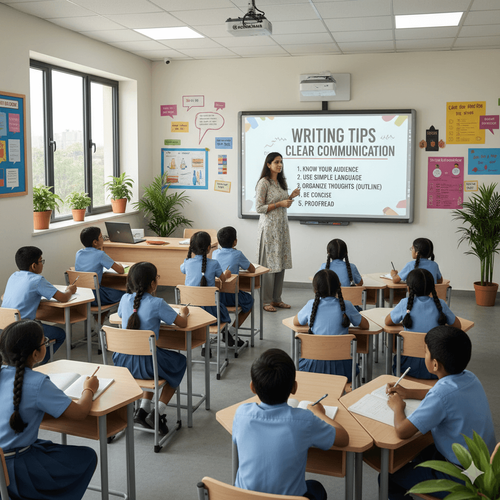

Clear communication is the foundation of effective expression—whether you’re crafting an academic essay, drafting a professional email, or weaving a compelling story. The clarity of your writing directly shapes how well others understand your ideas. Even the most brilliant thoughts can lose their impact if they are not communicated clearly and confidently.
In today’s fast-paced world, strong writing isn’t just an academic requirement—it’s a life skill. It influences how students express themselves in class, how individuals present their ideas in the workplace, and how confidently writers share their creativity with the world. When your writing is clear, your message becomes powerful.
This blog dives deep into proven writing strategies that enhance clarity and structure, including:
How to organize your thoughts before writing
How to build strong, meaningful sentences
How to use vocabulary effectively
How to structure paragraphs for maximum impact
How to edit and refine your writing so it’s crisp, engaging, and error-free
Each tip is designed to help you write with confidence, purpose, and a strong sense of flow—making your communication clearer and more impactful.
How PlanetSpark Helps Children Become Clear, Confident Writers
By the end of this blog, you’ll also discover how PlanetSpark’s Creative Writing Course transforms children into confident communicators. Through a blend of fun activities, interactive sessions, and personalized learning, young learners develop:
A solid understanding of sentence structure
The ability to express ideas clearly and creatively
Strong grammar, vocabulary, and storytelling skills
Confidence in organizing and presenting thoughts
Real-world communication skills useful for school and beyond
PlanetSpark focuses on nurturing writing skills in a way that feels engaging rather than overwhelming—turning learning into a joyful experience.
Why Clear Writing Matters
Words shape how others perceive us. When writing lacks clarity, even great ideas can lose impact. Clear communication ensures your reader understands your thoughts exactly as intended , no confusion, no guesswork. Whether it’s school essays, creative writing, or professional communication, clarity builds trust, credibility, and engagement.
Good writing isn’t about using fancy words; it’s about connecting ideas logically and expressing them simply. Strong writers know that clarity is kindness , it respects the reader’s time and makes your message memorable.
Want your child to master editing, grammar, and storytelling? Enroll in the PlanetSpark Creative Writing Course for real-time feedback and guided improvement!
Practical Writing Tips for Clear Communication
Writing clearly is not just about choosing the right words—it’s about intentionally shaping your message so your reader understands exactly what you mean. Below are comprehensive, step-by-step strategies to help you write with clarity, confidence, and ease.
1. Understand Your Purpose and Audience
Before writing a single sentence, pause and reflect on two essential questions:
Why am I writing this?
Who is going to read it?
Your purpose determines what you say, while your audience determines how you say it.
Why It Matters
Writing to persuade requires strong arguments, whereas writing to inform requires accuracy and structure. A message for a teacher should sound different from one meant for friends or a blog audience.
Example
Classroom Essay: Formal tone, structured paragraphs, academic vocabulary
Personal Blog: Conversational tone, relatable language, storytelling elements
Understanding your audience ensures the message feels relevant, respectful, and appropriate.
2. Keep It Simple and Concise
Great writing is not about long sentences or complicated words—it’s about clarity. The simpler your message, the easier it is to understand.
Common Mistake
Using complex vocabulary to “sound smart” often confuses readers and weakens the message.
Example
❌ “In order to achieve optimal results, it is necessary to implement the aforementioned process.”
✔️ “To get the best results, use this process.”
Why It Works
Short sentences improve readability
Simple words reduce mental effort for the reader
Clear explanations build trust
If your message can be communicated in fewer words, choose clarity over clutter.
3. Organize Your Thoughts Logically
Structure is the backbone of clear communication. A well-organized piece guides the reader smoothly from one idea to the next.
Basic Structure
Introduction: Sets the context
Body: Presents main points with supporting details
Conclusion: Summarizes and reinforces your message
Each paragraph should focus on one main idea. Use transition words to connect ideas:
therefore, furthermore, however, for example, on the other hand, etc.
Why It Matters
Logical flow transforms scattered ideas into meaningful writing. When readers can follow your reasoning easily, your message becomes far more impactful.
4. Choose the Right Tone
Tone is the personality of your writing. It determines how your message feels—formal, warm, humorous, serious, inspirational, or conversational.
How to Set the Right Tone
Match the tone to the situation
Adjust based on the reader’s expectations
Avoid sarcasm unless appropriate
Quick Tip
Read your writing aloud.
If it sounds stiff, confusing, or overly emotional, revise it to match your intended mood.
5. Prefer Active Voice Over Passive Voice
Active voice makes your writing clearer, stronger, and more direct.
Example
❌ Passive: “The story was written by Asha.”
✔️ Active: “Asha wrote the story.”
Why Active Voice Helps
It highlights the doer of the action
It reduces unnecessary words
It keeps readers more engaged
Passive voice works in some situations, but for clear communication, active sentences are usually more effective.
6. Check Grammar and Punctuation Carefully
Grammar and punctuation are the rules that hold your writing together. Errors can confuse readers or change your meaning entirely.
Why It Matters
Correct punctuation ensures smooth reading
Proper grammar improves credibility
Mistake-free writing is more professional and trustworthy
Tips
Use tools like Grammarly for clean drafts
Read high-quality books and articles to build intuitive grammar sense
Pay attention to commonly confused punctuation marks like commas, colons, and semicolons
7. Eliminate Redundancy
Redundant phrases add unnecessary clutter and weaken your writing.
Examples of Redundant Phrases
“each and every”
“past history”
“end result”
“basic fundamentals”
“final outcome”
Ask yourself:
If I remove this word or phrase, does the meaning change?
If the answer is no, cut it out.
Why Less Is More
Concise writing respects your reader’s time and makes your message more impactful.
8. Revise, Edit, and Proofread Thoroughly
Writing improves through refining. A strong final piece usually comes after multiple revisions—not in the first attempt.
Effective Editing Checklist
Clarity: Is the message easy to understand?
Flow: Do ideas connect smoothly?
Tone: Is the tone appropriate?
Word Choice: Are there simpler alternatives?
Brevity: Can any sentence be shortened?
Bonus Tip
Use AI-powered tools like PlanetSpark’s SparkX, which analyzes communication for:
Clarity
Fluency
Vocabulary usage
Sentence structure
Confidence
This gives students immediate feedback to improve their writing.
9. Use Examples and Analogies
Examples bring clarity to abstract ideas. Analogies help readers relate to new concepts by comparing them with familiar ones.
Example
Instead of defining “teamwork” in a complex way, describe a group of children building a project together or a sports team scoring a goal.
Why Examples Help
They simplify complex ideas
They engage the reader
They make writing more relatable and memorable
10. Practice Every Day
Clear writing is a skill—and like any skill, it improves with practice.
Ways to Practice
Maintain a daily journal
Write short stories or summaries
Reflect on personal experiences
Rewrite jumbled or complex sentences
Engage in creative writing challenges
Platforms like PlanetSpark’s Spark Diary encourage kids to write regularly in a fun, gamified way—building consistency, creativity, and clarity.
Want your child to master editing, grammar, and storytelling? Enroll in the PlanetSpark Creative Writing Course for real-time feedback and guided improvement!
11. Seek Constructive Feedback
Feedback transforms good writing into great writing. Ask others to read your work and explain what they understood. If it doesn’t match your intent, you know where to improve. Remember , clarity grows through iteration, not perfection.
How PlanetSpark’s Creative Writing Course Builds Confident Communicators
While writing can be learned through practice, structured guidance accelerates progress. PlanetSpark’s Creative Writing Course empowers children to become clear thinkers and expressive communicators through personalized learning, real-time feedback, and creativity-driven lessons.
Writing + Speaking Integration
At PlanetSpark, writing is complemented with speaking practice. Students present their written work aloud, improving expression, confidence, and fluency. The program follows the LSRW method , Listening, Speaking, Reading, Writing , ensuring well-rounded communication skills.
Editing, Feedback, and Rewriting
Each class emphasizes revision and real-time improvement. Students receive constructive feedback from trainers and peers, learning the art of rewriting , a crucial step in mastering clarity and precision in writing.
Real Publishing Opportunities
Students can publish their stories and poems on PlanetSpark’s blog, e-magazine, or collaborative anthologies, giving them exposure and recognition for their creativity. Nothing motivates clearer writing more than seeing one’s work published for an audience.
1:1 Personal Trainers for Every Child
Every student is paired with a certified communication expert who understands their personality and learning pace. These trainers focus on writing fluency, grammar, storytelling, and confidence, offering tailored guidance that ensures steady improvement.
This personal mentorship creates a comfortable environment where kids learn freely, ask questions, and grow consistent
SparkX – AI-Enabled Video Analysis Tool
PlanetSpark integrates technology into learning with SparkX, an AI tool that analyzes recorded speeches, storytelling sessions, or writing presentations. It assesses:
Voice clarity and confidence
Grammar and vocabulary usage
Sentence flow and expression
Body language and stage presence
Parents receive performance reports highlighting strengths and improvement areas , ensuring measurable growth in communication skills.
AI-Led Practice Sessions
Children can practise speaking and storytelling with an AI coach that provides instant feedback on clarity, fluency, and grammar. These sessions enhance consistency, making learning interactive and flexible beyond live classes.
Spark Diary – Building Daily Writing Habits
PlanetSpark’s digital journaling tool, Spark Diary, encourages kids to write daily reflections, stories, and poems. This consistent practice develops creativity, structure, and discipline , essential for mastering clear writing and thought organization.
Gamified Learning for Engagement
Learning at PlanetSpark feels like playtime! Through quizzes, games, and challenges like “Grammar Guru” and “Spell Knockout,” kids stay motivated and excited to learn every day. Gamification makes writing less intimidating and more enjoyable.
Empowering Writers, Inspiring Communicators
Writing is not just about putting words together , it’s about organizing thoughts, connecting emotions, and influencing others through clarity. PlanetSpark’s Creative Writing Course turns this into a reality for young learners by combining structured teaching, AI-driven insights, and fun-filled creativity exercises.
With personalized mentoring and real publishing opportunities, every child evolves into a confident communicator ready to make their mark.
Help your child write clearly, speak confidently, and think creatively. Enroll in the PlanetSpark Creative Writing Course and give them the power of expression today!
You may also read :
Frequently Asked Questions
Because it ensures your ideas are understood exactly as intended. Clear writing builds trust, credibility, and connection with readers.
Plan before writing, use simple words, avoid jargon, and revise your work for structure and tone. Regular practice makes a huge difference.
Use AI-assisted tools like Grammarly or PlanetSpark’s Spark Diary to check grammar, vocabulary, and readability.
Creative writing encourages free expression, imagination, and empathy — all crucial for connecting ideas clearly and engagingly.
Through one-on-one classes, real-time feedback, AI analysis, and creative publishing opportunities, PlanetSpark ensures holistic communication growth.