

Struggling to understand nouns or feeling confused between types like proper, abstract, and collective nouns? You’re not alone, many Class 7 students find grammar tricky when it’s only learned through rules instead of real understanding.
The good news is that with the right guidance and consistent practice, mastering grammar becomes simple and even enjoyable. If you want to strengthen your child’s foundation, exploring Best Grammar Classes for Kids to Build Strong English Skills can make a big difference. With expert support and interactive learning, children can move from confusion to confidence in no time.
What is Noun for Class 7?
Nouns are words that name people, places, animals, things, or ideas. For class 7, nouns are classified into types: proper nouns, common nouns, collective nouns, abstract nouns, and material nouns. Understanding nouns helps form clear sentences by identifying who or what the sentence is about.
Every sentence has a subject, which lets us know what the sentence is all about. Therefore, nouns are considered to be essential parts of a language.
You can get to know what exactly are nouns with the help of the examples below:
|
Person |
Veena |
Ahmed |
Doctor |
Employee |
|
Place |
City |
Office |
House |
Country |
|
Thing |
Furniture |
Apple |
Mobile |
Computer |
It is important to know the examples of nouns for class 7 for every student. Therefore, we have come up with this guide that will help you clear the concepts related to nouns.
Struggling with nouns, proper nouns, and abstract nouns?
Book a FREE demo class and boost your child’s grammar confidence!
CBSE Class 7 English Nouns
Want to learn Class 7 English nouns? Don't worry we've made it super easy for you! In this guide, you'll understand all the types of nouns taught in CBSE Class 7 with simple definitions and clear examples.
Let’s explore the different types of nouns one by one:
1. Proper Nouns
Definition: Proper nouns always begin with a capital letter and refer to the specific names of people, places, brands, or events.
Examples:
-
Kate (person)
-
London (place)
-
Gucci shoes (brand)
-
Olympic Games (event)
2. Abstract Nouns
Definition: Abstract nouns refer to ideas, feelings, qualities, or concepts that cannot be seen or touched physically.
Examples:
-
Happiness
-
Bravery
-
Excitement
-
Childhood
-
Flight
3. Collective Nouns
Definition: Collective nouns refer to a group or collection of people, animals, or things taken as one unit.
Examples:
-
A bunch of flowers
-
A library of books
-
A stadium full of spectators
4. Common Nouns
Definition: Common nouns are general names for people, places, animals, or things.
Examples:
A. People: girl, father, salesperson, student
B. Things: curtain, furniture, pen, utensil
C. Animals: dog, lion, deer, wolf
5. Singular Nouns
Definition: A singular noun refers to only one person, place, thing, or animal.
Examples:
-
A dog was roaming in the backyard.
-
An ice tray is in the fridge.
-
Rebekah is a talented girl.
Note: Most singular nouns become plural by adding 's' or 'es':
-
car → cars
-
match → matches
Some nouns ending in 'f' or 'fe' change to 'ves':
-
half → halves
-
knife → knives
6. Plural Nouns
Definition: Plural nouns refer to more than one person, animal, place, or thing.
Examples:
-
Boys are playing cricket.
-
Apples are on the table.
-
Lions roam in the jungle.
7. Countable Nouns
Definition: Countable nouns are things that can be counted in numbers.
Examples:
-
Bottles
-
Notebooks
-
Candies
Note: Countable nouns can be singular or plural.
Want your child to build strong English grammar skills with confidence?
Enroll now and secure your free demo class before seats fill up!
8. Uncountable Nouns
Definition: Uncountable nouns are things that cannot be counted.
Examples:
-
Water
-
Air
-
Milk
-
Bread
9. Masculine Nouns
Definition: A masculine noun refers to the male gender.
Examples:
-
Peter
-
Son
-
Husband
-
King
10. Feminine Nouns
Definition: A feminine noun refers to the female gender.
Examples:
-
Queen
-
Daughter
-
Niece
-
Housewife
11. Nominative Nouns
Definition: When a noun is used as the subject of a verb, it is called a nominative noun.
Examples:
-
Sachin saw me.
-
Sourav lost his chain.
-
The dog killed the poor cat.
12. Objective Nouns
Definition: An objective noun acts as the object of a verb in a sentence.
Examples:
-
The author wrote many books.
-
We made some cookies.
-
Sahil lost his wallet.
13. Possessive Nouns
Definition: A possessive noun shows ownership or possession and is usually marked with an apostrophe ('s).
Examples:
-
This is Rahul’s car.
-
The employee’s salary was increased.
-
My dad’s house is beautiful
14. Concrete Nouns
Definition: A concrete noun is tangible it refers to things that can be seen, touched, heard, smelled, or tasted.
Examples:
-
Chair
-
House
-
Chocolate milkshake (tastes sweet and feels cold)
-
Desktop (made of metal and plastic)
Give your child a head start in English Grammar with clear, simple noun lessons.
Noun Activities for Class 7
Worksheet- 1
Choose the noun in the sentence and tick on the right option.
Q1. They were walking across the valley.
a) They
b) Across
c) Walking
d) Valley.
Answer- Valley
Q2. I cannot rely on his honesty.
a) Rely
b) Cannot
c) Honesty
d) On
Answer- Honesty
Q3. His family does not support him at all.
a) His
b) Support
c) Family
d) all
Answer- Family
Q4. Taj Mahal is considered a sign of love.
a) Taj Mahal
b) sign
c) love
d) Considered
Answer- Taj Mahal
Q5. How many students attended the session?
a) Many
b) How
c) Attended
d) Students
Answer- Students.
Worksheet-2
Select the correct noun amongst the given options and fill in the blank.
1. The dog is sitting on my _______ (lap/laps)
2. 2. There are nine _______ on the table. (Plate/plates)
3. 3. I have five_______ (book/books)
4. 4. They were riding their _______ (horse/horses)
5. 5. She owns a _______ (cat/cats)
6. 6. How many _______ you have in your box? (pencil/pencils)
7. 7. My dad got a brand new _______ (car/cars)
8. 8. There are two curtains in my_______ (room/rooms)
9. 9. Jimmy ate two_______. (apple/apples)
10. 10. I have one _______. (laptop/laptops)
Answers
1. Lap
2. Plates
3. Books
4. Horses
5. Cat
6. Pencils
7. Car
8. Room
9. Apples
10. Laptop.
Worksheet-3
In the sentences below, some nouns are countable, while others are uncountable. First, find the noun and mention what type it is.
1. Jeremy got wheat and grains for himself.
2. Honda is selling a number of motorcycles.
3. The garden has various plants to trim.
4. Cat drinks milk.
5. The office boy strives hard to complete his work.
6. I like eating desserts that are decorated well.
7. You should never waste water.
8. The papaya he got was raw.
9. There are numerous methods for solving an equation.
10. A stampede happened last year because of the excessive crowd.
Answers
1. Wheat and Grains- Uncountable (Material noun)
2. Motorcycles- Countable (Common noun)
3. Plants- Countable (Common noun)
4. Cat- Countable (Common noun)
Milk- Uncountable (Material noun)
5. Office Boy- Countable (Common noun)
Work- Uncountable
6. Sweets- Uncountable (Common noun)
7. Water- Uncountable (Material noun)
8. Papaya- Countable (Proper noun)
9. Numerous ways & Equation- Countable (Common noun)
10. Crowd- Countable (Collective noun).
Why Choose PlanetSpark English Grammar Course?
Strong grammar is the foundation of confident communication—and PlanetSpark ensures your child doesn’t just learn rules, but applies them in real life.
1. 1:1 Personalised Grammar Coaching
Every child learns at a different pace. With one-on-one sessions, trainers focus on your child’s specific gaps—whether it’s tenses, nouns, sentence structure, or usage.
2. Learn Grammar Through Practice (Not Memorisation)
No rote learning. Students improve through:
- Sentence building exercises
- Real-life examples
- Speaking + writing practice
This makes grammar natural and easy to use.
3. Structured Curriculum from Basics to Advanced
The course follows a clear progression:
- Parts of speech (nouns, verbs, adjectives)
- Tenses and sentence formation
- Advanced grammar usage
Perfect for building strong fundamentals step by step.
4. Improves School Performance
Better grammar directly impacts:
- English exams
- Writing skills
- Reading comprehension
Children start scoring better and writing more confidently.
5. Builds Speaking Confidence Along with Grammar
Students don’t just write—they speak confidently using correct grammar, improving fluency and communication skills together.
6. Engaging & Interactive Learning
Classes include:
- Fun quizzes
- Worksheets
- Activities and games
This keeps kids interested and consistent in learning.
7. Regular Feedback & Progress Tracking
Parents get clear insights into:
- Improvement areas
- Performance reports
- Skill development
So you can see real progress, not just attendance.
Nouns are one of the most important building blocks of English grammar, helping students form clear and meaningful sentences. Once children understand the different types of nouns and how to use them correctly, their writing and speaking skills improve naturally.
The key to mastering nouns is consistent practice, real-life usage, and clear understanding, not just memorisation. By applying these concepts in daily conversations and schoolwork, students can build strong grammar foundations with confidence.
With the right guidance and regular practice, your child can turn grammar from a confusing subject into a strong skill that supports their overall communication and academic success.
Reader Can Also Read
Grammar Curriculum
What Our Students Say About PlanetSpark
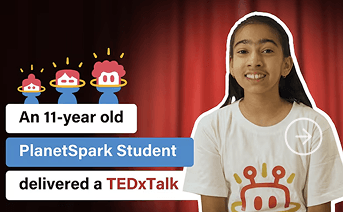
Parents of Oviya Singh
Oviya Singh, a PlanetSpark student, spoke about ‘Soil Conservation’ in her TEDxTalk by addressing the status quo and questioning, ‘Is the world running out of food?’

Mohd Rafiq
Thanks to PlanetSpark and his teacher’s guidance, Ayan now speaks confidently, participates actively, and has published his first storybook.

Mr. & Mrs. Bipin Patel
PlanetSpark helped my son Ahan find his voice and confidence. From stage speaking to being published in Pearls of Poetry, his growth has been remarkable.

Mrs. Sushila Thapa
PlanetSpark’s Public Speaking program has boosted Sristi’s confidence and clarity, her school performance speaks for itself.

Rajiv Sharma
My daughter has transformed from a shy kid to a confident speaker in just 6 months. The personalized attention and structured curriculum made all the difference.
Parents of Oviya Singh
Oviya Singh, a PlanetSpark student, spoke about ‘Soil Conservation’ in her TEDxTalk by addressing the status quo and questioning, ‘Is the world running out of food?’
Mohd Rafiq
Thanks to PlanetSpark and his teacher’s guidance, Ayan now speaks confidently, participates actively, and has published his first storybook.
Mr. & Mrs. Bipin Patel
PlanetSpark helped my son Ahan find his voice and confidence. From stage speaking to being published in Pearls of Poetry, his growth has been remarkable.
Mrs. Sushila Thapa
PlanetSpark’s Public Speaking program has boosted Sristi’s confidence and clarity, her school performance speaks for itself.
Rajiv Sharma
My daughter has transformed from a shy kid to a confident speaker in just 6 months. The personalized attention and structured curriculum made all the difference.
Practice with Our Worksheets
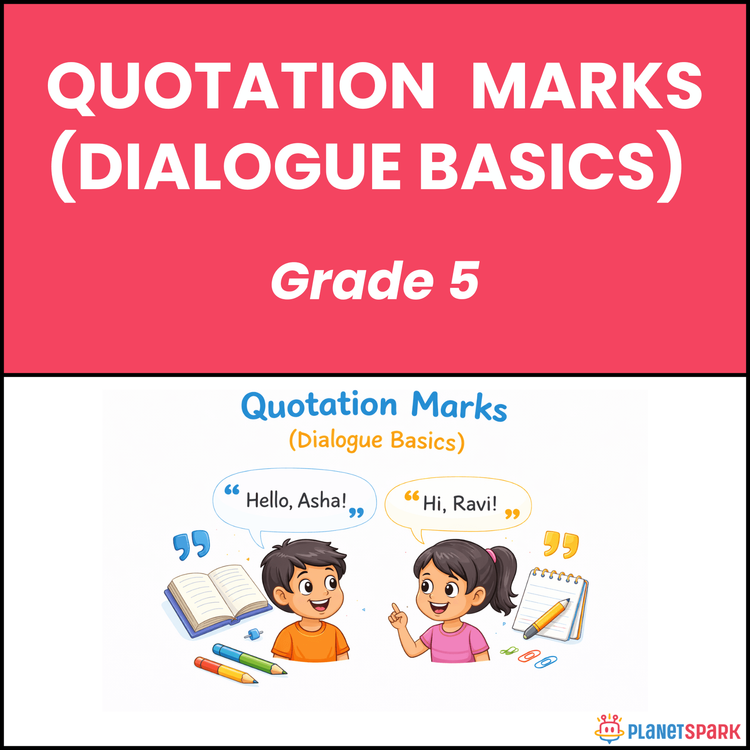
Class 5 Quotation Marks Dialogue English Grammar Worksheet
Practice using quotation marks correctly while writing dialogues and conversations.
Class 3 Grammar Worksheet on Subject–Verb Agreement
Match subjects and verbs correctly in sentences with this simple worksheet.

Class 4 Reading Passage on The Greedy Merchant
Explore what happens to a greedy merchant in this meaningful story-based worksheet.
Class 4 Multiple Meaning Words English Worksheet
Discover words with multiple meanings using clear sentence examples.
KG English Worksheet on Colours and Shapes
Fun activities to help KG kids learn colours and shapes with simple examples.
Class 4 Grammar Worksheet on Adding details
Learn to expand ideas by adding descriptive words and clear information.
Class 2 English Worksheet: Punctuations "."and"?"
Explore naming words with fun activities that build strong noun skills early on.

Class 3 English Worksheet on Concrete and Abstract Nouns
Learn the difference between concrete and abstract nouns with activities designed to strengthen grammar concepts in young Class 3 learners.

Class 2 English Worksheet on Collective Nouns
Explore collective nouns for groups of animals, people, and things.
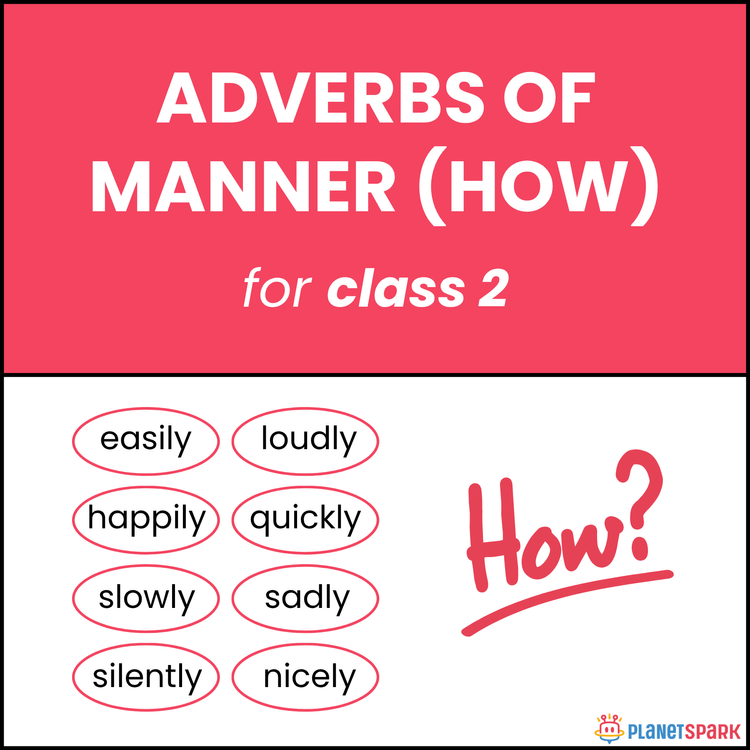
Class 2 Grammar Worksheet: Adverbs of Manner (How)
Explore how words like quickly and softly describe actions in fun exercises.
Class 5 Quotation Marks Dialogue English Grammar Worksheet
Practice using quotation marks correctly while writing dialogues and conversations.
Class 3 Grammar Worksheet on Subject–Verb Agreement
Match subjects and verbs correctly in sentences with this simple worksheet.
Class 4 Reading Passage on The Greedy Merchant
Explore what happens to a greedy merchant in this meaningful story-based worksheet.
Class 4 Multiple Meaning Words English Worksheet
Discover words with multiple meanings using clear sentence examples.
KG English Worksheet on Colours and Shapes
Fun activities to help KG kids learn colours and shapes with simple examples.
Class 4 Grammar Worksheet on Adding details
Learn to expand ideas by adding descriptive words and clear information.
Class 2 English Worksheet: Punctuations "."and"?"
Explore naming words with fun activities that build strong noun skills early on.
Class 3 English Worksheet on Concrete and Abstract Nouns
Learn the difference between concrete and abstract nouns with activities designed to strengthen grammar concepts in young Class 3 learners.
Class 2 English Worksheet on Collective Nouns
Explore collective nouns for groups of animals, people, and things.
Class 2 Grammar Worksheet: Adverbs of Manner (How)
Explore how words like quickly and softly describe actions in fun exercises.
Why Thousands of Parents Trust PlanetSpark
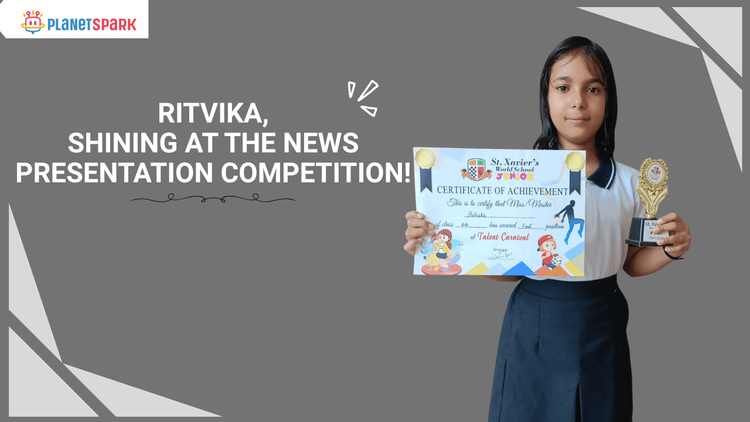
Ritvika (News Presentation Competition)
Ritvika has achieved a milestone in News Presentation! From the PlanetSpark classroom to the spotlight at the News Presentation Competition.
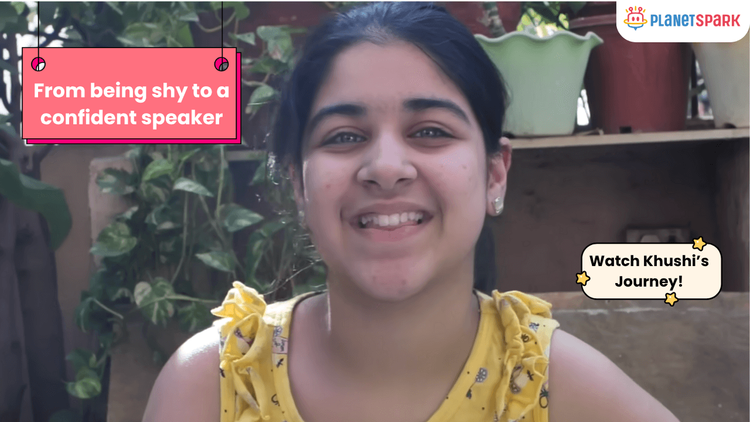
Khushi Bhatia, 10 Years
Khushi transformed from being a shy to a confident speaker with PlanetSpark!
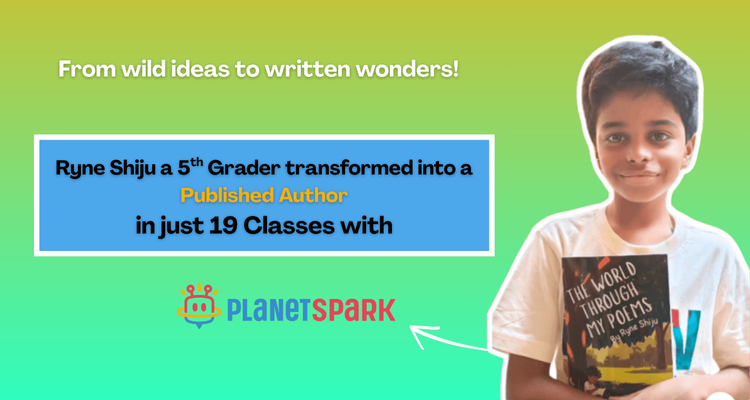
Ryne Shiju (Published Author)
Ryne Shiju, a bright PlanetSpark star, has turned imagination into inspiration becoming a published author whose words now empower and inspire.

Muskaan (SpellBee International Participant)
We are beyond proud of Muskaan from PlanetSpark, who showcased her spelling brilliance at the SpellBee International Programme.
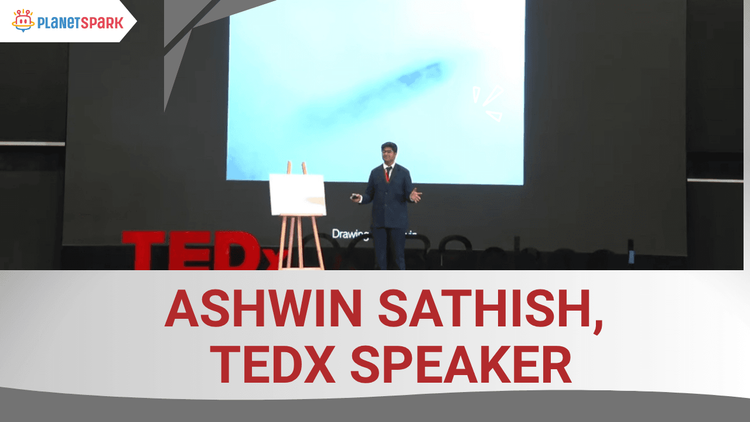
Ashwin Sathish (TEDx Speaker)
Ashwin Sathish, Grade 8 from New Delhi, stood tall as a TEDx Speaker, sparking conversations that truly matter. From classroom confidence to commanding a global stage, his journey reflects the power of voice, vision, and courage.

Eshaan (Published Author)
Eshaan has officially became a published author, turning classroom activity into a captivating storybook.
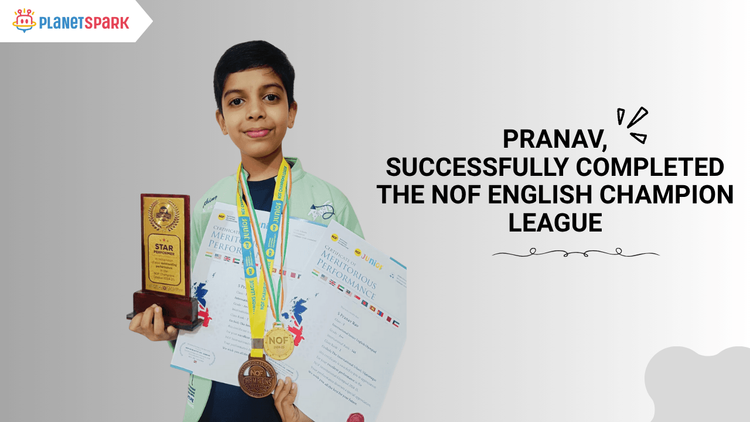
Pranav (NOF English Champion League)
Pranav, a Grade 3 star, has successfully completed the NOF English Champion League, showcasing his brilliance in Public Speaking and Creative Writing.

Ovia Singh (TEDx Speaker)
Oviya Singh from PlanetSpark challenged the status quo in her TEDx Talk, asking, ‘Is the world running out of food?’ as she highlighted the importance of soil conservation.
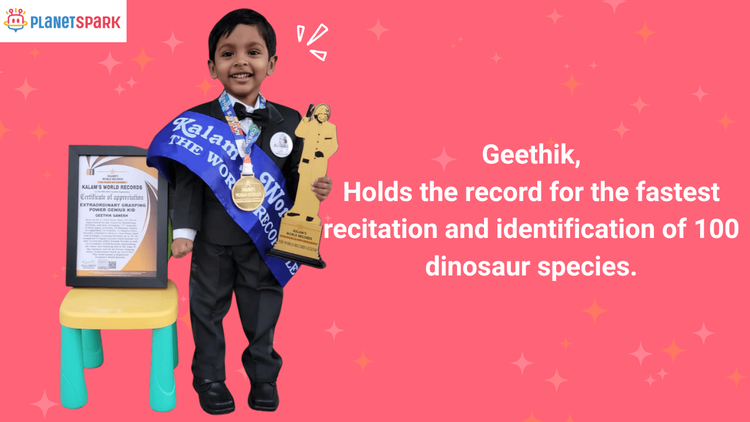
Geethik (Fastest Recitation)
Geethik’s PlanetSpark-sharpened speaking skills helped him set a 100-dinosaur recitation record.
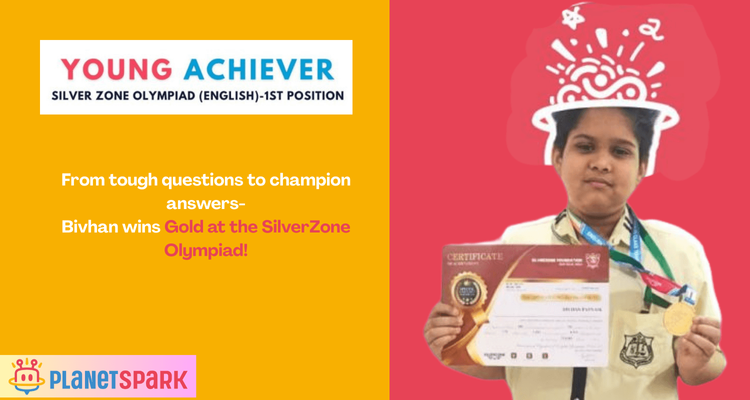
Bivhan Patnaik (SilverZone Olympiad)
Bivhan, in just Grade 4, wins Gold at the SilverZone Olympiad, a true symbol of brilliance, focus, and PlanetSpark-guided success.

Advaith Gupta (SpellBee International)
Advaith Gupta – Spelling His Way to Global Recognition! From mastering vocabulary to shining at SpellBee International, Advaith creates remarkable achievements.
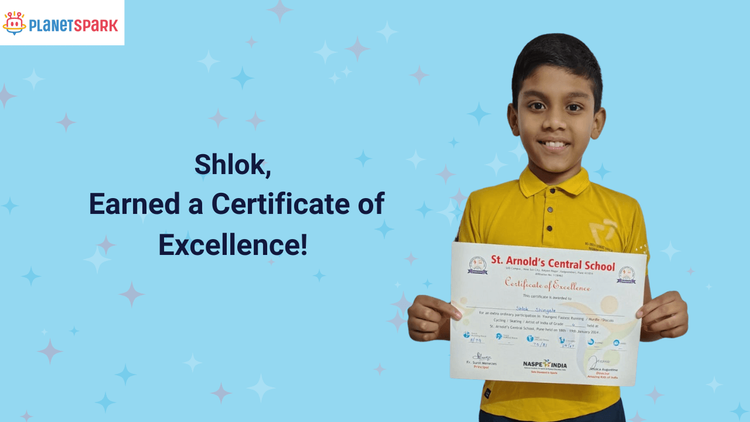
Shlok (certificate of excellence)
Earned a Certificate of Excellence, showcasing his growing confidence and skills nurtured at PlanetSpark.
Ovia Singh, 11 Years
Oviya Singh from PlanetSpark challenged the status quo in her TEDx Talk, asking, ‘Is the world running out of food?’ as she highlighted the importance of soil conservation.
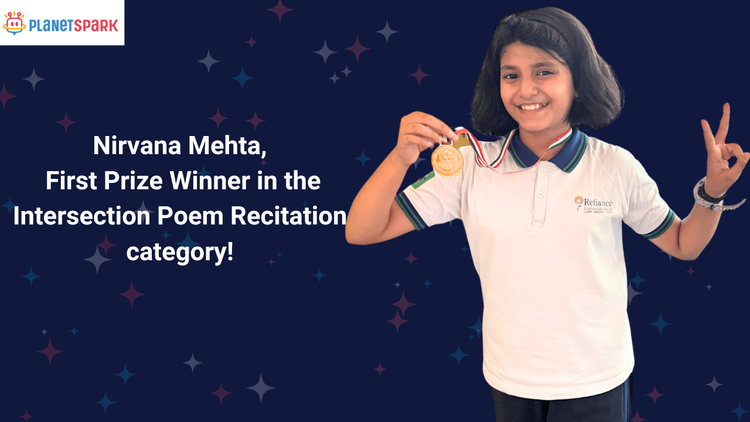
Nirvana Mehta (Wom Poem Recitation)
First Prize Winner in the Intersection Poem Recitation category
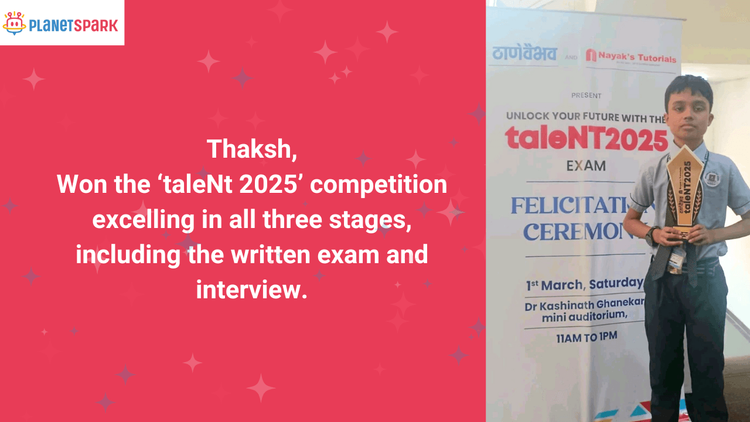
Thaksh (Won the ‘taleNt 2025’ competition)
Thaksh, won the ‘taleNt 2025’ competition in Thane after excelling in all three stages, including the written exam and interview.
Nirvaan, Grade 9
Nirvan now communicates confidently, speaks with clarity, and shines in public speaking!
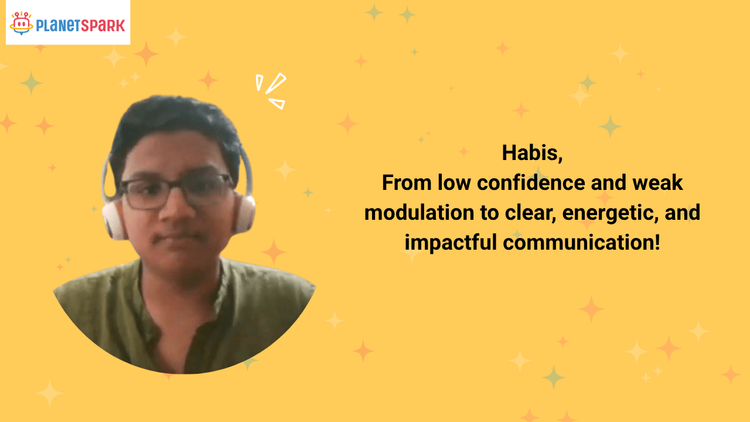
Habis, Grade 9
Meet Habis — once a shy speaker, now delivering every message with clarity, confidence, and strong stage presence.

Prathmesh (Got 3rd Prize in MUN)
Secured Third Prize at a Model United Nations event, reflecting his strong communication and critical thinking skills built at PlanetSpark.

Neel Kandul, First Position in class and State Rank 810 in the International Olympiad of English Language.
First Position in class and State Rank 810 in the International Olympiad of English Language.
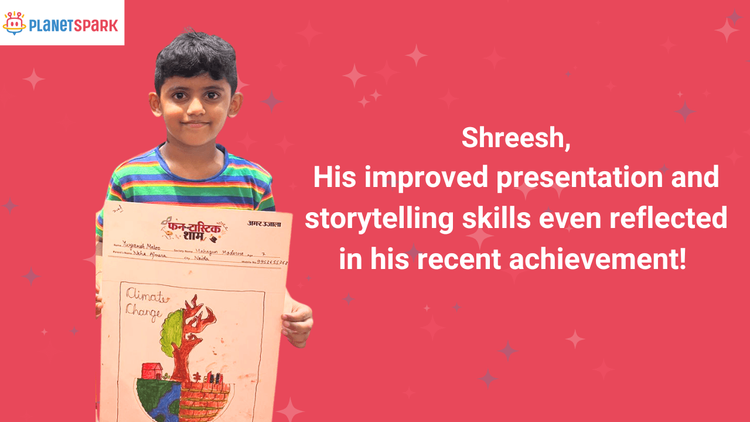
Shreesh
His improved presentation and storytelling skills even reflected in his recent achievement — winning second place in the Junior Category of a drawing competition on ‘Climate Change’ organized by the Amar Ujala team.
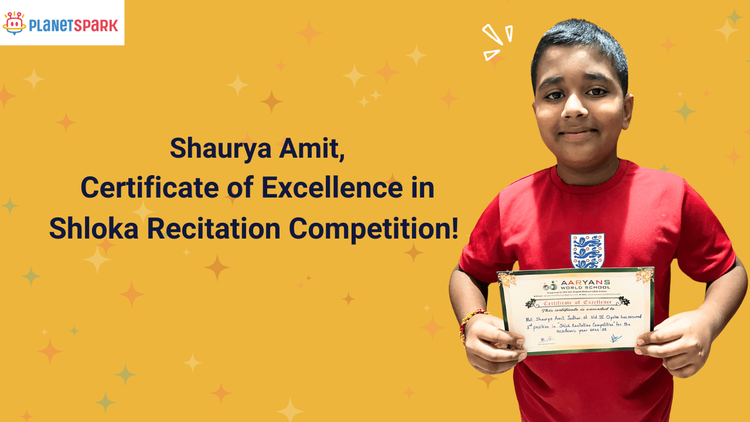
Shaurya Amit (Certificate of Excellence)
Certificate of Excellence in Shloka Recitation Competition

Manvik, 10 Years
Manvik Kumar, a student at PlanetSpark shares his story of becoming a confident Public Speaker.
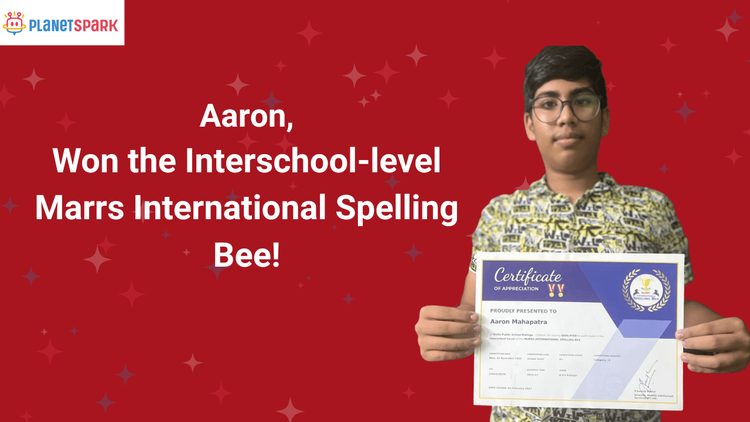
Aaron, International Spelling Bee Winner
Won at the Interschool-level Marrs International Spelling Bee, showcasing strong language skills and consistent PlanetSpark-driven growth.
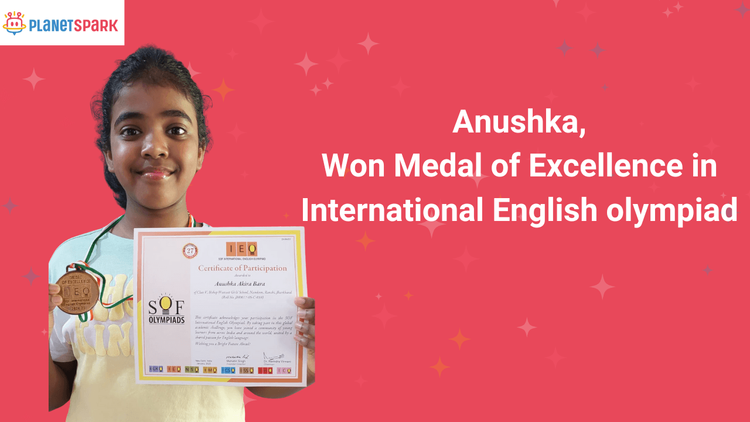
Anushka, Won Medal of Excellence in International English olympiad
Anushka won medal of excellence in International English olympiad. She scored sixth position in her school in olympiad.
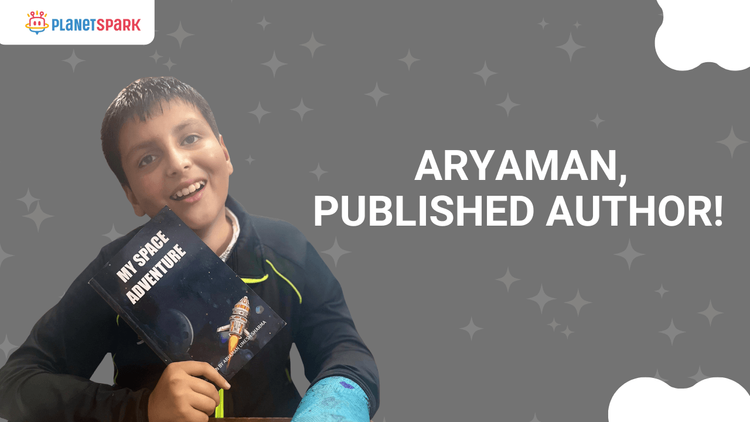
Aryaman, Published Author
Aaryaman became a published author, reflecting his creativity, communication skills, and confidence nurtured at PlanetSpark.
Frequently Asked Questions
Why are nouns important in grammar?
+Nouns are essential because they act as the subject or object in a sentence, helping us form clear and meaningful sentences.
What is the difference between countable and uncountable nouns?
+Countable nouns can be counted (e.g., books, apples), while uncountable nouns cannot be counted (e.g., water, milk).
What is a noun in Class 7 English?
+A noun is a word that names a person, place, animal, thing, or idea. It helps us identify what or who the sentence is about.
How many types of nouns are there in Class 7?
+There are several types, including proper nouns, common nouns, abstract nouns, collective nouns, material nouns, and more.
How can students easily learn nouns?
+Students can learn nouns by understanding types, practising examples, solving worksheets, and using them in daily conversations.