


What if someone had calculated planetary motion and the value of pi more than 1,500 years ago, without modern tools? Aryabhatta did exactly that. Long before telescopes and calculators, this Indian genius used logic and numbers to explain the cosmos.
Who was Aryabhatta? Also spelled Aryabhattha, he was one of the brightest minds of ancient India, a legendary mathematician and astronomer whose pioneering ideas shaped the world’s understanding of numbers, planetary motion, and the very nature of time.
Aryabhatta was a 5th-century Indian mathematician and astronomer who introduced the place value system, approximated pi, explained eclipses scientifically, and proposed Earth’s rotation centuries before modern science.
In this blog, we’ll explore Aryabhatta’s biography, inventions, astronomical theories, comparison with Brahmagupta, and the ongoing debate on who invented zero: Aryabhatta or Brahmagupta. This comprehensive guide also offers essay ideas for students and introduces modern-day writing programs that help children explore such legends creatively.

Early Life and Background of Aryabhatta
Where Was Aryabhatta Born?
Aryabhatta was born in 476 CE in Kusumapura, widely believed to be present-day Patna, Bihar. Some theories place his roots in Kerala, but mainstream historians agree on his strong connection with Nalanda, the ancient university town.
Birth Year: 476 CE
Education: Likely studied at Nalanda University, renowned for mathematics, astronomy, grammar, and logic
Profession: Mathematician, Astronomer, Scholar
Despite the lack of autobiographical detail in his works, Aryabhatta’s intellectual legacy remains undeniable. His ideas were far ahead of his time.
Aryabhatiya: His Masterpiece
At the young age of 23, Aryabhatta composed the Aryabhatiya, his most significant text. Written in Sanskrit, it comprises 121 verses across four sections:
-
Gitikapada – Cosmology, large units of time
-
Ganitapada – Algebra, arithmetic, geometry
-
Kalakriyapada – Time calculations, planetary positions
-
Golapada – Celestial sphere and astronomy
This work formed the basis of Indian astronomical science for centuries and was later translated into Arabic, influencing Islamic and European astronomy.
Historical Background of Aryabhatta’s Time
Aryabhatta lived during the Gupta period, often called the golden age of ancient India. This period, between the 4th and 6th centuries CE, saw remarkable progress in science, mathematics, literature, and philosophy. Education flourished, and scholars from different regions gathered in famous centers of learning like Nalanda University.
During Aryabhatta’s time, astronomy was deeply connected with religion and calendar-making. However, Aryabhatta introduced a more scientific and mathematical approach to understanding celestial events. His work marked a shift from mythological explanations to logical reasoning and observation, making him one of the most important scientific thinkers of ancient India.
Help your child turn ideas into impactful writing with PlanetSpark’s expert-led Creative Writing Classes.
Aryabhatta’s Contributions to Mathematics
-
Place Value System and the Concept of Zero
Aryabhatta’s calculations implied an understanding of zero as a placeholder in the place value system, a revolutionary step in mathematics.
This sparks the common question:
-
Who invented zero: Aryabhatta or Brahmagupta?
Aryabhatta used the concept of zero implicitly in positional values but didn’t define it as a number. Brahmagupta, who lived about 150 years later, formally defined zero as a numeral and laid out rules for arithmetic operations involving zero in his book Brahmasphutasiddhanta. While Aryabhatta initiated the concept, Brahmagupta completed it with mathematical precision.
-
Algebra and the Kuttaka Method
Aryabhatta devised the Kuttaka method (meaning “pulveriser”) to solve indeterminate equations. His system tackled linear Diophantine equations, complex algebra centuries before Europe developed similar methods.
-
Geometry and Pi Approximation
Aryabhatta estimated the value of π with the formula:
“Add four to 100, multiply by eight, then add 62,000. Divide by 20,000.”
This gives π ≈ 3.1416, accurate even by modern standards.
He also worked on the area of triangles, circles, and the volume of spheres.
-
Trigonometry Innovations
Aryabhatta introduced sine tables using the concept of ardha-jya, or half-chord. He also demonstrated an early understanding of cosine and versine. His innovations laid the foundation for modern trigonometry.
-
Major Mathematical Discoveries of Aryabhatta
Aryabhatta made several important contributions to mathematics that shaped future learning and discoveries.
One of his major achievements was the place value system, which became the foundation of modern number representation. He also worked extensively on algebra, solving complex equations using his famous Kuttaka method.
Aryabhatta gave an accurate approximation of pi (π), which was far ahead of his time. He also contributed to geometry by calculating areas and volumes and developed early ideas of trigonometry through sine tables.
His mathematical ideas influenced scholars in India and beyond for centuries.

Aryabhatta’s Contributions to Astronomy
-
Earth's Rotation and Heliocentric Ideas
Aryabhatta claimed that the Earth rotates on its axis, which explained the apparent movement of stars. This idea came almost 1,000 years before Copernicus introduced it in Europe. Aryabhatta also suggested that the Sun was relatively stationary, presenting an early form of heliocentric theory.
-
Scientific Explanation of Eclipses
Rejecting prevailing myths involving Rahu and Ketu, Aryabhatta gave accurate, scientific explanations for eclipses. He explained that lunar eclipses are caused by Earth's shadow falling on the Moon, and solar eclipses occur when the Moon blocks sunlight from reaching Earth. He also calculated the size of shadows and the duration of eclipses with surprising precision.
-
Planetary Periods and Solar Year
Aryabhatta calculated the length of the solar year as 365.3586805 days, which is incredibly close to the modern value of 365.256363 days. He also accurately calculated the revolutions of the Moon and other planets, including Mercury, Venus, Mars, Jupiter, and Saturn.
Aryabhatta’s Methods and Teaching Style
Aryabhatta used Sanskrit verse and concise formulas in his works, making them suitable for oral transmission and memorization, which was the standard in Indian education at the time. Every verse in the Aryabhatiya encapsulates complex ideas in just a few lines. Students were expected to recite these verses and later understand them through teacher-led explanations.
This ancient method of learning through memorization and breakdown mirrors how today’s students can grasp complex ideas through interactive instruction. Programs like PlanetSpark’s Creative Writing Classes follow a similar structure, teaching the core first and then building expression through practice.
Accuracy of Aryabhatta’s Calculations
Aryabhatta’s calculations were remarkably accurate for his time, especially considering the lack of modern tools.
He estimated the value of pi (π) as 3.1416, which is extremely close to the modern value of 3.14159. He also calculated the solar year as 365.3586805 days, which was very close to the actual value.
His astronomical calculations regarding planetary motion and eclipses showed deep observation and mathematical skill. These achievements highlight how advanced Aryabhatta’s scientific thinking was centuries ago.
Want your child to write better essays, stories, and biographies?
Aryabhatta vs. Brahmagupta: Complementary Geniuses
Aryabhatta and Brahmagupta were two pillars of Indian science, but their approaches differed significantly. Aryabhatta lived in the 5th century CE and composed Aryabhatiya, focusing on compact, verse-based sutras that required interpretation. His style was highly formulaic and demanded oral explanation. Brahmagupta, writing in the 7th century CE, took a more descriptive approach and authored the Brahmasphutasiddhanta, which expanded on Aryabhatta’s ideas with detailed explanations.
In terms of the concept of zero, Aryabhatta used it implicitly through place value, while Brahmagupta explicitly defined zero as a number and outlined how to perform arithmetic operations with it. Both scholars contributed immensely to astronomy, with Aryabhatta explaining eclipses and planetary motion using mathematics and Brahmagupta reinforcing many of those concepts while correcting or adding to others.
Instead of comparing who was greater, it's more accurate to see them as complementary figures. Aryabhatta laid the foundation, and Brahmagupta built upon it, expanding Indian mathematical thought and influencing generations of scholars in India and beyond.
Timeline of Aryabhatta’s Life and Legacy
- 476 CE: Born in Kusumapura, Bihar
- 499 CE: Composed the Aryabhatiya at age 23
- 525–550 CE: His work spreads across Indian scholarly circles
- Around 600 CE: Bhaskara I writes a detailed commentary on the Aryabhatiya
- 628 CE: Brahmagupta references Aryabhatta in Brahmasphutasiddhanta
- 8th–9th century: Aryabhatiya is translated into Arabic, influencing Islamic astronomy
- 1975: India launches Aryabhata, its first satellite, named in his honor
Common Misconceptions About Aryabhatta
Some common myths include the belief that Aryabhatta invented zero as a numeral. While he used the place value system that required zero, it was Brahmagupta who defined it formally. Another misconception is that Aryabhatta believed in a flat Earth. In reality, he proposed Earth’s rotation and rejected geocentric views. People also often confuse Aryabhatta with Aryabhatta II, who lived several centuries later and made separate contributions.
Why Students Should Learn About Aryabhatta
Learning about Aryabhatta is essential for students as it introduces them to India’s rich scientific legacy. Understanding Aryabhatta’s role helps students appreciate how Indian scholars contributed to global advancements in science, long before modern Western thinkers. Moreover, it encourages critical thinking, research, and curiosity.
This is where programs like PlanetSpark’s Essay Writing Classes and Public Speaking Courses play a role by helping students confidently articulate what they learn.
Legacy of Aryabhatta
Aryabhatta’s work left a lasting impact on mathematics and astronomy. His book Aryabhatiya influenced many later scholars, including Brahmagupta and Bhaskara I.
His ideas were translated into Arabic and helped shape Islamic astronomy, which later influenced European scientific thought. Aryabhatta’s scientific approach to eclipses, planetary motion, and numbers changed the direction of learning in ancient and modern science.
In 1975, India honored him by naming its first satellite Aryabhata, showing his continued importance in India’s scientific history.
Fun Facts About Aryabhatta
-
Aryabhatta completed the Aryabhatiya at the age of 23
-
Estimated pi (π) as 3.1416
-
Proposed Earth’s rotation centuries before Copernicus
-
Gave accurate scientific reasons for eclipses
-
India’s first satellite was named Aryabhata in 1975
-
His work was referenced by famous scholars like Al-Khwarizmi and Al-Biruni
Aryabhatta continues to inspire generations with his intellectual brilliance and fearless pursuit of truth through science. Whether it's the question of who invented zero or how eclipses occur, Aryabhatta's answers changed human understanding forever. His ideas were visionary, bridging ancient knowledge with modern science.
His legacy isn’t just about equations or celestial bodies; it’s about how deep thinking, observation, and creativity can shape history. For children aspiring to learn about such visionaries and express themselves through writing, Aryabhatta offers not just facts but inspiration.
Quick Facts About Aryabhatta
- Aryabhatta was born in 476 CE
- He wrote the Aryabhatiya at the age of 23
- He estimated the value of pi (π) accurately
- He proposed that the Earth rotates on its axis
- He explained solar and lunar eclipses scientifically
- His work influenced scholars in India, Arabia, and Europe
- India’s first satellite was named after him in 1975
Why Choose PlanetSpark Creative Writing Classes?
Learning about inspiring personalities like Aryabhatta becomes more meaningful when children can express their ideas clearly and creatively. PlanetSpark’s Creative Writing Classes help students improve their writing skills while developing stronger thinking, storytelling, and self-expression.
Here’s how PlanetSpark helps young writers grow:
- Learn to write essays, biographies, and informative pieces with better structure
- Build creativity through storytelling, descriptive writing, and idea development
- Improve vocabulary, sentence formation, and writing clarity
- Develop research and analytical thinking skills for academic writing
- Get personalized feedback from expert writing coaches
- Practice writing regularly through engaging exercises and creative challenges
PlanetSpark helps children turn knowledge into powerful written expression and become confident communicators.
From school essays to creative storytelling, PlanetSpark helps children become stronger writers.
Conclusion: Aryabhatta’s Legacy of Knowledge and Innovation
Aryabhatta was one of the greatest scholars in Indian history whose contributions to mathematics and astronomy changed the way the world understood numbers, time, and the universe. From calculating the value of pi to explaining eclipses scientifically and proposing Earth’s rotation, his ideas were far ahead of his time.
His life teaches us the value of curiosity, observation, and logical thinking. Aryabhatta’s journey reminds students that knowledge and determination can lead to discoveries that shape the future.
Learning about great thinkers like Aryabhatta not only helps children understand history and science but also inspires them to think deeply, ask questions, and express their ideas clearly. With the right guidance and practice, children can develop these skills and become confident thinkers, writers, and communicators.
Reader Can Also Read
Proud Voices of PlanetSpark

Parents of Oviya Singh
Oviya Singh, a PlanetSpark student, spoke about ‘Soil Conservation’ in her TEDxTalk by addressing the status quo and questioning, ‘Is the world running out of food?’
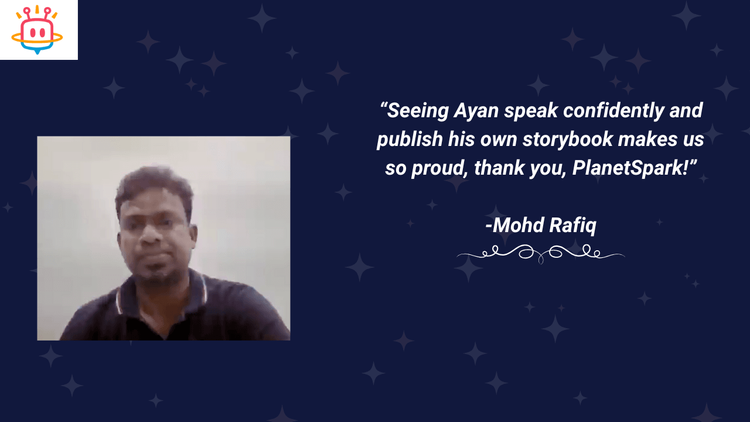
Mohd Rafiq
Thanks to PlanetSpark and his teacher’s guidance, Ayan now speaks confidently, participates actively, and has published his first storybook.
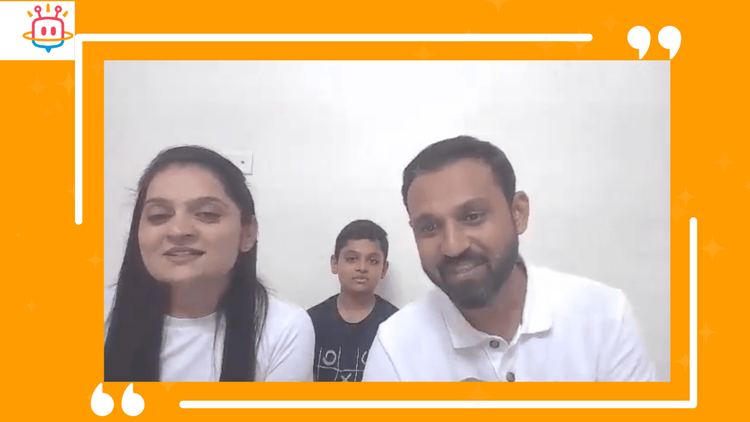
Mr. & Mrs. Bipin Patel
PlanetSpark helped my son Ahan find his voice and confidence. From stage speaking to being published in Pearls of Poetry, his growth has been remarkable.

Mrs. Sushila Thapa
PlanetSpark’s Public Speaking program has boosted Sristi’s confidence and clarity, her school performance speaks for itself.

Rajiv Sharma
My daughter has transformed from a shy kid to a confident speaker in just 6 months. The personalized attention and structured curriculum made all the difference.
Parents of Oviya Singh
Oviya Singh, a PlanetSpark student, spoke about ‘Soil Conservation’ in her TEDxTalk by addressing the status quo and questioning, ‘Is the world running out of food?’
Mohd Rafiq
Thanks to PlanetSpark and his teacher’s guidance, Ayan now speaks confidently, participates actively, and has published his first storybook.
Mr. & Mrs. Bipin Patel
PlanetSpark helped my son Ahan find his voice and confidence. From stage speaking to being published in Pearls of Poetry, his growth has been remarkable.
Mrs. Sushila Thapa
PlanetSpark’s Public Speaking program has boosted Sristi’s confidence and clarity, her school performance speaks for itself.
Rajiv Sharma
My daughter has transformed from a shy kid to a confident speaker in just 6 months. The personalized attention and structured curriculum made all the difference.
Practice with Our Worksheets
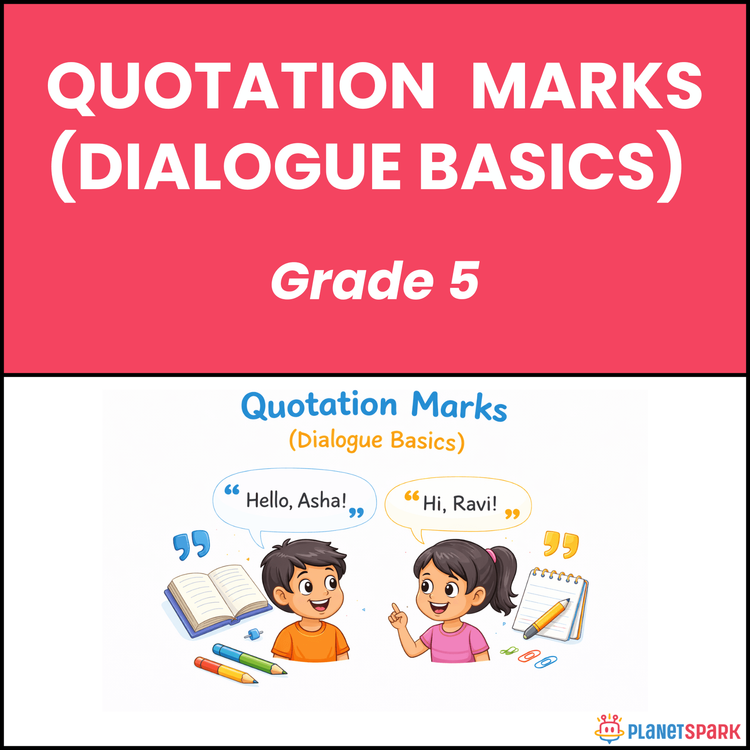
Class 5 Quotation Marks Dialogue English Grammar Worksheet
Practice using quotation marks correctly while writing dialogues and conversations.
Class 3 Grammar Worksheet on Subject–Verb Agreement
Match subjects and verbs correctly in sentences with this simple worksheet.

Class 4 Reading Passage on The Greedy Merchant
Explore what happens to a greedy merchant in this meaningful story-based worksheet.
Class 4 Multiple Meaning Words English Worksheet
Discover words with multiple meanings using clear sentence examples.
KG English Worksheet on Colours and Shapes
Fun activities to help KG kids learn colours and shapes with simple examples.

Class 4 Grammar Worksheet on Adding details
Learn to expand ideas by adding descriptive words and clear information.

Class 2 English Worksheet for Sentence Writing
Build writing skills with guided sentence-building tasks suited for young learners.
Class 2 English Worksheet: Punctuations "."and"?"
Explore naming words with fun activities that build strong noun skills early on.

Class 3 English Worksheet on Concrete and Abstract Nouns
Learn the difference between concrete and abstract nouns with activities designed to strengthen grammar concepts in young Class 3 learners.

Class 2 English Worksheet on Collective Nouns
Explore collective nouns for groups of animals, people, and things.
Class 5 Quotation Marks Dialogue English Grammar Worksheet
Practice using quotation marks correctly while writing dialogues and conversations.
Class 3 Grammar Worksheet on Subject–Verb Agreement
Match subjects and verbs correctly in sentences with this simple worksheet.
Class 4 Reading Passage on The Greedy Merchant
Explore what happens to a greedy merchant in this meaningful story-based worksheet.
Class 4 Multiple Meaning Words English Worksheet
Discover words with multiple meanings using clear sentence examples.
KG English Worksheet on Colours and Shapes
Fun activities to help KG kids learn colours and shapes with simple examples.
Class 4 Grammar Worksheet on Adding details
Learn to expand ideas by adding descriptive words and clear information.
Class 2 English Worksheet for Sentence Writing
Build writing skills with guided sentence-building tasks suited for young learners.
Class 2 English Worksheet: Punctuations "."and"?"
Explore naming words with fun activities that build strong noun skills early on.
Class 3 English Worksheet on Concrete and Abstract Nouns
Learn the difference between concrete and abstract nouns with activities designed to strengthen grammar concepts in young Class 3 learners.
Class 2 English Worksheet on Collective Nouns
Explore collective nouns for groups of animals, people, and things.
Why Thousands of Parents Trust PlanetSpark
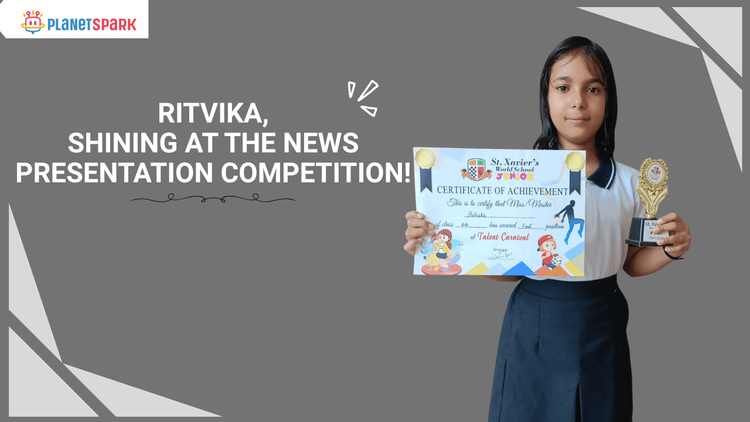
Ritvika (News Presentation Competition)
Ritvika has achieved a milestone in News Presentation! From the PlanetSpark classroom to the spotlight at the News Presentation Competition.
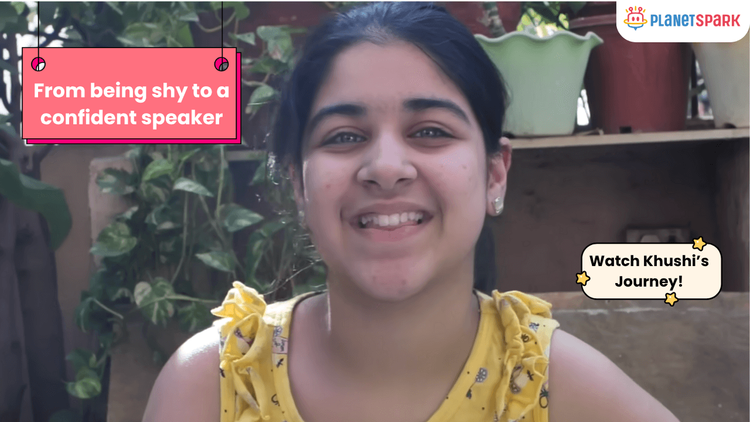
Khushi Bhatia, 10 Years
Khushi transformed from being a shy to a confident speaker with PlanetSpark!
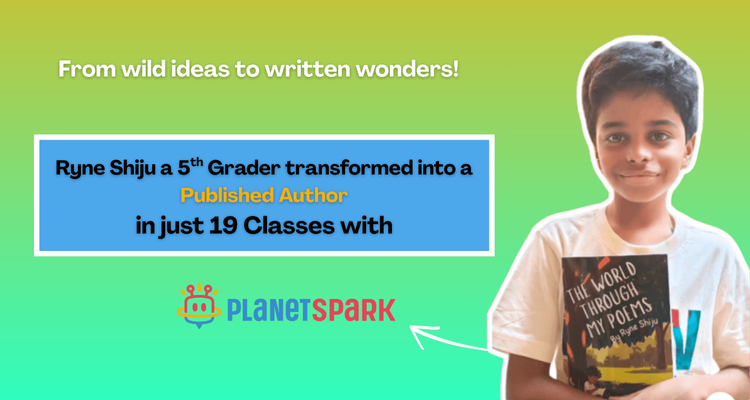
Ryne Shiju (Published Author)
Ryne Shiju, a bright PlanetSpark star, has turned imagination into inspiration becoming a published author whose words now empower and inspire.

Muskaan (SpellBee International Participant)
We are beyond proud of Muskaan from PlanetSpark, who showcased her spelling brilliance at the SpellBee International Programme.
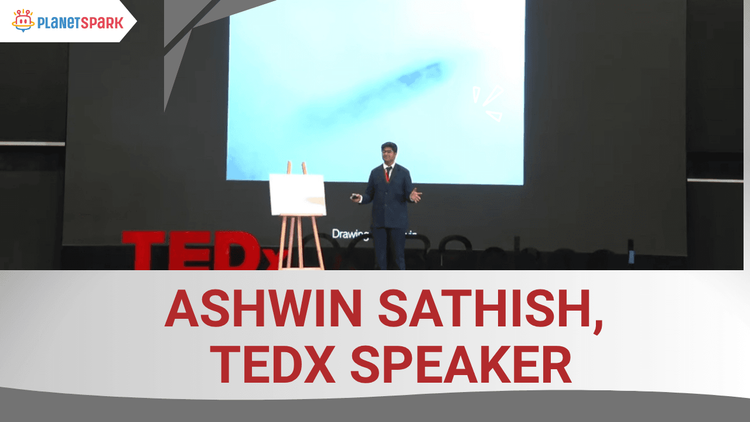
Ashwin Sathish (TEDx Speaker)
Ashwin Sathish, Grade 8 from New Delhi, stood tall as a TEDx Speaker, sparking conversations that truly matter. From classroom confidence to commanding a global stage, his journey reflects the power of voice, vision, and courage.
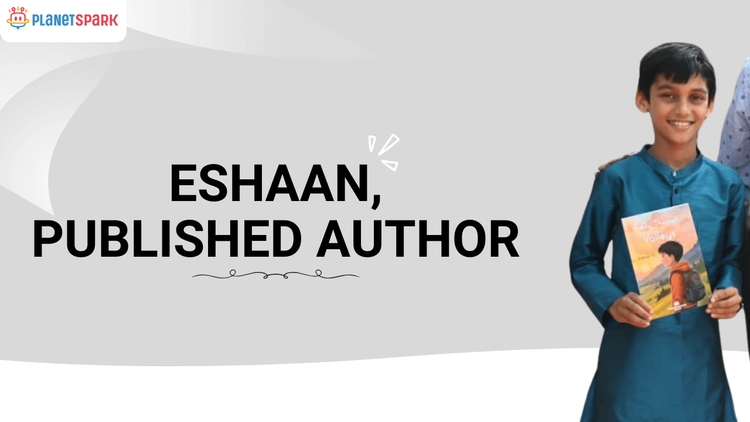
Eshaan (Published Author)
Eshaan has officially became a published author, turning classroom activity into a captivating storybook.
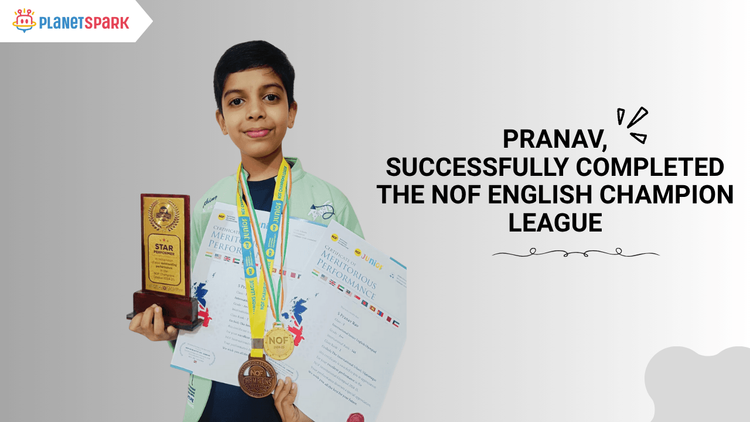
Pranav (NOF English Champion League)
Pranav, a Grade 3 star, has successfully completed the NOF English Champion League, showcasing his brilliance in Public Speaking and Creative Writing.

Ovia Singh (TEDx Speaker)
Oviya Singh from PlanetSpark challenged the status quo in her TEDx Talk, asking, ‘Is the world running out of food?’ as she highlighted the importance of soil conservation.
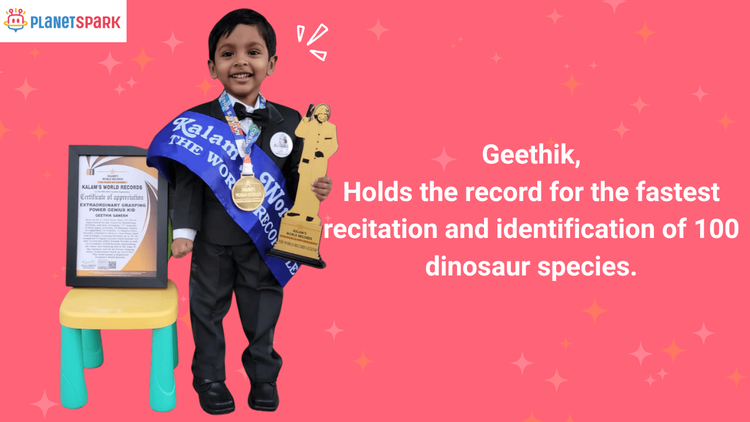
Geethik (Fastest Recitation)
Geethik’s PlanetSpark-sharpened speaking skills helped him set a 100-dinosaur recitation record.
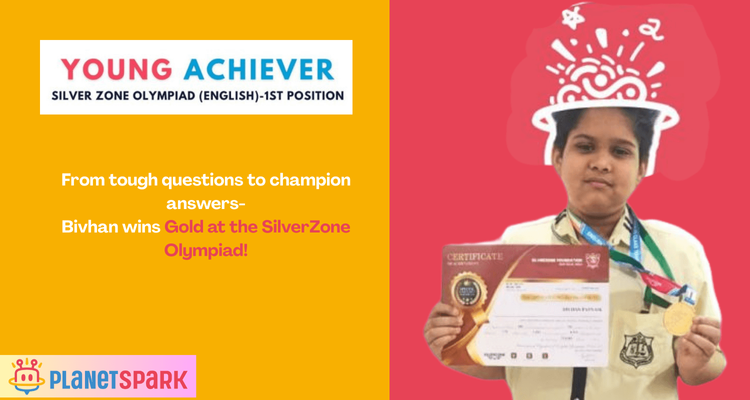
Bivhan Patnaik (SilverZone Olympiad)
Bivhan, in just Grade 4, wins Gold at the SilverZone Olympiad, a true symbol of brilliance, focus, and PlanetSpark-guided success.
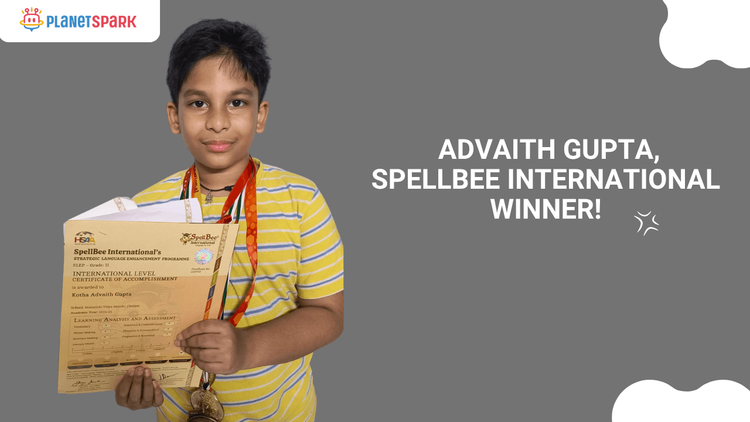
Advaith Gupta (SpellBee International)
Advaith Gupta – Spelling His Way to Global Recognition! From mastering vocabulary to shining at SpellBee International, Advaith creates remarkable achievements.

Shlok (certificate of excellence)
Earned a Certificate of Excellence, showcasing his growing confidence and skills nurtured at PlanetSpark.
Ovia Singh, 11 Years
Oviya Singh from PlanetSpark challenged the status quo in her TEDx Talk, asking, ‘Is the world running out of food?’ as she highlighted the importance of soil conservation.
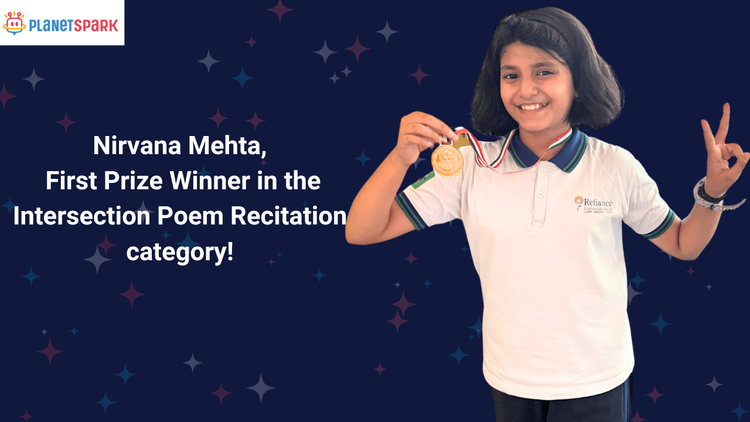
Nirvana Mehta (Wom Poem Recitation)
First Prize Winner in the Intersection Poem Recitation category
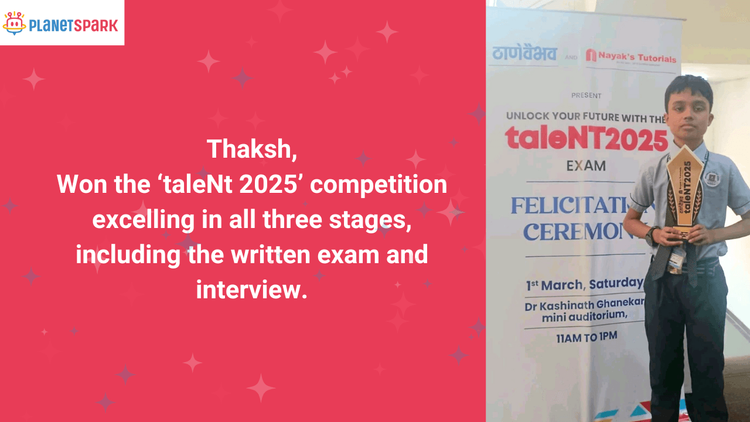
Thaksh (Won the ‘taleNt 2025’ competition)
Thaksh, won the ‘taleNt 2025’ competition in Thane after excelling in all three stages, including the written exam and interview.

Nirvaan, Grade 9
Nirvan now communicates confidently, speaks with clarity, and shines in public speaking!
Habis, Grade 9
Meet Habis — once a shy speaker, now delivering every message with clarity, confidence, and strong stage presence.

Prathmesh (Got 3rd Prize in MUN)
Secured Third Prize at a Model United Nations event, reflecting his strong communication and critical thinking skills built at PlanetSpark.
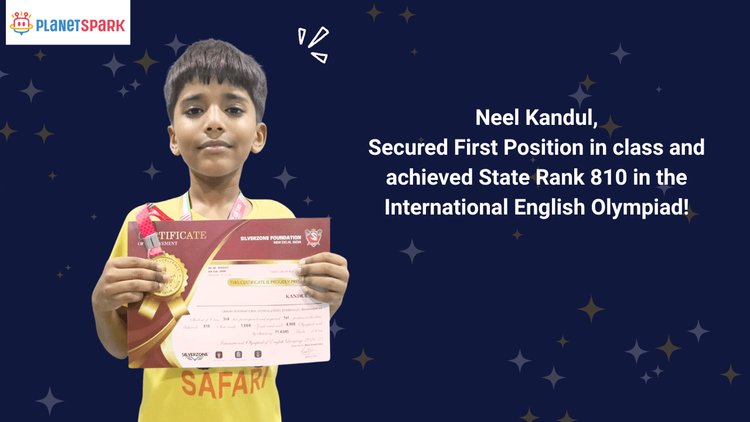
Neel Kandul, First Position in class and State Rank 810 in the International Olympiad of English Language.
First Position in class and State Rank 810 in the International Olympiad of English Language.
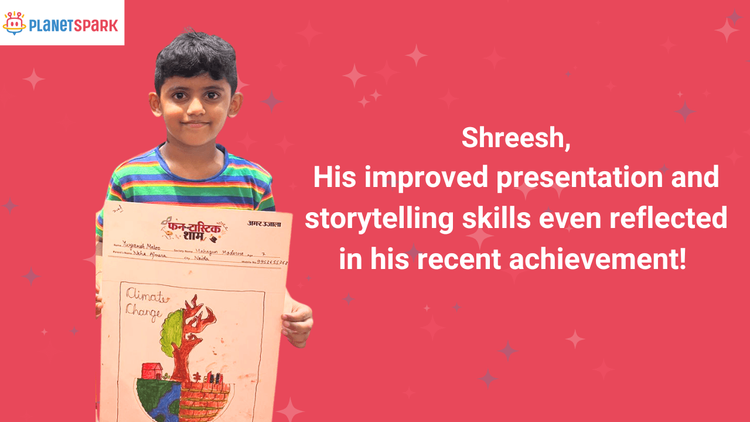
Shreesh
His improved presentation and storytelling skills even reflected in his recent achievement — winning second place in the Junior Category of a drawing competition on ‘Climate Change’ organized by the Amar Ujala team.
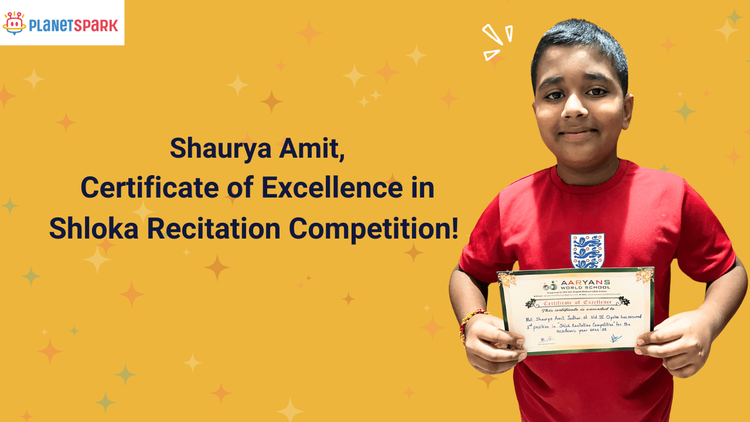
Shaurya Amit (Certificate of Excellence)
Certificate of Excellence in Shloka Recitation Competition

Manvik, 10 Years
Manvik Kumar, a student at PlanetSpark shares his story of becoming a confident Public Speaker.
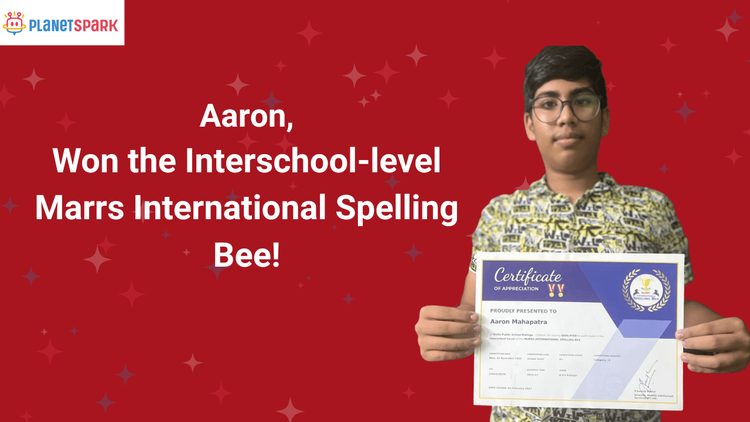
Aaron, International Spelling Bee Winner
Won at the Interschool-level Marrs International Spelling Bee, showcasing strong language skills and consistent PlanetSpark-driven growth.
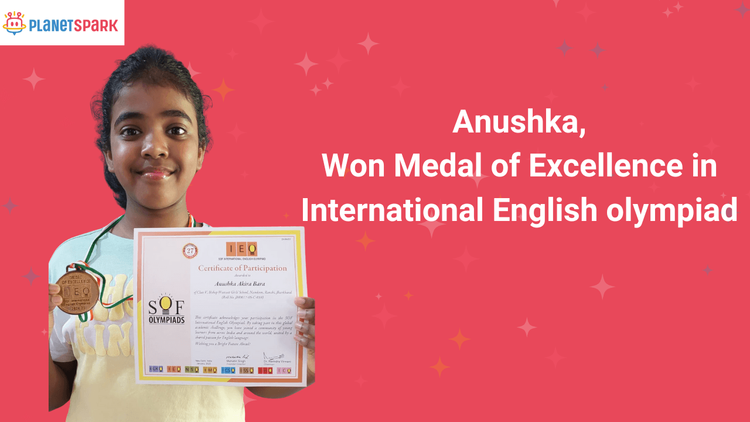
Anushka, Won Medal of Excellence in International English olympiad
Anushka won medal of excellence in International English olympiad. She scored sixth position in her school in olympiad.
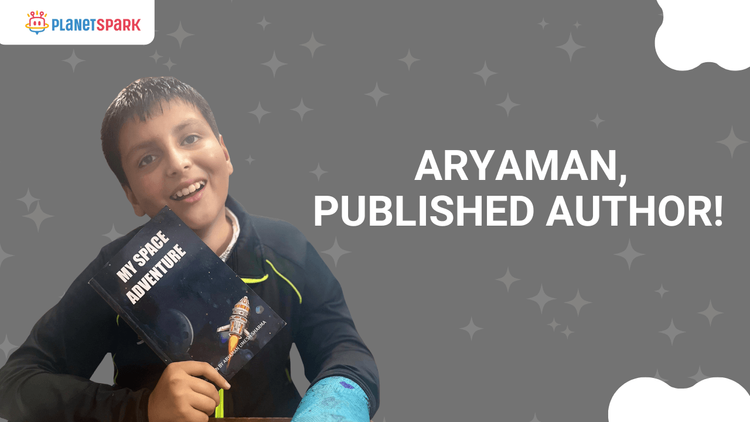
Aryaman, Published Author
Aaryaman became a published author, reflecting his creativity, communication skills, and confidence nurtured at PlanetSpark.
Frequently Asked Questions
What did Aryabhatta discover in astronomy?
+Aryabhatta discovered that the Earth rotates on its axis, explained solar and lunar eclipses using scientific reasoning, calculated planetary periods, and estimated the length of the solar year with remarkable accuracy.
Who was Aryabhatta and why is he famous?
+Aryabhatta was a 5th-century Indian mathematician and astronomer known for his groundbreaking work in mathematics and astronomy. He is famous for introducing the place value system, approximating the value of pi, explaining eclipses scientifically, and proposing that the Earth rotates on its axis.
Why is Aryabhatta important for students today?
+Aryabhatta is important for students because his work forms the foundation of modern mathematics and astronomy. Learning about him helps students develop logical thinking, scientific curiosity, and clear written communication skills used in school exams and projects.
What are the main contributions of Aryabhatta to mathematics?
+Aryabhatta’s contributions to mathematics include the place value system, early use of zero as a placeholder, accurate calculation of pi (π ≈ 3.1416), algebraic methods like the Kuttaka method, and foundational ideas in trigonometry.
Did Aryabhatta invent zero?
+Aryabhatta introduced the concept of zero through the place value system, but he did not define zero as a number. The formal definition and arithmetic rules for zero were later given by Brahmagupta. Both mathematicians played important roles in the development of zero.
What is Aryabhatiya and why is it important?
+Aryabhatiya is Aryabhatta’s most famous book, written when he was just 23 years old. It contains important concepts in algebra, geometry, trigonometry, and astronomy and influenced scholars in India, the Middle East, and Europe.
How can students write a good essay on Aryabhatta?
+Students should begin with a brief introduction, explain Aryabhatta’s mathematical and astronomical contributions with examples, and conclude with his impact on modern science. Practicing structured writing and idea organization, similar to methods used in guided writing programs like PlanetSpark, helps improve clarity and confidence.