Language is powerful because it helps
us express not only what we know, but also what we are unsure about. Sometimes, we feel confused, thoughtful, or stuck between two ideas. Writers use special tools in language to show these feelings clearly. One such tool is aporia. Understanding aporia meaning helps young learners become better thinkers and better writers.
Aporia is often used when a
writer wants to pause, think deeply, or question something instead of giving a straight answer. This makes writing sound natural and honest. In stories, essays, and speeches, aporia helps readers feel connected to the writer’s thoughts.
Each section is written in an easy style so learners can understand, reflect, and enjoy reading.
What is Aporia Meaning?
Aporia meaning refers to a moment of doubt, confusion, or uncertainty shown by a speaker or writer. When someone openly admits that they are unsure or questioning something, they are using aporia.
Aporia does not mean being wrong. It means thinking deeply.
Understanding Aporia Meaning in Simple Language
Aporia means:
Feeling unsure
Thinking carefully before deciding
Asking questions without quick answers
Showing honest confusion
Writers use aporia to slow down their thoughts and invite readers to think along with them.
Why Aporia Meaning Matters in Writing
Understanding aporia meaning helps learners because:
It shows that confusion is part of learning
It encourages curiosity
It makes writing more thoughtful
It helps express emotions clearly
Instead of pretending to know everything, aporia allows writers to say, “I am thinking about this.”
Everyday Situations Showing Aporia
Children experience aporia often in daily life.
Examples:
“Should I choose science or art?”
“Is it right to tell the truth if it hurts someone?”
“I wonder if winning is more important than trying.”
These sentences show thinking, doubt, and reflection.
Aporia Meaning in Writing
In writing, aporia:
Appears as questions
Sounds reflective
Makes readers pause
Builds emotional connection
Writers use aporia in:
Reflective essays
Stories
Speeches
Thoughtful paragraphs
Key Ideas About Aporia Meaning
Aporia shows uncertainty
Aporia invites thinking
Aporia makes writing realistic
Term
Explanation
Aporia
Expression of doubt or confusion
Reflection
Thinking deeply
Uncertainty
Not being sure
Understanding aporia meaning helps young writers realize that questions are just as powerful as answers.
Understanding aporia meaning becomes much easier when we see how it works through examples. Aporia is not a difficult idea once learners realize that it simply shows thinking, questioning, and uncertainty. When a writer is unsure and expresses that feeling openly, aporia is being used.
How Aporia Appears in Everyday Thinking
Aporia is something children experience naturally while thinking or learning.
Examples of everyday aporia:
“I am not sure if this answer is correct.”
“Should I help my friend or tell the teacher?”
“Is it better to be honest or kind in this situation?”
These sentences do not give final answers. They show doubt and reflection, which clearly explain aporia meaning.
Aporia in Simple Sentences
Aporia sentences often:
Begin with question words
Sound thoughtful
Show confusion or curiosity
Examples:
“Can anyone truly know what is right?”
“I wonder if this rule applies to everyone.”
“Is learning more important than winning?”
These examples help learners see how the aporia definition works in real writing.
Why Writers Use Easy Aporia Examples
Writers use aporia because:
It helps readers think
It feels honest and real
It slows down the story
It shows emotions clearly
Aporia does not confuse readers. Instead, it invites them to think along with the writer.
Aporia Compared to Clear Answers
Writing Style
Result
With aporia
Thoughtful and reflective
Without aporia
Direct and confident
Both styles are useful, but aporia is special because it shows thinking in progress.
Practice Examples for Better Understanding
Here are a few more examples to understand aporia meaning clearly:
“I am unsure whether success is about marks or effort.”
“Can bravery exist without fear?”
“Is happiness something we find or something we create?”
Each example shows:
Doubt
Reflection
Honest thinking
Key Learning from Examples
Aporia uses questions naturally
Aporia reflects thinking
Aporia makes writing engaging
Understanding aporia through easy examples helps learners feel confident using it in their own writing.
Aporia in literature is commonly used by writers to show deep thinking, moral questions, or emotional conflict. Many famous writers use aporia to make their characters sound realistic and thoughtful.
What Does Aporia in Literature Mean?
In literature, aporia is used when:
A character feels confused
A narrator questions ideas
The writer pauses to think
This technique helps readers connect emotionally with the text.
Why Writers Use Aporia in Literature
Writers use aporia in literature to:
Show inner conflict
Create suspense
Encourage reflection
Make characters relatable
When a character doubts their choices, readers understand them better.
Simple Literary Examples of Aporia
Examples from storytelling style sentences:
“Was this decision brave or foolish?”
“Could love survive such a mistake?”
“Was the truth worth the pain it caused?”
These sentences show aporia because the writer does not give a final answer.
Aporia and Paradox in Literature
Sometimes, aporia appears alongside paradox in literature. A paradox is a statement that seems opposite but makes sense when thought about deeply.
Example:
“The more I learn, the less I know.”
This paradox can lead to aporia, because it creates doubt and reflection.
Difference Between Aporia and Paradox in Stories
Aporia
Paradox
Shows doubt
Shows contradiction
Asks questions
Makes surprising statements
Expresses uncertainty
Expresses opposite ideas
Both are powerful tools, but they work differently.
Why Aporia Helps Young Readers
Aporia in literature helps learners:
Think deeply about stories
Understand characters’ feelings
Ask meaningful questions
Improve comprehension
Understanding aporia in literature prepares learners to read stories with greater awareness and confidence.
To understand aporia meaning better, it is important to first understand what a paradox is. Many learners confuse aporia with paradox, but both are different tools used in writing. A paradox may create confusion at first, but it actually carries a deeper meaning.
Simple Explanation of a Paradox
A paradox is a statement that:
Sounds wrong at first
Feels confusing
Seems opposite
Makes sense after thinking deeply
Paradoxes make readers stop and think.
Examples:
“Less is more.”
“The only constant is change.”
“I know that I know nothing.”
Each sentence looks confusing but holds truth.
How Paradox Works in Thinking
Paradox encourages:
Deep thinking
Curiosity
Reflection
Logical reasoning
Unlike aporia, which shows doubt, a paradox presents an idea that challenges normal thinking.
Paradox vs Normal Statements
Normal Statement
Paradox
Gives clear meaning
Appears confusing
Easy to understand
Needs thinking
Direct idea
Hidden meaning
Why Writers Use Paradox
Writers use paradox to:
Make ideas interesting
Challenge beliefs
Create strong impact
Teach lessons creatively
Paradox helps writers explain big ideas using small sentences.
Paradox in Daily Life
Children encounter paradoxes even outside books.
Examples:
“The more you hurry, the later you become.”
“Being yourself is the hardest thing.”
These ideas sound strange but reflect real life.
Paradox and Learning
Paradox helps learners:
Think beyond surface meaning
Improve reasoning skills
Understand abstract ideas
Understanding paradox helps learners later understand paradox figure of speech examples and how paradox connects with aporia.
A paradox is also known as a figure of speech because it uses language creatively to express deeper meaning. Learning paradox figure of speech examples helps learners identify and use them correctly in writing.
What is a Paradox Figure of Speech?
A paradox figure of speech:
Combines opposite ideas
Sounds impossible
Reveals truth after thinking
It is often used in:
Literature
Poetry
Speeches
Essays
Easy Paradox Figure of Speech Examples
Here are some simple examples suitable for young learners:
“This is the beginning of the end.”
“I am busy doing nothing.”
“Silence speaks louder than words.”
“The more you learn, the less you know.”
Each sentence shows contradiction but carries meaning.
Why These Examples Work
These paradox figure of speech examples work because:
They challenge thinking
They make readers pause
They express complex ideas simply
Paradox in Literature
Many writers use paradox in literature to:
Show conflict
Express emotions
Highlight important themes
Example-style sentences used in stories:
“Freedom can feel like a cage.”
“Winning the battle felt like losing everything.”
These sentences push readers to think deeply.
Paradox vs Aporia
Paradox
Aporia
States an opposite idea
Shows uncertainty
Confusing statement
Confused speaker
Hidden meaning
Open questioning
Paradox presents a strange idea. Aporia shows doubt about an idea.
How Learners Can Identify Paradox
Learners can spot paradox by asking:
Does this sentence sound impossible?
Does it make sense after thinking?
Does it express opposite ideas?
If yes, it is likely a paradox.
Connection Between Paradox and Aporia
Paradox can often lead to aporia. When readers face a paradox, they may feel confused or uncertain. That feeling of uncertainty is where aporia meaning becomes important.
Many learners think aporia and paradox mean the same thing because both can feel confusing. However, they are different figures of speech and are used for different purposes in writing. Understanding this difference helps learners use both correctly.
Basic Difference in Simple Words
Aporia shows doubt or uncertainty in the speaker’s mind
Paradox shows a statement with opposite ideas that still makes sense
Aporia is about thinking. Paradox is about meaning.
How Aporia Works
Aporia:
Shows confusion
Asks questions
Does not give answers
Sounds reflective
Example:
“I am not sure whether telling the truth was the right thing to do.”
This sentence clearly shows uncertainty, which explains aporia meaning.
How Paradox Works
Paradox:
Combines opposite ideas
Sounds impossible
Has hidden truth
Example:
“The more I learn, the less I know.”
This sentence sounds confusing but makes sense when thought about deeply.
Side-by-Side Comparison
Aporia
Paradox
Expresses doubt
Expresses contradiction
Uses questions
Uses statements
Shows uncertainty
Shows hidden meaning
Reflective tone
Surprising tone
Aporia vs Paradox in Literature
In aporia in literature, characters often question their decisions or beliefs. In paradox in literature, writers present ideas that challenge logic.
Example comparison:
Aporia: “Was this choice brave or foolish?”
Paradox: “Winning felt like losing.”
Why This Difference is Important
Understanding the difference helps learners:
Write clearly
Choose the right figure of speech
Improve reflective writing
Avoid confusion in exams and assignments
Quick Tip for Learners
If the sentence:
Shows confusion, it is aporia
Sounds opposite but meaningful, it is paradox
Knowing this difference strengthens understanding of both aporia definition and paradox figure of speech examples.
Writers do not always want to sound confident or certain. Sometimes, they want to show thinking, questioning, or emotional struggle. This is where aporia becomes very useful.
Aporia Helps Writers Sound Honest
When writers use aporia, they:
Admit uncertainty
Show real thinking
Avoid pretending to know everything
This makes writing feel more natural and relatable.
Aporia Encourages Readers to Think
Aporia does not give ready-made answers. Instead, it:
Invites readers to reflect
Encourages curiosity
Creates engagement
Readers feel involved because they think along with the writer.
Use of Aporia in Reflective Writing
Aporia is commonly used in:
Reflective essays
Opinion writing
Personal narratives
Moral discussions
Example:
“I still wonder if my decision helped or harmed others.”
This shows reflection and emotional depth.
Aporia in Literature
In aporia in literature, writers use it to:
Show inner conflict
Build emotional connection
Develop complex characters
Characters who doubt themselves feel more real to readers.
Benefits of Using Aporia
Writers use aporia because it:
Improves depth of writing
Builds emotional honesty
Supports critical thinking
Makes ideas thoughtful
How Aporia Improves Learning
For learners, aporia:
Encourages questioning
Supports deep understanding
Builds confidence in expressing doubt
Learning aporia meaning teaches that uncertainty is a strength, not a weakness.
Understanding aporia meaning is helpful, but learning how to use it in writing is even more important. Children can use aporia to express thoughts clearly, especially when they feel unsure, confused, or reflective about a topic.
When to Use Aporia in Writing
Children can use aporia when:
Writing reflective paragraphs
Sharing opinions
Describing thoughts or feelings
Writing stories with thinking characters
Aporia works best when the writer wants to show thinking rather than giving final answers.
How to Start Using Aporia
Aporia can be added by:
Asking thoughtful questions
Expressing uncertainty honestly
Sharing inner thoughts
Examples:
“I am not sure if winning is more important than learning.”
“Should rules always be followed, or should kindness come first?”
“I wonder if bravery means not being afraid.”
Each example shows aporia definition clearly.
Sentence Starters Using Aporia
Children can use these sentence starters:
“I am not sure whether…”
“I wonder if…”
“Is it possible that…”
“Can we truly say that…”
These starters help create reflective writing easily.
Using Aporia in Stories
In stories, aporia:
Shows a character’s thoughts
Makes characters realistic
Builds emotional connection
Example:
“He stood quietly, unsure if telling the truth would help or hurt.”
Using Aporia in Essays
In essays, aporia:
Introduces ideas thoughtfully
Shows balanced thinking
Encourages discussion
Example:
“While success is important, I am uncertain whether it should be the main goal.”
Practice helps learners understand aporia meaning better. Reading and writing aporia examples makes it easier to identify and use them correctly.
Simple Practice Examples
Read the sentences below and notice the doubt or uncertainty.
“I am not sure if helping everyone is always the right thing.”
“Can true happiness come from success alone?”
“I wonder whether silence can sometimes be more powerful than words.”
Each sentence clearly shows aporia.
Aporia vs Non-Aporia Sentences
Sentence Type
Example
Aporia
“Is honesty always the best policy?”
Not Aporia
“Honesty is the best policy.”
The first sentence shows doubt. The second gives a clear answer.
Practice Activity for Learners
Try rewriting these statements using aporia:
“Hard work leads to success.”
“Rules must always be followed.”
Possible aporia versions:
“Does hard work always lead to success?”
“Should rules always be followed in every situation?”
Identifying Aporia in Writing
To identify aporia, ask:
Is the writer unsure?
Is the sentence reflective?
Does it ask a thoughtful question?
If yes, it likely shows aporia.
Link Between Aporia and Paradox
Sometimes, paradox in literature creates confusion that leads to aporia. When readers face paradox figure of speech examples, they may feel uncertain, which reflects aporia meaning.
Why Practice is Important
Practicing aporia helps learners:
Improve thinking skills
Write more reflectively
Understand literature better
Build Strong Grammar Skills with PlanetSpark English Grammar
PlanetSpark’s English Grammar program is designed to help learners build a strong foundation in sentence structure, tenses, punctuation, and parts of speech through practical, usage-based learning. Instead of memorising rules, children learn grammar naturally by applying concepts in real-life communication. The focus is on understanding how grammar works in everyday writing and speaking, helping learners become confident and accurate language users.
Why PlanetSpark English Grammar stands out:
Interactive grammar learning without rote methods, using stories, dialogues, role plays, and live error correction
Concept-to-application approach, moving from rules to examples, sentence formation, paragraph writing, and real-time feedback
Gamified learning tools, including quizzes, word puzzles, Kahoots, and online games to improve engagement and retention
Integrated writing practice, where every grammar concept is reinforced through sentence-building and writing tasks
Structured grammar proficiency levels, guiding learners from basic topics like nouns and punctuation to advanced concepts such as conditionals, active and passive voice, and reported speech
Detailed parent reports, tracking progress in writing fluency, sentence complexity, and grammatical accuracy
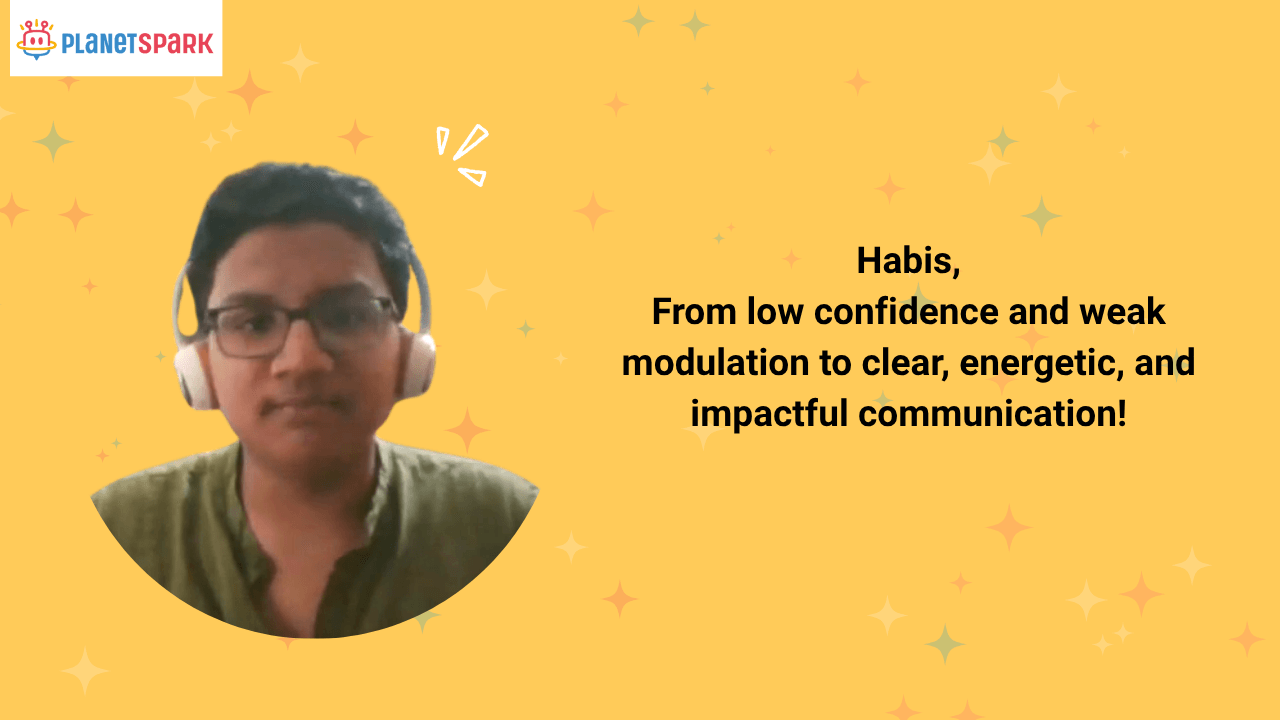
Habis – From Shy to Confident Speaker
Meet Habis, who once hesitated to speak up, but now delivers every message with clarity, confidence, and a commanding stage presence. Through consistent practice and guidance, Habis has transformed into a poised and impactful communicator, inspiring others with every word.
Final Thoughts on Mastering Aporia and Reflective Writing
Understanding aporia meaning helps learners realize that good writing is not only about giving answers but also about asking thoughtful questions. Aporia teaches writers to express doubt, reflection, and curiosity in a clear and meaningful way. By learning how aporia works, along with related concepts like paradox and its use in literature, learners develop stronger thinking and writing skills. Mastering such grammar and literary tools encourages deeper reflection, improves expression, and builds confidence in using English effectively across different types of writing.