
Appositive Phrase Meaning & Examples – Master Grammar with PlanetSpark


Table of Contents
- Understanding Appositive Phrases and Their Role in English G
- Types of Appositive Phrases Students Should Learn
- How to Use Appositive Phrases Correctly
- Appositive Phrase Examples for Class 6 to 10 Students
- Addressing a Common Confusion: Appositive vs Apposition vs A
- Practicing Appositive Phrases at Home
- About PlanetSpark
- Final Thoughts on Building Appositive Phrase Mastery
Appositive phrases help students write clearer,
more concise sentences by renaming or identifying a noun without repeating information. Parents who search for appositive phrase meaning often want simple explanations and examples that help their child understand English Grammar better. This guide breaks down appositive phrases in an easy, structured way and shows how mastering them strengthens sentence clarity and overall grammar skills.
PlanetSpark helps children learn English Grammar through guided one to one sessions, personalized instruction and interactive practice that makes complex concepts simple and engaging.
Understanding Appositive Phrases and Their Role in English Grammar
Appositive phrases are powerful grammar tools that help students refine clarity in writing. Instead of writing two separate sentences or repeating information, students use appositive phrases to rename or add detail to a noun within a single sentence. This improves fluency and shows grammatical maturity that teachers immediately notice.
Learning appositive phrase meaning also improves reading comprehension. When students understand how nouns are identified or clarified, they process information faster and make sense of longer sentences with ease. This skill becomes especially important as they progress to higher classes.
What Appositive Phrase Meaning Refers To
Appositive phrase meaning refers to a noun or noun phrase placed beside another noun to identify it or provide additional detail that enhances understanding. For example, in the sentence My sister Riya won the competition, the phrase Riya renames sister and clarifies who is being referred to. This simple structure helps children express more information without creating long, repetitive sentences.
Appositive phrases allow students to pack important details into a single, well organized sentence instead of splitting ideas into multiple short lines. This results in writing that feels more natural, fluent and academically strong. Understanding this structure helps students avoid unnecessary repetition and write sentences that feel smooth and meaningful. As children practice appositive phrases, they learn to express more information in fewer words, improving their grammar fluency and communication skills across subjects.
Over time, students begin recognizing appositive phrases in textbooks, stories and exam passages, which strengthens their reading comprehension as well. When children understand what an appositive phrase is and how it functions, they gain a versatile grammar tool that supports clear thinking and confident expression.
Why Appositive Phrases Matter for Students
Appositive phrases help students build sentences that sound clearer, more professional and more organized. They also learn how to add details naturally without interrupting the flow of writing, which is essential for strong academic performance. When students begin using appositives confidently, their writing appears more polished and their ideas become easier for teachers and examiners to understand.
This becomes especially valuable in essays, descriptive paragraphs and long answers where clarity and precision influence scoring. Appositive phrases help children explain complex ideas by adding short bursts of detail that guide the reader smoothly. Instead of writing multiple disconnected sentences, students learn to integrate information neatly into a single grammatical structure.
Mastery of appositive phrases strengthens overall English Grammar skills, making it easier for students to handle advanced sentence structures and express ideas confidently. As they encounter more complex grammar topics in higher grades, children with a solid understanding of appositives adapt faster and show stronger performance in writing, comprehension and communication tasks. This foundation sets the stage for long term academic confidence and stronger language skills.
Join now with PlanetSpark to master English Grammar the smart way.
Types of Appositive Phrases Students Should Learn
Understanding the types of appositive phrases helps students apply them correctly in writing. Each type serves a distinct purpose and changes how the sentence is read, which makes it important for children to recognize the grammatical effect of each form. When students understand both restrictive and non restrictive appositive phrases, they learn how to clarify meaning, add detail and control sentence flow with greater precision.
This knowledge also helps them make intentional grammar choices. Instead of adding details randomly, students learn when additional information is essential and when it is descriptive. With this awareness, they can choose the structure that communicates meaning most effectively in essays, descriptive writing and exam answers. This supports higher scoring responses and strengthens long term grammar development.
Restrictive Appositive Phrases
A restrictive appositive phrase identifies the noun in a way that is essential to the sentence. Without it, the sentence would lose important meaning or become unclear. For example, the author Ruskin Bond wrote many famous stories uses the appositive Ruskin Bond to specify which author is being discussed. The sentence depends on that phrase to make sense.
Students must learn that restrictive appositives are not separated by commas because they provide information that cannot be removed. This rule forms the foundation of accurate punctuation in complex sentences. Understanding restrictive appositives also helps children recognize essential information while reading comprehension passages, improving their ability to interpret text structure, intent and emphasis.
Non Restrictive Appositive Phrases
A non restrictive appositive phrase adds extra information that enhances the sentence but is not essential to its core meaning. For example, My dog Bruno, a playful Labrador, loves to run shows that the phrase a playful Labrador adds detail but can be removed without affecting the main message. This structure allows children to enrich writing by adding descriptive or clarifying information.
These appositive phrases require commas, and learning this rule helps students understand punctuation, rhythm and sentence structure more clearly. Mastering non restrictive appositives teaches children how to control tone, add expressive detail and write more engaging sentences in narratives and essays. This skill becomes especially valuable in higher classes where descriptive depth and grammatical precision influence scoring in English Grammar assessments.
How to Use Appositive Phrases Correctly
Using appositive phrases correctly requires students to understand both grammar rules and punctuation. With guided practice, children learn how to insert these phrases smoothly into their writing without interrupting meaning or clarity.
Punctuation Rules Every Student Must Know
Punctuation determines the meaning of appositive phrases. Restrictive appositives do not use commas because they provide essential identification. Non restrictive appositives use commas on both sides because they add extra detail.
Students often struggle with deciding when to use commas, and this leads to confusing or incorrect sentences. Learning punctuation through examples helps them identify patterns and write appositive phrases with confidence and accuracy.
Common Mistakes Students Make and How to Avoid Them
Common errors include placing commas incorrectly, using vague appositive phrases or repeating information unnecessarily. Some students also confuse appositive phrases with adjectives or separate sentences.
With guided coaching, students learn how to identify nouns clearly, place the appositive correctly and avoid disrupting sentence flow. Fixing these mistakes early strengthens grammar foundation and improves writing fluency across subjects.
Book a free demo class with PlanetSpark and see how grammar turns into confidence.
Appositive Phrase Examples for Class 6 to 10 Students
Examples help students recognize how appositive phrases function in real writing. Analyzing examples and practicing them strengthens grammar retention and improves application in class assignments.
Simple Grammar Examples for Beginners
Simple appositive phrases help students understand the basic pattern easily. For example, My friend Asha is coming over shows that Asha renames friend and clarifies who is being referred to.
Beginners benefit from examples that use familiar nouns such as family members, pets or everyday objects. These sentences build early confidence and teach students how to identify appositives naturally while reading.
Advanced Academic Examples for Higher Grades
Older students encounter appositive phrases in textbooks, literature and formal writing. Examples such as The Nile, the longest river in Africa, flows northward show how appositives add rich detail.
Working with advanced examples helps students understand how appositive phrases contribute to clarity and descriptive quality. These examples also prepare children for higher level English Grammar questions and writing tasks.
Addressing a Common Confusion: Appositive vs Apposition vs Apposite
Many students confuse appositive, apposition and apposite because the words sound similar, but each refers to a different concept. Clarifying this confusion early prevents incorrect usage and strengthens grammar accuracy.
Understanding Apposition in Grammar
Apposition refers to the relationship between a noun and the appositive phrase placed beside it, both referring to the same thing. Understanding apposition helps students see how two noun phrases can work together to provide clear, direct identification.
This concept supports sentence construction skills and helps children make sense of complex sentences in reading comprehension.
Why Appositive and Apposite Are Often Confused
Appositive and apposite sound similar, but they are entirely different. Appositive is a grammar structure, while apposite means appropriate or suitable. Students who search for appositive meaning often mistakenly type apposite meaning, leading to misunderstanding.
Teaching the difference ensures students apply the correct grammar term and recognize when a word is being used for meaning rather than structure.
Apposite Meaning and How to Explain the Difference Clearly
Apposite meaning refers to something being appropriate or fitting for a situation. It is not related to grammar. Explaining this difference helps students avoid incorrect interpretations and strengthens vocabulary understanding.
This clarification also ensures children use accurate terminology in both writing and classroom discussions, improving academic confidence.
Practicing Appositive Phrases at Home
Parents can support grammar growth by helping children practice appositive phrases through short, manageable exercises. Regular exposure builds comfort with identifying nouns, clarifying references and applying correct punctuation.
Daily Grammar Exercises for Students
Daily tasks such as rewriting sentences with appositives, identifying appositive phrases in stories or creating new sentences with simple noun phrases help children internalize the concept.
These activities strengthen sentence construction skills and build the foundation needed for advanced grammar structures in higher classes.
Why Guided English Grammar Coaching Accelerates Progress
Many students struggle to understand grammar rules on their own, especially when topics involve subtle distinctions like commas and clause relationships. Guided grammar coaching gives children personalized feedback and structured learning pathways that speed up improvement.
Expert instruction helps children master appositive phrases and broader grammar skills with confidence, clarity and long term retention.
About PlanetSpark
PlanetSpark transforms how children learn to communicate with confidence. Through live one to one sessions, expert mentors, and interactive grammar and writing activities, learners build clarity and confidence that last a lifetime.
1:1 Personal Trainers for Every Child
Certified coaches offer personalized guidance and instant feedback.
Personalized Curriculum and Learning Roadmap
Lessons adapt to each student’s level and progress.
SparkX AI Video Analysis Tool
AI helps evaluate grammar, fluency, and confidence.
Gamified Learning for Maximum Engagement
Quizzes and grammar games make learning fun.
Comprehensive Progress Reports
Parents track improvement in grammar, writing, and communication.
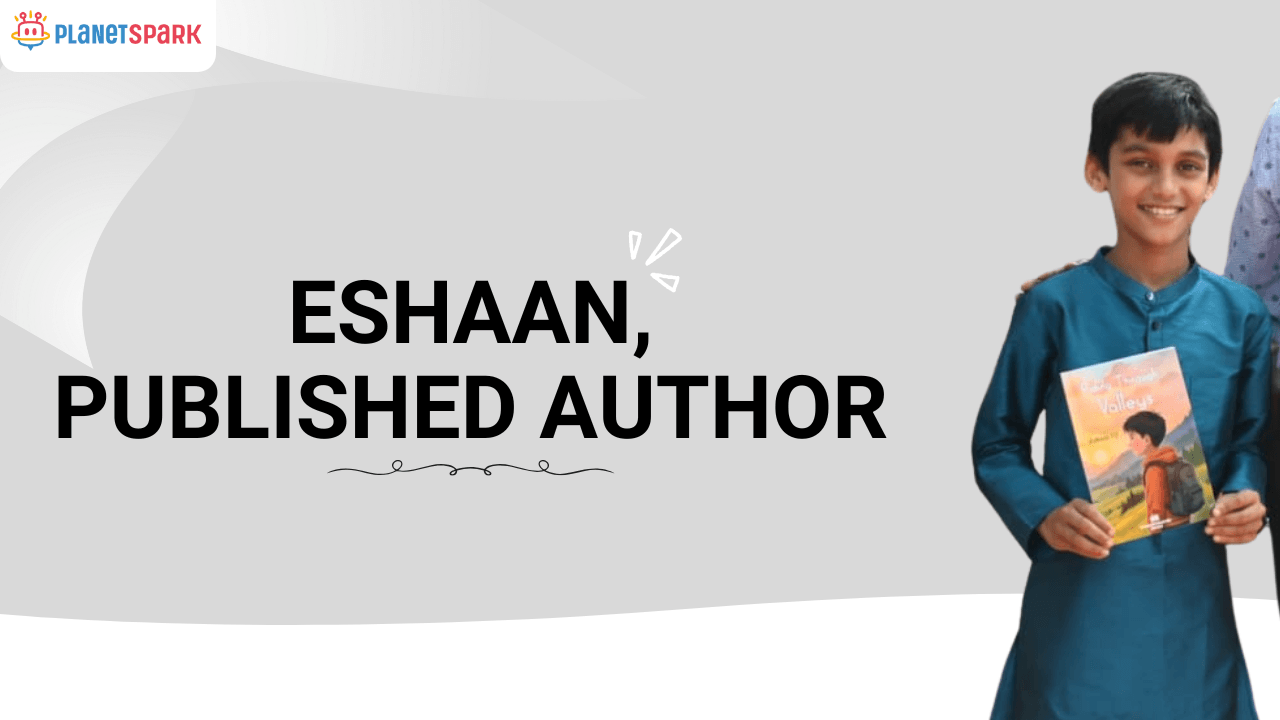
Eshaan’s Journey: From Classroom Creator to Published Young Author
Eshaan, a dynamic Grade 7 learner aged 12, has taken a remarkable leap as he has officially become a published author. What began as a simple classroom writing activity grew into a captivating storybook that showcases his creativity, discipline and evolving mastery of written expression. With consistent practice and a strong focus on clarity, Eshaan transformed everyday writing tasks into a meaningful literary achievement that reflects his dedication to stronger language skills.
Final Thoughts on Building Appositive Phrase Mastery
Appositive phrases help students write with clarity, depth and precision by allowing them to add meaningful details without repeating information. When children learn how to identify nouns and place appositive phrases correctly, their sentences become sharper and more organized. This strengthens overall English Grammar skills and enables them to express ideas with confidence in essays, long answers and everyday communication. Strong grammar fluency also improves reading comprehension, helping children understand complex sentences and interpret information more accurately.
As children practice appositive phrases, they develop the ability to convey more information in fewer words, which is a critical skill across all academic subjects. With structured practice and expert guidance, students learn to use appositive phrases confidently and accurately, improving sentence flow, punctuation control and clarity of expression. Guided support also helps them avoid common errors, refine their writing style and build a foundation they can rely on in higher classes.
Mastering this concept early builds a foundation for advanced grammar topics and strengthens a child’s ability to communicate clearly across subjects. As grammar becomes more demanding in senior grades, children who understand appositives find it easier to grasp complex structures such as clauses, modifiers and advanced composition techniques. This early mastery empowers them to participate more confidently in classroom discussions, complete written assignments with precision and perform better in both academic and real world communication tasks.
Enroll now at PlanetSpark and make grammar your child’s strength.
Frequently Asked Questions
An appositive phrase is a noun or noun phrase placed next to another noun to identify it or add extra information. It helps students write clearer, more organized sentences. Understanding appositive phrase meaning improves grammar accuracy and strengthens written expression across subjects.
"Appositive" refers to the noun phrase that renames another noun, while "apposition" refers to the grammatical relationship between the two phrases. Learning this difference helps students identify sentence patterns more easily and apply grammar rules correctly in writing.
An appositive phrase appears immediately after a noun and renames or explains it. For example, in the sentence "My brother Arjun is studying," the phrase "Arjun" renames "brother." Spotting these phrases helps students understand sentence meaning quickly and improves reading comprehension.
Appositive phrases help children add detail without repetition, making their writing smoother and more professional. This skill strengthens English grammar, supports essay writing, and improves clarity in long answers. Early mastery also prepares students for advanced sentence structures in higher classes.
Students confuse these words because they sound similar, but "appositive" is a grammar structure, and "apposite" means "appropriate" or "suitable." Teaching the difference prevents misunderstandings and helps children use accurate terminology in writing and communication.
Restrictive appositive phrases provide essential information and do not use commas. Nonrestrictive appositive phrases add extra detail and require commas. Knowing when to use each type helps students avoid punctuation errors and write clearer, more meaningful sentences.