
Grade 6 English Worksheet: Character Traits (Direct & Indirect)
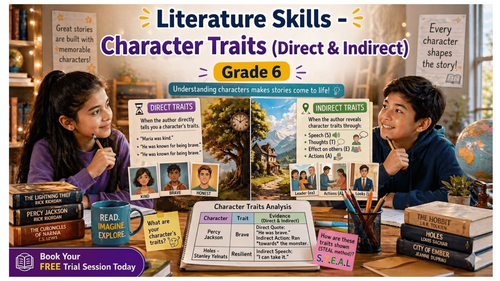

Understanding Personalities: Grade 6 English Worksheet on Character Traits Skills
What makes a hero brave? What
makes a villain greedy? The answers lie in their character traits. This Grade 6 English worksheet on Character Traits helps students look beyond the surface of a story to understand the personalities of the people within it. By analyzing what characters say, do, and think, Grade 6 students can identify specific qualities like honesty, kindness, and bravery. Mastering character traits is an essential literary skill that helps students connect with stories on a deeper level and create more believable characters in their own writing.
Download these English grammar worksheets and practice regularly to strengthen your language skills and build a strong foundation. You can also book a free trial to get expert guidance and improve your reading, writing, and comprehension abilities. The worksheets are designed in a simple and structured way to help K–8 students learn grammar concepts easily and use them confidently in everyday communication.
What Is the Topic?
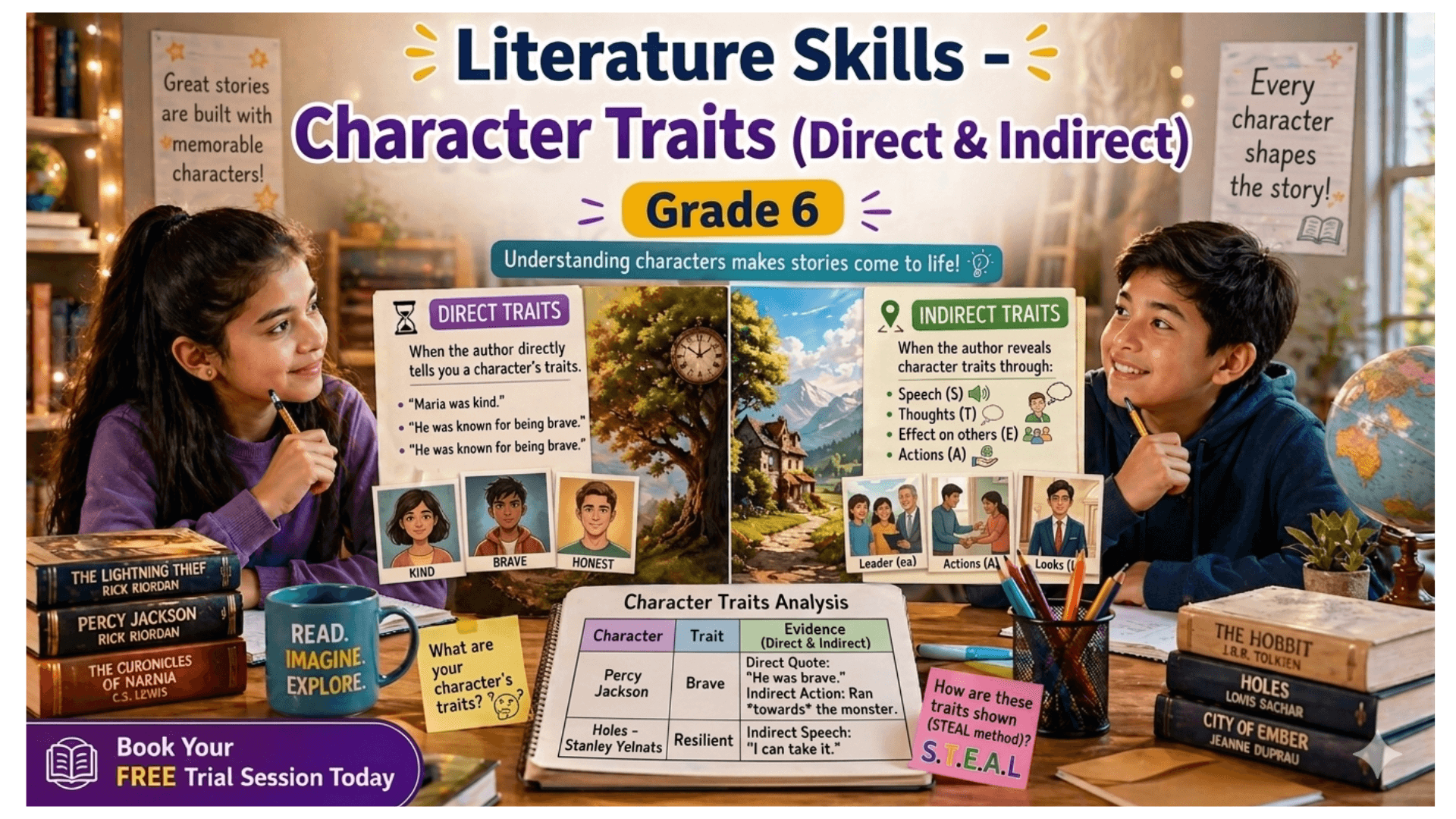
Character traits are the individual qualities or values that make a character unique. This worksheet focuses on identifying these traits through a character's actions. Students are expected to learn that while physical traits describe how someone looks, character traits describe how they act and who they are on the inside. By recognizing patterns in behavior—such as returning a lost item or helping someone in need—students can label a character as "honest" or "kind." This understanding is vital for analyzing character development and motivation in any narrative. You can Download the worksheet and practice it. For better understanding of topic Book Free Trials.
What’s in This Worksheet?
1. Multiple Choice Questions: Students choose the correct character trait based on given actions.
2. Fill in the Blanks: Students complete sentences using suitable character traits from a word bank.
3. True or False: Learners evaluate statements about direct and indirect character traits.
4. Underline the Actions: Students identify actions that show specific character traits.
5. Paragraph Writing: Students write a short paragraph describing a character and a real-life challenge using traits and actions.
Definitions, Examples, Techniques, and Tips
The worksheet provides practical examples of how actions reveal personality. For instance, in the sentence "He returned the lost wallet to the teacher," the action shows the trait of honesty. In "She helped an injured bird," the action demonstrates kindness. Techniques for identifying traits involve asking: "What does this action tell me about the person?" or "How would I describe someone who behaves this way?" Students are encouraged to look for consistent behaviors to determine a character's true nature.
Why Is It Important to Learn This?
Learning to identify character traits is important because it allows students to move from "summarizing" a story to "analyzing" it. Understanding a character’s personality helps readers predict how they will react to future conflicts. This skill strengthens empathy and social-emotional learning by encouraging students to consider different perspectives. In writing, knowing how to show traits through actions (rather than just telling the reader) makes stories much more engaging and professional.
Where Will This Knowledge Help You?
This knowledge is a fundamental part of the Grade 6 literature curriculum and is frequently tested in reading comprehension and character analysis sections of school exams. Beyond the classroom, being able to identify character traits helps in real-life social situations and when evaluating the credibility of information. It builds a strong foundation for more advanced literature topics such as protagonist vs. antagonist, character arcs, and thematic development.
How to Use This Worksheet?
1. Start with the matching and general knowledge sections to warm up your analytical skills.
2. When moving to Exercise No. 4, read each sentence and think about the "why" behind the action.
3. Match the underlined action to a specific descriptive word like "brave," "patient," or "hardworking."
4. For the writing task, focus on a specific time you were challenged and use strong verbs to show your bravery.
5. Review your answers with the key to ensure your trait identifications are accurate.
The solutions follow the exact worksheet order, so students should compare their answers carefully.
Important Tips and Tricks
1. Pay attention to how a character treats others; this is the quickest way to find traits like kindness or selfishness.
2. Look for "Show, Don't Tell"—an author might not say a character is "brave," but they will show it through an action like "standing up to a bully."
3. A character can have both positive and negative traits; look for the most prominent one in a specific sentence.
4. Adverbs (like "patiently" or "angrily") often provide big clues about a character's traits.
5. When writing your own character description, use specific actions to prove the trait you are describing.
✅ Answer Key (For Parents & Educators)
Exercise 1 – Multiple Choice Answers
1. b) kind
2. b) determined
3. a) determined
4. b) dishonest
5. a) honest
6. a) patient
7. c) angry
8. b) kind
9. a) helpful
10. c) unkind
Exercise 2 – Fill in the Blanks
1. kind
2. honest
3. brave
4. patient
5. dishonest
6. caring
7. rude
8. lazy
9. polite
10. determined
Exercise 3 – True or False
1. True
2. True
3. False
4. False
5. True
6. False
7. False
8. True
9. True
10. True
Exercise 4 – Underline the Actions
(Answers are the same sentences/actions that show traits)
1. returned the lost wallet
2. stood up to a bully
3. shouted at others angrily
4. ignored someone asking for help
5. waited patiently in a long queue
6. helped an injured bird
7. spoke gently to her friend
8. refused to share his toys
9. completed his work on time
10. worked hard to achieve his goal
Exercise 5 – Paragraph Writing -Describe any challenge of life you faced bravely (Sample Answer)
Once, I had to give a speech in front of my class, and I felt very nervous. However, I showed bravery by standing on the stage and speaking confidently. I practiced many times, which showed my determination. Even when I made small mistakes, I stayed calm and continued. My teacher appreciated my effort, and I felt proud of myself. This experience taught me the importance of being brave and determined in difficult situations.
Help your child master character traits and become a better reader and writer with structured practice and real-life connections.
🔖Book a free trial!