
Action Words Activity: Fun Ways to Learn Verbs for Kids
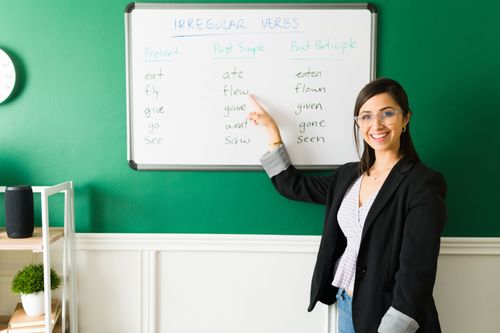

Table of Contents
- How Can Action Words Activities Improve English Grammar?
- What Are Fun Action Words Activities for Kids?
- What Are Simple Action Verbs Examples for Kids?
- What Are Common Action Word Mistakes in Kids?
- What Are the Best Grammar Exercises for Action Words?
- How Does PlanetSpark Help Kids Learn Grammar Faster?
- PlanetSpark English Grammar Classes
- It Starts Small. Then It Clicks.
Grammar rarely confuses kids because of complexity. It confuses them because it feels like it belongs in a textbook — not in their lives.
Rules on a page rarely connect to a child's experience. Without context or movement, even the simplest concepts slip away before they have a chance to stick.
For anyone exploring how to improve English grammar — especially for kids — the path forward lies in making language feel alive. Action words are a natural starting point. Kids already use them every day in how they talk, play, and describe the world around them. They just haven't been shown how to notice them yet.
That's the approach PlanetSpark takes. Grammar learned through real usage, interaction, and practice tends to stay — and grow.
Why Are Action Words Important for Kids?
Action words help kids build clear sentences, improve communication, and understand grammar by showing what actions are happening in everyday language.
Verbs might seem simple on the surface. Just "doing words." But they quietly carry the meaning of every sentence.
Try saying "She happy." Something feels incomplete. Add "is" and suddenly it lands.
That's the weight verbs carry. They give sentences direction and life.
Why this matters more than it seems?
When kids understand verbs, they express ideas more clearly, follow sentence flow more easily, and speak with growing confidence. Grammar improves almost as a side effect.
Kids learn best when they're moving, experimenting, and involved. That's why platforms like PlanetSpark focus on interactive learning — because grammar clicks faster when kids use it in context rather than read it in isolation.
You Can Also Read: Action Words: Simple Sentences for Class 1 Kids
How Can Action Words Activities Improve English Grammar?
Action words activities improve English grammar by combining movement, sentence practice, and repetition, helping kids understand verbs naturally and use them confidently.
Reading about grammar and actually practicing it are two very different experiences. Activities bridge that gap.
Activities that actually work
Action charades — Kids act out a verb while others guess, then form sentences around it. Loud, engaging, and surprisingly effective.
Verb hunt — Give a paragraph and ask kids to find all the verbs. Pattern recognition develops quickly.
Sentence building — Start with one verb and ask for as many different sentences as possible. Creativity does the rest.
Picture storytelling — Show an image and ask what's happening. Verbs surface naturally in the descriptions.
These activities feel like play. That's precisely what makes them work. Programs inspired by PlanetSpark use this blend of action and structure to make grammar genuinely stick.
What Are Fun Action Words Activities for Kids?
Fun action words activities like games, role play, and storytelling help kids practice verbs in engaging ways that improve understanding and long-term retention.
Boredom shuts learning down fast. When kids are engaged, they absorb without even realising it.
Activities kids actually enjoy
- Verb bingo
- Role play scenarios
- Story creation with verb prompts
- Matching verbs with images
- Group guessing games
Example in action
A child acts out swimming. Another guesses correctly, then says: "She is swimming in the pool."
That's grammar happening in real time — and it doesn't feel like a lesson at all. That's the sweet spot PlanetSpark consistently aims for.
Make grammar fun with PlanetSpark's guided activities that help kids learn through action.
What Are Simple Action Verbs Examples for Kids?
Simple action verbs like run, jump, eat, play, and write help kids recognise actions and use them correctly while forming clear and meaningful sentences.
Familiar words are the best starting point. Kids don't need complexity early — they need confidence first.
Common action words
Run. Jump. Eat. Play. Write. Read. Laugh. Dance.
In sentences
- She runs fast.
- He is eating lunch.
- They are playing outside.
- She writes every day.
Once kids see these in sentences, ask them to create their own. There's usually a pause. Then a try. Then something shifts. That moment of trying — even imperfectly — is where real learning begins.
With structured support like PlanetSpark, kids move from hesitation to natural usage at their own pace.
What Are Common Action Word Mistakes in Kids?
Common action word mistakes include wrong verb forms, missing helping verbs, and tense confusion, which can be corrected through consistent practice and feedback.
Mistakes are a natural and necessary part of learning — as long as they're gently addressed before they become habits.
Mistakes that come up often
- She go to school
- He eating
- They was playing
These feel minor at first. Over time, uncorrected patterns become deeply ingrained.
How to address them
Repeat the correct sentence naturally. Encourage more speaking rather than less. Correct with patience, not pressure. Keep practice consistent.
Guided learning environments like PlanetSpark focus on feedback that builds confidence rather than creating hesitation around mistakes.
Read More: Teach Verbs to Class 2 Kids – Easy and Fun Learning Methods
What Are the Best Grammar Exercises for Action Words?
Grammar exercises like sentence correction, fill-in-the-blanks, and speaking tasks help kids practise verbs regularly and improve accuracy through repetition.
Focused practice compounds over time. A little done consistently outperforms a lot done occasionally.
Exercises that help
- Fill in the blanks
- Rewrite incorrect sentences
- Create original sentences using given verbs
- Speak answers out loud rather than only writing them
Example
He don't play → He doesn't play
Say it. Repeat it. Use it in a new sentence. That's how it moves from rule to reflex.
A simple daily routine
- 10 minutes reading
- 10 minutes writing
- 10 minutes speaking
With structured support from PlanetSpark, this kind of practice becomes more focused and far more effective.
How Does PlanetSpark Help Kids Learn Grammar Faster?
PlanetSpark helps kids learn grammar through interactive classes, expert feedback, and activity-based learning that builds confidence and improves real communication skills.
Learning without guidance can slow progress down. Kids repeat errors, lose momentum, and gradually lose confidence alongside it.
Structure changes that trajectory.
What makes the difference
- Live interactive sessions
- Activity-based learning
- Expert teachers with real-time correction
- Communication-focused practice
- Personalised feedback
Over time, something shifts. Kids stop second-guessing themselves and start expressing themselves with ease.
PlanetSpark English Grammar Classes
Build Strong Grammar Skills Through Interactive Learning
PlanetSpark English Grammar classes help kids improve grammar through structured lessons, interactive activities, and real-world communication practice.
What kids experience
- Live interactive classes
- Expert teachers
- Real communication practice
- Personalised feedback
- Confidence-building approach
- Structured curriculum
- Activity-based learning
It Starts Small. Then It Clicks.
At first, it's just words. Run. Jump. Play.
Nothing remarkable.
Then something shifts.
Kids start noticing verbs in the things they read and say. They hesitate a little less. They try a little more. Sometimes they get it wrong — and that's where progress actually begins.
Grammar doesn't grow in perfect sentences. It grows in messy, confident attempts.
Slowly, without forcing it, sentences become clearer. Ideas come faster. Confidence builds — not loudly, but steadily.
Until one day, they stop thinking about grammar altogether.
They're just expressing.
Frequently Asked Questions
Action words are verbs that describe what someone is doing — like running or eating. They help kids form sentences and express ideas clearly.
They make grammar interactive and engaging. Kids learn faster when they act, speak, and practise rather than passively reading rules.
Activities like charades, storytelling, and role play help kids learn grammar in an enjoyable and genuinely effective way.
Daily practice, engaging activities, and consistent feedback work together to help kids build strong grammar skills over time.
Verb activities include sentence building, identifying verbs in text, and using action words in both speaking and writing tasks.
They help form complete sentences and improve communication. Every meaningful sentence depends on them.
Absolutely. Games make learning feel natural and significantly improve retention. Kids remember concepts far better when they experience them through activity.