
Learn Grammar with Stories: 10 Fun Ways Kids Improve Faster
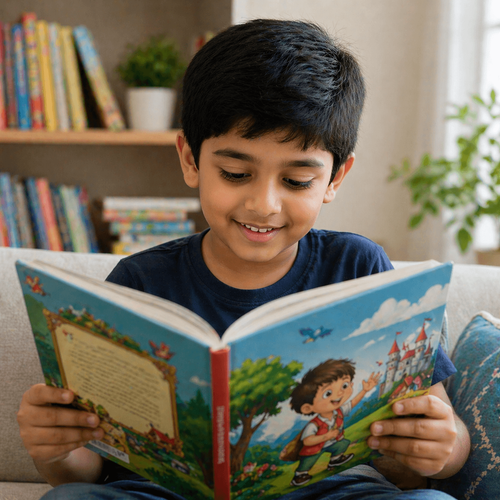

Table of Contents
- Why Children Learn Grammar Faster Through Stories
- Learn Grammar with Stories Through Reading Activities
- Storytelling Games That Build Grammar Naturally
- Fun Grammar Lessons for Kids Using Different Story Types
- How Parents Can Help Children Learn Grammar with Stories at
- Why Many Children Still Struggle With Grammar
- How to Choose the Best Grammar Program for Your Child
- Why PlanetSpark English Grammar Classes Deliver Faster Resul
- Strong Grammar Builds Strong Confidence
What if grammar practice could feel like story time instead of homework?
Many children struggle with grammar because they are taught rules in isolation. Worksheets, repetitive exercises, and memorization often make grammar feel difficult or boring. But when children learn grammar with stories, grammar becomes meaningful, memorable, and fun.
Stories help students understand how words work naturally inside sentences. They see verbs in action, punctuation in dialogue, adjectives describing characters, and sentence flow that makes ideas easy to understand.
In this blog, you will discover why stories are one of the smartest ways to improve grammar, fun activities children can try at home, practical parent tips, and how PlanetSpark’s expert-led English Grammar classes help children master grammar faster through storytelling, speaking, AI tools, and personalized guidance.
If your child enjoys stories but dislikes grammar practice, this may be the breakthrough you need.
Why Children Learn Grammar Faster Through Stories
Children remember stories far better than isolated grammar rules. A grammar worksheet may be forgotten quickly, but an interesting story with characters, emotions, and action often stays in memory.
When grammar is taught through stories, children understand why grammar matters.
For example:
- The dog runs fast teaches subject + verb agreement
- Mia opened the old wooden box carefully teaches adjectives and adverbs
- “Where are you going?” asked Riya. teaches punctuation in dialogue
Stories naturally expose children to:
- Sentence structure
- Verb tenses
- Punctuation
- Pronouns
- Describing words
- Sequencing words such as first, next, finally
- Strong vocabulary in context
Children also experience grammar repeatedly without pressure. If they hear past tense forms across many stories, they begin to absorb patterns naturally.
This is why grammar through storytelling for kids is often more effective than memorizing rule charts alone.
Why Parents Love This Method
- Less resistance during study time
- Better reading habits
- Improved vocabulary
- More confident writing
- Stronger speaking skills
Is your child bored of grammar books?
Book a Free Trial with PlanetSpark today and turn learning into fun before seats fill up.
Learn Grammar with Stories Through Reading Activities
One of the easiest ways to learn grammar with stories is through short daily reading sessions. Just 15 to 20 minutes a day can build grammar awareness over time.
Children do not need advanced novels. Age-appropriate short stories, comics, fables, and illustrated books work beautifully.
What Children Should Notice While Reading
Ask them to spot:
- Capital letters
- Full stops
- Question marks
- Verbs showing action
- Adjectives describing characters
- Pronouns replacing nouns
- Past tense and present tense verbs
- Joining words such as and, but, because
Fun Reading-Based Grammar Games
1. Grammar Detective
Read one page and circle all verbs.
2. Adjective Hunt
Find five describing words in the story.
3. Tense Tracker
List all past tense verbs from the chapter.
4. Punctuation Patrol
Count commas, full stops, and question marks.
5. Character Builder
Write three sentences describing the main character using adjectives.
These are excellent grammar activities through reading because they feel interactive rather than academic.
Mentor Sentences Technique
Choose one strong sentence from the story. Ask your child:
- Why does it sound clear?
- Which verb is used?
- Which words add detail?
- Can you write a similar sentence?
This method improves grammar and writing style together.
Example
Story sentence: The tiny bird flew across the bright blue sky.
Child writes: The playful puppy ran across the green garden.
That is grammar learning in action.
How PlanetSparks Helps?
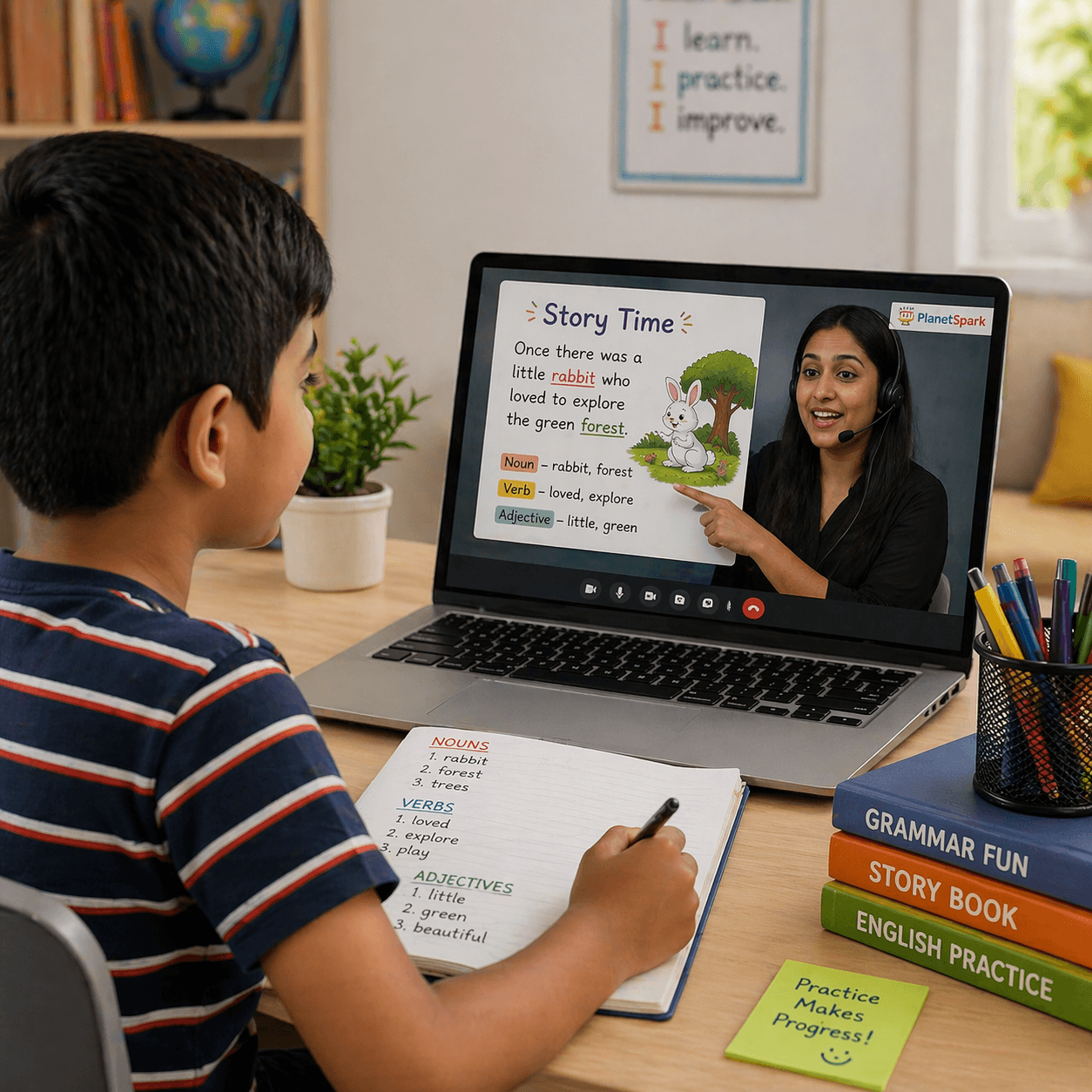
Reading stories daily helps children notice grammar naturally through real sentences and engaging contexts. By spotting punctuation, verbs, adjectives, and sentence patterns, children build grammar awareness without pressure. Activities like Grammar Detective, Tense Tracker, and Character Builder make learning interactive and enjoyable.
PlanetSpark strengthens this process through guided reading-based grammar lessons, storytelling exercises, and 1:1 expert coaching. Trainers help children understand grammar in context, improve writing style, and apply concepts confidently. With personalized feedback and fun activities, children learn faster while enjoying the process.
Storytelling Games That Build Grammar Naturally
Reading stories helps children notice grammar. Telling stories helps them use grammar.
When children narrate events, invent endings, or describe characters, they actively practise:
- Verb tense control
- Pronoun use
- Sentence order
- Connectors
- Clear expression
- Dialogue punctuation
High-Impact Story Games
Rewrite the Tense
Take a story in present tense and rewrite it in past tense.
Example:
He walks to school. → He walked to school.
Story Chain Game
One child starts a story with one sentence. The next child adds another sentence using an adjective or adverb.
Picture Prompt Storytelling
Show a picture and ask the child to create a story using:
- 3 nouns
- 2 verbs
- 2 adjectives
- 1 question sentence
Missing Word Story
Create a paragraph with blanks. Let the child fill nouns, verbs, or adjectives.
Fix the Dialogue
Correct punctuation in speech sentences.
Example:
wrong: where are you going asked sam
right: “Where are you going?” asked Sam.
These playful methods create strong story based grammar practice without stress.
Worried your child knows rules but cannot use them?
Book a PlanetSpark Demo Class now and help them apply grammar confidently. Limited slots this week.
Fun Grammar Lessons for Kids Using Different Story Types
Not every story teaches the same grammar skill. Using different story genres keeps learning exciting while targeting multiple language areas.
Fairy Tales
Great for:
- Past tense verbs
- Sequencing words
- Character descriptions
Example words: once, then, suddenly, finally
Adventure Stories
Great for:
- Action verbs
- Strong sentence flow
- Descriptive phrases
Mystery Stories
Great for:
- Question forms
- Logical connectors
- Prediction language
Words: because, maybe, perhaps, if
Animal Stories
Great for:
- Simple present tense
- Habit sentences
- Comparisons
Example: The lion is stronger than the fox.
Comic Stories
Great for:
- Dialogue punctuation
- Short sentence clarity
- Expression through speech bubbles
Real-Life Stories
Great for:
- Paragraph writing
- Personal pronouns
- Time sequencing
Why Variety Matters
When children engage with many formats, grammar becomes flexible rather than mechanical. They learn how grammar changes depending on purpose and tone.
This creates genuinely fun grammar lessons for kids.

How Parents Can Help Children Learn Grammar with Stories at Home
Parents do not need to become grammar teachers. Small habits done consistently can create powerful results.
Daily 15-Minute Routine
5 Minutes: Read together
5 Minutes: Ask grammar questions
5 Minutes: Retell or rewrite one part
Smart Questions to Ask
- Who is the main character?
- What happened first?
- Find three verbs.
- Can you change this sentence to past tense?
- Add one adjective to improve the sentence.
- Where should a comma go?
Encourage Story Retelling
Retelling builds grammar because children must organize ideas logically.
Let Mistakes Happen
Do not interrupt every sentence. Let the child speak first, then gently improve one or two errors.
Use Writing Prompts
- What happened in the magic forest?
- Write a funny ending.
- Describe a dragon using five adjectives.
- What if animals could talk?
Best Results Come From Consistency
Ten minutes daily is better than one hour once a week.
Still depending on last-minute exam grammar revision?
Book a Free Trial with PlanetSpark now and build grammar skills step by step before exams begin.
Why Many Children Still Struggle With Grammar
Even smart children often know rules but cannot apply them.
Why?
1. Grammar Is Taught Without Context
Children memorize definitions but do not see real usage.
2. Lack of Speaking Practice
They can fill blanks but cannot form correct spoken sentences.
3. No Personalized Feedback
Every child has different grammar gaps.
4. Inconsistent Practice
Grammar improves through repeated exposure.
5. Fear of Mistakes
Many children stay silent instead of practising.
Signs Your Child Needs Better Grammar Support
- Frequent sentence errors
- Weak writing structure
- Hesitation while speaking
- Poor punctuation
- Low confidence in English class
- Avoiding writing tasks
This is where structured support can make a major difference.
How PlanetSpark helps?
Even smart children often know grammar rules but struggle to apply them in speaking or writing. This usually happens because grammar is taught without context, practice is inconsistent, and children do not receive personalized feedback. Many also hesitate to speak due to fear of making mistakes. Signs include sentence errors, weak writing, poor punctuation, and low confidence in English class.
PlanetSpark helps solve this through 1:1 live classes, story-based grammar learning, speaking practice, expert feedback, and AI-powered progress tracking. Children build grammar skills naturally while gaining confidence in communication.
How to Choose the Best Grammar Program for Your Child
Not all grammar support is equal. Choose programs that include:
Look For These Features
- Personal feedback
- Live speaking practice
- Reading + writing balance
- Story-based learning
- Progress tracking
- Confidence building
- Qualified trainers
Avoid Programs That Only Offer
- Worksheets only
- Recorded videos only
- No correction system
- No speaking practice
- No personalized roadmap
Why Application Matters More Than Theory
A child who knows grammar terms but cannot write or speak correctly still needs support. The best programs teach grammar in real usage.
That is why many parents now prefer skill-based platforms over old-style tuition.
Why PlanetSpark English Grammar Classes Deliver Faster Results
PlanetSpark goes beyond traditional grammar tuition by combining storytelling, speaking practice, AI tools, and personalized coaching. Instead of only teaching rules, children learn how to apply grammar in reading, writing, speaking, and everyday communication.
Every learner is paired with a certified 1:1 trainer who understands their pace, confidence level, and learning style. These live one-on-one sessions help improve grammar accuracy, fluency, storytelling, sentence formation, creative writing, and public speaking skills.
The program begins with a personalized assessment, followed by a customized learning roadmap focused on each child’s needs. This may include grammar basics, vocabulary building, sentence structure, writing organization, or communication confidence.
PlanetSpark also uses smart learning tools like SparkX AI Video Analysis, where children upload speeches or presentations and receive feedback on voice clarity, grammar usage, confidence, and body language. With AI Practice Sessions, students can continue learning outside class through guided speaking and storytelling exercises.
To make learning engaging, children access gamified modules such as grammar quizzes, spelling games, and vocabulary challenges. Tools like Spark Diary encourage regular writing through stories, reflections, and creative prompts.
Parents stay updated through regular PTMs and progress reports, while children gain extra confidence through clubs like Debate Club, Story Writing Club, and Speech Circles. Safe platforms like Sparkline also allow students to share their work in a moderated environment.
Why Parents Choose PlanetSpark
- Live interactive classes
- 1:1 expert mentors
- AI-powered progress tracking
- Fun and engaging learning tools
- Confidence-first teaching model
- Visible improvement in communication skills
Want faster grammar results for your child? Book a trial class with PlanetSpark today.

Strong Grammar Builds Strong Confidence
Grammar is not just about correct answers. It is about helping children express thoughts clearly, write powerfully, and speak with confidence.
When children learn grammar with stories, they stop fearing grammar and start using it naturally. With consistent reading, playful storytelling practice, and expert guidance, grammar becomes a lifelong strength.
The earlier children build communication skills, the easier future success becomes. Start today, stay consistent, and let stories shape confidence.
Also Read: English Grammar for Spoken English – Build Clear and Correct Sentences
Frequently Asked Questions
PlanetSpark recommends reading short stories daily, identifying grammar patterns, and practising storytelling. This helps children understand grammar naturally.
Worksheets help revision, but storytelling improves understanding, memory, speaking, and writing together. The best approach combines both.
Children can begin from early primary years with picture books, short stories, and guided grammar activities.
Many children memorize grammar but do not apply it. They need live correction, speaking practice, and contextual learning.
PlanetSpark uses interactive methods like stories, dialogues, role plays, and gamified exercises instead of rote memorization. Students learn grammar through application, not just rules.
Yes. Strong grammar helps children form clear sentences, speak confidently, and express ideas better.
Most learners notice significant progress within 8–12 weeks of regular participation.
It’s simple. Book a free trial session on the PlanetSpark website, choose a convenient time, and let your child experience how fun and powerful learning confidence skills can be.