Help kids learn phonics easily with 3 letter words practice with PlanetSpark

Help kids learn phonics easily with 3 letter words practice with PlanetSpark

Last Updated At: 5 Apr 2026
20 min read

Learning to read is one of the most exciting milestones for kids, and phonics plays a key role in making this journey smooth and enjoyable. One of the best starting points is phonics 3 letter words, which help children understand how letters come together to form sounds and meaningful words. These simple words build the foundation for reading, spelling, and speaking confidently.

Phonics is all about connecting sounds with letters. When kids start with small and easy words, they feel more confident and motivated to learn. This is where 3 letter phonics words become extremely helpful. They are simple, easy to pronounce, and perfect for beginners who are just stepping into the world of language.

In early learning stages, kids often struggle with long or complex words. Introducing short words helps them focus on sounds rather than getting overwhelmed. For example, words like “cat,” “bat,” and “dog” are easy to read and understand. These words follow a pattern, making it easier for children to recognize and repeat them.

Why starting with small words works

  • Helps kids understand letter sounds clearly
  • Builds confidence in reading
  • Improves pronunciation and fluency
  • Makes learning fun and engaging

Another important benefit is that these words help children identify patterns. Once they learn one word, they can easily learn similar words. For instance, if a child learns “cat,” they can quickly pick up “bat,” “rat,” and “mat.” This pattern-based learning speeds up their reading skills.
phonics 3 letter words

Key benefits of learning phonics early

Skill DevelopedHow It Helps Kids
ReadingRecognize words quickly
SpeakingClear pronunciation
WritingBetter spelling skills
ConfidenceEncourages independent learning

Parents and teachers play a crucial role in introducing these words in a fun way. Instead of forcing memorization, using games, visuals, and repetition can make a big difference. Kids learn faster when they enjoy the process.

Another important factor is consistency. Practicing a few words daily helps children retain what they learn. Over time, this small effort leads to big improvements in their reading ability.

Phonics 3 letter words are not just about learning words. They are about building a strong foundation for lifelong learning. When kids master these basics, they find it easier to move on to more complex words and sentences.

Why 3 Letter Phonics Words Are Important for Kids

Understanding the importance of phonics 3 letter words is essential for parents and educators who want to build strong language skills in children. These words act as the first step toward reading fluency and communication. They are simple, structured, and highly effective in teaching kids how language works.

3 letter phonics words are often called CVC words, which stands for consonant vowel consonant. This pattern helps children decode words easily by breaking them into sounds. Instead of memorizing entire words, kids learn how to read them step by step.

How these words build strong reading skills

  • Teach kids how to blend sounds
  • Improve word recognition
  • Develop decoding skills
  • Strengthen memory through repetition

When children learn these words, they start understanding how sounds form words. This helps them read new words independently without relying on memorization. It also boosts their confidence as they begin to read on their own.

Impact on overall language development

Learning 3 letter phonics words does more than just improve reading. It supports multiple language skills at once:

  • Listening skills: Kids learn to identify sounds
  • Speaking skills: Clear and correct pronunciation
  • Writing skills: Better spelling and sentence formation
  • Cognitive skills: Improves memory and focus

Another important benefit is that these words make learning less stressful. Long or complicated words can confuse kids, but short words are easy to understand and practice. This keeps children engaged and interested in learning.

Why repetition and practice matter

Consistency is key when it comes to phonics learning. Practicing these words regularly helps kids remember them better. Repetition also helps in recognizing patterns, which is essential for reading fluency.

Here are some simple ways repetition helps:

  • Reinforces sound recognition
  • Improves speed and accuracy
  • Builds confidence in reading aloud

Common examples kids learn first

  • cat, bat, rat
  • dog, log, fog
  • sun, bun, run

These examples show how patterns make learning easier. Once a child understands one pattern, they can quickly learn similar words.

Role of parents and teachers

Parents and teachers should focus on making learning interactive. Instead of traditional methods, they can use:

  • Flashcards
  • Storytelling
  • Rhymes and songs
  • Word games

These methods keep kids engaged and make learning enjoyable.

“Strong grammar builds strong communication.”
Join PlanetSpark English Grammar Course and help your child master English with confidence.

What Are 3 Letter Phonics Words (CVC Words Explained)

Phonics 3 letter words are simple words made using a basic pattern that helps kids learn how to read and pronounce words correctly. These words usually follow a consonant vowel consonant structure, commonly known as CVC words. This pattern is one of the easiest ways to introduce children to reading because it focuses on clear and consistent sounds.

In this structure:

  • The first letter is a consonant
  • The middle letter is a vowel
  • The last letter is again a consonant

For example, in the word “cat”:

  • “c” is a consonant sound
  • “a” is a vowel sound
  • “t” is a consonant sound

This simple structure helps kids break words into smaller sounds and then blend them together to read the word smoothly.

How CVC words work in phonics learning

CVC words are designed to teach kids sound blending. Instead of memorizing the whole word, children learn to read it step by step:

  • Identify each letter sound
  • Blend the sounds together
  • Pronounce the complete word

This process improves decoding skills, which are essential for reading new and unfamiliar words.

Examples of CVC word patterns

PatternExamples
-atcat, bat, mat, rat
-ogdog, log, fog
-enpen, hen, den
-itsit, bit, hit
-ubcub, tub, rub

These patterns help kids recognize similarities between words, making it easier to learn multiple words at once.

Why CVC words are easy for kids

  • Simple structure makes them easy to read
  • Clear sounds reduce confusion
  • Repetitive patterns improve memory
  • Quick learning boosts confidence

Another important point is that these words use short vowel sounds, which are easier for kids to understand compared to long vowel sounds. This makes them perfect for beginners.

Difference between CVC and other word types

Word TypeExampleDifficulty Level
CVC WordscatEasy
CVCC WordsmilkMedium
CCVC WordsclapMedium
Complex WordstrainDifficult

Starting with CVC words ensures that kids are not overwhelmed and can build a strong base before moving to more complex words.

How kids benefit from understanding word structure

When children understand how words are formed, they:

  • Read faster
  • Spell better
  • Recognize new words easily
  • Gain confidence in speaking

Instead of guessing words, they use logic and sound patterns to read correctly.

Simple teaching approach

Parents and teachers can follow a step-by-step method:

  1. Teach individual letter sounds
  2. Introduce vowel sounds
  3. Combine sounds to form words
  4. Practice regularly with examples

This structured approach makes learning smooth and effective.

Overall, understanding what phonics 3 letter words are helps kids build a strong reading foundation. It simplifies the learning process and prepares them for advanced language skills.

“Clear grammar, clear thinking.”
Enroll in PlanetSpark English Grammar Course and boost your child’s language skills.

List of 100 Common 3 Letter Phonics Words

Learning becomes easier when kids have a wide range of examples to practice. A well-organized list of 3 letter phonics words helps children recognize patterns and improve their reading speed. These words are grouped based on similar sounds, making it easier for kids to learn them step by step.

Below is a carefully curated list of 100 commonly used phonics 3 letter words.

Words with “-at” sound

  • cat, bat, rat, mat, hat, sat, pat, fat, vat, tap

Words with “-an” sound

  • can, man, fan, pan, ran, tan, van, ban, nap, lap

Words with “-ap” sound

  • cap, map, sap, tap, lap, gap, nap, rap, tap, yap

Words with “-og” sound

  • dog, log, fog, hog, cog, bog, jog, mog, tog, nog

Words with “-en” sound

  • pen, hen, den, men, ten, zen, ken, ben, fen, len

Words with “-it” sound

  • sit, bit, hit, kit, lit, pit, fit, nit, wit, zit

Words with “-ub” sound

  • cub, tub, rub, hub, sub, dub, nub, pub, bun, sun

Words with “-ed” sound

  • bed, red, fed, led, wed, ted, med, ped, sed, ned

Words with “-op” sound

  • top, hop, pop, mop, cop, lop, bop, sop, nop, zop

Words with “-ug” sound

  • bug, mug, rug, tug, hug, dug, jug, pug, lug, sug

Why grouping words helps kids learn faster

  • Makes patterns easy to identify
  • Reduces learning time
  • Improves memory retention
  • Builds confidence through repetition

When kids see similar word endings, they quickly understand how changing one letter creates a new word. This pattern recognition is a key part of phonics learning.

How to use this list effectively

Parents and teachers can use this list in different ways:

  • Practice 5 to 10 words daily
  • Read words aloud together
  • Use flashcards for quick revision
  • Create simple sentences using these words

Example practice activity

Activity TypeHow to Do It
ReadingSay each word loudly
WritingCopy words in a notebook
SpeakingUse words in daily conversation
GameMatch words with pictures

Tips to make learning fun

  • Turn words into a game
  • Use colorful charts
  • Reward small achievements
  • Encourage daily practice

Consistency is the key. Practicing a small set of words regularly helps kids remember them for a long time.

By using this list of phonics 3 letter words, children can gradually improve their reading, speaking, and writing skills in a fun and structured way.

“Great speakers start with great grammar.”
Help your child shine with PlanetSpark English Grammar Course today.
Fun and Easy Ways to Teach Phonics 3 Letter Words

Teaching phonics 3 letter words does not have to be boring or repetitive. In fact, the more fun and interactive the process is, the faster kids learn. Children naturally enjoy games, stories, and activities, so using these methods can make learning 3 letter phonics words exciting and effective.

The key is to keep lessons simple, engaging, and consistent. When kids enjoy the process, they stay motivated and learn without pressure.

Make learning playful with games

Games are one of the best ways to teach kids. They turn learning into an enjoyable activity instead of a task.

Some simple games you can try:

  • Word matching game
    Match words like “cat” with pictures of a cat
  • Sound blending game
    Say sounds separately like “c-a-t” and ask kids to guess the word
  • Word building blocks
    Use letter blocks to form words
  • Memory card game
    Match pairs of words or word and image

These games improve recognition and help kids remember words easily.

Use storytelling for better understanding

Kids love stories, and stories can be a powerful teaching tool. Create small stories using simple words like:

  • The cat sat on a mat
  • The dog ran to the sun

Stories help kids see how words are used in real sentences. This improves both reading and comprehension.

Incorporate visual learning

Visuals make learning easier and more effective. Kids remember what they see better than what they hear.

You can use:

  • Flashcards with pictures and words
  • Colorful charts on walls
  • Picture books with simple text

Learning through songs and rhymes

Rhymes and songs are highly effective for teaching phonics. They help kids remember sounds and patterns through repetition.

Examples:

  • Short rhymes using simple words
  • Alphabet songs with sound emphasis

This method improves pronunciation and makes learning enjoyable.

Daily practice routine

Consistency is important. A short daily routine works better than long study sessions.

ActivityTime Required
Reading words5 minutes
Writing words5 minutes
Playing a game5 minutes

Just 15 minutes daily can make a big difference.

Use real-life examples

Connect learning with daily life. For example:

  • Show a “cup” and say the word
  • Point to a “bed” and read it together

This helps kids understand the practical use of words.

Encourage participation

  • Ask kids to read aloud
  • Let them form words on their own
  • Praise their efforts

Positive reinforcement builds confidence and keeps them motivated.

Why fun learning methods work

  • Keeps kids engaged
  • Reduces learning pressure
  • Improves retention
  • Builds interest in reading

Teaching phonics 3 letter words through fun activities ensures that kids not only learn faster but also enjoy the process.

“Confidence begins with correct sentences.”
Upgrade your child’s skills with PlanetSpark English Grammar Course.

Phonics Activities to Practice at Home

Practicing phonics 3 letter words at home is essential for improving a child’s reading skills. Regular practice helps kids remember words, understand sounds, and gain confidence. The good part is that you do not need expensive tools. Simple and creative activities can make a big impact.

Parents can turn everyday moments into learning opportunities by using fun and engaging methods.

Simple home activities for daily practice

Here are some easy activities that can be done at home:

  • Flashcard practice
    Show a word and ask the child to read it
  • Write and read activity
    Ask kids to write words and read them aloud
  • Word hunt game
    Find objects at home and name them
  • Fill in the missing letter
    Example: c_t → cat

These activities improve both reading and writing skills.

Interactive learning ideas

Making learning interactive keeps kids interested. Try these ideas:

  • Use a whiteboard for writing words
  • Create a mini quiz with rewards
  • Practice words during playtime
  • Use toys to form simple words

Activity-based learning table

Activity NameSkill DevelopedHow It Helps
FlashcardsWord recognitionQuick recall of words
Writing practiceSpellingImproves accuracy
Reading aloudPronunciationBuilds confidence
Word gamesMemoryMakes learning fun

Using repetition effectively

Repetition is very important in phonics learning. When kids repeat words regularly, they remember them better.

Ways to practice repetition:

  • Read the same words daily
  • Revise old words before learning new ones
  • Use the same words in different activities

Create a learning routine

A fixed routine helps kids stay consistent. For example:

  • Morning: Read 5 words
  • Afternoon: Practice writing
  • Evening: Play a word game

This balanced approach ensures complete learning.

Encourage independent learning

Let kids explore words on their own:

  • Ask them to form new words
  • Let them read simple books
  • Encourage them to ask questions

This builds curiosity and confidence.

Use rewards and motivation

Kids respond well to rewards. You can:

  • Give stickers for correct answers
  • Appreciate small achievements
  • Celebrate progress

This keeps them motivated to learn more.

Common mistakes to avoid during practice

  • Forcing kids to memorize
  • Long study sessions
  • Ignoring pronunciation
  • Lack of consistency

Avoiding these mistakes ensures better results.

Practicing phonics 3 letter words at home in a fun and structured way helps kids improve faster. With regular effort and the right approach, children can develop strong reading and language skills.

“Good grammar opens doors to success.”
Give your child an edge with PlanetSpark English Grammar Course.

Common Mistakes Kids Make While Learning Phonics

While learning phonics 3 letter words, kids often make small mistakes that can slow down their progress. These mistakes are completely normal, but identifying and correcting them early can make learning smoother and more effective. Parents and teachers should focus on guiding kids patiently instead of correcting them harshly.

Understanding these common errors helps in creating better learning strategies and improving overall results.

Mixing up letter sounds

One of the most common mistakes is confusing letter sounds. Kids may struggle to differentiate between similar sounds like:

  • “b” and “d”
  • “p” and “b”
  • “m” and “n”

This confusion affects their ability to read words correctly. For example, a child might read “bat” as “pat” or “mat.”

Why it happens:

  • Lack of clear phonics practice
  • Similar sound patterns
  • Insufficient repetition

How to fix it:

  • Practice sounds individually
  • Use visual aids and examples
  • Repeat similar sounding words regularly

Guessing words instead of reading

Some kids try to guess words by looking at the first letter instead of reading the full word. For example, they may see “cat” and say “car.”

Problems caused:

  • Weak decoding skills
  • Poor reading accuracy
  • Lack of confidence

Solution:

  • Encourage sound-by-sound reading
  • Ask kids to spell the word aloud
  • Practice blending sounds slowly

Skipping letters while reading

Children sometimes skip letters, especially vowels, and read incomplete words. For example:

  • “dog” becomes “dg”
  • “sun” becomes “sn”

This happens when kids rush through words or do not focus on each sound.

How to improve:

  • Teach slow reading
  • Emphasize vowel sounds
  • Practice with simple word lists

Difficulty in blending sounds

Blending is a key skill in phonics learning. Some kids find it hard to combine sounds smoothly.

Example:

  • Instead of “c-a-t → cat,” they say each letter separately

Reasons:

  • Lack of practice
  • Not understanding sound connection

Fix:

  • Practice blending daily
  • Use clapping or tapping methods
  • Start with very simple words

Over-reliance on memorization

Memorizing words without understanding sounds can create problems later. Kids may recognize a word but fail to read a new similar word.

Example:

  • Knows “cat” but cannot read “bat”

Better approach:

  • Focus on sound patterns
  • Teach word families
  • Encourage decoding instead of memorizing

Inconsistent practice habits

Irregular practice can slow down progress. Kids may forget previously learned words if they do not revise regularly.

Common issues:

  • Forgetting words quickly
  • Losing confidence
  • Slow improvement

Solution:

  • Create a daily routine
  • Revise old words frequently
  • Keep practice sessions short and fun

Table of common mistakes and solutions

MistakeImpactSolution
Mixing soundsWrong pronunciationPractice sounds daily
Guessing wordsPoor reading skillsFocus on decoding
Skipping lettersIncomplete readingSlow reading practice
No blendingBroken pronunciationBlend sounds step by step
Memorizing onlyLimited learningTeach patterns

Role of parents and teachers

  • Be patient and supportive
  • Avoid pressuring kids
  • Use encouraging words
  • Focus on improvement, not perfection

Mistakes are part of the learning process. With the right guidance, kids can overcome these challenges and improve their reading skills effectively.

“Learn grammar, speak smarter.”
Start your child’s journey with PlanetSpark English Grammar Course now.

Tips for Parents to Improve Kids’ Phonics Skills

Parents play a crucial role in helping kids learn phonics 3 letter words effectively. With the right approach, learning can become fun, engaging, and highly productive. Small daily efforts at home can make a big difference in a child’s reading journey.

The goal is to create a supportive and interactive learning environment where kids feel comfortable and motivated.

Create a phonics-friendly environment

A good learning environment helps kids stay focused and interested.

You can:

  • Keep books and flashcards easily accessible
  • Use colorful charts with words
  • Create a small reading corner at home

This makes learning a natural part of their daily routine.

Focus on daily short practice sessions

Long study hours can make kids lose interest. Instead, short and consistent sessions work better.

Ideal routine:

  • 10 to 15 minutes daily
  • Mix of reading, writing, and games
  • Revision of old words

Consistency is more important than duration.

Encourage reading aloud

Reading aloud improves pronunciation and confidence. It also helps parents identify mistakes easily.

How to do it:

  • Ask kids to read slowly
  • Correct gently when needed
  • Appreciate their efforts

Use simple and clear instructions

Kids understand better when instructions are simple.

Instead of saying:

  • “Read this properly”

Say:

  • “Let’s read each sound together”

Clear guidance helps kids learn faster.

Make learning interactive

Interactive learning keeps kids engaged and interested.

Try:

  • Word games
  • Sound matching activities
  • Storytelling with simple words

This approach makes learning enjoyable instead of stressful.

Track progress regularly

Keeping track of progress helps in understanding improvement areas.

ActivityWhat to Track
ReadingSpeed and accuracy
WritingCorrect spelling
SpeakingClear pronunciation

This helps parents adjust their teaching methods.

Encourage curiosity and questions

Kids learn better when they are curious.

  • Let them ask questions
  • Give simple explanations
  • Encourage them to explore new words

This builds interest in learning.

Avoid pressure and comparison

Every child learns at their own pace. Comparing kids with others can reduce confidence.

Instead:

  • Focus on individual progress
  • Celebrate small achievements
  • Be patient and supportive

Use real-life learning opportunities

Connect phonics learning with daily life.

Examples:

  • Read words on signboards
  • Identify objects at home
  • Practice words during playtime

This makes learning practical and meaningful.

Build a habit of revision

Revision is important to retain learning.

  • Revise old words regularly
  • Mix old and new words
  • Use fun methods for revision

Why parental support matters

  • Builds confidence in kids
  • Improves learning speed
  • Creates a positive learning experience
  • Strengthens parent-child bonding

With the right support and consistent effort, kids can master phonics 3 letter words easily and develop strong reading skills.

phonics 3 letter words

How PlanetSpark Helps Kids Master Phonics Easily

Learning phonics 3 letter words becomes simple and engaging when kids follow a structured and interactive approach. PlanetSpark focuses on making learning fun while building strong reading and speaking skills. Instead of rote learning, kids are guided step by step from understanding letter sounds to forming and reading words confidently. The platform uses interactive sessions, real-time feedback, and activity-based learning to keep children engaged. This helps them grasp concepts faster and apply them in everyday communication. With a focus on pronunciation, fluency, and confidence, kids not only learn to read but also express themselves better.

  • Structured step-by-step phonics learning
  • Interactive sessions with games and activities
  • Focus on pronunciation and speaking skills
  • Personalized attention for better improvement
  • Regular practice through reading and writing tasks
  • Builds confidence in reading and communication

Success Story: Pranav’s Achievement in English Excellence

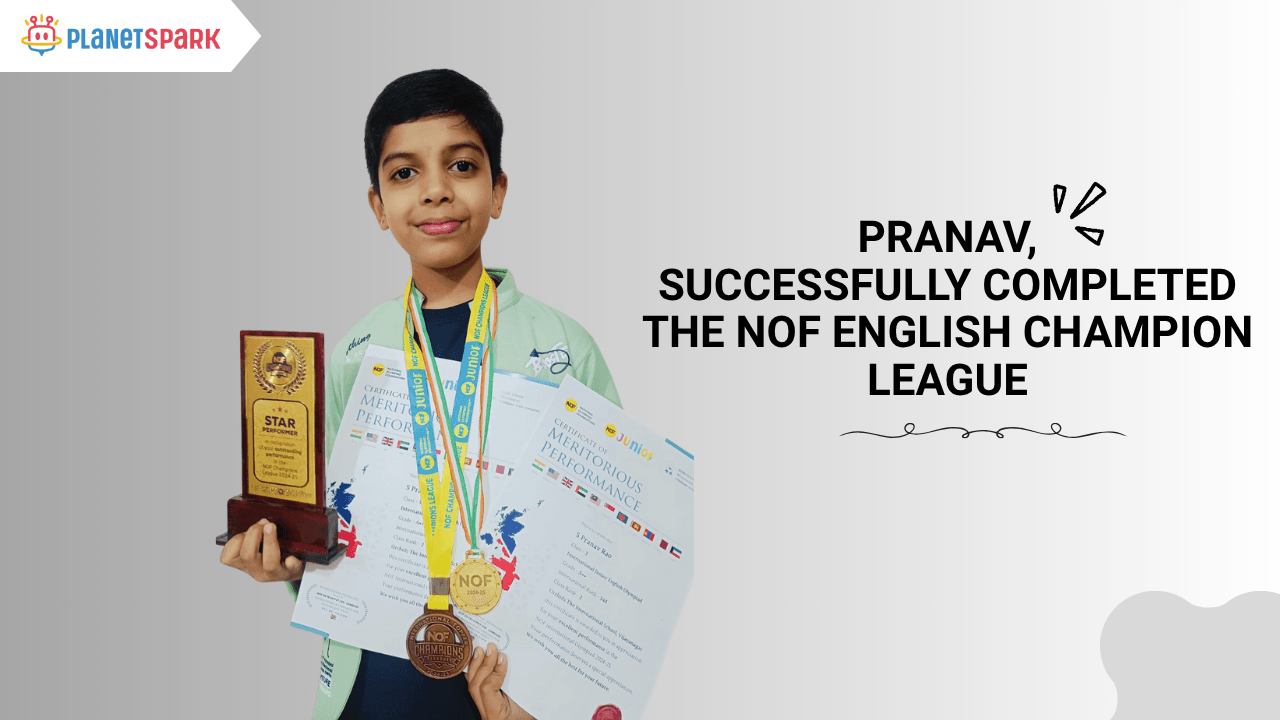
Pranav, a bright Grade 3 student, has achieved a remarkable milestone by successfully completing the NOF English Champion League. His journey reflects dedication, confidence, and a strong passion for learning.

Through consistent effort, Pranav showcased exceptional skills in Public Speaking and Creative Writing. His ability to express ideas clearly and creatively set him apart and highlighted his growing command over the English language.

This achievement not only reflects his hard work but also his enthusiasm to learn and improve every day. Pranav’s success is an inspiring example for young learners, proving that with the right guidance and practice, great accomplishments are possible even at an early stage.

phonics 3 letter words

Conclusion

Phonics 3 letter words are the first step in a child’s reading journey. They help kids understand sounds, form words, and build confidence in reading and speaking. Starting with simple and structured learning makes the process easy and enjoyable.

From understanding CVC patterns to practicing through fun activities, every step plays an important role in building strong language skills. Regular practice, interactive methods, and parental support can make a significant difference in how quickly and effectively kids learn.

By focusing on simple words and consistent learning, children can develop a strong foundation that supports their future reading and communication skills.

“Fluent English starts with strong basics.”
Build your child’s foundation with PlanetSpark English Grammar Course.

You must read:
Learn Phonics Sounds A to Z With Words & Examples For Kids
A Sound Words for Class 1: A Fun Phonics Guide For Young Leaners

Frequently Asked Questions

Phonics 3 letter words are simple words made using three letters that help kids learn letter sounds and improve reading skills.

Common examples include cat, bat, dog, pen, sun, and hat. These words follow simple sound patterns.

Kids can start learning these words early when they begin recognizing letters and sounds.

They help kids understand sound blending, improve reading, and build a strong foundation for language learning.

You can use flashcards, games, storytelling, and daily practice to make learning fun and effective.

CVC words are consonant vowel consonant words like cat, dog, and pen that help kids learn basic reading skills.