
Loose Sentences in English Made Easy with PlanetSpark
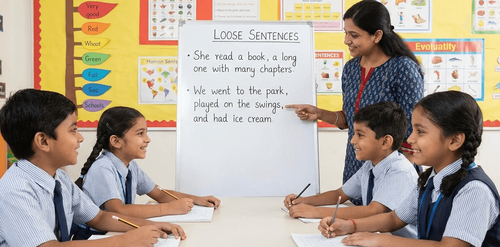

Table of Contents
- Loose Sentences Meaning
- Loose Sentences Examples
- How to Use Loose Sentences in English
- Writing a Loose Sentence
- How to Identify a Loose Sentence?
- Periodic Sentence vs Loose Sentence
- Tips for Writing Better Loose Sentences
- PlanetSpark Success Story
- Why Choose PlanetSpark for Learning English Grammar?
- Conclusion: Build Your Sentence Formation Confidence with Pl
Loose sentences are a key part of natural and fluent English writing. They present the main idea first and then add extra details, just like we speak in everyday life.
Because of this, loose sentences feel relaxed, clear, and reader-friendly. They are commonly used in stories, blogs, conversations, and even academic writing to make ideas easy to follow. This blog explains the definition of loose sentences, their examples, how they are used, when to use loose sentences, the difference between loose and periodic sentences, and tips for writing loose sentences and many more.
Loose Sentences Meaning
A loose sentence, which is also known as a cumulative sentence, starts with an independent clause that gives a complete meaning on its own. After that, it adds extra phrases or clauses that describe, explain, or expand the main idea.
Even if the added details are removed, the sentence still makes sense.
Simple way to remember:
Main idea first, details later
Loose sentences focus on clarity rather than suspense, which makes them different from more dramatic sentence structures.
Loose Sentences Examples
Loose sentences are very common in daily speech and writing.
Part 1 = Main clause (complete meaning)
Part 2 = Added details (extra information)
- Sentence: She completed the project, working late at night, skipping breaks, and staying fully focused.
Main clause: She completed the project
Added details: working late at night, skipping breaks, and staying fully focused - Sentence: The children played in the park, laughing loudly, running freely, and enjoying the cool breeze.
Main clause: The children played in the park
Added details: laughing loudly, running freely, and enjoying the cool breeze - Sentence: He opened the letter, reading it carefully, feeling nervous, and expecting bad news.
Main clause: He opened the letter
Added details: reading it carefully, feeling nervous, and expecting bad news - Sentence: The teacher explained the lesson, using simple words, giving examples, and answering questions patiently.
Main clause: The teacher explained the lesson
Added details: using simple words, giving examples, and answering questions patiently - Sentence: I finished my dinner early, washed the dishes, cleaned the table, and prepared for bed.
Main clause: I finished my dinner early
Added details: washed the dishes, cleaned the table, and prepared for bed - Sentence: The train arrived late, causing confusion, delaying passengers, and disrupting schedules.
Main clause: The train arrived late
Added details: causing confusion, delaying passengers, and disrupting schedules - Sentence: She walked into the room confidently, smiling at everyone, greeting her friends, and taking her seat.
Main clause: She walked into the room confidently
Added details: smiling at everyone, greeting her friends, and taking her seat - Sentence: The movie ended suddenly, shocking the audience, raising questions, and leaving a strong impression.
Main clause: The movie ended suddenly
Added details: shocking the audience, raising questions, and leaving a strong impression
Loose Sentence Example in Daily Life
In everyday life, we naturally use loose sentences while talking, texting, or writing emails.
Sentence: I reached home late from work, kicked off my shoes, warmed some food, and collapsed on the sofa.
This sounds natural because the action comes first, followed by small details.Sentence: I finished my homework quickly, packed my bag, checked my notes, and went to sleep.
This sounds natural because the main action comes first, followed by small, related actions.Sentence: She entered the classroom confidently, smiled at her friends, took her seat, and opened her book.
This works well because the sentence starts with the main action and then adds simple detailsExample: We reached the station early, bought our tickets, grabbed some snacks, and waited for the train.
This feels smooth because the main idea appears first, and the details come step by step.- Example: He completed the presentation on time, reviewed the slides, fixed small errors, and sent it to his manager.
This sounds clear and easy because the action is stated first, and the extra details follow naturally.
Loose Sentence Example from Novels
Many famous writers use loose sentences to create smooth and immersive narration.
- Example inspired by Ernest Hemingway:
He was an old man who fished alone in a small boat in the Gulf Stream, sailing daily, hoping patiently, enduring silence. - Example inspired by Mark Twain:
Tom Sawyer lay on his bed, staring at the fence, planning mischief, dreaming of adventure. - Malgudi Days by R.K. Narayan:
He was a simple man who lived in the quiet town of Malgudi, walking to the market each morning, greeting familiar faces, and accepting life as it came. - The Home and the World by Rabindranath Tagore:
She sat by the window in the afternoon light, watching the road below, listening to distant sounds, and reflecting on her inner thoughts. - The God of Small Things by Arundhati Roy:
The village lay silent after the rain, smelling of wet earth, echoing with soft noises, and holding memories in every corner.
These sentences feel calm and flowing, helping readers visualise the scene.
Loose Sentence Example in Literature
Classic literature often uses loose sentences for rhythm and emotion.
Jane Austen–style example:
Elizabeth felt happy about her sister’s marriage, smiling warmly, imagining the future, and sharing the joy.Virginia Woolf–style example:
She felt strangely distant, watching the passing cars, hearing the city hum, drifting into thought.- Charles Dickens–style example:
He felt the weight of the city around him, hearing carts roll past, watching faces hurry by, and sensing life move endlessly. - George Orwell–style example:
He sat alone in the small room, staring at the blank wall, listening to the ticking clock, and feeling the pressure of silence. - F. Scott Fitzgerald–style example:
She looked across the garden at twilight, noticing the soft lights, remembering past summers, and longing for something lost. - Ruskin Bond–style example:
He sat quietly on the hillside, watching the clouds drift by, listening to the birds, and enjoying the cool breeze. - R.K. Narayan–style example:
He walked to the market every morning, greeting his neighbours, stopping at familiar shops, and enjoying the slow pace of life. - Sudha Murty–style example:
She helped the children after school, listening to their stories, guiding them gently, and smiling with kindness. - Premchand–style example:
He returned home tired from the fields, washing his hands, sitting near the lamp, and thinking about his family.
Loose sentences help literature feel thoughtful and expressive.
How to Use Loose Sentences in English
Using loose sentences is simple once you understand the order of ideas. The key rule is to say the main thing first, and then slowly add extra information.
- Start with a strong main clause: Begin your sentence with a complete idea that makes sense on its own.
Example: She finished her homework.
This sentence is already complete. The reader understands the main action. - Add details using commas, phrases, or conjunctions: After the main clause, add small details that explain how, when, where, or what happened next. These details are usually added after commas. Here, the main idea comes first, and then extra actions are added one by one.
Example: She finished her homework, checked her answers, packed her bag, and relaxed. - Keep the flow natural and logical: The added details should:
a. Be related to the main idea
b. Come in a natural order
c. Sounds like normal speech
If the details feel confusing or unrelated, the loose sentence will not work well.
Where Loose Sentences Work Best?
Loose sentences are very useful in everyday writing because they are easy to read and understand.
They work best in:
- Storytelling: They help describe actions smoothly. For example, He opened the door, stepped inside, and looked around.
- Descriptions: They allow you to add details naturally. For example, the garden looked beautiful, filled with flowers, buzzing with bees, glowing in sunlight.
- Explanations: They make ideas clear by giving information step by step. Example- The machine stopped suddenly, making a loud noise, causing confusion, and delaying the work.
- Blogs and Essays: They make writing friendly and conversational, not rigid.
Writing a Loose Sentence
A loose sentence is written in two clear steps. Think of it like building a sentence in layers.
Step 1: Write the main idea
First, write one short sentence that gives the main action or idea.
This part must make complete sense by itself.
Example: The team practised.
Even if we stop here, the sentence is complete.
The reader already knows who did what.
That is why this part is called the main clause.
Step 2: Add helpful details after the main idea
Now, after the main sentence, you add extra information to explain more about the action.
These details usually tell:
How it happened | When it happened | What else was done
They are added after commas.
Expanded sentence:
The team practised all morning, running drills, sweating under the hot sun, preparing for the match.
Here:
The team practised → main idea
all morning, running drills, sweating under the hot sun, preparing for the match → added details
These details improve the sentence, but they are not necessary to understand the main meaning.
How to Identify a Loose Sentence?
To identify a loose sentence, you only need to check two things.
Step 1: Check the first part of the sentence
Does the first part of the sentence make complete sense by itself?
If the answer is yes, then the sentence may be a loose sentence.
Example: She completed her work, before sunset, without any help.
First part: She completed her work
✔ This is a complete idea. So, it passes Step 1.
Step 2: Check the extra details
Are the remaining words just extra information?
If removing them still keeps the sentence correct, then it is a loose sentence.
Example (details removed)- She completed her work.
✔ Still correct
✔ Meaning is clear
So, it is a loose sentence.
Simple Rule to Remember: Main idea first + extra details later = Loose sentence
Common Clues That Help You Identify a Loose Sentence
Look for these signs in a sentence:
- Extra phrases after commas
Loose sentences often continue after commas.
Example:
He reached home early, washed his hands, changed his clothes, and rested. - Words like after, while, which, and
These words often introduce extra details, not the main idea.
Example:
The students sat quietly, while the teacher explained the lesson. - A list added after the main clause
If a sentence starts complete and then adds a list, it is usually loose.
Example:
She packed her bag, books, notebooks, and lunch.
Periodic Sentence vs Loose Sentence
Both loose sentences and periodic sentences are correct in English. The only real difference is where the main idea is placed.
1. Loose Sentence
In a loose sentence, the writer tells the main point immediately.
After that, extra details are added to explain or describe it.
Example Sentence: I ate breakfast, enjoying coffee and toast.
How it works:
Main idea: I ate breakfast
Extra detail: enjoying coffee and toast
Even if we stop after “I ate breakfast”, the sentence is complete.
That is why it feels easy, relaxed, and natural, like everyday speech.
2. Periodic Sentence:
In a periodic sentence, the writer does not give the main idea at the beginning. Instead, details are presented first, and the main point is saved for last.
Example Sentence: Enjoying coffee and toast, I ate breakfast.
How it works:
Extra detail first: Enjoying coffee and toast
Main idea last: I ate breakfast
Here, the reader has to wait till the end to know the full meaning. This creates suspense or emphasis.
Loose vs Periodic Sentence Differentiation
Point | Loose Sentence | Periodic Sentence |
|---|---|---|
Main idea | Comes first | Comes last |
Reading feel | Easy and smooth | Dramatic and powerful |
Reader effort | Low | Slightly higher |
Common use | Daily writing | Formal or persuasive writing |
Very Easy Trick to Remember:
If the sentence makes sense at the start → Loose sentence
If the sentence makes sense only at the end → Periodic sentence
Tips for Writing Better Loose Sentences
Loose sentences become effective only when they are clear, smooth, and not confusing. These tips help you write them correctly.
1. Start with a clear action or idea
Always begin your loose sentence with one clear action or thought.
Weak start: After a long day, feeling tired and hungry, he… (confusing)
Good start: He returned home tired, after a long day at work.
Why this helps:
The reader immediately understands who did what, so the sentence feels easy.
2. Add sensory details (what you see, feel, hear)
After the main idea, add small details that appeal to the senses.
Example: She walked through the garden, smelling fresh flowers, hearing birds chirp, and feeling calm.
Why this helps:
Sensory details make the sentence more interesting and vivid, especially in stories and descriptions.
3. Mix short and long sentences
Do not write only long, loose sentences one after another.
Example: The rain stopped. The road looked clean, shining under the streetlights, reflecting the calm night.
Why this helps:
Mixing short and long sentences keeps writing lively and engaging, not boring.
4. Read aloud to check flow
Always read your sentence aloud after writing it.
If it sounds smooth → it’s good
You feel breathless or confused → it needs fixing
Why this helps:
Loose sentences should sound like, not like a list forced together.
5. Remove unnecessary details while editing
Do not add details just to make the sentence long.
Too much detail: He sat on the chair, which was wooden, brown, old, dusty, and near the table.
Better loose sentence: He sat on the chair, resting quietly after the day’s work.
Why this helps:
Too many details confuse the reader. Only keep details that add meaning.
PlanetSpark Success Story
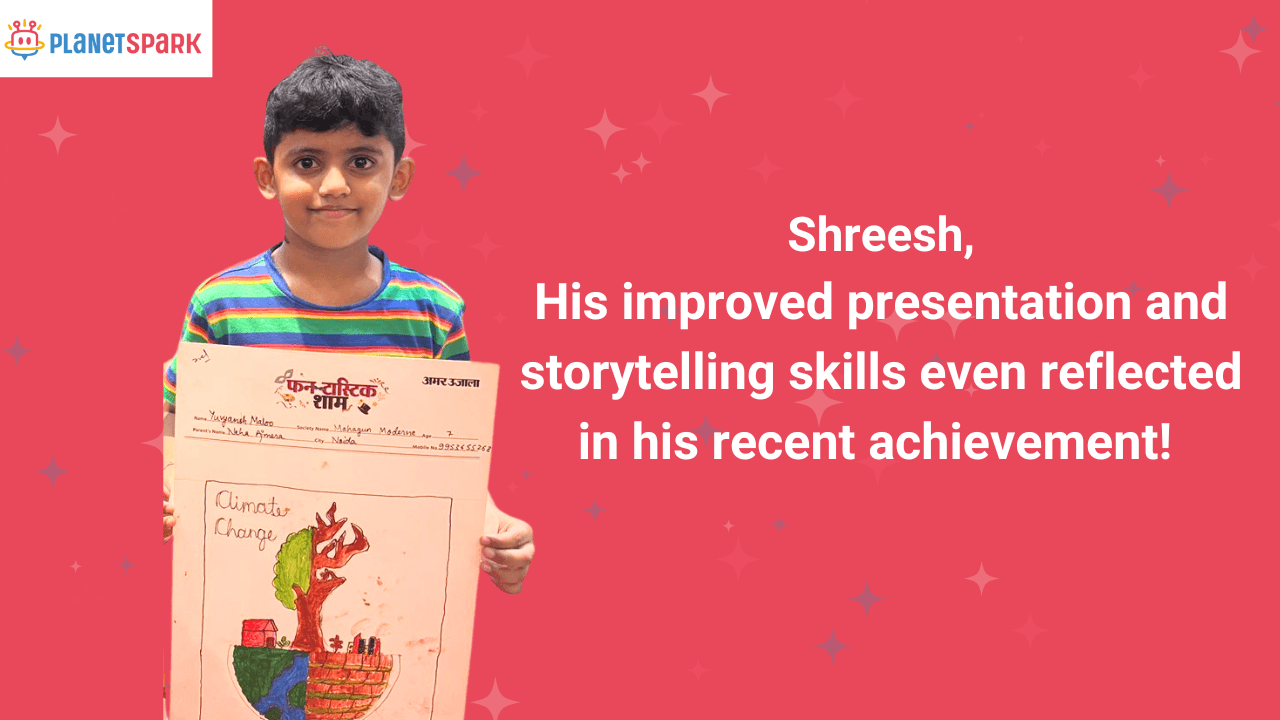
PlanetSpark has helped Shreesh express his ideas creatively and confidently. His improved presentation and storytelling skills are even reflected in his recent achievement — winning second place in the Junior Category of a drawing competition on ‘Climate Change’ organised by the Amar Ujala team.
Give your child the skills to express ideas smoothly and confidently—join PlanetSpark today.
Why Choose PlanetSpark for Learning English Grammar?
- Step-by-step learning process which starts from beginner English grammar and writing topics to advanced concepts like worldbuilding.
- More than 800+ interactive practice worksheets and quizzes specially handpicked and designed by industry experts to make grammar and creative writing easy and engaging.
- Expert certified English teachers with hands-on experience in the teaching industry who can personalise sessions according to the needs of the child.
- Live, 1:1 interactive classes with teachers and trainers who provide instant feedback and offer two-way engagement through active participation.
- Curriculum built around real-world situations to make the learning process seem natural and relevant.
- Learning through games, storytelling, and visual effects makes the child feel that learning is fun and engaging.
Conclusion: Build Your Sentence Formation Confidence with PlanetSpark
Learning and adapting sentence formation in English is a powerful skill that helps in building the child’s confidence, creativity, and the ability of communication skills. Children with the proper ability to form sentences correctly with concepts like loose sentence or periodic sentence help in their grammar and expressing thoughts clearly and fearlessly.
In this sentence formation journey, PlanetSpark becomes an integral part with its fun, structured, and highly effective learning method. The step-by-step approach of the courses designed by PlanetSpark ensures that every child progresses at their own pace and ability while building a strong foundation.
Frequently Asked Questions
It is called a loose sentence because:
- The sentence is not tight or tense
- The main idea comes first
- The rest of the sentence, “loosely,” adds information
- If you remove the extra details, the sentence still works:
Example- The team practised.
- Speeches
- Persuasive writing
- Dramatic moments
- Important conclusions
The ending feels strong and impactful.
There are no strict rules, but good loose sentences usually:
- Begin with an independent clause
- Add clear and relevant details
- Use commas correctly
- Avoid too many modifiers (3–4 is ideal)
The goal is clarity, not confusion.
Use loose sentences when:
- You want easy understanding
- You are writing blogs, stories, emails, or explanations
- You want a friendly and conversational tone
- Avoid overusing them in persuasive or dramatic writing—balance them with other sentence types.