
How to Use Mind Mapping to Learn English Grammar Easily
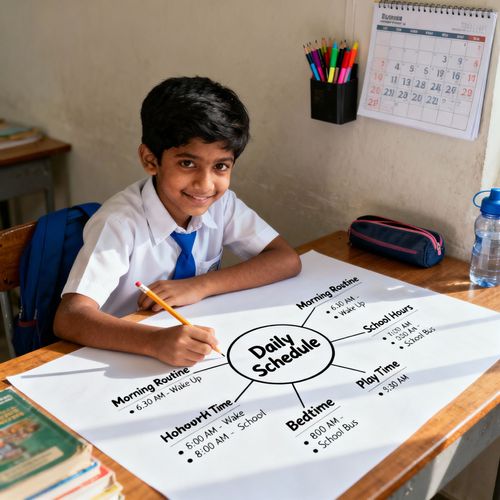

Table of Contents
- What Is Mind Mapping and Why It’s Fun to Learn With
- Mind Mapping Ideas for Grammar Topics
- Simple Steps to Create a Grammar Mind Map on Paper or Digita
- Examples: Grammar Mind Maps You Can Try
- Common Mistakes to Avoid While Making Mind Maps
- Fun Tips to Make Grammar Mind Maps Colourful and Creative
- How PlanetSpark Helps You Learn English Grammar the Smart Wa
- Turn Your Grammar Maps Into Magic
Feel stuck facing endless grammar rules and wish there were a fun, visual way to learn? Mind mapping can turn that frustration into excitement by turning grammar into colourful webs of ideas.
In this blog, we will discuss the concept of “mind mapping definition” creative techniques of mind mapping will be shared, practical steps will guide how to draw one, sample grammar mind maps will be shown, mistakes to avoid will be discussed and finally how PlanetSpark helps children master English grammar with smart methods.
What Is Mind Mapping and Why It’s Fun to Learn With
Mind mapping is a way of organising ideas visually that allows exploration and creativity. In essence, a central topic (say “Grammar”) sits in the middle, branches radiate for key ideas (tenses, parts of speech), and sub-branches show details (simple past, pronouns etc.). When used for grammar learning, mind mapping makes the dry rules come alive colours, doodles, icons and connections help brains remember better and engage more. Using mind mapping, children move from memorising lists to understanding patterns, turning grammar into a game of visual thinking. This transforms grammar study into something that feels less like a chore and more like creative play
Mind Mapping Ideas for Grammar Topics
Here are several ideas of how the technique of mind mapping can work for specific grammar topics:
Tenses: A central node labelled “Tenses” with branches “Present”, “Past”, “Future”; sub-branches for “Simple”, “Continuous”, “Perfect”.
Parts of Speech: Centre “Parts of Speech” leads to “Noun”, “Verb”, “Adjective”, “Adverb”, “Pronoun” etc; each gets examples and a doodle icon.
Sentence Structure: Branches for “Subject”, “Predicate”, “Object”, “Modifiers”; draw arrows and cartoons to show how parts connect.
Punctuation & Capitalisation: Map showing full-stop, comma, question mark, exclamation mark; include mini-stories: “Why use this mark?”
Common Mistakes: Map that tracks frequent errors (e.g., subject-verb agreement, wrong tense usage) with corrective notes.
Vocabulary & Grammar Links: A mind map linking vocabulary themes (“Food”, “Places”, “Animals”) to grammar points (adjectives, verbs, prepositions) for integrated study.
Using mind mapping in these ways lets children visualise relations among grammar rules, rather than treating each rule as isolated. The “techniques of mind mapping” such as use of colour, images, branching and association help memorisation and understanding.

Simple Steps to Create a Grammar Mind Map on Paper or Digital Tools
Here’s a straightforward process to create an effective grammar mind map — whether using paper or online tools:
Pick a central topic: Write a key grammar concept in the centre of a page or digital canvas (e.g., “Tenses”).
Add main branches: From the centre draw 4-6 thick coloured branches for major sub-topics (e.g., Present, Past, Future).
Add sub-branches: From each main branch draw thinner lines to details (e.g., under Past → “Past Simple”, “Past Continuous”).
Use colours & icons: Use different colours for each branch, draw little icons (clock for tense, person icon for noun) – this engages visual memory.
Include examples & rules: On each sub-branch include a short example sentence, and a mini rule (“He eats / She is eating”).
Make connections: Use dotted lines or arrows to show links (for example, between “Past Continuous” and “Interrupted action”).
Review and expand: After the map is drawn, revisit it each week add new branches (e.g., “Future Perfect”) or fold in vocabulary links.
Personalise it: Encourage drawing doodles, using favourite colours or even stickers; personalisation improves motivation.
Apply in writing/speaking: Use the map as a cheat-sheet when writing sentences or speaking, thereby reinforcing the grammar in context.
By using these steps, creation of a grammar mind map becomes a fun activity, not a burden. The “techniques of mind mapping” (branching, colour, imagery, connection) are at the heart of this.
Examples: Grammar Mind Maps You Can Try
Mind maps help make grammar visual and memorable. Below are practical examples that show how to use mind mapping to learn English grammar easily. Each example includes a simple diagram layout so students can sketch their own maps on paper or digital tools.
Watch your child’s grammar confidence grow with colourful mind maps and live lessons at PlanetSpark
1. Tenses Mind Map
A Tenses Mind Map helps understand time and action forms clearly.
[TENSES]
|
---------------------------------------
| | |
[PRESENT] [PAST] [FUTURE]
| | |
------ ------ ------
| | | | | | | | | | | |
SP PC PP PPC SP PC PP PPC SP FC FP FPC
SP – Simple Present, PC – Present Continuous, PP – Present Perfect, PPC – Present Perfect Continuous
SP – Simple Past, etc.
Examples inside map:
Present: He plays football every day.
Past: He played football yesterday.
Future: He will play football tomorrow.
Techniques of Mind Mapping: Use blue for Present, red for Past, and green for Future to apply and improve recall.
2. Parts of Speech Mind Map
This map helps classify words into their grammatical categories.
[PARTS OF SPEECH]
|
---------------------------------------------------------------
| | | | | | | |
NOUN PRONOUN VERB ADJECTIVE ADVERB PREPOSITION CONJUNCTION INTERJECTION
Details with examples:
Noun: name of person/place/thing – dog, Delhi
Pronoun: replaces noun – he, she, they
Verb: action – run, write
Adjective: describes noun – tall, bright
Adverb: describes verb – quickly, very
Preposition: shows position – on, under
Conjunction: joins – and, but
Interjection: shows emotion – Wow!, Oh!
Technique of Mind Mapping : Draw each branch in a different colour; add small sketches like a running figure for verbs or a happy face for interjections.
See your child build grammar maps and clear concepts in live sessions with PlanetSpark English Grammar course
3. Sentence Structure Mind Map
This mind map shows how sentence parts connect to form meaning.
[SENTENCE STRUCTURE]
|
-------------------------------------------------
| | | |
SUBJECT VERB OBJECT MODIFIERS
|
CLAUSES
Example:
The small cat quickly chased the mouse.
Subject: The cat
Verb: chased
Object: the mouse
Modifier: small, quickly
Techniques of Mind Mapping: Draw arrows showing flow → Subject → Verb → Object → Modifier. Use this map to understand sentence construction easily.
4. Punctuation and Capitalisation Mind Map
This map helps recall where and how to use punctuation marks.
[PUNCTUATION & CAPITALISATION]
|
--------------------------------------------------------------------
| | | | | | |
Full Stop Comma Question Mark Exclamation Quotation Apostrophe Capital Letters
Examples within branches:
Full Stop: I love reading.
Comma: I bought apples, bananas, and oranges.
Question Mark: Where are you going?
Exclamation Mark: That’s amazing!
Quotation Marks: She said, “Let’s go!”
Apostrophe: It’s raining.
Capital Letters: Delhi is the capital of India.
Techniques of Mind Mapping: Use symbols in your branches (e.g., ? ! ,) to make them easy to remember.
Ready for stress-free grammar learning?
Enrol in PlanetSpark’s English Grammar Course and try out mind mapping techniques
5. Common Grammar Mistakes Mind Map
A quick-reference map to correct frequent grammar errors.
[COMMON GRAMMAR MISTAKES]
|
----------------------------------------------------------
| | | |
Subject-Verb Tense Error Wrong Prep Articles
Agreement
Examples with corrections:
He go to school → He goes to school
I am go to school → I am going to school
She is good in dance → She is good at dance
An apple / A banana
Techniques of Mind Mapping: Use red for incorrect examples and green for correct ones. This visual contrast reinforces learning.
6. Vocabulary + Grammar Link Map
This mind map connects vocabulary themes with grammar rules.
[FOOD VOCABULARY]
|
------------------------------------------------
| | | |
NOUNS ADJECTIVES VERBS PREPOSITIONS
Examples:
Nouns: apple, pizza, rice
Adjectives: spicy, sweet, delicious
Verbs: eat, cook, taste
Prepositions: in the bowl, on the plate
Example sentence: I eat spicy pizza on weekends.
Technique: This map combines grammar and vocabulary for integrated learning one of the smartest techniques of mind mapping for children.
Make grammar rules easy to remember!
Try PlanetSpark’s English Grammar Course free and start creating mind maps that work.
7. Degrees of Comparison Mind Map
This map helps children remember how adjectives change forms when comparing things.
[DEGREES OF ADJECTIVES]
|
-------------------------------
| | |
POSITIVE COMPARATIVE SUPERLATIVE
Examples:
Positive: big → My house is big.
Comparative: bigger → Her house is bigger than mine.
Superlative: biggest → That building is the biggest in the city.
Techniques of Mind Mapping: Draw ascending arrows or small steps showing growth from “big → bigger → biggest”.
Common Mistakes to Avoid While Making Mind Maps
While mind mapping is a powerful tool, some pitfalls reduce its effectiveness. Here are common mistakes and how to avoid them:
Too many branches at once: Overloading a single map with dozens of sub-topics makes it messy. Better to create separate maps for each large topic.
Monochrome or no imagery: If all branches are black/white lines with no colour or doodles, the visual benefit gets lost. Use colours and icons deliberately.
No rules or examples: A map with only labels (e.g., “Present Continuous”) but no examples or mini-rule offers little practice value. Always add at least one example sentence.
Static tool-only without review: Making the map once and never revisiting it fails to embed learning. Schedule short review sessions weekly.
Copying someone else’s map exactly: While templates are fine, entirely copying someone else’s map reduces personal engagement. Encourage kids to add their own doodles, colour choices, and examples.
No link to practice: If the map remains just for drawing and never used for writing or speaking, its impact is limited. Use it when doing homework or speaking.
Neglecting digital option when needed: Some children prefer digital maps with drag/drop and icons — forcing exclusively paper may reduce motivation. Offer both.
Ignoring the “why-branch”: Without showing why a rule exists (e.g., “We use ‘was doing’ when an action was interrupted”), the mind-map remains superficial. Encourage adding brief “why” notes.
By avoiding these mistakes, the mind-mapping process retains maximum benefit and keeps grammar learning light, visual and effective rather than becoming just another worksheet.
Want grammar to stick? Combine mind mapping and PlanetSpark’s course
Fun Tips to Make Grammar Mind Maps Colourful and Creative
Use Bright Colours for Each Grammar Topic
Example: Blue for verbs, red for nouns, green for adjectives it makes remembering grammar rules easy and visually engaging.Add Pictures and Doodles to Explain Rules
Simple drawings like running figures for verbs or happy faces for adjectives make grammar learning fun and easy to recall.Use Keywords, Not Long Sentences
Encourage students to write short, clear words instead of lengthy explanations to keep their mind maps neat and easy to revise.Create Branches with Real-Life Examples
For instance, add “I eat apples” under present tense and “I ate apples” under past tense — examples make learning more meaningful.Try Shapes and Symbols for Quick Recall
Use stars for important rules, circles for examples, and arrows to show how ideas connect across topics.Use Digital Tools Like Canva or MindMeister
Older students can experiment with simple online tools to make colourful, easy-to-edit mind maps.Keep Updating Your Mind Map as You Learn New Grammar Rules
Encourage continuous learning every new grammar topic can become a new branch or add-on to an existing mind map.
How PlanetSpark Helps You Learn English Grammar the Smart Way
PlanetSpark offers an English Grammar Course tailored for children aged up to 12-13 that beautifully complements mind mapping techniques. The course uses live 1:1 sessions, interactive activities, games and visual tools — ideal for children who use mind maps to reinforce learning. Key USPs include:
Curriculum-aligned modules covering grammar topics like tenses, parts of speech, sentence structure and more.
Classes designed for young learners, making grammar fun rather than rule-heavy.
Live interactive sessions with expert teachers where children practise grammar through stories, games and writing supporting mind mapping by turning visuals into usage.
Progress tracking and personalised feedback so that children can revisit specific mind-map branches where learning gaps exist.
Free trial class available a great opportunity to combine mind mapping with structured online support.
For kids using mind mapping to learn grammar, PlanetSpark offers the extra structure and motivation to turn maps into mastery. Book a free trial class today and watch grammar transform from “boring rules” into “fun thinking games”.
Turn Your Grammar Maps Into Magic
Mind mapping reignites grammar learning by turning abstract rules into colourful, engaging webs of thought. Armed with key topics, creative mapping techniques, smart steps and common pitfall warnings plus the smart support of PlanetSpark’s English Grammar Course children can ramp up confidence, clarity and creativity. Start mapping, start mastering, and let grammar feel less like a hurdle and more like a playground of ideas.
Frequently Asked Questions
Mind mapping is a visual tool where a central idea branches out into related topics and sub-topics. In grammar learning, it helps by showing how rules connect, making memorisation easier and allowing children to see patterns instead of just isolated facts.
Digital tools offer drag-and-drop, icons and colours which can be highly engaging for kids. Paper maps also work well and encourage hand-drawing. The best choice depends on the child’s preference the technique of mind mapping matters most, rather than the medium.
PlanetSpark’s course uses visual, interactive methods aligned with the idea of mind mapping. It provides themed lessons on grammar topics, personalised feedback, and gamified activities which turn branches of a map into real-life practice.
Set a short weekly session (10-15 minutes) to revisit each mind map. Children can add new branches, recall examples aloud, quiz themselves or teach someone else using their map. This regular review turns a map from decoration into recall tool.
Mind mapping is a powerful supplement, but not a full replacement. Worksheets and drills still support structured practise, while mind maps provide overview and memory reinforcement. Together, they deliver a strong grammar-learning combo.
Children aged around 7 to 13 can start using mind mapping for grammar. At this stage they are ready to visualise categories (like parts of speech) and examples, and mind mapping makes it fun and accessible rather than overwhelming.