Learners often understand the basics of parts of speech, but still make small mistakes when using them in real sentences. Recognizing these common errors helps build stronger grammar skills and makes concepts like parts of speech examples, parts of speech definitions and the 8 parts of speech much easier to master.


What Are Parts of Speech? Meaning, Definition, and Examples
Learn the eight parts of speech with simple definitions, examples in sentences, and an easy reference chart.
What if every word in a sentence had its own special role, just like characters in a story?
This idea becomes clearer when you understand the parts of speech.
What Are Parts of Speech?
Parts of speech are the basic categories that every word in English belongs to. These categories explain how a word works inside a sentence, helping learners understand meaning, structure, and expression. When you explore the parts of speech in English, you begin to see that every word has a purpose, whether it names something, describes something, shows action, or connects ideas.
At its core, the definition of parts of speech is simple:
They are groups that classify words based on the job they do in a sentence.
Understanding what parts of speech are is important because it acts like learning the rules of a game. Once you know the roles, you instantly understand how sentences are built and how words interact with each other. Whether you're learning English for school, writing essays, reading stories, or improving communication skills, knowing the parts of speech helps you:
Build clearer sentences
Avoid grammar mistakes
Understand meanings accurately
Improve reading comprehension
Strengthen writing and speaking abilities
Every word you see around you belongs to one of these groups, and mastering them gives you a strong foundation for everything else in English grammar.
How Many Parts of Speech Are There
There are eight main parts of speech in English, and every word you use fits into one of these eight categories. When learners ask how many parts of speech are there or how many types of parts of speech exist, the answer remains simple and universal: English grammar is built on eight essential groups.
These categories help you understand the function of each word in a sentence. Whether a word names something, replaces another word, shows action, describes, connects, or expresses feeling, its purpose is defined by its part of speech.
Why knowing the number of parts of speech matters?
Understanding how many parts of speech exist gives learners a clear structure to follow. Instead of guessing how words work, you can place every word into one of these eight types. This makes grammar easier because:
You recognise sentence patterns
You identify common errors faster
You understand how words change roles
You become more confident in writing and speaking
The eight parts of speech include:
Noun
Pronoun
Verb
Adjective
Adverb
Preposition
Conjunction
Interjection
These eight types give you the complete framework for building, understanding, and analysing sentences. Once you know them, the rest of English grammar becomes far more manageable.
If you're wondering how many types of parts of speech there are beyond the main eight, some grammars also describe subtypes, such as types of nouns (common, proper), types of verbs (action, linking), or types of adjectives, but the core structure always remains eight.
Understanding this foundation is key to becoming confident in English.
The 8 Parts of Speech
The eight parts of speech are the pillars of English grammar. Every sentence you build is a combination of these categories, each playing a different role. Understanding the parts of speech with examples, definitions, and usage helps learners identify patterns, avoid mistakes, and express ideas clearly.
Noun
A noun is a word that names a person, place, thing, or idea. It answers questions like who or what.
Examples: teacher, river, happiness, phone
Sentence examples:
The teacher explained the lesson.
I placed the phone on the table.
Nouns are one of the most important parts of speech because they act as the subject or object in sentences.
Pronoun
A pronoun is a word used in place of a noun. It prevents repetition and keeps sentences smooth.
Examples: he, she, it, they, them
Sentence examples:
She is reading a book.
The dogs were barking, so they went inside.
Pronouns make communication clearer and more natural.
Verb
A verb shows action or state of being. It tells what someone or something does.
Examples: jump, is, write, think
Sentence examples:
They write stories every day.
He is happy with his project.
Verbs are powerful parts of speech because they form the backbone of every sentence.
Adjective
An adjective describes or adds meaning to a noun or pronoun. It tells what kind, which one, or how many.
Examples: bright, three, large, colorful
Sentence examples:
She wore a bright dress.
They adopted two puppies.
Adjectives help create vivid, descriptive sentences.
Adverb
An adverb describes a verb, adjective, or another adverb. It explains how, when, where, or to what extent.
Examples: quickly, yesterday, very, outside
Sentence examples:
She ran quickly to the bus.
The room looked very neat.
Adverbs add detail and clarity to actions and descriptions.
Preposition
A preposition shows the relationship between words in a sentence, often indicating place, direction, or time.
Examples: in, on, under, between, before
Sentence examples:
The cat is under the sofa.
We met before the class started.
Prepositions make sentences more meaningful and connected.
Conjunction
A conjunction links words, phrases, or sentences. It helps ideas flow smoothly.
Examples: and, but, or, because, although
Sentence examples:
I like apples and bananas.
She stayed home because it was raining.
Conjunctions are essential for building longer, well-structured sentences.
Interjection
An interjection shows sudden emotion or reaction. It often appears at the beginning of a sentence.
Examples: wow, oh, hey, hooray
Sentence examples:
Wow, that trick was amazing.
Oh, I forgot my notebook.
Interjections bring expressions to life and add feeling to communication.
Understanding all eight parts of speech helps learners grasp the full structure of English. With clear definitions, examples in sentences, and everyday usage, identifying parts of speech becomes simple and enjoyable.
Parts of Speech Chart for Quick Learning
| Part of Speech | What It Means | What It Does in a Sentence | Easy Example |
|---|---|---|---|
| Noun | Name of a person, place, thing or idea | Tells us who or what the sentence is about | Riya, school, ball |
| Pronoun | Word that replaces a noun | Helps avoid repeating the noun again and again | he, she, they, it |
| Verb | Action or state of being | Shows what someone or something does | run, jump, is, are |
| Adjective | A describing word | Tells us more about a noun | tall boy, red balloon |
| Adverb | A word that describes a verb, adjective or another adverb | Tells us how, when or where something happens | quickly, very, yesterday |
| Preposition | Word that shows relation between nouns or pronouns | Tells us the position, direction or time | on, under, at, between |
| Conjunction | Connecting word | Joins words, phrases or sentences | and, but, because |
| Interjection | A word that shows strong feeling | Adds emotion or sudden reaction | wow, oh, hooray |
Parts of Speech with Examples in Sentences
Seeing each part of speech used in different ways helps learners understand how words change depending on the sentence. Below are multiple examples for all eight parts of speech so students can clearly connect meaning with usage.
1. Noun Examples
Nouns name people, places, things or ideas.
Examples:
The rabbit hopped across the field.
Maya bought a new book.
Happiness is important.
The train reached the station on time.
2. Pronoun Examples
Pronouns replace nouns to avoid repetition.
Examples:
Arjun lost his bag, but he found it later.
The children were excited because they won the match.
This is the toy I wanted; it is perfect.
Sara and Ria are dancing; both look happy.
3. Verb Examples
Verbs show action or a state of being.
Examples:
The birds sang sweetly.
She is a brilliant swimmer.
They played football in the evening.
The baby slept peacefully.
4. Adjective Examples
Adjectives describe nouns.
Examples:
It was a bright morning.
She wore a beautiful dress.
The hungry puppy waited for food.
He bought three new pencils.
5. Adverb Examples
Adverbs describe verbs, adjectives or other adverbs.
Examples:
The athletes ran quickly.
She spoke softly to the child.
The train arrived late.
He sang very beautifully. (describes an adjective)
6. Preposition Examples
Prepositions show location, time or direction.
Examples:
The cat hid under the bed.
They walked towards the park.
The meeting starts at 10 AM.
The gift is behind the curtain.
7. Conjunction Examples
Conjunctions connect words, phrases or sentences.
Examples:
I wanted to play, but it started raining.
She likes apples and oranges.
We will go out if the weather is clear.
He studied hard because the test was important.
8. Interjection Examples
Interjections show strong emotions.
Examples:
Wow, this place looks amazing.
Oh no, I lost my keys.
Hurray, our team won.
Oops, I dropped the glass.
Common Mistakes Learners Make
1. Confusing Adjectives and Adverbs
Many learners think both describe actions, but adjectives describe nouns, while adverbs describe verbs, adjectives and other adverbs.
Wrong: She sings beautiful.
Correct: She sings beautifully.
2. Using Pronouns Without Clear Antecedents
A pronoun must clearly refer to a noun, otherwise the meaning becomes confusing.
Confusing: When Sara met Mina, she was excited.
(Who was excited?)
Correct: Sara was excited when she met Mina.
3. Misidentifying Prepositions as Adverbs
Words like around, before, after, and inside can act as either prepositions or adverbs depending on usage.
Preposition: The kids sat inside the room.
Adverb: The kids went inside.
4. Forgetting That Verbs Are Not Only Actions
Learners usually remember action verbs but forget state of being verbs.
Examples: am, is, are, was, were
These are essential for forming correct sentences.
5. Overusing Conjunctions in One Sentence
Kids often use many connecting words, creating run on sentences.
Incorrect: I like pizza and it is tasty and we eat it often and it has cheese.
Correct: I like pizza because it is tasty.
6. Treating Interjections as Full Sentences
Interjections add emotion but do not complete a thought.
Learners must follow them with proper sentences.
Example:
Wrong: Wow. Amazing.
Correct: Wow, this place looks amazing.
7. Using Nouns Instead of Verbs
Beginners sometimes describe actions using a noun.
Incorrect: I took a run fast.
Correct: I ran fast.
8. Forgetting That Some Words Change Their Part of Speech
Many English words belong to different parts of speech depending on usage.
Examples:
Play (noun): The play was interesting.
Play (verb): The kids play outside.
Recognizing this helps improve writing accuracy.
Parts of Speech Worksheets for Practice
Why Parts of Speech Matter in English
Parts of speech matter because they form the framework of every sentence you read, write, or speak. When you understand the parts of speech in English, you begin to see how words fit together and why sentences make sense. Without this understanding, even simple grammar rules can feel confusing. With it, English becomes easier, smoother, and far more enjoyable to learn.
Why learning parts of speech is important
Learning the parts of speech definition and examples helps you:
1. Build clearer and stronger sentences
When you know whether a word is a noun, verb, adjective, or another part of speech, you can place it correctly in a sentence and express your ideas more clearly.
2. Improve communication skills
Using the right parts of speech makes your writing and speaking sharper. You avoid vague sentences and become more accurate with your message.
3. Understand word functions in different situations
Many English words change their roles based on how they are used. A word can act as a noun in one sentence and as a verb in another. Knowing the parts of speech helps you identify these changes easily.
4. Avoid common grammar mistakes
A strong understanding of parts of speech helps you avoid errors like mixing up adjectives and adverbs, using the wrong verb form, or placing prepositions incorrectly.
5. Become confident in reading and writing
When you know how sentences are built, reading becomes faster and writing becomes more natural. You can analyse text better, spot patterns, and express ideas confidently.
Understanding why parts of speech matter is the first step toward mastering English grammar. It gives you the tools to break down sentences, learn new words effectively, and communicate with clarity in any situation.

Get Acquainted with Our Top Educators
Top 1% certified experts who make learning engaging and impactful.

 Aanchal Soni
Public Speaking
 10+ Years
 Anisha Gupta
Spoken English
16+ Years Ankita Singh8+ Years
 Ankur Bhardwaj
Maths
10+ Years Abshar Afroz
 Banani Garai
TESOL-certified educator
30+ Years Divya Khangarot
Public Speaking & Creative Writing
4+ Years Divya Solanki
Maths
11+ Years Fahira Khan
 Kanishka Modi
 Maria Antony
English for Non Native Speakers
8+ Years Mariya Ali
 Mariyam Farhana B
 Nidhi Inani
 Priya Badotiya
Public Speaking
7+ Years Roohi Kalra
Our Impact!

Bringing All Parts of Speech Together
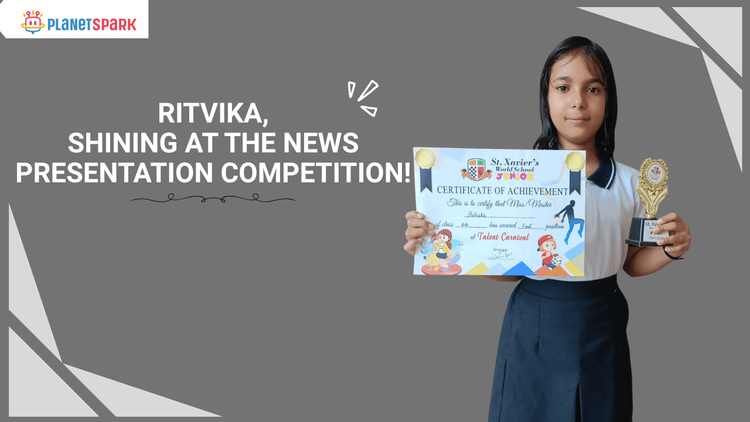
Ritvika (News Presentation Competition)
Ritvika has achieved a milestone in News Presentation! From the PlanetSpark classroom to the spotlight at the News Presentation Competition.
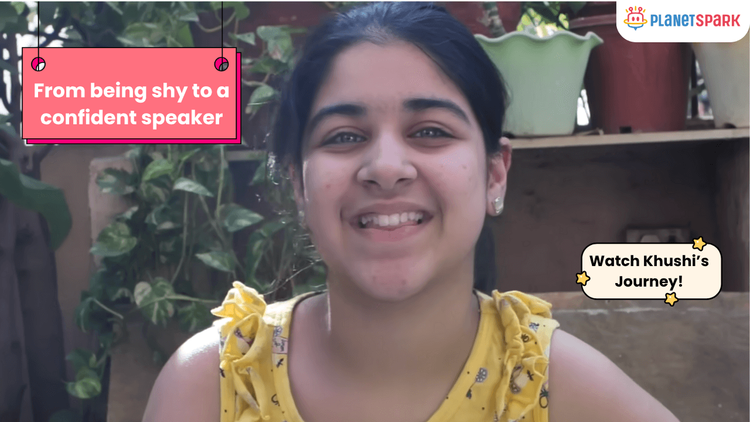
Khushi Bhatia, 10 Years
Khushi transformed from being a shy to a confident speaker with PlanetSpark!
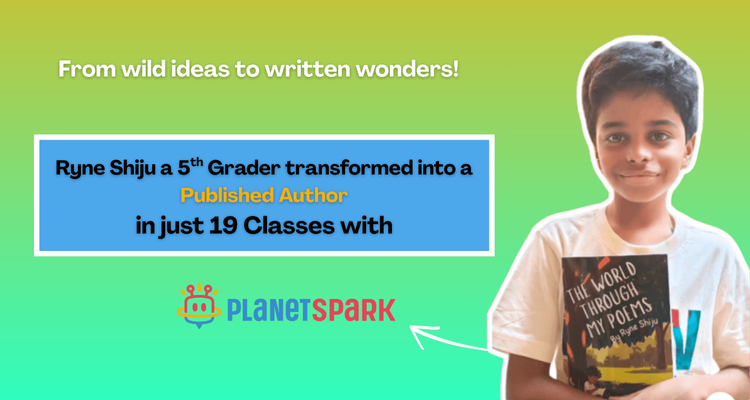
Ryne Shiju (Published Author)
Ryne Shiju, a bright PlanetSpark star, has turned imagination into inspiration becoming a published author whose words now empower and inspire.

Muskaan (SpellBee International Participant)
We are beyond proud of Muskaan from PlanetSpark, who showcased her spelling brilliance at the SpellBee International Programme.
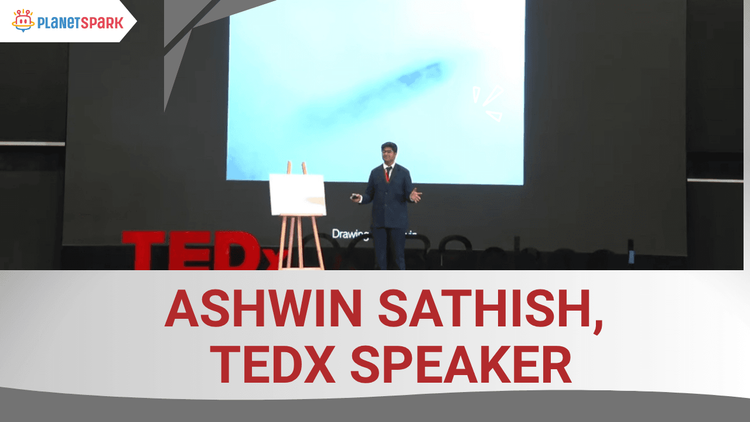
Ashwin Sathish (TEDx Speaker)
Ashwin Sathish, Grade 8 from New Delhi, stood tall as a TEDx Speaker, sparking conversations that truly matter. From classroom confidence to commanding a global stage, his journey reflects the power of voice, vision, and courage.

Eshaan (Published Author)
Eshaan has officially became a published author, turning classroom activity into a captivating storybook.

Pranav (NOF English Champion League)
Pranav, a Grade 3 star, has successfully completed the NOF English Champion League, showcasing his brilliance in Public Speaking and Creative Writing.
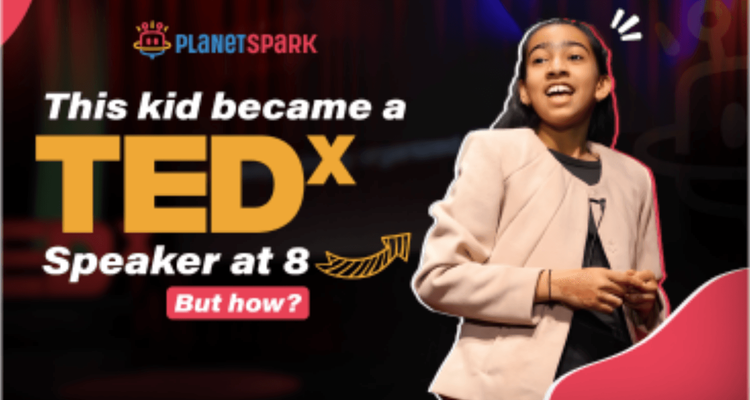
Ovia Singh (TEDx Speaker)
Oviya Singh from PlanetSpark challenged the status quo in her TEDx Talk, asking, ‘Is the world running out of food?’ as she highlighted the importance of soil conservation.
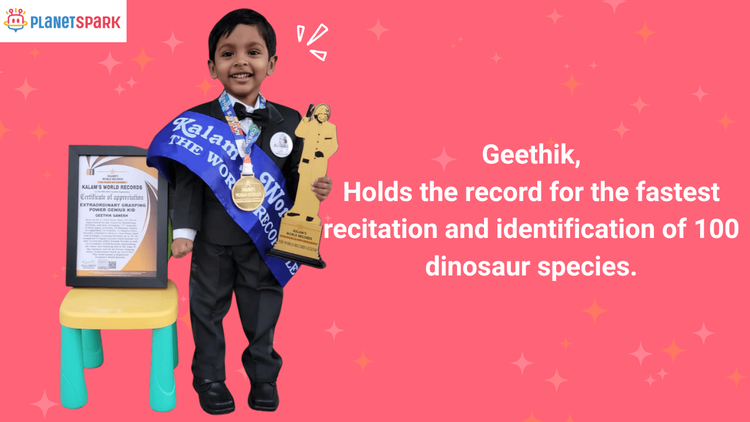
Geethik (Fastest Recitation)
Geethik’s PlanetSpark-sharpened speaking skills helped him set a 100-dinosaur recitation record.
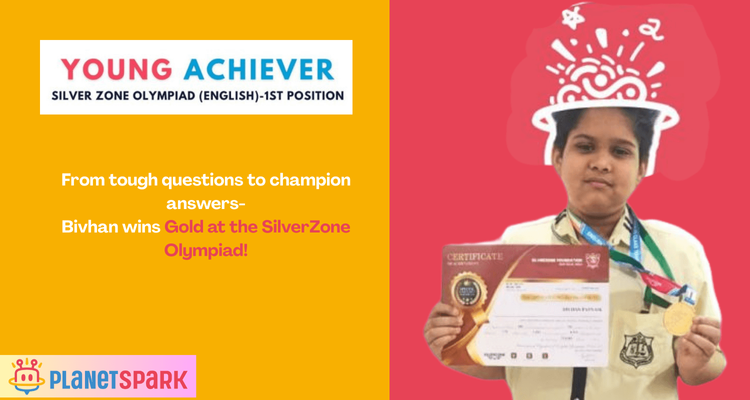
Bivhan Patnaik (SilverZone Olympiad)
Bivhan, in just Grade 4, wins Gold at the SilverZone Olympiad, a true symbol of brilliance, focus, and PlanetSpark-guided success.

Advaith Gupta (SpellBee International)
Advaith Gupta – Spelling His Way to Global Recognition! From mastering vocabulary to shining at SpellBee International, Advaith creates remarkable achievements.

Shlok (certificate of excellence)
Earned a Certificate of Excellence, showcasing his growing confidence and skills nurtured at PlanetSpark.
Ovia Singh, 11 Years
Oviya Singh from PlanetSpark challenged the status quo in her TEDx Talk, asking, ‘Is the world running out of food?’ as she highlighted the importance of soil conservation.
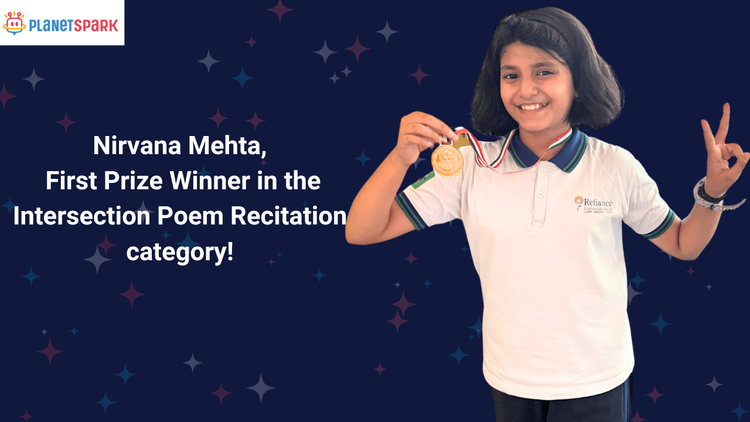
Nirvana Mehta (Wom Poem Recitation)
First Prize Winner in the Intersection Poem Recitation category

Thaksh (Won the ‘taleNt 2025’ competition)
Thaksh, won the ‘taleNt 2025’ competition in Thane after excelling in all three stages, including the written exam and interview.
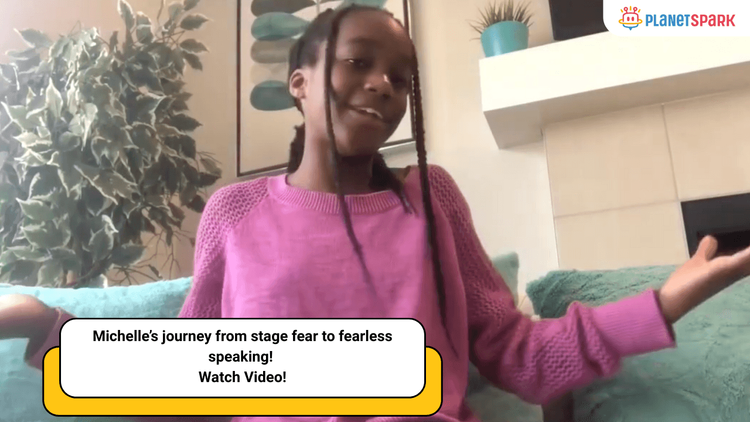
Michelle, 12
From shy to shining, Michelle’s story of conquering stage fear!
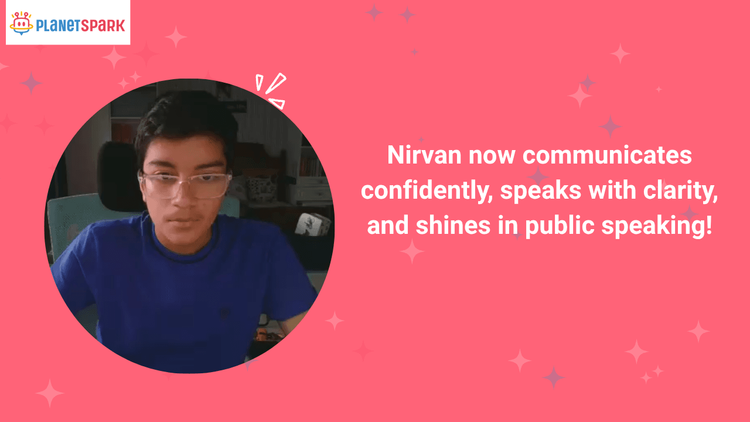
Nirvaan, Grade 9
Nirvan now communicates confidently, speaks with clarity, and shines in public speaking!
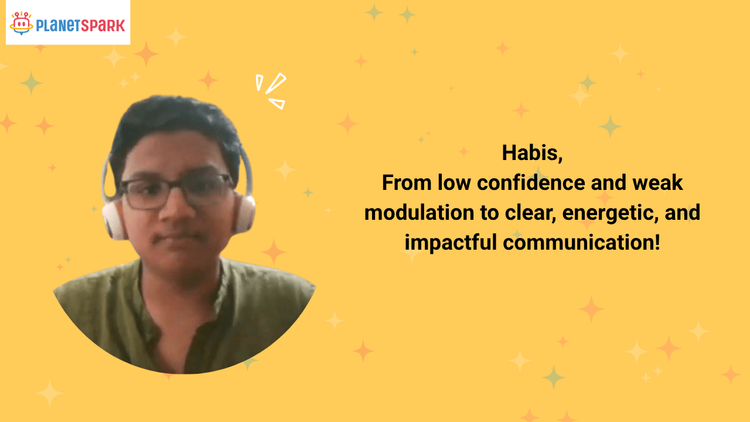
Habis, Grade 9
Meet Habis — once a shy speaker, now delivering every message with clarity, confidence, and strong stage presence.

Prathmesh (Got 3rd Prize in MUN)
Secured Third Prize at a Model United Nations event, reflecting his strong communication and critical thinking skills built at PlanetSpark.

Neel Kandul, First Position in class and State Rank 810 in the International Olympiad of English Language.
First Position in class and State Rank 810 in the International Olympiad of English Language.
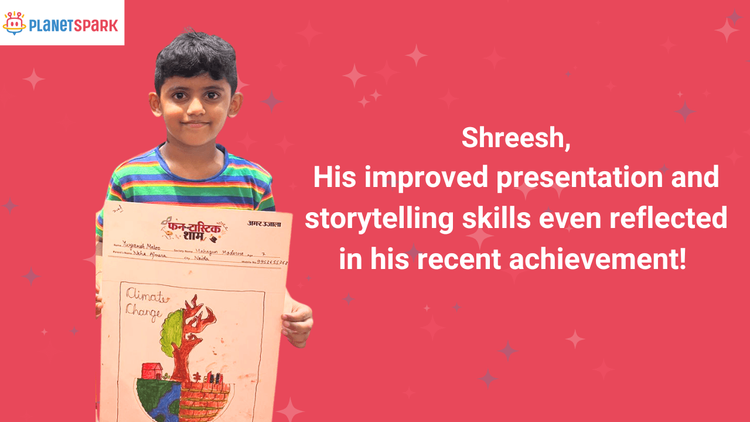
Shreesh
His improved presentation and storytelling skills even reflected in his recent achievement — winning second place in the Junior Category of a drawing competition on ‘Climate Change’ organized by the Amar Ujala team.
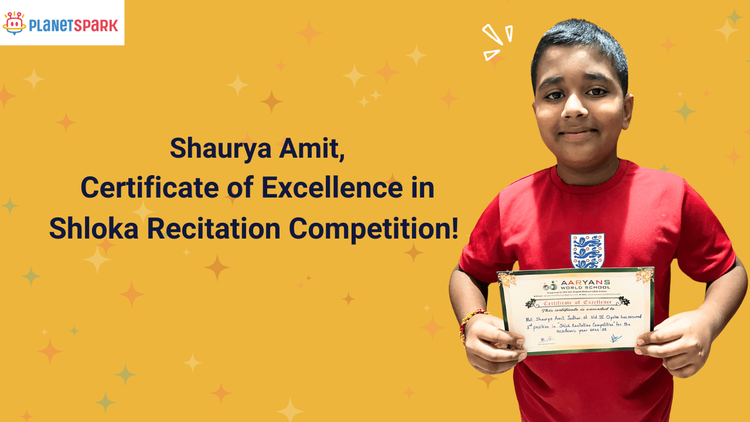
Shaurya Amit (Certificate of Excellence)
Certificate of Excellence in Shloka Recitation Competition

Manvik, 10 Years
Manvik Kumar, a student at PlanetSpark shares his story of becoming a confident Public Speaker.
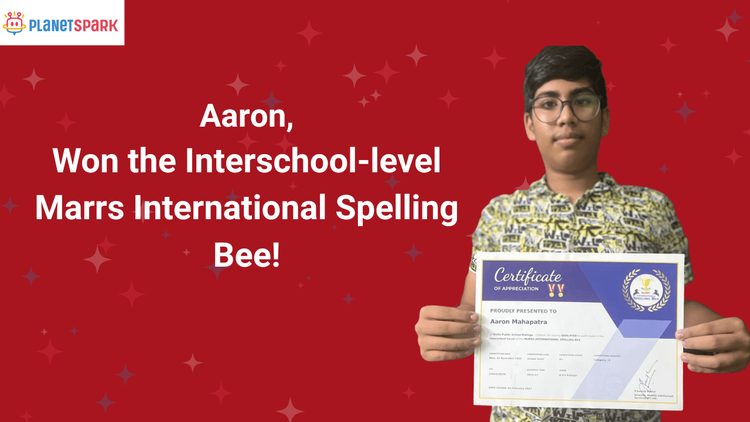
Aaron, International Spelling Bee Winner
Won at the Interschool-level Marrs International Spelling Bee, showcasing strong language skills and consistent PlanetSpark-driven growth.
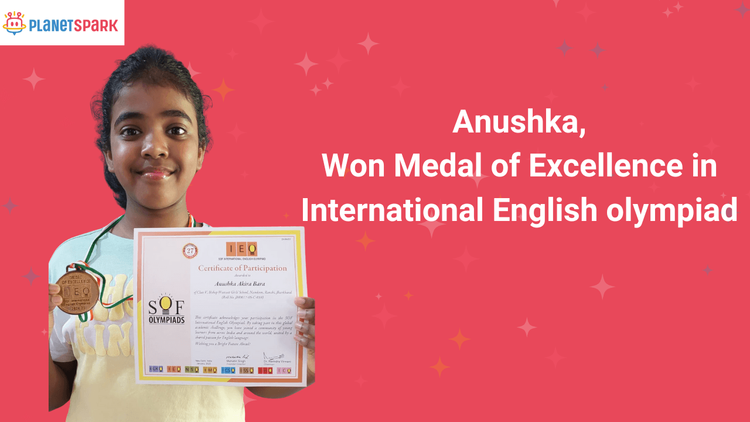
Anushka, Won Medal of Excellence in International English olympiad
Anushka won medal of excellence in International English olympiad. She scored sixth position in her school in olympiad.
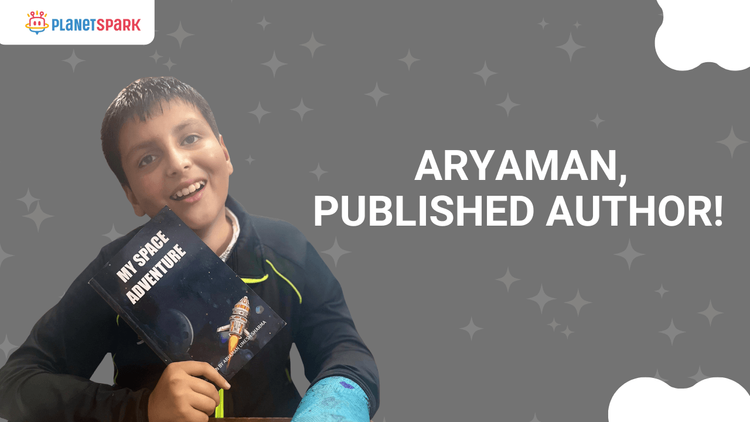
Aryaman, Published Author
Aaryaman became a published author, reflecting his creativity, communication skills, and confidence nurtured at PlanetSpark.
Making Headlines Nationwide
Featured in leading media for transforming individuals into confident, expressive, and stage-ready public speakers.

How Binny Bansal-Backed PlanetSpark Reached Break-Even And Beat The Edtech Blues

PlanetSpark keeps sailing in the edtech downturn

Featured in Tech Asia
Frequently Asked Questions
Parts of speech are categories that show how a word functions in a sentence. English has eight main parts of speech: nouns, pronouns, verbs, adjectives, adverbs, prepositions, conjunctions and interjections.
There are eight parts of speech in English. Some extended grammar guides include additional categories like articles or determiners, but traditionally the number remains eight.
Understanding parts of speech helps learners form correct sentences, choose the right words, improve writing skills and build a strong grammar foundation. It also makes reading and comprehension easier.
A noun names a person, place, thing or idea.
A pronoun replaces a noun to avoid repetition.
Example: Riya is a noun, while she is a pronoun that replaces it.
Look for the action or state of being. If the word shows what someone or something does or is, it is usually a verb.
Examples: run, jump, is, were.
An adjective is a describing word that tells more about a noun. It answers questions like What kind? Which one? How many?
Example: red ball, three pencils, happy child.
Yes. Some words can function as different parts of speech depending on context. For example, “run” can be a verb (I run daily) or a noun (I went for a run).
Practice identifying words in sentences, use examples, and revise regularly. Interactive learning, like PlanetSpark classes, can make this process easier for kids.
Loading available times...