
Learn Phonic Blend words to improve early reading skills


Table of Contents
- What Are Phonic Blend Words
- Types of Phonic Blend Words and How They Are Different
- Beginning Blend Words in Phonic Blend Words
- Ending Blend Words in Phonic Blend Words
- Consonant Blend Words in Phonic Blend Words
- Difference Between Beginning, Ending, and Consonant Phonic B
- Easy Examples of Phonic Blend Words
- Fun Ways to Practice Phonic Blend Words
- Why Choose PlanetSpark for English Grammar Skills
- Pranav Shines in English Grammar and Communication
- Conclusion: Building Strong Reading Skills with Phonic Blend
Learning to read is one of the most important milestones in a child’s life. At the heart of early reading lies phonics, and one of the most powerful phonics skills is learning phonic blend words. These words help learners join sounds smoothly to read complete words with confidence.
For kids, phonic blend words make reading fun and less confusing. Instead of reading letter by letter, children learn how sounds flow together naturally. For working professionals, especially parents and educators, understanding phonic words makes it easier to guide children at home and support early literacy development.
When children know how to blend words phonics, they can read unfamiliar words without fear. They stop guessing and start decoding. This skill improves reading speed, pronunciation, spelling, and comprehension over time.
This blog is written in a simple, friendly way so that children can enjoy reading it, while adults can clearly understand the learning logic behind it. You will learn what phonic blend words are, the types of blends, and why they are essential for building strong reading skills.
What Are Phonic Blend Words
Phonic blend words are words in which two or more letter sounds are spoken together smoothly, without stopping or changing their individual sounds. Each letter keeps its own sound, but the sounds blend to form a complete word.
For example:
b + l = bl
s + t = st
c + r = cr
When reading blend words, children do not say each sound separately. Instead, they slide the sounds together in one flow.
Simple Meaning for Kids
Phonic blend words are words where sounds stick together and read as one smooth sound.
How Phonic Blend Words Help Reading
Improve reading fluency
Reduce spelling mistakes
Help children read faster
Build confidence in speaking
Strengthen phonics basics
Difference Between Phonic Words and Phonic Blend Words
Phonic words include all words learned using sounds
Phonic blend words are a special type where sounds blend without breaking
This means all phonic blend words are phonic words, but not all phonic words are blend words.
Examples of Phonic Blend Words
| Blend | Example Word | How It Sounds |
|---|---|---|
| bl | black | b-l-ack |
| fl | flower | f-l-ower |
| st | stone | s-t-one |
| gr | green | g-r-een |
| cl | clap | c-l-ap |
These phonics blend words help children recognize sound patterns, making reading smoother and more enjoyable.
Why Children Struggle Without Blend Words
Reading becomes slow
Words sound broken
Confidence reduces
Spelling becomes confusing
Learning phonic blend words early solves these problems and creates a strong reading foundation.
“Strong grammar builds strong readers!”
Enroll in PlanetSpark English Grammar course to master sentence structure and writing skills.
Types of Phonic Blend Words and How They Are Different
There are different types of phonic blend words, based on where the blended sounds appear in a word. Understanding these types helps learners read longer and more complex words with ease.
Main Types of Phonic Blend Words
Beginning blend words
Ending blend words
Consonant blend words
Each type focuses on a different position of sounds but follows the same phonics rule.
Why Types of Blend Words Are Important
Help children decode new words
Improve spelling accuracy
Make reading less stressful
Strengthen phonics understanding
Comparison of Types of Phonic Blend Words
| Type | Where the Blend Appears | Example |
|---|---|---|
| Beginning blend words | Start of the word | stop |
| Ending blend words | End of the word | milk |
| Consonant blend words | Two consonants together | flag |
How to Blend Words Phonics Easily
Listen to each sound
Say the sounds clearly
Slide the sounds together
Read the full word smoothly
Repeat for practice
This method works for all types of phonic blend words and supports consistent learning for kids.
Role of Adults in Teaching Blend Words
Read aloud with children
Encourage slow blending first
Praise effort, not perfection
Practice daily with simple words
Understanding the types of phonic blend words helps both kids and adults make reading a confident and joyful habit.
“Write, speak, and shine with confidence!”
Join PlanetSpark and learn grammar through fun stories, quizzes, and interactive lessons.
Beginning Blend Words in Phonic Blend Words
Beginning blend words are a type of phonic blend words where two consonant sounds come together at the start of a word. Each consonant keeps its own sound, but they are spoken smoothly without stopping.
For example, in the word “stop”, the sounds s and t blend together at the beginning to form st.
What Are Beginning Blend Words
Beginning blend words start with:
Two consonants
Both sounds are heard
No new sound is created
This makes them easy to learn once children understand basic phonics.
Why Beginning Blend Words Are Important
Help children read longer words
Improve confidence in early reading
Make word recognition faster
Strengthen sound awareness
Beginning blends are usually the first type of blend words children learn because they are simple and very common in daily reading.
Common Beginning Blend Words
| Beginning Blend | Example Words |
|---|---|
| bl | blue, black, block |
| cl | clap, clock, clean |
| fl | flag, fly, flower |
| gr | green, grass, grow |
| st | star, stone, stop |
| tr | tree, train, truck |
These phonic blend words appear frequently in storybooks, signs, and daily conversations.
How Kids Can Learn Beginning Blend Words
Say each sound slowly at first
Slide the sounds together
Read the full word aloud
Repeat daily with new words
How to Blend Words Phonics Using Beginning Blends
Say the first sound
Say the second sound
Blend both sounds together
Add the remaining sounds
This method helps children understand how to blend words phonics without confusion.
Common Mistakes to Avoid
Skipping one sound
Adding extra vowel sounds
Reading too fast without blending
With regular practice, beginning blend words become easy and natural for young readers.
“Every word you write matters!”
Explore PlanetSpark English Grammar course for usage-based learning and practical writing practice.
Ending Blend Words in Phonic Blend Words
Ending blend words are phonic blend words where two consonant sounds appear at the end of a word. Just like beginning blends, each consonant keeps its own sound, and both sounds are clearly heard.
For example, in the word “milk”, the sounds l and k blend at the end.
What Are Ending Blend Words
Ending blend words:
End with two consonants
Do not change sound order
Are read smoothly without pauses
These blends help children read words completely and clearly.
Why Ending Blend Words Matter
Improve word completion while reading
Reduce guessing habits
Strengthen spelling skills
Improve pronunciation
Children who struggle with endings often miss letters. Learning ending blends solves this issue.
Common Ending Blend Words
| Ending Blend | Example Words |
|---|---|
| lk | milk, silk |
| nd | hand, sand |
| st | best, fast |
| mp | lamp, jump |
| sk | mask, desk |
| ft | gift, soft |
These phonic words are common in beginner reading books and daily language.
How to Teach Ending Blend Words
Ask children to listen to the ending sounds
Stretch the last two sounds slowly
Blend them together clearly
Practice spelling the word
How to Blend Words Phonics with Ending Blends
Read the word slowly
Focus on the last two sounds
Blend them smoothly
Say the full word clearly
This helps children master ending blend words without skipping letters.
Challenges Children Face
Dropping the last sound
Confusing similar blends
Rushing through words
With patience and daily practice, ending blend words become easier and help children become fluent readers.
“Good grammar, great communication!”
Learn grammar the fun way with PlanetSpark and improve reading, writing, and speaking.
Consonant Blend Words in Phonic Blend Words
Consonant blend words are an important part of phonic blend words. In these words, two consonants come together, and both sounds are heard clearly. The sounds do not mix to create a new sound. They simply blend smoothly.
For example:
fl in flag
gr in green
tr in train
Each letter keeps its own sound, which makes consonant blend words easy to decode once phonics basics are clear.
What Makes Consonant Blend Words Different
Both consonant sounds are spoken
No extra vowel sound is added
Sounds flow smoothly together
This rule applies whether the blend appears at the beginning or the end of a word.
Common Consonant Blend Words
| Consonant Blend | Example Words |
|---|---|
| bl | blue, blank |
| cr | crab, cross |
| fl | flower, flag |
| gr | green, grape |
| pl | plate, play |
| sk | skin, task |
| tr | tree, train |
These consonant blend words help children read new words without guessing.
Why Consonant Blend Words Are Important
Build strong decoding skills
Improve reading speed
Help with correct pronunciation
Support spelling accuracy
How to Blend Words Phonics Using Consonant Blends
Say each consonant sound
Slide the sounds together
Add the vowel sound
Read the full word clearly
This simple process strengthens understanding of phonics blend words and builds reading confidence.
Tips for Adults Teaching Consonant Blends
Use picture cards
Read aloud together
Repeat blends daily
Encourage slow blending first
Learning consonant blend words makes reading smooth and enjoyable for children and beginners.
“Master words, master the world!”
Enroll in PlanetSpark to build grammar proficiency and confident communication skills.
Difference Between Beginning, Ending, and Consonant Phonic Blend Words
Understanding the difference between beginning blend words, ending blend words, and consonant blend words helps learners read with clarity and confidence. While all are types of phonic blend words, their position and use are different.
Clear Comparison of Phonic Blend Words
| Type | Position in Word | Example |
|---|---|---|
| Beginning blend words | Start of the word | stop |
| Ending blend words | End of the word | milk |
| Consonant blend words | Two consonants together | flag |
Key Differences Explained Simply
Beginning blend words help start reading smoothly
Ending blend words help finish words clearly
Consonant blend words focus on blending consonant sounds
Why This Difference Matters
Improves reading accuracy
Reduces confusion
Helps children spell correctly
Builds strong phonics awareness
How Kids Can Practice All Types Together
Read blend word lists
Sort words by type
Say sounds aloud
Use writing practice
How to Blend Words Phonics Across All Types
Identify the blend
Say each sound clearly
Blend without pausing
Read the full word
Mastering these differences helps learners understand phonic words deeply and improves overall reading skills.
Easy Examples of Phonic Blend Words
Learning becomes easier when children see clear and simple examples. Phonic blend words are best understood through everyday words that children hear, speak, and read often. These examples help learners recognize sound patterns and read with confidence.
Why Examples Matter
Help children understand blending clearly
Improve word recognition
Reduce reading hesitation
Build confidence step by step
When learners repeatedly see phonics blend words in action, blending becomes natural.
Beginning Blend Words Examples
| Blend | Words |
|---|---|
| bl | blue, black, block |
| cl | clap, clean, clock |
| fl | fly, flag, flower |
| gr | green, grass, grow |
| tr | tree, train, truck |
These beginning blend words help children start reading words smoothly without stopping between sounds.
Ending Blend Words Examples
| Blend | Words |
|---|---|
| nd | hand, sand, land |
| mp | jump, lamp, camp |
| st | fast, best, nest |
| lk | milk, silk, talk |
| ft | gift, soft, lift |
Ending blends teach children to finish words clearly and avoid skipping sounds.
Consonant Blend Words Examples
| Blend | Words |
|---|---|
| br | bread, brush |
| cr | crab, cross |
| pl | play, plate |
| sk | skin, desk |
| sp | spoon, spot |
These consonant blend words show how two consonants work together without changing their sounds.
How to Use These Examples for Practice
Read words aloud
Point to each blend
Repeat words slowly
Practice daily
Seeing and reading examples helps children understand how to blend words phonics correctly and confidently.
“Strong sentences make strong minds!”
Join PlanetSpark English Grammar course to learn grammar through stories, games, and exercises.
Fun Ways to Practice Phonic Blend Words
Practicing phonic blend words does not have to feel like homework. Fun and interactive activities help children learn faster and remember better. When learning feels playful, children stay interested and motivated.
Why Fun Practice Is Important
Keeps children engaged
Improves focus
Encourages daily practice
Builds confidence naturally
Fun Activities for Kids
Sound sliding game
Say each sound slowly, then slide them togetherBlend word cards
Match blends with picturesClap and blend
Clap once for each sound, then say the wordRead together
Read short sentences with blend words
Practice Ideas for Adults and Kids
Read signboards together
Spot blend words in storybooks
Write blend words on paper
Say words during daily activities
How to Blend Words Phonics During Play
Say the sounds
Blend them smoothly
Say the full word
Repeat in a fun voice
Daily Practice Tips
Practice for short time periods
Use simple words first
Encourage effort
Celebrate small wins
Regular practice with these activities helps learners master phonic words and become confident readers over time.
Why Choose PlanetSpark for English Grammar Skills
PlanetSpark focuses on building strong English grammar skills through practical and usage-based learning, not rote memorisation. The goal is to help kids use grammar confidently in real communication, whether in speaking or writing.
Grammar concepts are taught in an interactive and engaging way, using stories, dialogues, role plays, and live error correction. This makes learning natural and relatable instead of rule heavy.
What Makes PlanetSpark’s Grammar Learning Effective
Interactive Grammar Learning
Grammar is learned through real usage, not by memorising rules.Concept to Application Model
Lessons move step by step from rules to examples, sentence formation, paragraph writing, and live correction.Gamified Learning Tools
Fun quizzes, word puzzles, Kahoots, and online games keep kids engaged and improve retention.Integrated Writing Practice
Every grammar topic is followed by sentence building and short writing tasks to ensure practical understanding.Grammar Proficiency Levels
Learners progress from basics like nouns, verbs, and punctuation to advanced concepts such as conditionals, active and passive voice, and reported speech.Parent Reports on Grammar Skillsets
Parents receive clear reports showing improvement in sentence structure, writing fluency, and grammatical accuracy.
Pranav Shines in English Grammar and Communication
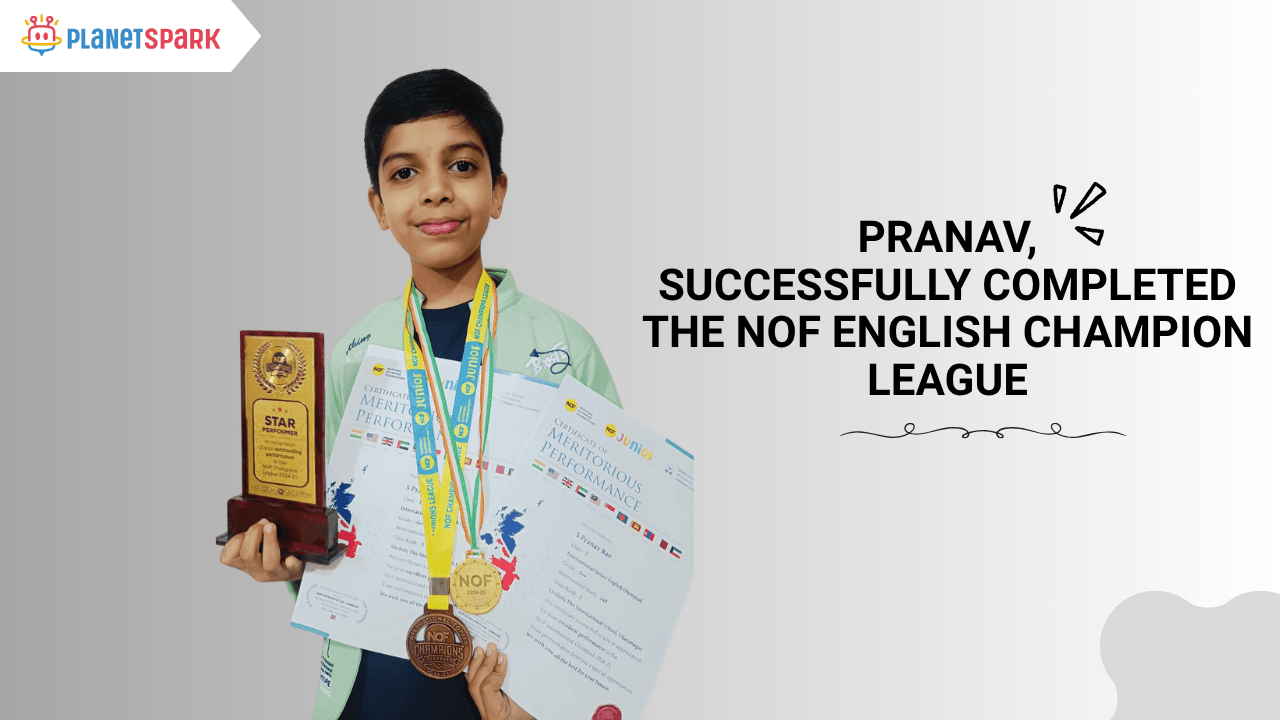
Pranav, a bright young learner, has successfully completed the NOF English Champion League, demonstrating exceptional skills in English grammar, sentence formation, and creative writing. His participation showcased not only his understanding of grammar rules but also his ability to apply them confidently in writing and public speaking.
Through this achievement, Pranav has proven his strong command over sentence structure, punctuation, and effective communication, making him a role model for peers aiming to excel in English language skills.
Conclusion: Building Strong Reading Skills with Phonic Blend Words
Learning phonic blend words is a key step in developing strong early reading skills. When children understand how sounds join together, reading becomes smoother, clearer, and more enjoyable. From recognizing beginning blend words to mastering ending blend words and consonant blend words, each stage helps learners read words confidently without guessing.
This blog explained what phonic blend words are, the different types, and how to blend words phonics using simple methods, examples, and fun practice ideas. With regular exposure to phonic words and consistent practice, children improve pronunciation, spelling, and overall reading fluency. At the same time, working professionals and parents gain clarity on how to support learning at home in a structured way.
Phonics is not about memorising rules. It is about listening, blending, and using sounds naturally in everyday reading. When learners build a strong foundation with phonics blend words, they are better prepared for advanced reading, writing, and communication skills in the future.
With the right guidance, practice, and encouragement, mastering phonic blend words becomes an achievable and rewarding journey for every learner.
“Fluent writing starts with fluent grammar!”
Start with PlanetSpark to improve sentence formation, punctuation, and writing fluency.
Frequently Asked Questions
Phonic blend words are words where two or more consonant sounds are joined together smoothly, so each sound can be heard clearly.
All phonic blend words are phonic words, but not all phonic words are blends. Blend words focus on combining two or more sounds without changing them.
The main types are beginning blend words (at the start), ending blend words (at the end), and consonant blend words (two consonants together anywhere).
They improve reading fluency, pronunciation, and spelling, and help children read confidently without guessing words.
Practice can include reading aloud, using word cards, blending sounds slowly, and playing interactive games with parents or teachers.
Yes, parents and beginners can use phonic blend words to guide children in reading, improve pronunciation, and understand English better.