
Present Tense Example with Rules, Types & Sentences
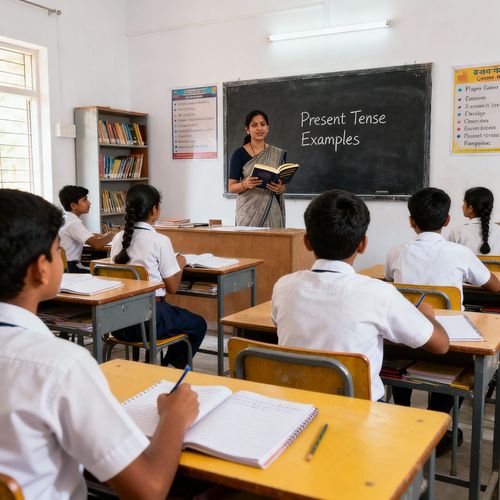

Understanding the present tense is essential to mastering English grammar. The present tense describes actions happening now, habitual actions, and universal truths. In this blog, we’ll explore present tense examples, their types, rules, and how to use them correctly in sentences. You’ll also find clear explanations, grammar tips, and examples that make learning simple and fun.
Understanding the Present Tense
The present tense expresses what is happening currently, what happens regularly, or what is generally true. It is one of the most commonly used verb tenses in English and forms the foundation of communication.
In simple terms, when we talk about daily activities or ongoing actions, we use the present tense.
Types of Present Tense
There are four main types of present tense in English grammar:
Simple Present Tense
Present Continuous Tense
Present Perfect Tense
Present Perfect Continuous Tense
Let’s explore each with clear present tense examples and usage.
1. Simple Present Tense
Definition:
The simple present tense describes habitual actions, general truths, or fixed arrangements.
Formula:
👉 Subject + Base Verb (V1) + s/es (for singular subjects)
Examples:
I go to school every day.
She plays the piano beautifully.
The sun rises in the east.
Usage:
To express habits or routines
To describe universal truths
To state facts and feelings
Pro Tip:
For third-person singular subjects (he, she, it), always add s or es to the verb.
2. Present Continuous Tense
Definition:
This tense describes actions happening right now or around the current time.
Formula:
👉 Subject + am/is/are + Verb-ing
Examples:
I am writing a blog.
They are watching a movie.
She is learning English grammar.
Usage:
To describe ongoing actions
To express temporary actions
To indicate planned future activities
Note:
The present continuous tense helps create a sense of immediacy and liveliness in your writing or speech.
3. Present Perfect Tense
Definition:
The present perfect tense connects past actions with the present. It’s used when the result of a past action is relevant now.
Formula:
👉 Subject + has/have + Past Participle (V3)
Examples:
I have completed my homework.
She has visited Paris twice.
They have lived here for five years.
Usage:
To describe experiences
To show completed actions with present importance
To talk about actions that started in the past and continue now
4. Present Perfect Continuous Tense
Definition:
It describes actions that started in the past and are still continuing.
Formula:
👉 Subject + has/have been + Verb-ing
Examples:
I have been studying English for two years.
He has been working here since 2020.
They have been playing football since morning.
Usage:
To show duration of an activity
To emphasize the continuity of an action
Rules for Using Present Tense Correctly
Use base verb for plural subjects (I, you, we, they).
Add s/es for singular subjects (he, she, it).
Use am/is/are with -ing form for ongoing actions.
Use has/have with past participles to connect past to present.
Avoid mixing tenses in one sentence unless context demands.
Examples of Common Errors:
❌ She go to school every day.
✅ She goes to school every day.
❌ I am study English.
✅ I am studying English.
Examples of Present Tense in Daily Life
Let’s look at how we use present tense examples in everyday communication:
| Situation | Example Sentence |
|---|---|
| Routine | I brush my teeth twice a day. |
| Ongoing Action | He is watching TV now. |
| Experience | We have visited the zoo. |
| Duration | They have been learning dance for three months. |
| Truth | Water boils at 100°C. |
Mastering these forms will make your English more natural and fluent.
Common Mistakes in Present Tense Usage
Forgetting the -s/es:
Incorrect: He read books every day.
Correct: He reads books every day.Using wrong helping verbs:
Incorrect: She have finished her work.
Correct: She has finished her work.Mixing tenses:
Incorrect: I am going to school yesterday.
Correct: I went to school yesterday.
Pro Tip:
Always identify time expressions like now, every day, since, and for to choose the right present tense.
Why Learning Present Tense Is Important
It improves your spoken English fluency.
It strengthens your writing skills by making sentences grammatically correct.
It helps in building strong communication foundations for professional and academic growth.
PlanetSpark English Grammar Course
The PlanetSpark English Grammar Course is designed to make grammar learning practical, engaging, and result-driven.
Interactive Grammar Learning – No Rote Learning
Grammar is taught through stories, dialogues, role plays, and error correction, ensuring real-world usage instead of memorization.
Gamified Learning Tools
Children engage with quizzes, puzzles, and grammar challenges that make learning grammar fun and effective.
Integrated Writing Practice
After every grammar lesson, students complete writing and sentence-building tasks to reinforce understanding.
Grammar Proficiency Levels
The course is structured from basic to advanced grammar concepts, including tenses, conditionals, passive voice, and reported speech.
Parent Reports on Grammar Skillsets
Parents receive reports tracking improvement in writing fluency, grammatical accuracy, structure, and creativity.
1:1 Personal Trainers for Every Child
Each student is paired with a certified communication expert who tailors lessons to their unique learning style, pace, and goals.
Immediate feedback during sessions
Focus on fluency, storytelling, and grammar
Personalized engagement and progress tracking
AI-Enabled Tools and Gamified Learning
With SparkX AI, students get real-time feedback on grammar, body language, and sentence flow , ensuring mastery through practice.
The Spark Diary helps kids develop consistent writing habits, while clubs and competitions encourage public speaking, writing, and creative expression.
Parental Involvement and Progress Reports
Parents receive comprehensive progress reports detailing grammar growth, fluency, writing skills, and confidence levels.
Speak, Write, and Shine with Confidence!
Mastering the present tense is your first step toward powerful English communication. From writing clear sentences to expressing thoughts fluently, understanding tenses builds confidence and clarity.At PlanetSpark, grammar isn’t just learned , it’s experienced. With AI-powered tools, gamified learning, and personal trainers, students gain lifelong communication skills.
You may also read:
Frequently Asked Questions
The present tense describes actions happening now, habitual routines, or universal truths.
They are: Simple Present, Present Continuous, Present Perfect, and Present Perfect Continuous.
Use stories, daily-life examples, and interactive grammar lessons like those at PlanetSpark for better retention.
It forms the base of all English communication — improving speaking, writing, and comprehension skills.