
Rearrange Words to Make Meaningful Sentences: Fun Practice Exercises
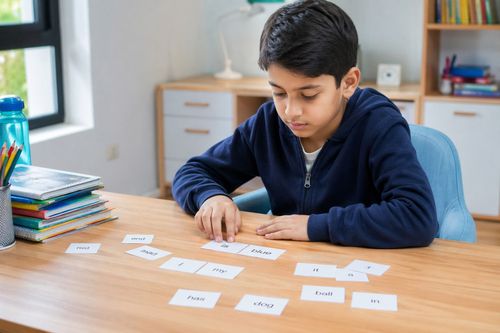

Table of Contents
- What is Sentence Rearrangement?
- Basic Rules of Word Order in English
- Types of Sentence Rearrangement Exercises
- Step-by-Step Method to Rearrange Words
- Jumbled Sentences Practice (20+ Exercises)
- Common Mistakes in Sentence Rearrangement
- Tips to Improve Sentence Formation Skills
- Fun Activities to Practice Word Order
- Why Sentence Rearrangement is Important
- Success Story
- About PlanetSpark : English Grammar
- Conclusion
Do you ever mix up words and struggle to form a correct sentence? Even a small mistake in word order can change the meaning completely. Learning how to rearrange the words to make meaningful sentences is a simple but powerful way to improve your English and speak with confidence.
In this blog, you will learn easy rules, fun sentence rearrangement exercises, and simple jumbled sentences practice to build your skills step by step. Platforms like PlanetSpark make this journey smoother by offering guided lessons, interactive activities, and expert feedback to help kids and students improve faster.
What is Sentence Rearrangement?
Sentence rearrangement means arranging jumbled or mixed-up words in the correct order to form a meaningful and complete sentence. It helps you understand how English sentences are structured and improves your grammar in a simple and effective way. This skill is very useful for building strong language basics.
Example:
- Jumbled: playing / is / she / garden / in / the
- Correct: She is playing in the garden
This skill helps you to:
- Speak English correctly and confidently in daily life
- Write clear, correct, and meaningful sentences
- Understand English faster while reading or listening
- Improve grammar and sentence structure step by step
Basic Rules of Word Order in English
To solve word order exercises easily, it is important to understand a few simple grammar rules. These rules help you arrange words in the correct order so that you can form clear, correct, and meaningful sentences in English. Once you learn these patterns, sentence rearrangement becomes much easier.
1. Basic Sentence Structure
Subject + Verb + Object
This is the most common and basic structure in English sentences. The subject is the person or thing doing the action, the verb is the action, and the object is the receiver of the action.
- Example: Ram eats mango.
Here Ram is the subject, eats is the verb, and mango is the object.
2. Position of Adjectives
Adjectives come before the noun they describe. Adjectives are words that tell us more about a person, place, or thing.
- Example: She has a beautiful dress.
Here beautiful describes the dress and is placed before the noun dress.
3. Use of Adverbs
Adverbs usually tell us how, when, or where an action happens. In simple sentences, adverbs often come after the main verb.
- Example: He runs quickly.
Here quickly tells us how he runs and comes after the verb runs.
4. Questions
In questions, the helping verb is placed at the beginning of the sentence. This helps turn a normal sentence into a question form.
- Example: Are you ready?
Here is the helping verb placed at the start.
5. Negative Sentences
To make a sentence negative, we use not after the helping verb. This changes the meaning of the sentence into its opposite.
- Example: She is not happy.
Here not is placed after the helping verb is to make the sentence negative.

Types of Sentence Rearrangement Exercises
Sentence rearrangement exercises are divided into different levels based on difficulty. Practicing all levels helps you improve grammar, sentence structure, and thinking skills step by step.
1. Simple Jumbled Sentences (Beginner)
These are easy sentences made with basic words. They help learners understand the correct word order and build confidence in forming sentences.
- Example:
is / my / this / book
✔ This is my book
In this level, sentences are short and usually follow a simple Subject Verb Object structure. It is perfect for beginners and young learners who are just starting with English grammar.
2. Moderate Level Sentences
These sentences are a little longer and include extra words like adjectives and adverbs. They help you understand how to arrange words in a more natural and meaningful way.
- Example:
quickly / ran / the / dog / park / in / the
✔ The dog ran quickly in the park
At this level, learners practice improving sentence flow and placing words in the correct position while maintaining meaning.
3. Complex Sentence Formation Activities
These are advanced sentences that include joining words like because, although, if, and when. They help improve logical thinking and understanding of sentence connections.
- Example:
because / late / he / missed / bus / the / was / he
✔ He missed the bus because he was late
These sentence formation activities help improve both grammar and thinking skills together. They are very useful for exams and advanced writing practice.
Step-by-Step Method to Rearrange Words
Follow this simple method to easily solve sentence rearrangement exercises and form correct and meaningful sentences. These steps will help you understand word order better and improve your English grammar with regular practice.
1. Find the Subject (Who or What)
First, identify who or what the sentence is about. This is the main person, place, or thing that is doing the action. The subject is the starting point of every sentence and helps you understand what the sentence is talking about. Look for names, pronouns like he, she, they, or nouns like boy, girl, or school.
2. Identify the Verb (Action Word)
Next, find the action word in the sentence. The verb tells what the subject is doing or what action is happening. Common verbs include eat, play, run, write, read, and sleep. Once you identify the verb, it becomes much easier to build the correct sentence structure.
3. Add the Object (What or Whom)
After finding the subject and verb, look for the object. The object is the person or thing that receives the action. It completes the meaning of the sentence. For example, in “Ram eats mango,” mango is the object that completes the action of eating.
4. Place Extra Words Correctly
Now arrange extra words like adjectives and adverbs in the correct place. Adjectives usually come before nouns and describe them, while adverbs usually come after verbs and describe how the action is done. Correct placement of these words makes the sentence clear and meaningful.
5. Read the Sentence Again to Check Meaning
Finally, read the complete sentence carefully to check if it sounds correct and meaningful. Make sure the sentence follows proper grammar and is easy to understand. If something feels wrong, adjust the word order until the sentence is perfect.
Jumbled Sentences Practice (20+ Exercises)
Practice these jumbled sentences to improve your grammar, word order, and sentence formation skills. Try solving them on your own first before checking the answers.
Beginner Level
is / she / happy
have / I / a / pen
playing / they / are
cat / the / sleeping / is
we / school / go / to
Intermediate Level
in / the / boy / park / playing / is
reading / she / book / a / is
quickly / he / runs
they / match / watching / are / a
teacher / the / explaining / is
Advanced Level
because / tired / he / slept / was / he
after / homework / finished / she / her / played
if / hard / you / succeed / work / you / will
when / arrived / I / he / left / had
although / raining / it / went / we / outside
Answers
- She is happy
- I have a pen
- They are playing
- The cat is sleeping
- We go to school
(Continue similarly for all answers…)
Want to improve your sentence formation faster: Join PlanetSpark and book a free demo class today.
Common Mistakes in Sentence Rearrangement
While solving sentence rearrangement exercises, students often make small mistakes that change the meaning of the sentence. Understanding these common errors can help you improve faster and form correct sentences easily.
Wrong Word Order: This happens when words are not arranged in the correct sequence. English follows a proper structure, and changing the order can make the sentence confusing or incorrect. Always follow Subject Verb Object order when possible.
Missing Articles (a, an, the): Articles are small words but very important in English. Many learners forget to use them, which makes sentences sound incomplete. Using a, an, and the correctly improves sentence clarity.
Incorrect Verb Placement: Verbs must be placed correctly according to the sentence structure. If the verb is placed in the wrong position, the sentence loses its meaning or sounds unnatural. Always identify the main action first.
Ignoring Subject-Verb Agreement: The subject and verb must match in number. A singular subject takes a singular verb, and a plural subject takes a plural verb. Ignoring this rule leads to grammar errors and incorrect sentences.
Tips to Improve Sentence Formation Skills
If you want to improve your sentence formation skills quickly, you need regular practice and the right learning habits. These simple tips will help you build strong grammar and form correct sentences with confidence.
Practice Daily Jumbled Sentences: Solve jumbled sentences every day to improve your word order and grammar. Regular practice helps you understand sentence structure better and makes rearranging words easier over time.
Read Simple English Books: Reading helps you see how correct sentences are formed. Start with easy books or short stories to learn new words and sentence patterns naturally.
Speak in English Every Day: Try to speak English in daily life, even if it is simple. Speaking regularly improves your confidence and helps you use correct sentence structure automatically.
Write Small Sentences Regularly: Practice writing short and simple sentences every day. This improves your grammar, spelling, and ability to form meaningful sentences.
Use Guided Learning Platforms like PlanetSpark: Learning with expert support makes a big difference. Platforms like PlanetSpark offer structured lessons, interactive practice, and feedback to help kids and students improve faster and build strong English skills.
Fun Activities to Practice Word Order
Learning doesn’t have to be boring!
Try these:
- Sentence-building games: Fun activities where you arrange words in the correct order to form meaningful sentences. These games improve speed, grammar, and thinking skills.
- Flashcards: Cards with different words that you need to arrange in the correct sentence. This makes learning interactive, simple, and easy to remember.
- Group classroom activities: Learning in groups helps you discuss, solve, and build sentences together. It also improves communication and teamwork skills.
- Online quizzes: Digital quizzes that test your sentence formation skills with instant results. They make practice fun and engaging.
These fun word order exercises make learning enjoyable for kids and students.
Why Sentence Rearrangement is Important
Sentence rearrangement is an important English skill that helps you understand how words are used to form correct and meaningful sentences. It improves both your grammar and overall communication skills.
- School exams: It helps you answer grammar questions correctly and score better marks in English tests.
- Competitive exams: This skill is often asked in exams and helps improve accuracy and speed.
- Better communication: It allows you to speak and express your thoughts clearly and confidently.
- Writing emails and essays: It improves your writing skills, making your sentences more clear, structured, and professional.
Success Story
Rohan, a 10-year-old student, used to struggle a lot with English sentences. He often got confused while solving jumbled sentences practice in school and made mistakes in word order. His confidence was low, and he avoided speaking English in class. After joining structured learning sessions on PlanetSpark, he started practicing sentence rearrangement exercises daily with fun activities and guided support.
Within a few weeks, Rohan noticed a big improvement. He began forming correct sentences easily and even started speaking English confidently in front of his classmates. His grammar improved step by step, and he scored much better in exams. Today, Rohan enjoys learning English and feels more confident in both speaking and writing, all because of regular practice and the right guidance from PlanetSpark.

About PlanetSpark : English Grammar
PlanetSpark helps children master English grammar with clarity, accuracy, and confidence through engaging 1:1 live classes. Our English Grammar Program strengthens sentence construction, tense usage, vocabulary, and writing skills helping kids communicate correctly and effectively in school and everyday life.
1. 1:1 Expert Coaching
Each child is guided by a certified trainer who personalises lessons to their learning style and pace ensuring a strong grasp of grammar rules and accurate usage.
2. Personalised Learning Path
A customised curriculum identifies each learner’s gaps and gradually builds skills in tenses, sentence structure, parts of speech, and punctuation taking them from basic grammar to mastery.
3. AI-Powered Grammar Feedback
With SparkX and AI-led practice exercises, students receive instant feedback on sentence accuracy, punctuation, and word usage making improvement measurable and consistent.
4. Interactive & Gamified Learning
Engaging modules like Grammar Guru, Sentence Builder, and Daily Quizzes make learning grammar fun, motivating kids to practise daily while reinforcing concepts.
5. Confidence in Writing & Communication
Through structured exercises, storytelling, and writing practice, children develop the confidence to write and speak grammatically correct English in every context.
Conclusion
Learning how to rearrange the words to make meaningful sentences is an essential skill that improves both speaking and writing. With regular practice of sentence rearrangement exercises, you can easily build strong grammar basics and confidence. Start with simple sentences, practice daily, and gradually move to more advanced levels. For better results, platforms like PlanetSpark provide structured learning, expert guidance, and fun practice sessions to help kids and students learn faster.
Frequently Asked Questions
Sentence rearrangement is the process of arranging jumbled or mixed-up words in the correct order to form a meaningful and complete sentence. It helps improve grammar and sentence structure.
You can rearrange words easily by first identifying the subject, then the verb, and finally the object. After that, place adjectives and adverbs correctly and check if the sentence makes sense.
These exercises help improve grammar, word order, and communication skills. They also make it easier to speak and write correct English in daily life and exams.
Common mistakes include wrong word order, missing articles (a, an, the), incorrect verb placement, and ignoring subject-verb agreement. These can make sentences incorrect or confusing.
Students can improve by practicing jumbled sentences daily, reading simple English books, speaking regularly, writing short sentences, and using guided learning platforms.