
Relative Pronouns Examples to Improve Grammar with PlanetSpark
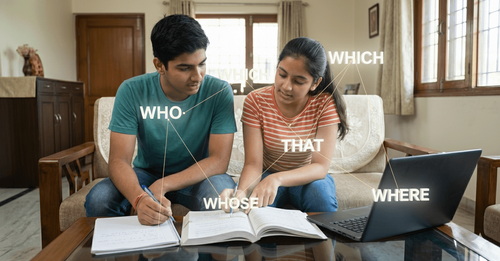

Table of Contents
- What Are Relative Pronouns?
- Relative Pronouns Examples Explained Clearly
- Types of Relative Clauses with Examples
- Common Errors Students Make
- How to Use Relative Pronouns in Writing and Speaking
- Teaching Relative Pronouns to Children
- Why Students Struggle with Relative Pronouns
- Importance of Practice in Grammar Learning
- Long-Term Benefits of Learning Relative Pronouns
- PlanetSpark Vocabulary Classes to International Achievements
- Learn Grammar the Smart Way with PlanetSpark
- Conclusion
Grammar becomes strong when learners understand how sentences connect. Relative pronouns examples play an important role in this process. Many students struggle with sentence formation because they repeat words or break ideas into short lines. Relative pronouns solve this issue. They connect ideas. They reduce repetition. They make communication clear. This blog explains relative pronouns examples in simple language. It uses short sentences. It avoids complex terms. It focuses on correct usage in daily English.
Learning grammar does not need fear. It needs clarity and practice. When students read and use relative pronouns examples, they gain confidence in writing and speaking. This guide explains rules, shows usage, highlights mistakes, and supports learners step by step.
What Are Relative Pronouns?
Many learners ask, what are relative pronouns and why teachers stress them so much. Relative pronouns connect a clause to a noun. They give extra information about that noun. They help sentences flow smoothly.
Relative pronouns include who, whom, whose, which, and that. Each pronoun has a clear role. Learners must choose the right one based on meaning.
Example:
She met the teacher who helped her improve grammar.
The word “who” refers to “teacher.” It adds information without repeating the noun.
Why Relative Pronouns Matter
Relative pronouns help learners:
- Combine ideas
- Avoid repeating words
- Write longer sentences
- Speak with clarity
Without them, English sounds broken and unclear.
Relative Pronouns Examples Explained Clearly
Rules feel easy when learners see real sentences. This section explains relative pronouns examples using simple words.
Examples of Relative Pronouns Used for People
Use “who” and “whom” when you talk about people.
- She is the student who won the award.
- He is the coach whom the team respects.
“Who” works as a subject.
“Whom” works as an object.
Many learners avoid “whom,” but it still matters in formal writing.
Examples of Relative Pronouns Showing Possession
Use “whose” to show ownership.
- I met the writer whose story inspired me.
- She knows a child whose skills improved fast.
“Whose” works for people and things.

Examples of Relative Pronouns Used for Things
Use “which” and “that” for objects and ideas.
- This is the lesson that builds grammar accuracy.
- I bought a book which explains sentence structure.
These are clear examples of relative pronouns in daily use.
Relative Pronouns Examples Sentences for Daily Practice
Below are relative pronouns examples sentences learners can practice daily:
- She joined the class that focuses on grammar.
- He met the mentor who guided him well.
- This is the app which helps children learn English.
- I thanked the teacher whose advice helped me.
Reading and speaking these sentences helps learners remember usage.
Types of Relative Clauses with Examples
Relative clauses have two types. Each type changes sentence meaning.
Defining Relative Clauses
Defining clauses give essential information. Without them, meaning changes. Do not use commas.
Example:
Students who practice grammar daily improve faster.
The clause tells which students.
Non-Defining Relative Clauses
Non-defining clauses add extra details. You can remove them without changing meaning. Use commas.
Example:
My teacher, who teaches English grammar, supports me well.
Difference Between Defining and Non-Defining Clauses
Defining clauses identify the noun.
Non-defining clauses describe the noun.
Understanding this difference helps learners avoid punctuation errors.
Common Errors Students Make
Students often repeat the same mistakes while using relative pronouns. These errors affect sentence clarity and grammar accuracy. Most of these mistakes happen due to confusion between rules and lack of regular practice. Understanding these errors helps learners avoid them and improve sentence formation.
Wrong Pronoun Choice
One of the most common mistakes involves choosing the wrong relative pronoun. Students often use “which” instead of “who” while referring to people. This error happens because learners try to apply one rule everywhere.
Wrong: She is the teacher which helped me.
Right: She is the teacher who helped me.
The word “who” refers to a person. “Which” refers to things or ideas. Mixing these two pronouns makes the sentence grammatically incorrect. Students must first identify whether the noun refers to a person or an object before selecting the pronoun.
Extra Pronoun Use
Another frequent error involves using an extra subject pronoun in the relative clause. Many students feel the sentence sounds incomplete without it, so they add words like “she” or “he” again.
Wrong: She is the girl who she won the prize.
Right: She is the girl who won the prize.
The relative pronoun already replaces the subject. Adding another pronoun creates confusion and breaks grammar rules. Students must remember that the relative pronoun itself performs the role of the subject or object.
Missing Relative Pronoun
Some students remove the relative pronoun completely. While this works in casual speech, it weakens formal writing and confuses beginners.
Wrong: This is the book I read yesterday.
Right: This is the book that I read yesterday.
Including the relative pronoun improves sentence clarity and structure. It helps learners understand how ideas connect.
Why These Errors Continue
These mistakes continue because students do not practice enough sentence construction. They also focus more on rules than usage. Grammar improves when learners write and speak complete sentences regularly.
How to Avoid These Mistakes
Students must read example sentences daily. They must practice writing short sentences using relative pronouns. Teachers must correct mistakes instantly. With regular practice and feedback, students learn faster and gain confidence.
Consistent practice removes these errors and strengthens grammar accuracy.
How to Use Relative Pronouns in Writing and Speaking
Grammar learning succeeds when learners apply rules.
Relative Pronouns in Writing Skills
Relative pronouns help writers connect ideas smoothly.
Example without relative pronoun:
She met a teacher. The teacher helped her.
Correct sentence:
She met a teacher who helped her.
The second sentence sounds complete and clear.
Relative Pronouns in Essay Writing
Essays need structured sentences. Relative pronouns help students explain ideas clearly.
Example:
Online classes that focus on speaking help students gain confidence.
Such sentences improve exam scores.
Relative Pronouns in Spoken English
Speaking needs flow. Relative pronouns help speakers explain ideas in one sentence.
Example:
I like the course that improves communication skills.
This sentence sounds confident and natural.
Tips to Master Relative Pronouns
Learners can follow these steps:
- Read example sentences aloud
- Write one sentence daily
- Replace repeated nouns
- Check pronoun usage
Small steps bring strong grammar skills.
Teaching Relative Pronouns to Children
Children learn grammar faster with examples. Rules confuse them. Stories and examples help more.
Example for children:
This is the cat that loves milk.
Children understand meaning quickly through such sentences.
Teachers must guide practice. Parents must encourage speaking at home.
Why Students Struggle with Relative Pronouns
Many students struggle because:
- Teachers focus on rules only
- Students lack speaking practice
- Feedback comes late
Guided learning solves these problems.
Importance of Practice in Grammar Learning
Grammar improves through repetition. Students must use grammar daily. Practice builds confidence.
Short daily practice works better than long sessions.
Long-Term Benefits of Learning Relative Pronouns
Strong grammar supports:
- Essay writing
- School exams
- Public speaking
- Daily communication
Teachers notice clear sentence structure. Students gain confidence.
PlanetSpark Vocabulary Classes to International Achievements

Advaith Gupta – Spelling His Way to Global Recognition! From mastering vocabulary to shining at SpellBee International, Advaith creates remarkable achievements.
Learn Grammar the Smart Way with PlanetSpark
Grammar learning needs structure and support. Practice needs feedback. That is where PlanetSpark helps learners grow.
PlanetSpark offers live online classes. Expert teachers guide each session. Students practice grammar through speaking, reading, and writing. Teachers correct errors instantly. This helps students improve fast.
PlanetSpark uses real-life topics. Students use relative pronouns examples during discussions and presentations. This improves understanding and memory. Lessons follow a structured curriculum based on age and skill level.
Parents receive regular progress updates. Students gain confidence in school exams and daily communication. PlanetSpark focuses on skill building, not memorization.
Grammar becomes simple when learning feels engaging. PlanetSpark creates that learning environment.
PlanetSpark focuses on:
- Live interaction
- Personal feedback
- Speaking-based grammar practice
- Structured lesson plans
Students learn grammar in context. They apply rules naturally.
Conclusion
Grammar accuracy grows with regular practice. Relative pronouns help learners connect ideas clearly. This blog explained rules using relative pronouns examples that students can apply daily. Consistent practice builds strong grammar skills.
With expert guidance and structured learning, students improve faster. Platforms like PlanetSpark support this journey with live classes and instant feedback. Start practicing today and strengthen grammar step by step.
Frequently Asked Questions
PlanetSpark develops grammar, speaking, and writing skills together. This balanced approach supports long-term learning. Students gain confidence in school and daily communication. Consistent practice leads to lasting improvement.
PlanetSpark focuses on using grammar in real conversations. Students apply rules instead of memorizing them. Structured lessons guide learners step by step. Continuous feedback helps students improve faster.
PlanetSpark conducts live online classes with trained English experts. Students practice grammar through speaking and writing tasks. Teachers correct errors instantly during sessions. This approach improves accuracy and confidence.
Daily practice builds habit and confidence in sentence formation. It helps learners remember correct usage. Regular practice also reduces common grammar mistakes. Over time, students communicate more clearly and accurately.
Relative pronouns help learners connect ideas in one sentence. They improve sentence flow and reduce broken or repetitive lines. Correct usage shows clear thinking and strong grammar control. This skill supports both writing and speaking.
Relative pronouns connect a clause to a noun and add extra information. They help avoid repetition and make sentences clear. Common relative pronouns include who, which, and that. For example, “She met a teacher who helped her learn grammar.”