
NCERT Class 11 Conic Sections: Formulas, Types, and Examples


Table of Contents
- What are Conic Sections?
- Types of Conic Sections – Overview
- Circle
- Parabola
- Ellipse
- Hyperbola
- Comparison Table: Circle vs Parabola vs Ellipse vs Hyperbola
- Real-Life Applications of Conic Sections
- Common Mistakes Students Make
- Practice Questions (Category-Wise)
- Most Expected Exam Questions
- Why Learn with PlanetSpark
- Master the Curves, Master the Chapter
Ever noticed how a cricket ball follows a curved path, or how satellite dishes perfectly capture signals? These shapes aren’t random—they’re conic sections. In Class 11 Maths, conic sections form a crucial chapter that builds your foundation for coordinate geometry and competitive exams. In simple terms, they are curves formed by slicing a cone at different angles. In this blog, you’ll learn all types, formulas, concepts, solved examples, and practice questions—explained in the easiest way possible for exams.
What are Conic Sections?
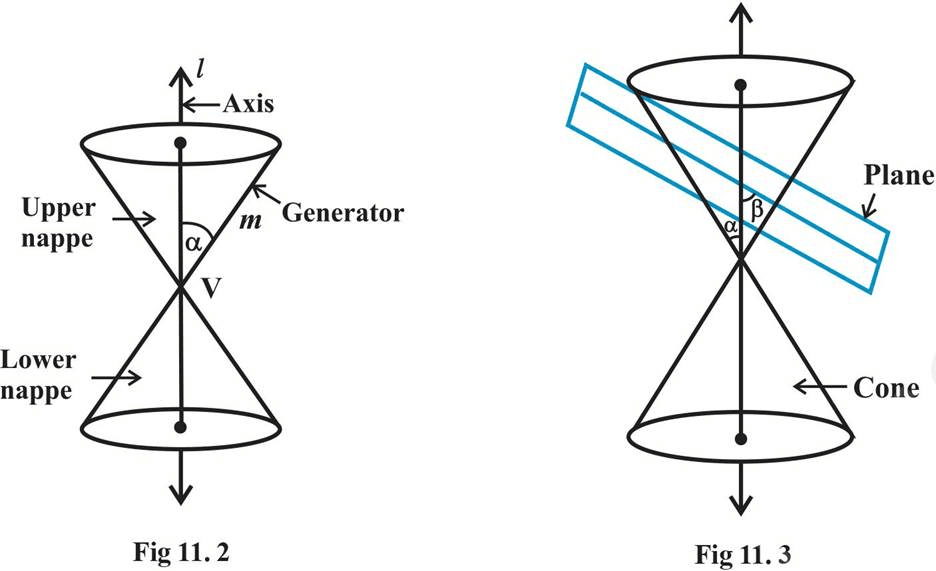
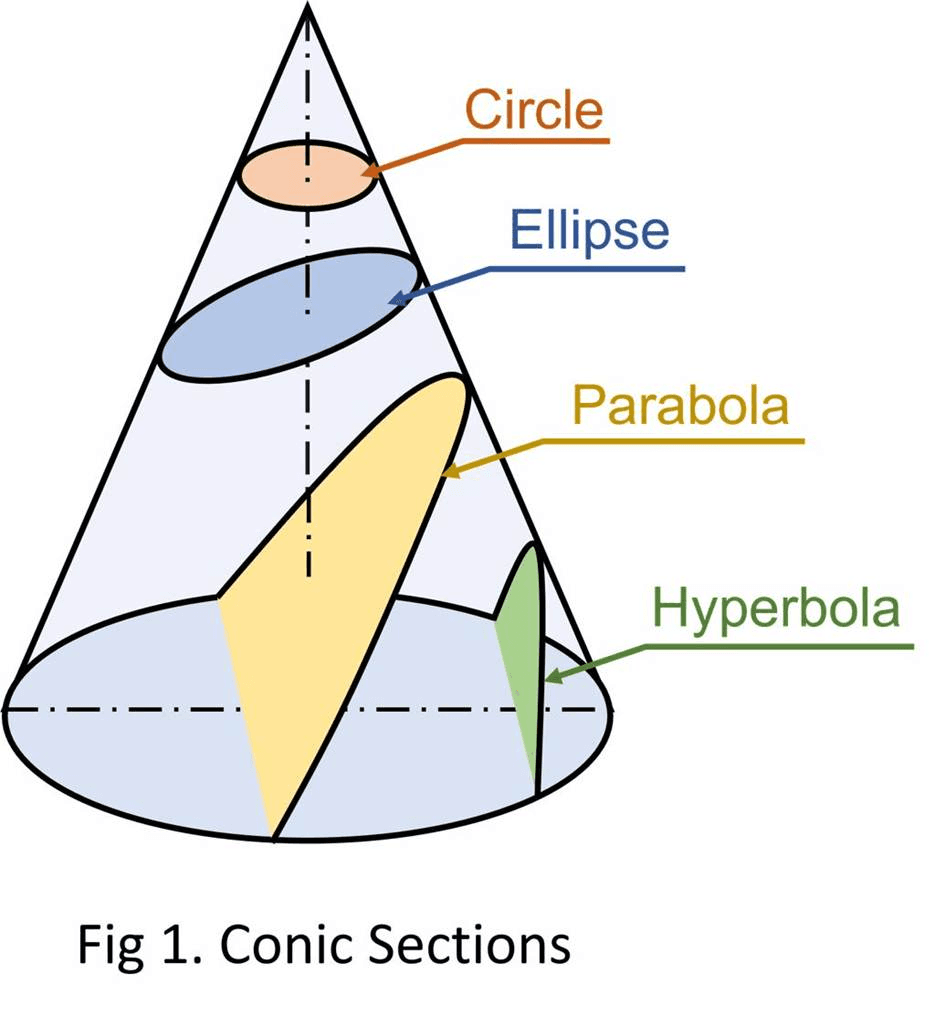
Conic sections are the curves obtained when a plane intersects a double-napped right circular cone at different angles. This is the fundamental definition given in NCERT and forms the base of the entire chapter.
To understand this clearly, let’s break down the structure of a cone:
- Vertex: The fixed point where the two nappes of the cone meet.
- Axis: The vertical line passing through the vertex, around which the cone is symmetric.
- Generator: A slant line that rotates around the axis to form the cone.
- Nappes: The cone has two identical parts—upper and lower—called nappes.
Now, the type of curve formed depends on the angle (β) made by the intersecting plane with the axis of the cone, and the angle (α) made by the generator.
- If β = 90°, the section is a circle.
- If α < β < 90°, the section is an ellipse.
- If β = α, the section is a parabola.
- If β < α, the plane cuts both nappes and forms a hyperbola.

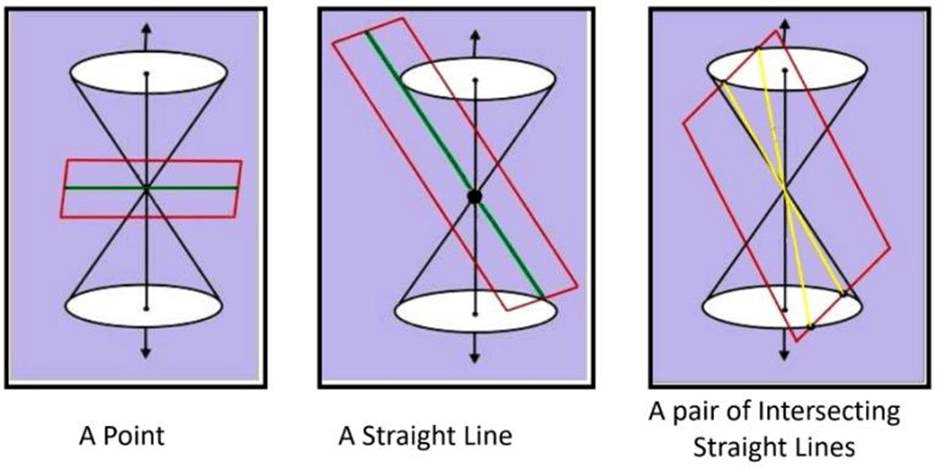
Degenerate Conics
When the plane passes through the vertex, special cases arise called degenerate conics:
- A point (when the plane touches only the vertex)
- A line (when the plane coincides with a generator)
- A pair of intersecting lines (when it cuts both nappes through the vertex)
These are simplified or “collapsed” forms of standard conics.
Types of Conic Sections – Overview
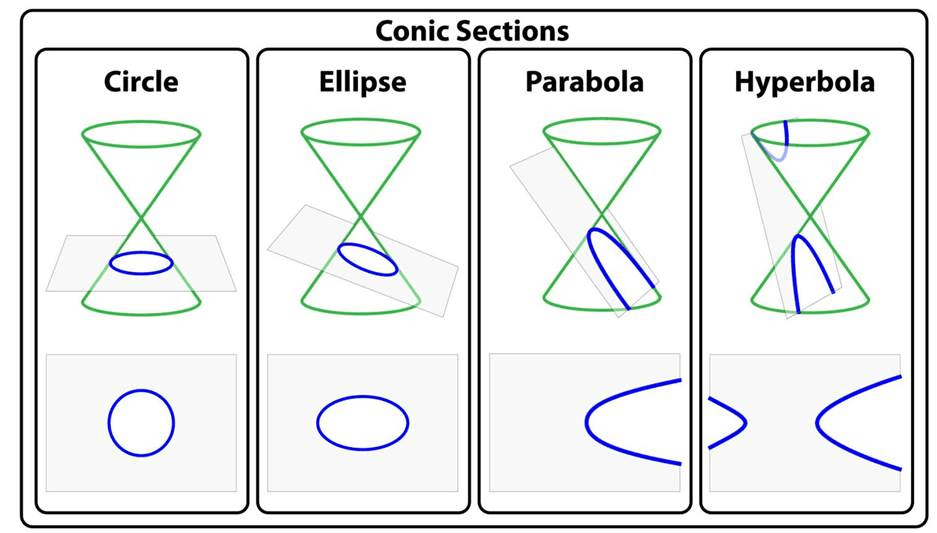
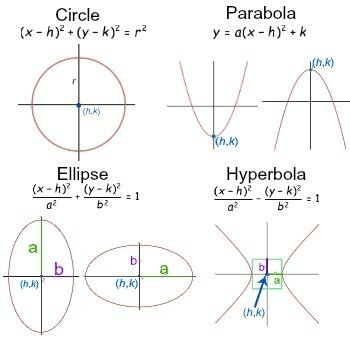
There are four main types of conic sections you’ll study in Class 11:
- Circle: A set of all points equidistant from a fixed point (centre).
- Parabola: A curve where each point is equidistant from a fixed point (focus) and a fixed line (directrix).
- Ellipse: A set of points where the sum of distances from two fixed points (foci) is constant.
- Hyperbola: A curve where the difference of distances from two fixed points (foci) is constant.
Also Read
Quick Comparison Insight
- A circle is the simplest conic with perfect symmetry.
- A parabola represents transition (boundary case).
- An ellipse is a stretched circle (closed curve).
- A hyperbola is an open curve with two branches.
Understanding these differences helps you quickly identify equations in exams and avoid confusion.
Circle
Definition
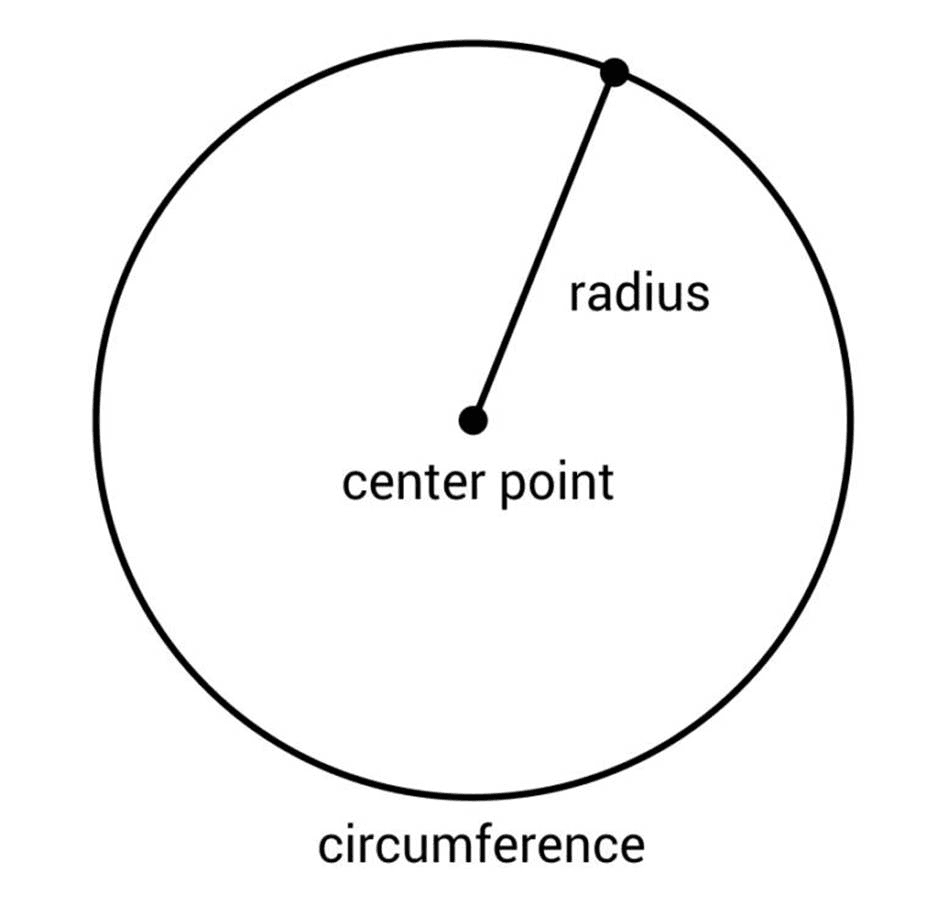
A circle is the set of all points in a plane that are at a constant distance from a fixed point.
- The fixed point is called the centre.
- The constant distance is called the radius.
This is the simplest type of conic section and is highly scoring in exams.
Standard Equation
The standard equation of a circle is:
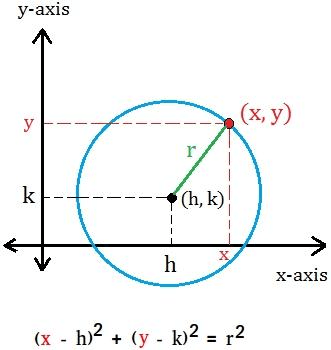
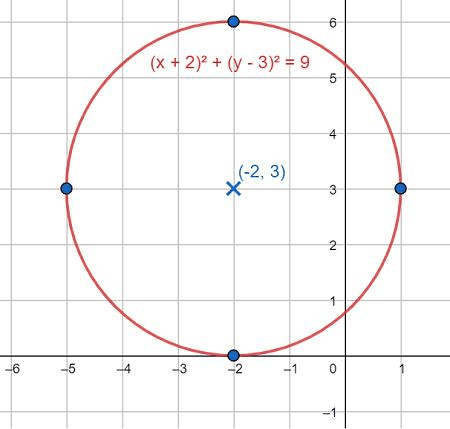
(x − h)² + (y − k)² = r²
Where:
- (h, k) = centre of the circle
- r = radius
If the centre is at the origin (0, 0), the equation becomes:
x² + y² = r²
Key Concepts
- Centre (h, k): The fixed point from which all points on the circle are equidistant.
- Radius (r): The distance from the centre to any point on the circle.
- Every point (x, y) on the circle satisfies the equation.
Book Your Free Math Class Today!
Solved Examples
Example 1:
Find the equation of a circle with centre (0, 0) and radius 5.
Solution:
Using formula: x² + y² = r²
⇒ x² + y² = 25
Example 2:
Find the equation of a circle with centre (−3, 2) and radius 4.
Solution:
(x − (−3))² + (y − 2)² = 16
⇒ (x + 3)² + (y − 2)² = 16
Example 3:
Find the centre and radius of:
x² + y² + 8x + 10y − 8 = 0
Solution:
Group terms:
(x² + 8x) + (y² + 10y) = 8
Complete the square:
(x + 4)² + (y + 5)² = 49
Centre = (−4, −5), Radius = 7
Exam Tips
- Always remember: centre comes with opposite sign in the equation.
- For general equations, use completing the square method.
- Quickly identify radius using r².
- If coefficient of x² and y² are not equal → it’s not a circle.
Mastering circles helps you build a strong base for all other conic sections.
Parabola
Definition
A parabola is the set of all points in a plane that are equidistant from a fixed point and a fixed line.
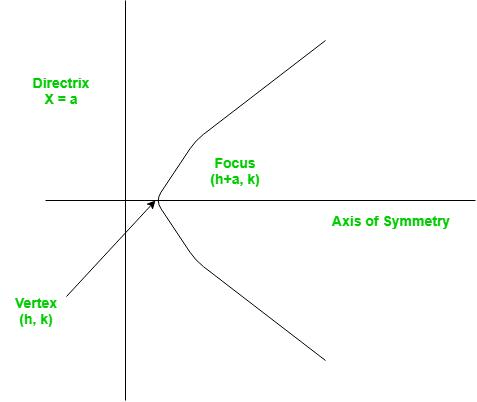
- The fixed point is called the focus.
- The fixed line is called the directrix.
This definition is extremely important and is the base for deriving all formulas.
Key Terms
- Focus (F): Fixed point inside the curve.
- Directrix: Fixed line outside the curve.
- Vertex: The point where the parabola changes direction (turning point).
- Axis: A line passing through the vertex and focus; it divides the parabola into two equal halves.
The parabola is always symmetric about its axis.
Also Read
Standard Equations
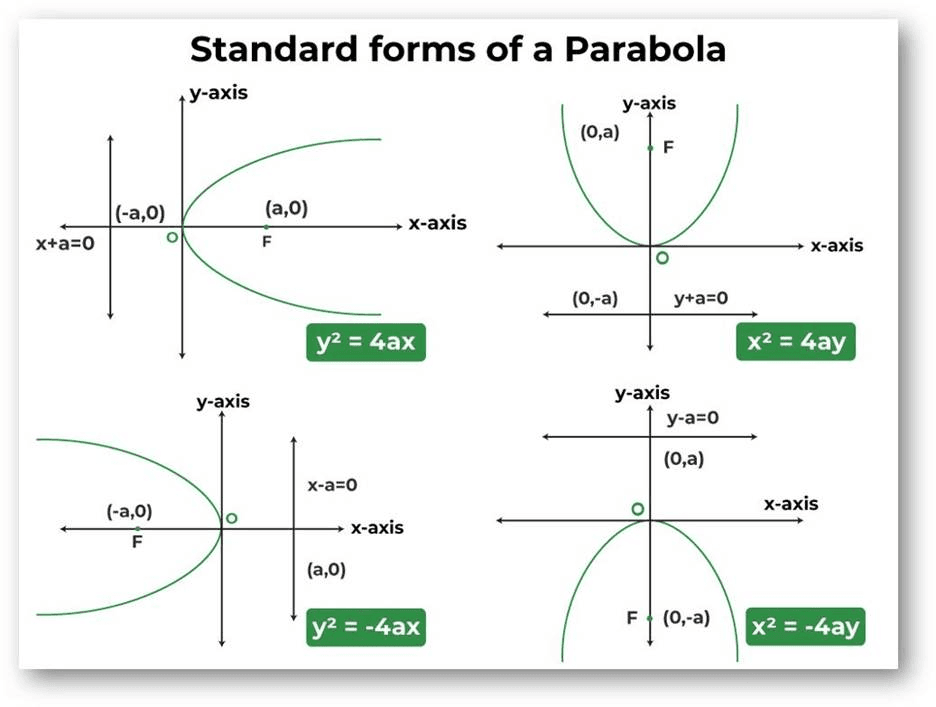
Depending on orientation, there are four standard forms:
- y² = 4ax → Opens right
- y² = −4ax → Opens left
- x² = 4ay → Opens upward
- x² = −4ay → Opens downward
Where a is the distance between the vertex and the focus.
Orientation Rules
- If the equation contains y², the axis is along the x-axis.
- If the equation contains x², the axis is along the y-axis.
Direction depends on sign:
- Positive → Right or Upward
- Negative → Left or Downward
Quick trick:
- y² = 4ax → horizontal parabola
- x² = 4ay → vertical parabola
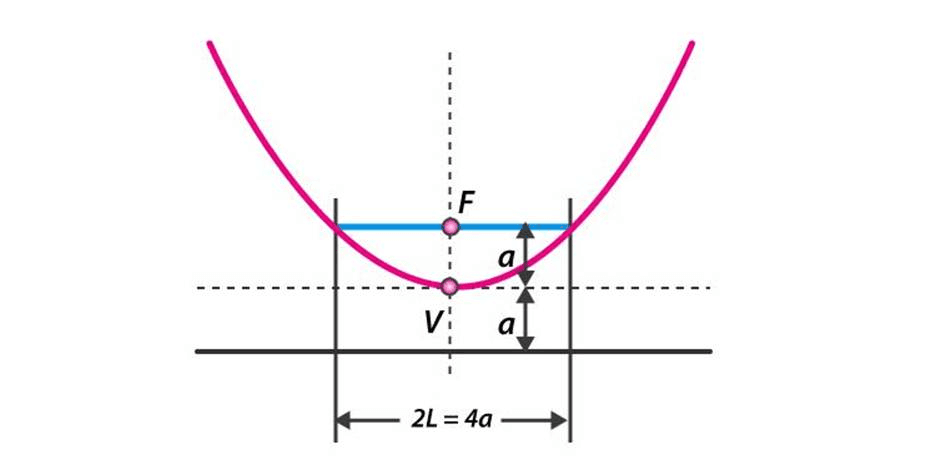
Latus Rectum
The latus rectum is a line segment passing through the focus and perpendicular to the axis.
- Length of latus rectum = 4a
It is an important exam formula and frequently asked.
Solved Examples
Example 1:
Find focus, directrix, and latus rectum of y² = 8x
Solution:
Compare with y² = 4ax
⇒ 4a = 8 ⇒ a = 2
- Focus = (2, 0)
- Directrix = x = −2
- Latus rectum = 4a = 8
Example 2:
Find the equation of parabola with focus (2, 0) and directrix x = −2
Solution:
Axis is along x-axis → use y² = 4ax
Here, a = 2
⇒ Equation = y² = 8x
Example 3:
Find the equation of parabola with vertex (0,0) and focus (0, 3)
Solution:
Axis is along y-axis → use x² = 4ay
⇒ a = 3
⇒ Equation = x² = 12y
Example 4:
Find equation of parabola symmetric about y-axis passing through (2, −3)
Solution:
Form: x² = −4ay (since it opens downward)
Substitute (2, −3):
4 = −4a(−3)
⇒ 4 = 12a
⇒ a = 1/3
⇒ Equation = x² = −4(1/3)y
⇒ 3x² = −4y
Final Insight:
Parabola is a bridge between circle and other conics. Once you understand its orientation and formulas, solving questions becomes quick and scoring.
Ellipse
Start Your Free Math Demo Class Now
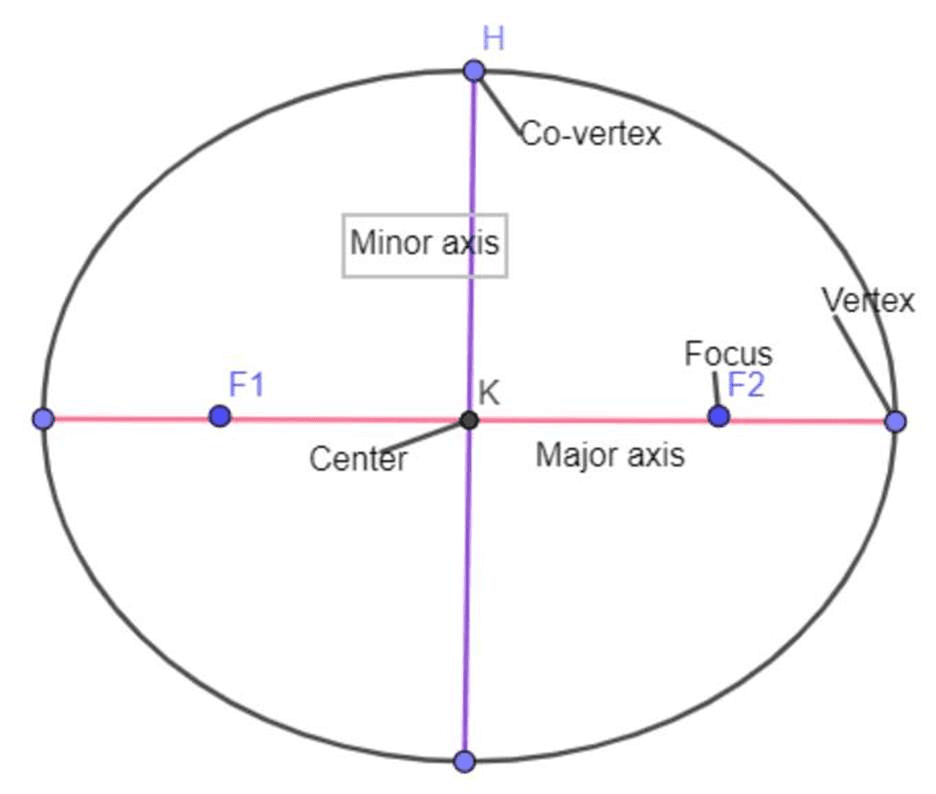
Definition
An ellipse is the set of all points in a plane such that the sum of distances from two fixed points is constant.
- These fixed points are called foci (plural of focus).
Think of an ellipse as a “stretched circle.” Unlike a circle (one centre), an ellipse has two centres of influence (foci).
Key Terms
- Foci: Two fixed points inside the ellipse.
- Centre: Midpoint of the line joining the foci.
- Major Axis: The longest diameter passing through the foci.
- Minor Axis: The shortest diameter perpendicular to the major axis.
- Vertices: Endpoints of the major axis.
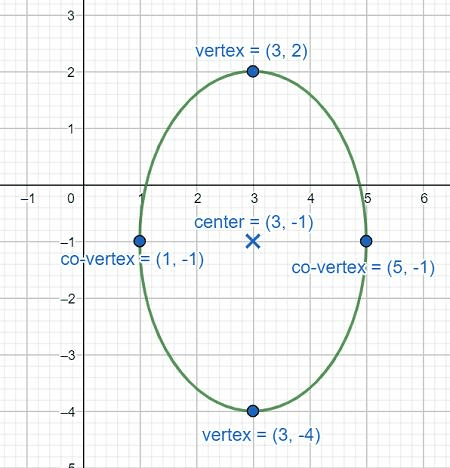
If the major axis is horizontal → ellipse stretches left-right
If vertical → ellipse stretches up-down
Standard Equations
There are two standard forms depending on orientation:
- x²/a² + y²/b² = 1 (a > b)
- Major axis along x-axis
- x²/b² + y²/a² = 1 (a > b)
- Major axis along y-axis
Where:
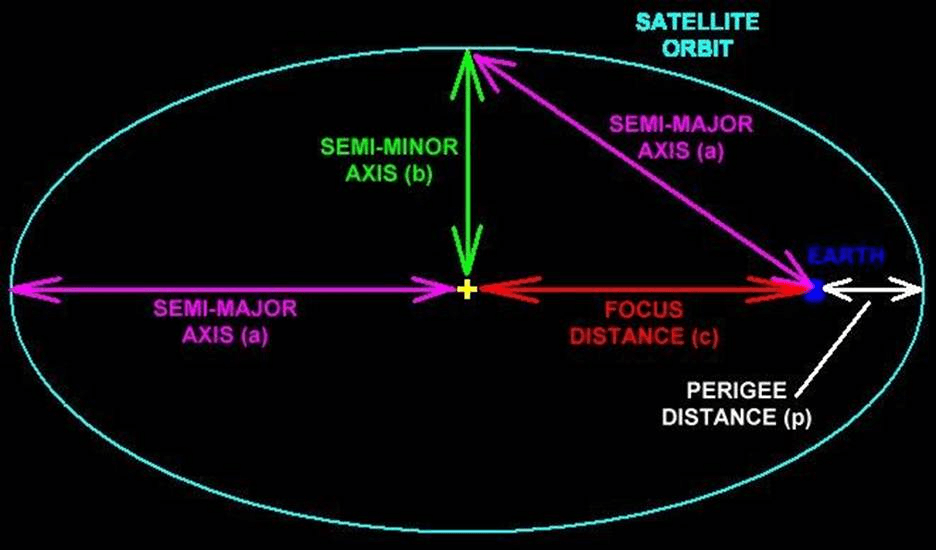
- a = semi-major axis
- b = semi-minor axis
Important Relations
- c² = a² − b²
(distance of focus from centre) - e = c/a (eccentricity)
Key idea:
- For ellipse, e < 1
- Smaller e → shape closer to circle
- Larger e → more stretched ellipse
Latus Rectum
The latus rectum of an ellipse is a line passing through the focus and perpendicular to the major axis.
- Length of latus rectum = 2b²/a
Frequently asked in exams, especially in numerical questions.
Solved Examples
Example 1:
Find foci, vertices, and eccentricity of:
x²/25 + y²/9 = 1
Solution:
Compare with x²/a² + y²/b² = 1
⇒ a = 5, b = 3
c² = 25 − 9 = 16 ⇒ c = 4
- Foci = (±4, 0)
- Vertices = (±5, 0)
- Eccentricity = 4/5
Example 2:
Find equation of ellipse with vertices (±13, 0) and foci (±5, 0)
Solution:
a = 13, c = 5
c² = a² − b²
⇒ 25 = 169 − b²
⇒ b² = 144
⇒ Equation: x²/169 + y²/144 = 1
Example 3:
Find equation of ellipse with major axis along y-axis, a = 3, b = 2
Solution:
Use form: x²/b² + y²/a² = 1
⇒ x²/4 + y²/9 = 1
Example 4:
Find eccentricity of ellipse: 9x² + 4y² = 36
Solution:
Convert to standard form:
x²/4 + y²/9 = 1
⇒ a = 3, b = 2
c² = 9 − 4 = 5 ⇒ c = √5
⇒ e = √5 / 3
Try a Free Math Class with Expert Teachers
Final Insight
Ellipse is extremely important for exams and real-life applications (like planetary motion). Focus on:
- Identifying a and b correctly
- Using c² = a² − b² without mistakes
- Understanding orientation
Once these are clear, most questions become direct and scoring.
Hyperbola
Definition
A hyperbola is the set of all points in a plane such that the difference of distances from two fixed points is constant.
- These fixed points are called the foci.
Unlike an ellipse (closed curve), a hyperbola is an open curve with two separate branches.
Key Terms
- Foci: Two fixed points that define the curve.
- Centre: Midpoint of the foci.
- Transverse Axis: Line passing through the foci and vertices (main axis).
- Conjugate Axis: Line perpendicular to the transverse axis through the centre.
- Vertices: Points where the curve intersects the transverse axis.
The hyperbola is symmetric about both axes.
Standard Equations
There are two standard forms:
- x²/a² − y²/b² = 1
- Transverse axis along x-axis
- Opens left and right
- y²/a² − x²/b² = 1
- Transverse axis along y-axis
- Opens upward and downward
Where:
- a = distance from centre to vertex
- b = related to conjugate axis
Important Relations
- c² = a² + b²
(distance of focus from centre) - e = c/a (eccentricity)
Key idea:
- For hyperbola, e > 1
- This helps distinguish it from ellipse (e < 1) and parabola (e = 1)
Latus Rectum
The latus rectum is a line segment passing through the focus and perpendicular to the transverse axis.
- Length of latus rectum = 2b²/a
Important for numerical problems.
Solved Examples
Example 1:
Find foci, vertices, and eccentricity of:
x²/9 − y²/16 = 1
Solution:
Compare with standard form:
a = 3, b = 4
c² = 9 + 16 = 25 ⇒ c = 5
- Foci = (±5, 0)
- Vertices = (±3, 0)
- Eccentricity = 5/3
Example 2:
Find equation of hyperbola with vertices (±2, 0) and foci (±3, 0)
Solution:
a = 2, c = 3
c² = a² + b²
⇒ 9 = 4 + b²
⇒ b² = 5
⇒ Equation: x²/4 − y²/5 = 1
Book Your Free Math Demo Class Today!
Example 3:
Find equation of hyperbola with transverse axis along y-axis, a = 4, b = 1
Solution:
Use form: y²/a² − x²/b² = 1
⇒ y²/16 − x²/1 = 1
Example 4:
Find eccentricity of hyperbola: 9x² − 4y² = 36
Solution:
Convert to standard form:
x²/4 − y²/9 = 1
⇒ a = 2, b = 3
c² = 4 + 9 = 13 ⇒ c = √13
⇒ e = √13 / 2
Final Insight
Hyperbola may look complex, but most questions follow a pattern:
- Identify a and b correctly
- Use c² = a² + b²
- Check orientation (x² positive or y² positive)
Master these steps, and hyperbola becomes one of the most scoring topics in conic sections.
Comparison Table: Circle vs Parabola vs Ellipse vs Hyperbola
| Conic Section | Definition | Standard Equation | Eccentricity (e) |
|---|---|---|---|
| Circle | Set of points equidistant from a fixed point (centre) | x² + y² = r² (or (x − h)² + (y − k)² = r²) | e = 0 |
| Parabola | Distance from focus = distance from directrix | y² = 4ax or x² = 4ay | e = 1 |
| Ellipse | Sum of distances from two foci is constant | x²/a² + y²/b² = 1 | e < 1 |
| Hyperbola | Difference of distances from two foci is constant | x²/a² − y²/b² = 1 | e > 1 |
Quick Insight:
- Circle is a special case of ellipse (e = 0).
- Parabola acts as a boundary (e = 1).
- Ellipse is a closed curve, while hyperbola is open.
- Eccentricity helps you instantly identify the conic type in exams.
Real-Life Applications of Conic Sections

Conic sections are not just theoretical—they play a huge role in real life:
- Satellite Motion (Ellipse):
Planets and satellites revolve in elliptical orbits. This helps scientists predict positions accurately. - Reflectors (Parabola):
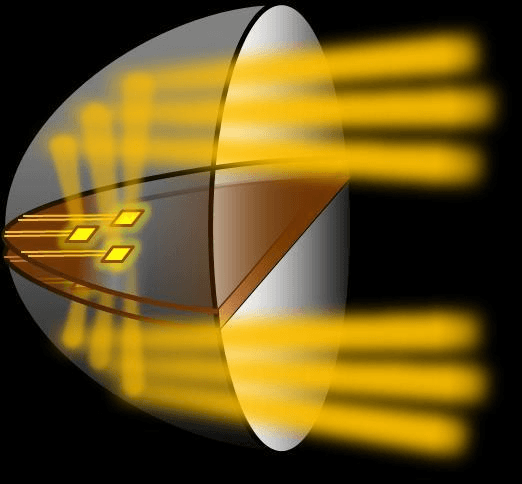
Car headlights, torches, and satellite dishes use parabolic shapes to focus light or signals at one point (focus), improving efficiency. - Architecture (Ellipse & Hyperbola):
Structures like domes, bridges, and cooling towers use conic shapes for strength and design efficiency. - Astronomy (All Conics):
The paths of comets, planets, and space objects follow conic sections—ellipse, parabola, or hyperbola depending on speed and gravity.
Understanding conics helps connect maths with real-world innovations.
Start Your Free Math Demo Class Now
Common Mistakes Students Make
Students often lose marks in conic sections due to small but critical mistakes:
- Formula Confusion:
Mixing formulas like ellipse (c² = a² − b²) and hyperbola (c² = a² + b²). - Sign Errors:
Writing + instead of − in hyperbola equations or wrong sign in parabola orientation. - Axis Identification Mistakes:
Not recognizing whether the curve opens along x-axis or y-axis. - Incorrect Substitution:
Errors while putting values in equations, especially in numericals.
Pro Tip:
Always identify the type of conic first, then apply formulas. This one step can save a lot of marks in exams.
Practice Questions (Category-Wise)
Concept-Based Questions (Basics)
- What is a conic section?
- Define focus and directrix in a parabola.
- What is the eccentricity of a circle?
- Name the conic section formed when a plane cuts parallel to the base of a cone.
- What is the difference between ellipse and hyperbola?
- Define major axis and minor axis of an ellipse.
- What is the latus rectum of a parabola?
- When is a conic called degenerate?
- What is the condition for a parabola based on eccentricity?
- Which conic has two branches?
Formula-Based Questions
- Find the radius of the circle: x² + y² = 49
- Find the centre and radius of: x² + y² − 6x − 8y = 0
- For the parabola y² = 16x, find the value of a and focus
- Find the eccentricity of an ellipse where a = 5, b = 4
- Find c for ellipse if a = 13 and b = 12
- Find eccentricity of hyperbola where a = 3, b = 4
- Find length of latus rectum of parabola x² = 12y
- Find length of latus rectum of ellipse with a = 5, b = 3
- Find length of latus rectum of hyperbola with a = 4, b = 2
- Verify relation c² = a² + b² for given hyperbola values
Equation-Based Questions
- Find equation of circle with centre (2, −3) and radius 5
- Convert x² + y² + 4x − 6y − 12 = 0 into standard form
- Find equation of parabola with focus (3, 0)
- Find equation of parabola with vertex at origin opening downward and a = 2
- Find equation of ellipse with a = 5, b = 4 (major axis along x-axis)
- Find equation of ellipse with major axis along y-axis, a = 6, b = 2
- Find equation of hyperbola with a = 3, b = 2 along x-axis
- Find equation of hyperbola with transverse axis along y-axis, a = 5, b = 3
- Identify the conic: 9x² + 16y² = 144
- Identify the conic: x² − y² = 1
Try a Free Math Class with Expert Teachers
Mixed / Case-Based Questions (Exam Level)
- Find the focus, directrix, and latus rectum of parabola y² = 20x
- Find vertices and eccentricity of ellipse x²/36 + y²/16 = 1
- Find equation of ellipse given foci (±4, 0) and vertices (±5, 0)
- Find foci and equation of hyperbola x²/25 − y²/9 = 1
- A parabola passes through (2, 4) and is symmetric about x-axis. Find its equation
- Determine the type of conic and its properties: 4x² − 9y² = 36
- Find equation of circle passing through (1,2) with centre on x-axis
Tip for Students:
Start with concept-based questions, then move to formulas, and finally practice mixed questions to build full exam confidence.
Most Expected Exam Questions
To score well in exams, focus on these high-probability question patterns from conic sections:
- Find the equation of a parabola given focus and directrix.
- Identify the conic section from a general equation (circle, parabola, ellipse, hyperbola).
- Convert general equation into standard form by completing the square.
- Find eccentricity, foci, and vertices of ellipse or hyperbola.
- Calculate latus rectum length for parabola, ellipse, or hyperbola.
- Form equation of ellipse/hyperbola using given vertices and foci.
- Determine orientation of conic (along x-axis or y-axis) based on equation.
These patterns are frequently repeated in school exams, boards, and competitive tests. Practice them thoroughly to maximize your score.
Why Learn with PlanetSpark
- Concept Clarity First:
PlanetSpark ensures students understand the “why” behind formulas, not just memorize them. - Interactive Learning:
Concepts like conic sections are taught through real-life examples and engaging sessions, making learning easy and interesting. - Personal Mentoring:
Every student gets individual attention, helping them clear doubts faster and build strong fundamentals. - Application-Based Approach:
Students learn how to apply concepts in exams and real-world problems, not just solve textbook questions. - Confidence Building:
Regular practice and guidance help students become more confident in tackling maths problems.

Master the Curves, Master the Chapter
Conic sections may seem complex at first, but with the right understanding of formulas, concepts, and practice, they become one of the most scoring topics in Class 11 Maths. From circles to hyperbolas, each curve follows a clear pattern—once you grasp it, solving questions becomes easy. Stay consistent with practice, avoid common mistakes, and focus on concepts. With the right approach, you can confidently master this chapter and perform excellently in exams.
You May Also Read
Frequently Asked Questions
Yes, PlanetSpark allows you to book a free demo class to experience how conic sections and other topics are taught effectively.
PlanetSpark simplifies conic sections using interactive teaching methods, relatable examples, and clear explanations.
Yes, PlanetSpark is ideal for Class 11 students as it provides personalized mentoring and covers important topics like conic sections in depth.
PlanetSpark enhances problem-solving skills by teaching step-by-step methods and building strong conceptual understanding.
Yes, PlanetSpark offers structured practice questions and expert guidance to help students master conic sections effectively.
PlanetSpark focuses on concept clarity and application-based learning, making conic sections easier and more interesting for students.
PlanetSpark helps students understand NCERT Class 11 Conic Sections through simple explanations, real-life examples, and personalized learning sessions.