
Geometry Basics Explained: Build Strong Concepts and Visual Thinking Skills in Math
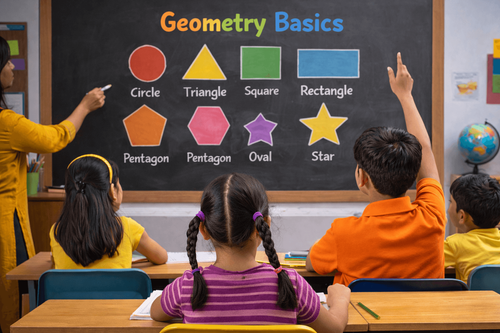

Table of Contents
- What Is Geometry? Understanding Shapes Around Us
- Points, Lines, and Planes – Foundation of Geometry
- Understanding Angles and Their Types
- 2D Shapes and Polygons – Learning Through Visualization
- Why Visualization Matters in Geometry
- Perimeter and Area
- Introduction to 3D Shapes – Thinking Beyond Flat Figures
- How Geometry Builds Visual Thinking Skills
- Common Geometry Mistakes Students Make
- Fun and Practical Ways to Practice Geometry
- How Strong Geometry Basics Help in Higher Classes
- How PlanetSpark Helps in Mastering the Basics of Geometry
- Conclusion
Geometry is often the first branch of mathematics where students are asked not just to calculate, but to see, imagine, and understand shapes. While numbers deal with quantity, geometry deals with space, form, and structure. This is why many children either love geometry instantly or feel confused by it.
The truth is, geometry is not about memorising formulas, it’s about building visual thinking skills. When students understand how shapes work, how lines interact, and how angles open and close, math becomes more meaningful and less intimidating.
In this blog, we will break geometry down into simple ideas, starting from the basics. This first part focuses on foundational concepts like shapes, points, lines, angles, and 2D figures. With the right approach and strong visuals, geometry can become one of the most enjoyable and confidence-building areas of math.
What Is Geometry? Understanding Shapes Around Us
Geometry is the branch of mathematics that deals with shapes, sizes, positions, and space. Unlike arithmetic, which focuses on numbers, geometry helps students understand the world visually.
Look around you:
- The floor tiles are rectangles or squares
- The wheels of a bicycle are circles
- The roof of a house often forms a triangle
Geometry is everywhere, and children naturally observe shapes long before they learn their names. The goal of geometry in school is to give structure to this natural observation.
Geometry helps students:
- Recognise patterns
- Understand space and direction
- Improve reasoning and logic
- Visualise problems instead of guessing
When children learn geometry correctly, they stop asking, “Why do I need this?”, because they can see it all around them.
Points, Lines, and Planes – Foundation of Geometry
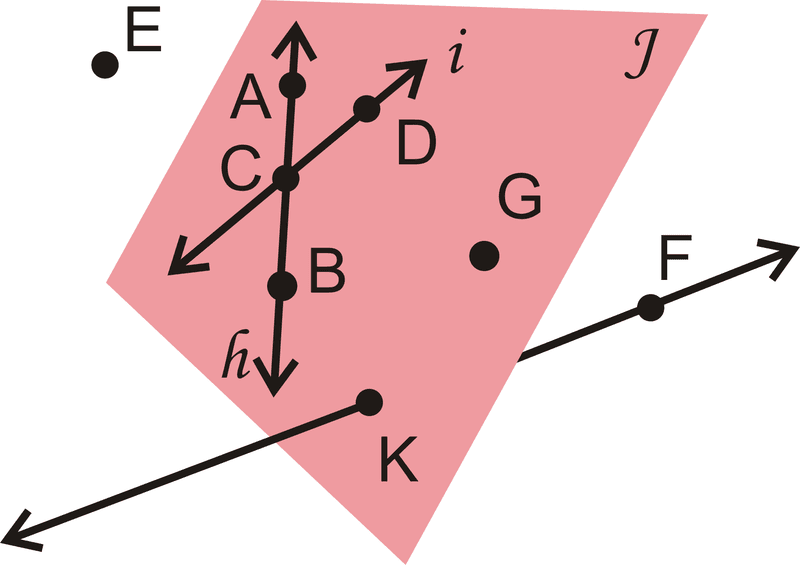
Every geometry concept starts with three simple ideas: points, lines, and planes. These may sound small, but they form the base for everything else.
Point
A point shows a location.
It has no size and no shape, just position.
Think of:
- A dot on paper
- A place marked on a map
Line
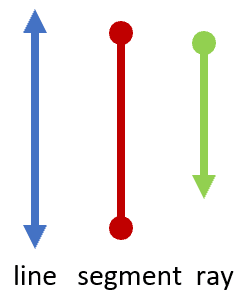
A line is made of many points joined together. It has length but no thickness and goes on forever in both directions.
Related ideas:
- Line segment: part of a line with two end points
- Ray: starts at one point and goes on forever in one direction
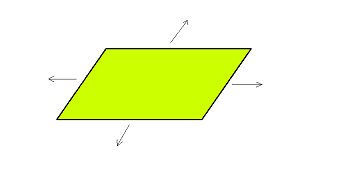
Plane
A plane is a flat surface that extends endlessly.
Examples:
- A sheet of paper
- A whiteboard
- The surface of a table
Understanding these basics helps students later when they study angles, shapes, and coordinate geometry.
Make shapes and space easy to understand for your child.
Join a PlanetSpark demo class to see how geometry is taught through visuals, logic, and real-life examples.
Understanding Angles and Their Types
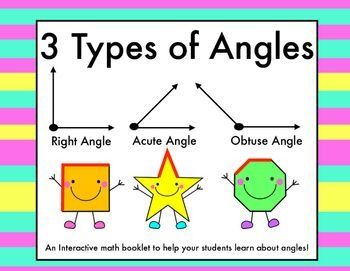
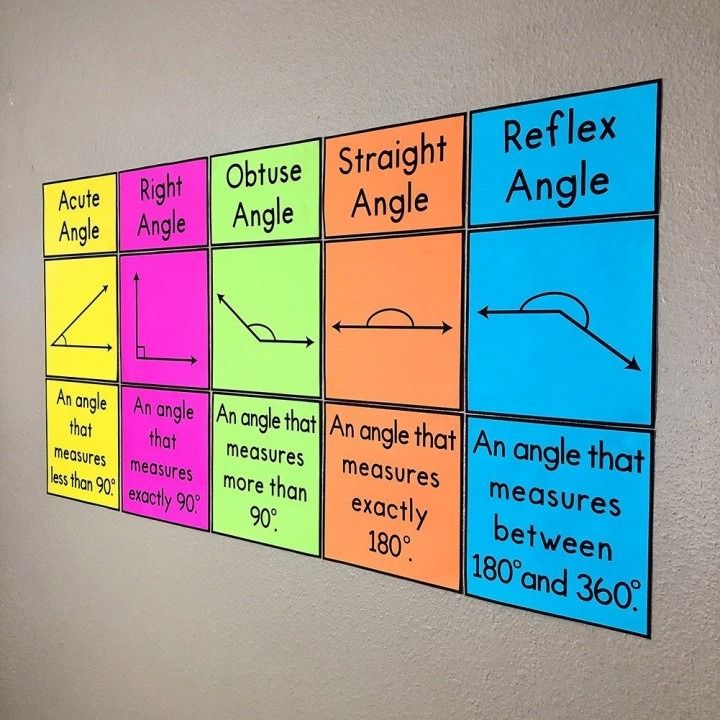
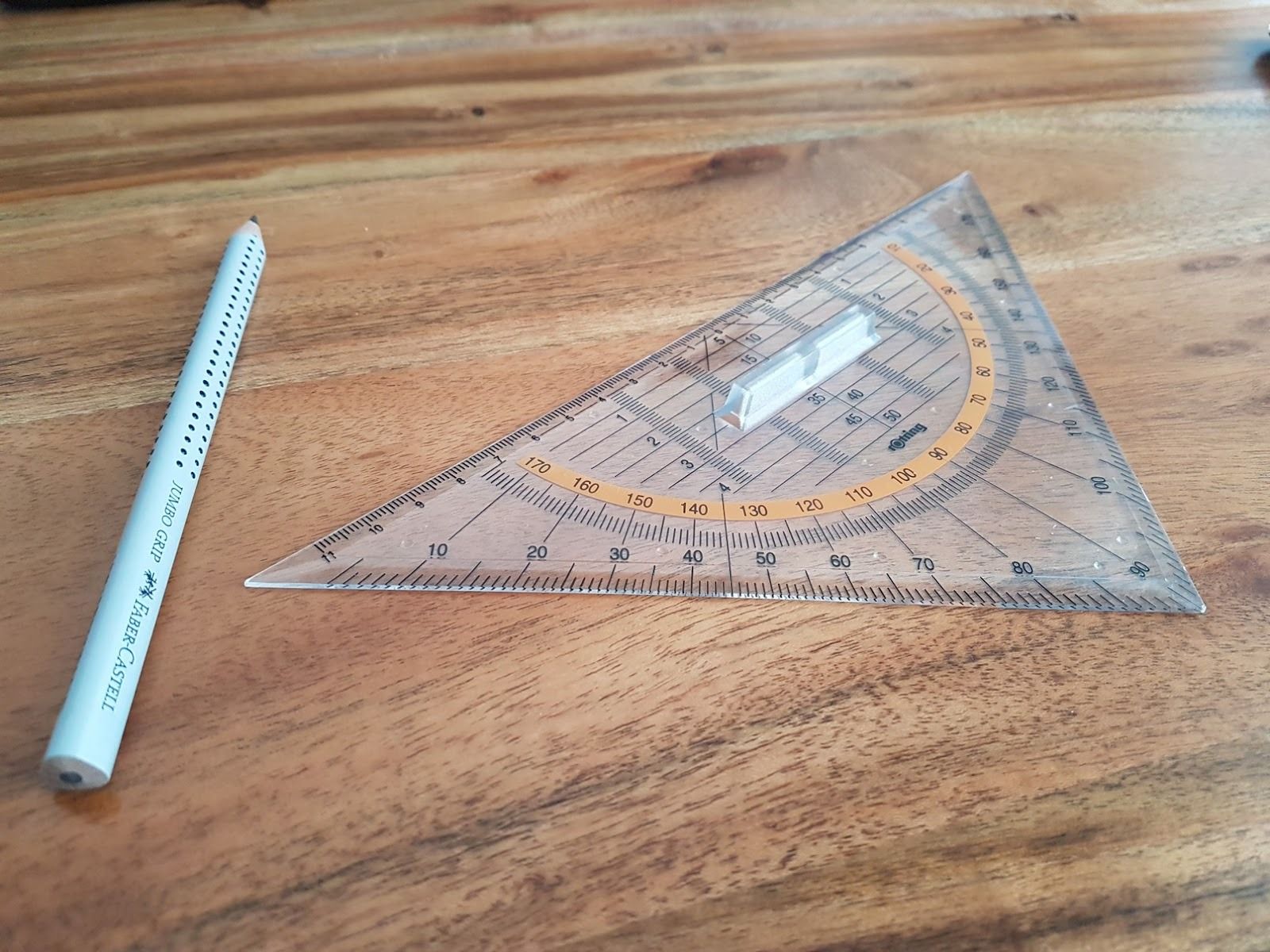
An angle is formed when two lines meet at a point. That meeting point is called the vertex, and the lines are called the arms of the angle.
Angles help us understand:
- Corners of shapes
- Turns and directions
- Slopes and movements
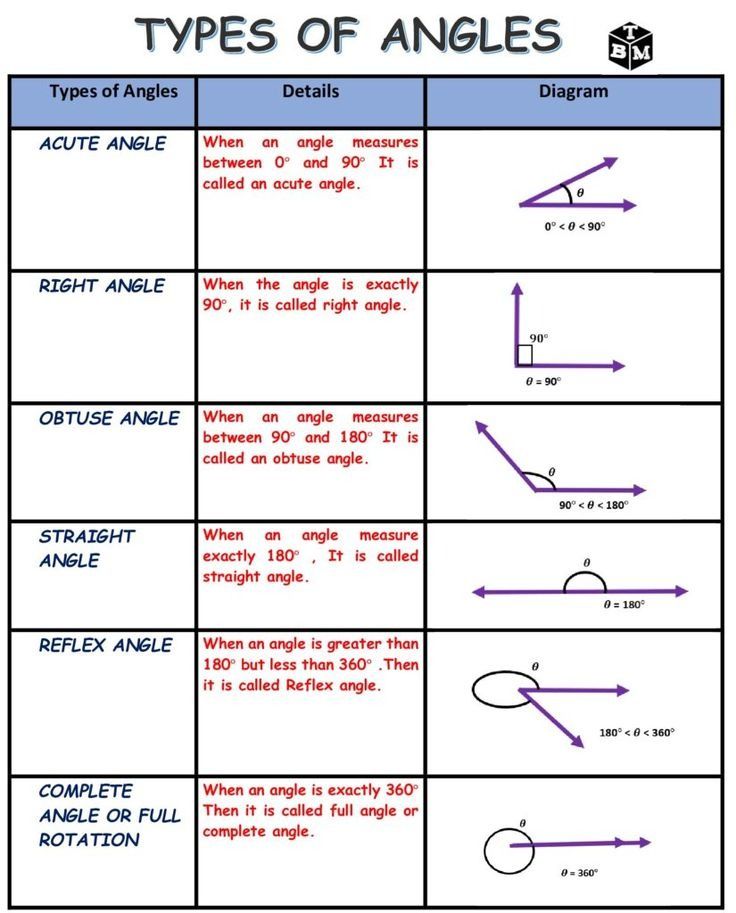
Types of Angles
- Acute Angle: Less than 90° (sharp and narrow)
- Right Angle: Exactly 90° (perfect corner of a square)
- Obtuse Angle: More than 90° but less than 180
- Straight Angle: Exactly 180° (a straight line)
- Reflex Angle: More than 180°
Everyday examples make angles easier:
- The hands of a clock
- An opening door
- Folding paper
When students learn to identify angles visually, measuring them becomes much easier.
2D Shapes and Polygons – Learning Through Visualization
What Are 2D Shapes?
2D (two-dimensional) shapes are flat shapes. They have:
- Length
- Width
- No thickness
Examples include squares, rectangles, triangles, and circles.
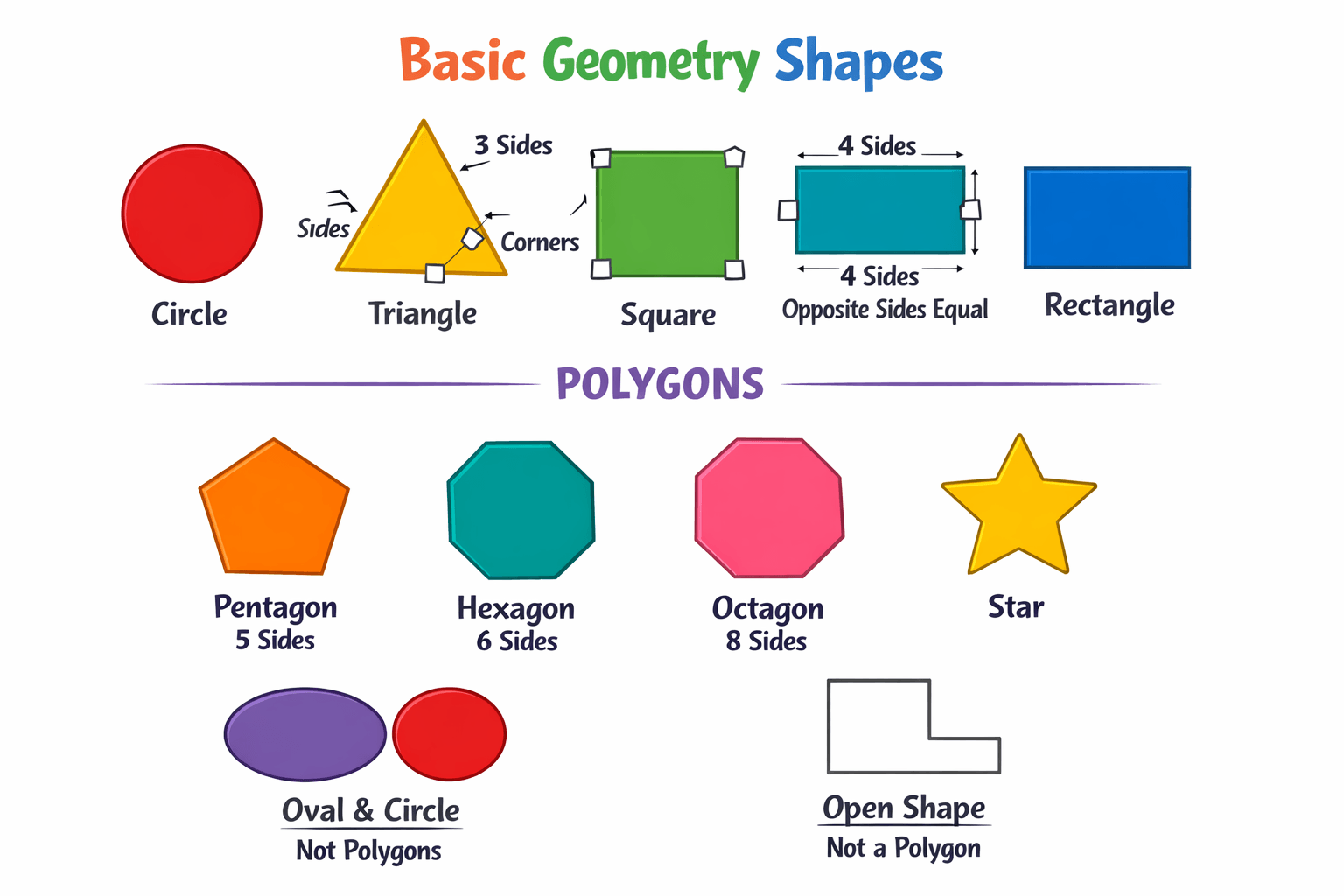
Common 2D Shapes
- Square: All sides equal, all angles right angles
- Rectangle: Opposite sides equal, all angles right angles
- Triangle: Three sides and three angles
- Circle: No sides or corners
Polygons Explained
A polygon is a closed shape made of straight lines.
- Triangle → 3 sides
- Quadrilateral → 4 sides
- Pentagon → 5 sides
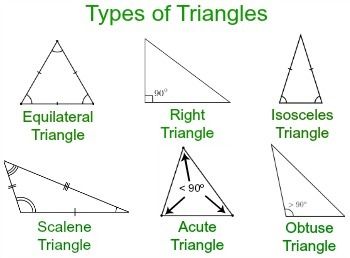
Types of Triangles
Triangles are especially important in geometry:
- Equilateral: all sides equal
- Isosceles: two sides equal
- Scalene: all sides different
Drawing shapes, tracing them, and breaking them into parts helps students see relationships, not just remember names.
Why Visualization Matters in Geometry
Geometry is not meant to be learned online from formulas. Visualization helps students:
- Understand concepts deeply
- Reduce careless mistakes
- Build confidence in problem-solving
When children draw shapes, label angles, or colour areas, their brains process math differently. Instead of memorising steps, they understand the logic behind them.
Good geometry learning always includes:
- Diagrams
- Sketches
- Models
- Visual examples
This is what builds a strong base for future topics like area, volume, and coordinate geometry.
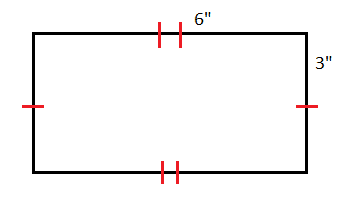
Perimeter and Area
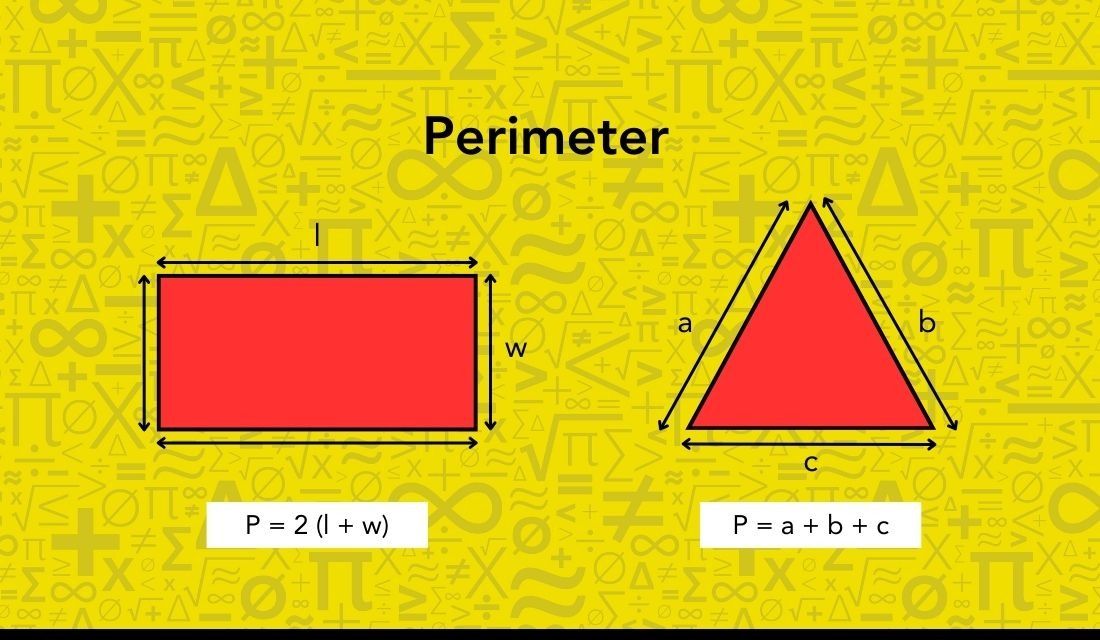
Two of the most important geometry concepts students learn are perimeter and area. They may sound similar, but they measure very different things, and confusion between them is extremely common.
What Is Perimeter?
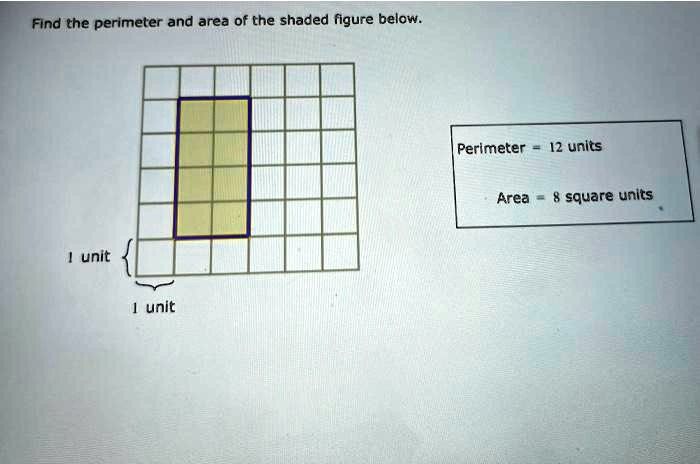
Perimeter is the total distance around a shape.
Imagine walking along the border of a park, that distance is the perimeter.
Examples:
- Perimeter of a square = all four sides added together
- It is measured in units (cm, m, etc.)
What Is Area?
Area tells us how much space a shape covers.
Think of how much paint is needed to colour the inside of a shape.
Examples:
- Area of a rectangle = length × breadth
- It is measured in square units
Visual Way to Understand the Difference
- Perimeter → outline or boundary
- Area → shaded space inside
Many students mix these up because they try to memorise formulas instead of understanding what is being measured. Using grid paper, colouring shapes, and counting squares makes area far more intuitive.
Introduction to 3D Shapes – Thinking Beyond Flat Figures
Until now, we’ve looked at flat shapes. But the real world is full of 3D (three-dimensional) shapes, which have:
- Length
- Width
- Height
3D shapes help children understand space and depth.
Key Parts of 3D Shapes
- Faces: flat surfaces
- Edges: where two faces meet
- Vertices: corners
Common 3D Shapes
- Cube: all faces are squares (dice)
- Cuboid: rectangular faces (books, boxes)
- Cylinder: circular faces and one curved surface (cans)
- Cone: one circular face with a pointed top
- Sphere: perfectly round, no edges or vertices (ball)
Handling real objects makes learning easier. A child who holds a box understands a cuboid far better than one who only sees it in a textbook.
How Geometry Builds Visual Thinking Skills
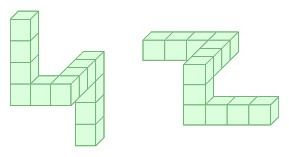
Geometry plays a powerful role in developing visual and spatial intelligence. When students work with shapes, they learn to imagine objects in their minds.
Skills Geometry Strengthens
- Mental rotation (imagining shapes turning)
- Pattern recognition
- Logical sequencing
- Problem visualisation
For example, when a child is asked to find the area of a shape, they learn to:
- Break it into smaller parts
- Rearrange mentally
- Visualise before calculating
These skills are not limited to math. They help in science, art, architecture, and even daily problem-solving.
Students who develop visual thinking through geometry often show:
- Better reasoning ability
- Improved confidence
- Reduced fear of word problems
Build strong geometry basics that support future math learning.
Book a PlanetSpark demo class to experience clear, concept-driven teaching for young minds.
Common Geometry Mistakes Students Make
Even students who like math often struggle with geometry. Most mistakes come from rushing or memorising without understanding.
Frequent Errors
- Confusing area with perimeter
- Forgetting to label units
- Ignoring diagrams
- Applying formulas without understanding
- Misreading shapes and angles
How to Overcome These Mistakes
- Always draw or observe a diagram carefully
- Ask: What am I measuring, space or boundary?
- Re-check units
- Practice explaining the solution out loud
When students slow down and visualise, accuracy improves automatically.
Fun and Practical Ways to Practice Geometry
Learn Geometry Through Drawing and Sketching
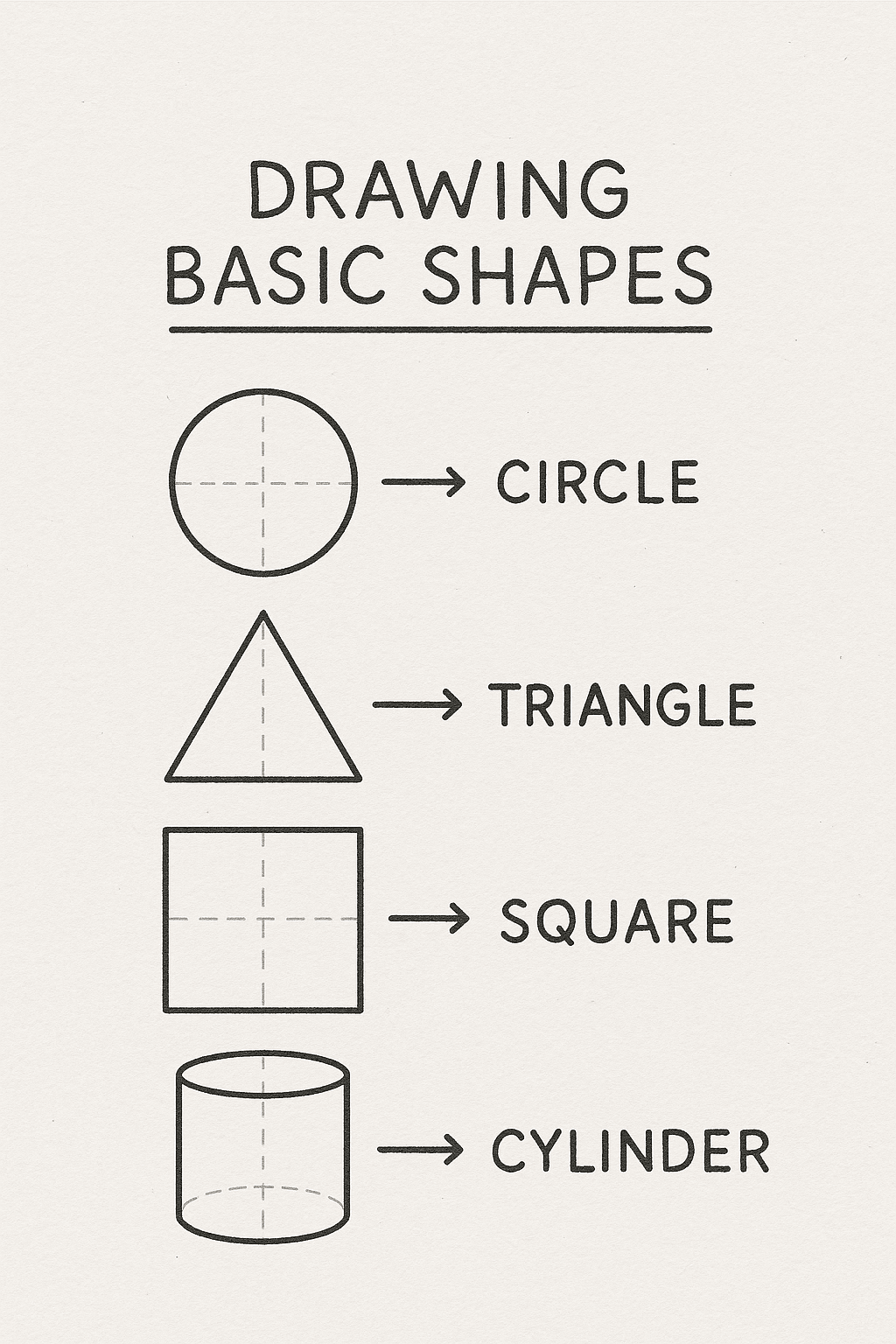
Drawing is one of the easiest and most effective ways to understand geometry. When children draw shapes themselves, they begin to notice sides, angles, and symmetry more clearly. Sketching triangles, rectangles, or circles, even freehand, helps students visualise how shapes are formed and how they differ from each other. Labelling sides and angles on drawings strengthens concept clarity and reduces careless mistakes. Simple activities like drawing patterns, borders, or tiled designs turn geometry into a creative exercise rather than a textbook task.
Use Everyday Household Objects as 3D Models
Geometry becomes far more interesting when students connect it to real objects. Items like boxes, cans, balls, dice, and bottles are perfect examples of 3D shapes. A book can represent a cuboid, a dice shows a cube, and a water bottle looks like a cylinder. By holding and observing these objects, children understand faces, edges, and vertices naturally. This hands-on experience makes abstract concepts feel real and easy to remember.
Explore Geometry Through Art, Craft, and Patterns
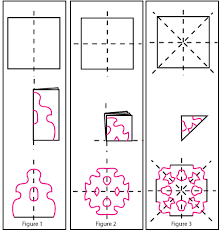
Art and geometry go hand in hand. Activities like rangoli designs, mosaics, mandala drawing, and paper cutting involve strong geometric thinking. When children create patterns, they unknowingly work with symmetry, angles, and shapes. Paper folding helps them understand lines of symmetry and congruence visually. Craft-based learning also improves concentration and patience while reinforcing geometry concepts without pressure or fear.
Practice Geometry with Games and Puzzles
Games make learning effortless. Puzzles like tangrams, shape-matching games, and block puzzles improve spatial awareness and logical thinking. Board games that involve movement and direction also support angle and orientation understanding. When geometry is learned through play, children experiment freely, make mistakes, and learn naturally. This approach builds confidence and reduces math anxiety.
Connect Geometry to Real-Life Measurements
Daily life is full of geometry opportunities. Measuring the length and width of a room, finding the perimeter of a table, or estimating the area of a notebook helps children apply what they learn. Parents can involve children while rearranging furniture, packing boxes, or even during shopping. These small activities show students that geometry is not limited to exams, it’s a practical skill used every day.
How Strong Geometry Basics Help in Higher Classes
Geometry is not an isolated topic, it supports many advanced math areas.
Strong basics help students in:
- Coordinate geometry
- Mensuration
- Trigonometry
- Competitive exams
Students who understand shapes, angles, and space find it easier to:
- Read graphs
- Solve application-based questions
- Handle complex diagrams
Most importantly, they approach math with logic instead of fear.
Help your child connect geometry to the world around them.
A PlanetSpark demo class shows how expert mentors turn shapes, angles, and formulas into easy learning.
How PlanetSpark Helps in Mastering the Basics of Geometry
PlanetSpark helps students build a strong foundation in geometry by focusing on visual understanding, spatial reasoning, and real-world connections.
- Instead of memorising formulas, learners understand the logic behind shapes, lines, angles, and measurements.
- With personalised guidance, expert mentors help students visualise geometric concepts and explain how geometry appears in everyday life.
- Learners explore shapes, angles, and properties through clear explanations, diagrams, and guided problem-solving.
- Understanding shapes and lines → learning angles and properties → applying formulas → strengthening spatial and logical thinking. This structured flow makes geometry easier and more intuitive.
- Students practise through hands-on activities, drawing-based questions, real-life examples, and step-by-step solutions.
- Regular feedback, interactive lessons, and concept-driven teaching help students gain confidence and prepare for advanced geometry topics.
Conclusion
Geometry teaches students how to see, think, and reason. When learned visually, it becomes enjoyable and meaningful instead of confusing. By understanding shapes, angles, space, and measurements, children develop skills that go far beyond exams. Geometry trains the mind to observe patterns, solve problems calmly, and think logically. With the right foundation, consistent practice, and a focus on understanding rather than memorising formulas, geometry can become one of the strongest and most rewarding areas of math.
Frequently Asked Questions
Geometry helps students understand shapes, space, and measurements used in daily life. It also builds logical thinking, problem-solving skills, and visual reasoning, which are essential for higher math topics and real-world applications.
Regular practice with drawings, real-life examples, models, and visual explanations helps a lot. Encouraging children to explain shapes and diagrams in their own words also improves understanding.
Regular practice with drawings, real-life examples, models, and visual explanations helps a lot. Encouraging children to explain shapes and diagrams in their own words also improves understanding.
Instead of rote learning, students should understand why a formula works. Visual methods like breaking shapes into smaller parts or using grid paper make formulas easier to remember.
Strong geometry basics support topics like coordinate geometry, trigonometry, and mensuration. Students with good visualization skills solve diagram-based and application questions faster and more accurately.