
How to Learn Maths Smarter: 10 Classroom-Tested Tricks by PlanetSpark


Table of Contents
- Smarter Ways to Master Mathematics
- 10 Classroom-Tested Tricks to Learn Maths Smarter
- How to Study Math Easily: Proven Strategies That Actually Wo
- Why Learning Maths Smartly Matters
- From Maths Doubts to Olympiad Excellence
- How PlanetSpark Makes Maths Learning Smarter
- Build a Strong Study Environment for Maths
- Why PlanetSpark Is the Ultimate Destination for Maths Master
- Maths Can Be Easy with the Right Approach at PlanetSpark
Struggling to understand maths concepts even after hours of memorising formulas?
Learning mathematics becomes easier when students focus on smart strategies instead of rote memorisation. How to learn maths effectively is about understanding concepts, building confidence, and practicing with purpose. This guide shares 10 classroom-tested tricks that simplify problem-solving and improve accuracy. With structured lessons, expert mentors, and interactive practice, PlanetSpark helps students develop strong mathematical thinking and enjoy learning maths smarter every day.
Smarter Ways to Master Mathematics
Learning maths becomes easier when students focus on understanding, logic, and consistency rather than memorisation alone. A smart approach helps build confidence, improve accuracy, and develop problem-solving skills that support long-term academic success.
Key principles for learning maths smarter:
Understand concepts clearly before applying formulas.
Practise regularly with varied question types.
Break complex problems into simple steps.
Learn from mistakes instead of fearing them.
Use real-life examples to strengthen understanding.
With the right strategies and a positive mindset, maths can shift from being challenging to enjoyable, empowering students to learn independently and perform with confidence.
10 Classroom-Tested Tricks to Learn Maths Smarter
Learning maths does not have to feel confusing or stressful. These classroom-tested tricks focus on understanding, practice, and confidence-building. Used by expert educators, they help students simplify concepts, strengthen self-study habits, and develop a smarter, more enjoyable approach to learning mathematics.
Trick 1: Master Concepts Before Memorising Formulas
One of the biggest mistakes students make is memorising formulas without understanding their meaning. To truly know how to learn maths, students must first grasp the “why” behind every formula.
For example, instead of memorising area formulas, students should visualise shapes, break them into parts, and understand how measurements relate. This approach makes formulas easier to remember and apply.
PlanetSpark teachers use real-life examples, diagrams, and discussions to help learners explain concepts in their own words. This method strengthens self-study mathematics because students no longer rely on notes alone.
Trick 2: Break Big Problems into Smaller Steps
Complex word problems often scare students. The secret to how to learn maths easily lies in simplifying the process. Breaking problems into smaller, logical steps makes even difficult questions manageable.
Students are encouraged to:
Identify the given information
Understand what is being asked
Solve step by step
Check the final answer logically
This structured thinking is especially helpful for students doing math self-study, as it provides a clear roadmap for solving problems independently.
Trick 3: Use Visual Learning and Diagrams
Visual learning is a powerful tool in mathematics. Graphs, number lines, charts, and drawings help students see relationships between numbers and concepts.
PlanetSpark classrooms actively use visual models to explain fractions, algebra, geometry, and data handling. When students can “see” maths, they understand faster and remember longer. This is one of the most effective answers to how to be good at maths, especially for visual learners.
Visualisation also improves how to study maths by yourself, as students can recreate diagrams while revising at home.
Support your child with PlanetSpark’s advanced maths tools and teaching methods!
Trick 4: Practice Smart, Not Just More
Doing 50 random questions is less effective than solving 15 well-chosen problems thoughtfully. Smart practice focuses on quality, variety, and reflection.
Students should:
Practice different types of questions
Analyse mistakes carefully
Reattempt incorrect problems
This approach helps learners understand patterns and avoid repeated errors. PlanetSpark educators emphasise reflective practice, a key skill for anyone wondering how to get better at maths through independent study.
Trick 5: Learn Maths Through Real-Life Applications
Maths becomes easier when students see how it applies to everyday life. Concepts like percentages, ratios, and measurements are everywhere—from shopping bills to sports statistics.
PlanetSpark integrates real-world scenarios into lessons so students relate maths to their surroundings. This not only answers how to learn maths easily but also keeps learners motivated and curious.
Real-life application is particularly useful for self-study mathematics, as students start observing and practising maths outside textbooks.
Trick 6: Develop a Consistent Self-Study Routine
Consistency is crucial when it comes to math self-study. Instead of long, irregular sessions, short daily practice builds stronger retention.
An effective routine includes:
Revising concepts regularly
Practising a few problems daily
Reviewing mistakes weekly
Knowing how to study maths by yourself means creating a routine that suits your learning pace. PlanetSpark guides students to build disciplined habits that support long-term success.
Trick 7: Ask Questions and Explain Answers Aloud
One powerful but often ignored method is verbalising mathematical thinking. When students explain how they solved a problem, they identify gaps in understanding.
PlanetSpark classrooms encourage students to speak their reasoning, improving both clarity and confidence. This strategy connects communication skills with maths learning and is highly effective for those aiming to learn how to be good at maths.
Explaining answers aloud also strengthens self-study mathematics, as students become their own teachers.
Give your child the advantage of structured maths learning designed for long-term success with PlanetSpark!
Trick 8: Focus on Mistakes, Not Marks
Mistakes are valuable learning tools. Instead of feeling discouraged, students should analyse where they went wrong and why.
Keeping an error notebook helps track common mistakes and avoid them in the future. This reflective habit is essential for anyone serious about how to get better at maths.
PlanetSpark educators create a safe environment where mistakes are treated as learning opportunities, boosting confidence and resilience.
Trick 9: Strengthen Mental Maths and Number Sense
Strong basics make advanced maths easier. Mental maths improves speed, accuracy, and confidence.
Daily mental exercises like quick calculations, estimation, and number games help students develop number sense. This foundation is key to how to learn maths easily and performing better in exams.
PlanetSpark integrates mental maths activities into lessons, supporting both classroom learning and math self-study.
Trick 10: Build Confidence Through Guided Support
Confidence plays a major role in maths success. Students who believe they can improve are more likely to practise and persist.
PlanetSpark combines academic learning with confidence-building through interactive sessions, personalised feedback, and structured guidance. This holistic approach helps learners truly understand how to learn maths in a smarter, stress-free way.
With the right mentorship, even students who once struggled can discover how to be good at maths and enjoy the subject.
How to Study Math Easily: Proven Strategies That Actually Work
Learning maths becomes easier when students focus on understanding concepts, practising with purpose, and building the right habits. These strategies help improve accuracy, confidence, and long-term problem-solving skills.
Core Strategies
- Master the basics before moving to advanced topics
- Focus on understanding concepts instead of memorising formulas
- Ask “why” to grasp the logic behind methods
- Practise regularly with attention to the solving process
- Analyse mistakes to identify and correct thinking gaps
Techniques for Deeper Learning
- Break complex problems into smaller, manageable steps
- Use real-life examples to make maths relatable
- Visualise concepts using diagrams, charts, and tools
- Strengthen mental maths for faster and accurate calculations
Mindset & Habits
- Maintain a positive attitude towards learning maths
- Practise consistently with short daily sessions
- Ask questions whenever concepts feel unclear
- Use maths games and puzzles to make learning fun
- Review class notes before starting homework
Smart Study Habits
- Spend more time solving problems than copying notes
- Avoid rushing to answers; struggle productively first
- Use reliable study resources and practice tests
- Join study groups to learn different problem-solving approaches
Why Learning Maths Smartly Matters
Many students spend hours studying maths yet see little improvement. This happens because they focus on quantity rather than quality. Smart learning emphasises understanding, clarity, and strategy. When students know how to study maths by yourself, they stop depending entirely on tuition and become independent thinkers.
Smart maths learning:
Builds strong conceptual foundations
Reduces fear and anxiety around numbers
Improves speed and accuracy in exams
Encourages logical and analytical thinking
PlanetSpark classrooms focus on these outcomes by blending concept clarity with communication and reasoning skills, helping learners discover how to get better at maths step by step.
From Maths Doubts to Olympiad Excellence
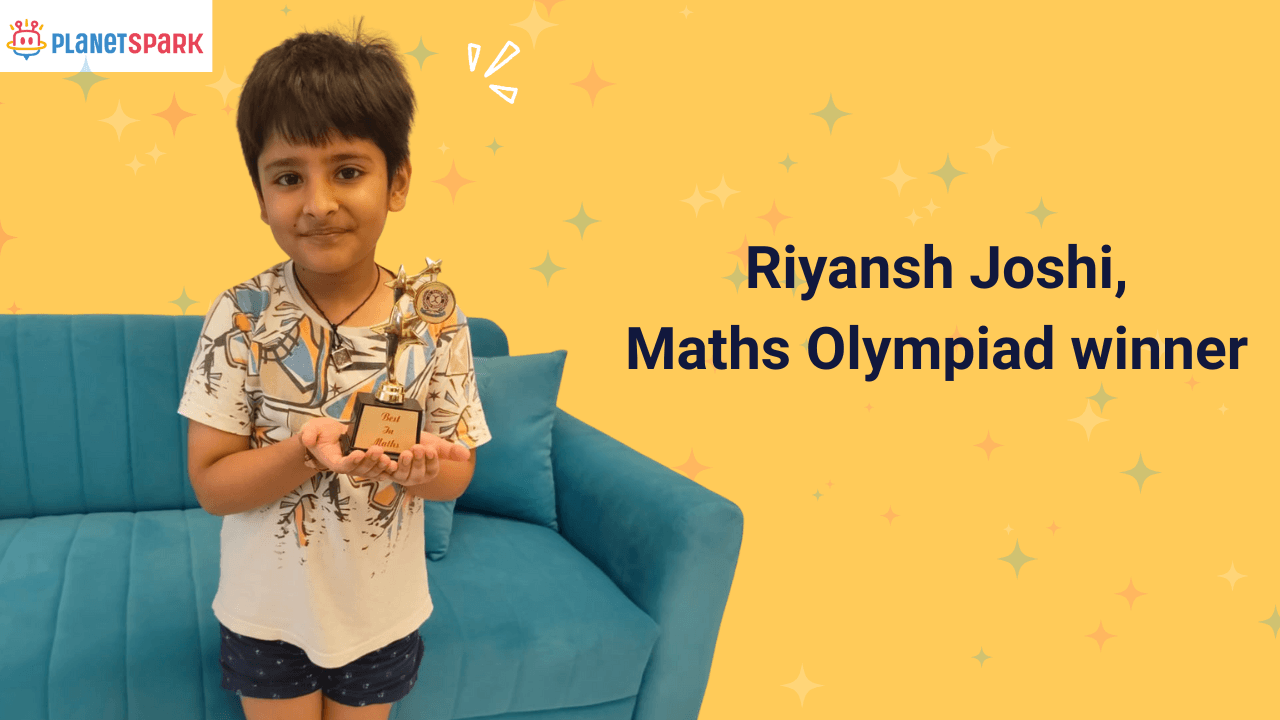
Riyansh Joshi, a proud Maths Olympiad winner, stands out for his clarity of thought, strong reasoning skills, and confident communication.
If you want to learn how to learn maths smarter, build strong concepts, and develop confidence like Riyansh, join PlanetSpark today. With expert guidance and structured learning, maths success becomes achievable and enjoyable.
How PlanetSpark Makes Maths Learning Smarter
PlanetSpark’s approach goes beyond traditional teaching. By blending conceptual clarity, communication skills, and logical reasoning, students learn maths in a way that sticks.
Key benefits include:
Concept-based learning.
Focus on independent thinking.
Support for self-study mathematics.
Confidence-building through expression.
Whether your child wants to improve basics or explore advanced concepts, PlanetSpark provides the tools needed to master how to learn maths effectively.
Build a Strong Study Environment for Maths
A distraction-free and organised study environment plays a crucial role in improving maths performance. When students study in a calm space with clear goals, their focus increases, and learning becomes more effective.
Choose a quiet place with minimal distractions.
Keep maths materials and notes well organised.
Set specific goals for each study session.
Study at the same time daily to build consistency.
A supportive environment combined with smart strategies helps students stay focused, practise effectively, and develop lasting confidence in mathematics.
Why PlanetSpark Is the Ultimate Destination for Maths Mastery
PlanetSpark delivers a complete learning experience that strengthens every aspect of a child’s mathematical understanding, accuracy, and confidence. With personalised one-on-one guidance, interactive practice, and real-world learning, students don’t just learn math—they master it.
Services That Build Strong Mathematical Skills
Personal Math Trainers for concept correction, problem-solving support, and skill enhancement
Customised Learning Roadmaps tailored to each child’s strengths and learning gaps
SparkX AI Analysis to assess accuracy, speed, and conceptual clarity
AI Guided Practice Sessions for computation, reasoning, and application-based learning
Spark Diary for daily maths practice and real-life number application
Gamified Learning Tools, including Speed Maths, Number Ninja, Logic Lab, and Fraction Quest
SparkBee Daily Quizzes to strengthen calculations, logic, and numerical fluency
SparkShop eBooks covering arithmetic, geometry, data handling, and reasoning
Progress Reports and PTMs offering clear, actionable insights
With PlanetSpark, your child builds mathematical confidence, logical thinking, and a future-ready foundation that lasts a lifetime.
Maths Can Be Easy with the Right Approach at PlanetSpark
Learning maths does not have to be stressful or boring. With the right strategies, consistent practice, and expert guidance, every student can improve. Understanding how to learn maths easily starts with changing how we approach the subject.
These 10 classroom-tested tricks show that smarter learning beats harder learning. With PlanetSpark’s structured support, students not only learn maths but also build confidence, communication, and problem-solving skills that last a lifetime.
Also Read:
What is Calculas? Build Strong Math Thinking With PlanetSpark
Frequently Asked Questions
Many students struggle with maths because they memorise formulas without understanding concepts. Gaps in basics, fear of mistakes, and lack of practice routines also make learning maths feel harder than it actually is.
You can learn maths effectively at home by focusing on concept clarity, practising step by step, revising mistakes, and maintaining a consistent routine. Visual aids and self-explanation further improve independent maths learning.
Spending 30 to 60 minutes daily on maths is usually sufficient when study time is focused. Short, regular sessions with revision and practice are more effective than long, irregular study hours.
PlanetSpark helps students learn maths smarter by focusing on conceptual understanding, logical reasoning, and communication. Its guided approach builds confidence, encourages independent thinking, and supports consistent progress in mathematics.
Yes, weak students can become good at maths with the right guidance, regular practice, and mindset. Understanding basics, analysing mistakes, and building confidence gradually leads to steady and lasting improvement.
Parents should consider PlanetSpark because it combines structured maths learning with confidence-building and communication skills, helping students overcome fear, understand concepts deeply, and develop long-term problem-solving abilities.