
NCERT Class 12 Integrals: Formulas and Examples


Table of Contents
- What are Integrals?
- Types of Integrals
- Important Terms in Integration
- Standard Formulas of Integrals
- Logarithmic Function
- Properties of Integrals
- Methods of Integration
- Trigonometric Identities
- Important Integrals (Special Forms)
- Solved Examples
- Quick Revision Summary (Cheat Sheet)
- 10. Practice Questions (Category-Wise)
- Most Expected Exam Questions
- Tips to Master Integrals
- Common Mistakes Students Make
- Learn Integration the Smart Way with PlanetSpark
- Mastering Integration Step-by-Step
Ever looked at a derivative and wondered, “How do I get the original function back?” That’s exactly what integrals help you do. While differentiation breaks a function into smaller parts, integration rebuilds it step by step. In Class 12, integrals might feel confusing at first—but once you understand the basics, they become much easier and even interesting. From finding areas under curves to solving real-life physics problems, integrals are widely used. In this guide, you’ll learn integrals in a simple, structured way—with formulas, clear explanations, and plenty of practice questions.
What are Integrals?
Integrals are the inverse (opposite) of differentiation. This means if differentiation helps us find the rate at which something is changing, integration helps us go back and find the original function.
In mathematical terms:
If the derivative of a function
 is
is  , then the integral of
  gives us back
  .
.
For example:
If
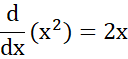
Then reversing it:
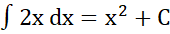
Why do we add “+ C”?
Whenever we differentiate a constant, the result is zero. So, if we only know the derivative, we cannot tell what constant was originally present. That’s why we always add + C, called the constant of integration.
Mini Examples:



Real-Life Understanding:
Think of differentiation like breaking something into smaller parts, and integration like rebuilding it completely.
Another way to understand integrals is through area. Imagine a curve drawn on a graph—integrals help us find the area under that curve, which is useful in physics, economics, and engineering.
Key Takeaway:
- Differentiation → Finds rate of change
- Integration → Finds original function
Once you understand this relationship, the rest of the chapter becomes much easier to grasp.
Types of Integrals
In calculus, integrals are mainly of two types:
- Indefinite Integrals
- Definite Integrals
Understanding the difference between them is very important because they serve different purposes.
Indefinite Integrals
Indefinite integrals are integrals without limits. They represent a general solution or a family of functions.
For example:
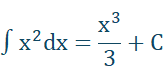
Why “family of functions”?
Because different values of  give different functions:


All of these have the same derivative: 
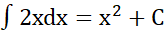
Examples:

Common Mistakes:
- Forgetting to add + C
- Applying wrong formulas
- Confusing with definite integrals
Key Idea:
Indefinite integrals give a function, not a fixed answer.

Definite Integrals
Definite integrals have limits, so they give a fixed numerical value.
For example:

Here:
- 0 → Lower limit
- 2 → Upper limit
What do limits mean?
Limits tell us the interval over which we are calculating the result—usually the area under a curve.
Solve Step-by-Step:
First integrate:
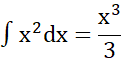
Now apply limits:
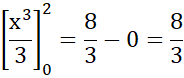
Key Idea:
Definite integrals give a number, not a function.
Difference Explained (Simple Way)
- Indefinite integral → Like a general formula (many answers)
- Definite integral → Like a final value (one answer)
Or simply:
- No limits → Add + C
- With limits → No + C, gives fixed value
Important Terms in Integration
Before solving integrals, it’s important to understand the basic terms used in integration.
| Term | Meaning |
|---|---|
| Integrand | The function inside the integral |
| Variable | The variable with respect to which integration is done |
| ∫ (Integral sign) | Symbol representing integration |
| dx | Indicates the variable of integration |
| C | Constant of integration |
Explanation:
Each part of an integral has a specific role. The integrand is what you need to integrate, while dx tells you which variable you are working with. The constant C ensures that all possible answers are included.
Example Breakdown:
Consider:

- Integrand →

- Variable →

- dx → indicates integration with respect to

Solution:

How to Identify Each Part in a Question:
Whenever you see an integral:
- Look inside ∫ → that’s your integrand
- Look at dx → tells you the variable
- Check if limits are present → tells you type of integral
Key Tip:
Always read the integral carefully before solving—it helps you decide the right method and formula.
Standard Formulas of Integrals
These formulas are the foundation of integration. Most questions are solved directly or indirectly using them.
Algebraic Functions
The most important formula:
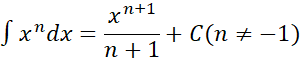
Why  ?
?
Because when  , the formula becomes:

which is undefined. That’s why it becomes a special case:
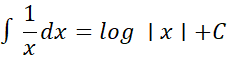
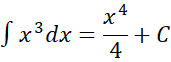
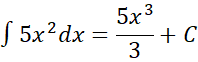
Examples:
Tip:
Just increase power by 1 and divide by new power.
Trigonometric Functions
These are based on reverse differentiation.
Key Formulas:




Pattern Understanding:
- Derivative of sin → cos → so integral of cos → sin
- Derivative of cos → -sin → so integral of sin → -cos
Examples:



Tip:
Think: “reverse derivative.”
Exponential Functions
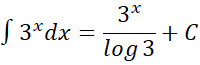
Formulas:

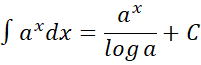
Difference between  and
and  :
:
 → simplest form (no denominator)
 → includes
  in denominator
Examples:

Tip:
If base ≠ e → divide by the log of base

Logarithmic Function
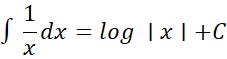
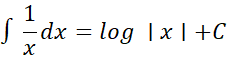
Formula:
Why special?
Because the power rule fails at  , so we use a logarithmic form instead.
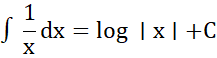
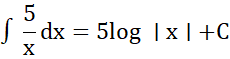
Examples:
Memory Tricks (Important!)
- Power rule → “Increase power, divide”
- sin → -cos
- cos → sin
 → same
 → log
→ log
Learning patterns is easier than memorizing everything!
You May Also Read
Properties of Integrals
Properties help simplify integrals and make calculations easier.
Linearity Property

Why it works:
Integration distributes over addition.
Example:

Constant Multiple Rule

Why it works:
Constants do not affect integration.
Example:

Reverse of Differentiation
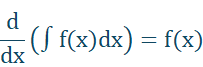
Why it works:
Integration and differentiation cancel each other.
Example:
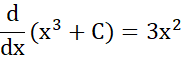
When to Use These Properties:
- Break large expressions → use linearity
- Remove constants → use constant rule
- Check answers → use reverse property
Common Mistakes:
- Forgetting to apply the property to all terms
- Missing constant C
- Incorrect splitting of terms
Methods of Integration
This is the most important section, as it teaches how to solve complex integrals.
Integration by Substitution
When to Use:
- Function inside another function
- Expression like

Steps:
- Assume a new variable
- Differentiate it
- Replace in integral
- Solve and substitute back
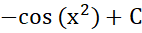
Example 1:
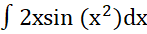
Let  ,
, 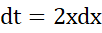

Final Answer:
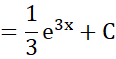
Example 2:

Let 
Integration by Parts
Formula:

ILATE Rule:
Choose  based on priority:
I > L > A > T > E
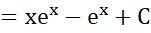
Example 1:

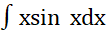
Example 2:

Trigonometric Identities
When to Use:
- Products like sin×cos
- Powers like sin², cos²
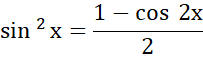
Example 1:
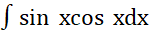
Use identity:
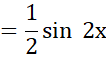
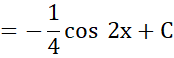
Answer:
Example 2:
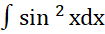
Use:
Partial Fractions
When to Use:
- Rational functions (fractions)
- Denominator can be factorized
Steps:
- Factor denominator
- Split into simpler fractions
- Integrate each part
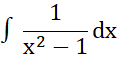
Example:

How to Identify Which Method to Use:
| Type of Problem | Method |
|---|---|
| Inside function | Substitution |
| Product of functions | By Parts |
| Trigonometric expressions | Identities |
| Fraction | Partial Fractions |
Final Tip:
The more you practice, the faster you’ll recognize the method. Initially, focus on pattern recognition rather than speed.
Important Integrals (Special Forms)
Certain integrals appear frequently in exams and are considered special forms because they don’t directly follow basic algebraic or trigonometric formulas.
Key Formulas:
- ∫ dx / (x² + a²) = (1/a) tan⁻¹(x/a) + C
- ∫ dx / √(a² − x²) = sin⁻¹(x/a) + C
- ∫ dx / (x² − a²) = (1/2a) ln |(x − a)/(x + a)| + C
- ∫ eˣ sinx dx = (eˣ/2)(sinx − cosx) + C
- ∫ eˣ cosx dx = (eˣ/2)(sinx + cosx) + C
Where Are These Used?
These integrals are commonly used in:
- Trigonometric substitutions
- Definite integrals involving inverse functions
- Applications in physics (waves, motion)
Example:
Evaluate ∫ dx / (x² + 4)
Solution:
Here, a² = 4 ⇒ a = 2
Using formula:
∫ dx / (x² + a²) = (1/a) tan⁻¹(x/a) + C
= (1/2) tan⁻¹(x/2) + C
These special forms are often hidden inside complex expressions, so recognizing them quickly is key.
Solved Examples
Let’s solve a variety of integrals step-by-step:
Basic Level:
1. ∫ x² dx
= x³/3 + C
2. ∫ cosx dx
= sinx + C
Moderate Level:
3. ∫ (2x + 3) dx
Split the integral:
= ∫ 2x dx + ∫ 3 dx
= x² + 3x + C
4. ∫ x cosx dx
Use integration by parts:
Let u = x, dv = cosx dx
Then du = dx, v = sinx
= x sinx − ∫ sinx dx
= x sinx + cosx + C
Application-Based:
5. ∫ dx / (x² + 9)
= (1/3) tan⁻¹(x/3) + C
6. ∫ eˣ cosx dx
= (eˣ/2)(sinx + cosx) + C
7. ∫ (1/x) dx
= ln|x| + C
8. ∫ (x² + 1)/x dx
Split:
= ∫ x dx + ∫ (1/x) dx
= x²/2 + ln|x| + C
Notice how breaking the integral into smaller parts simplifies the solution.
Quick Revision Summary (Cheat Sheet)
Here’s a quick cheat sheet to revise integration concepts faster before exams:
Key Formulas:
- ∫ xⁿ dx = xⁿ⁺¹/(n+1) + C (n ≠ −1)
- ∫ (1/x) dx = ln|x| + C
- ∫ eˣ dx = eˣ + C
- ∫ sinx dx = −cosx + C
- ∫ cosx dx = sinx + C
- ∫ dx/(x² + a²) = (1/a) tan⁻¹(x/a) + C
- ∫ dx/√(a² − x²) = sin⁻¹(x/a) + C
Method Selection Shortcuts:
- Substitution → When you see a function inside another (like (x²+1), √(x+3))
- Integration by Parts → Product of functions (x·eˣ, x·sinx)
- Trigonometric Identities → Powers of sin, cos (sin²x, cos³x)
- Partial Fractions → Rational functions (polynomial/polynomial)
1-Line Reminders:
- Always add + C in indefinite integrals
- Simplify the expression before solving
- Check if the integrand matches a known pattern
- Break complex integrals into smaller parts
- Use identities to reduce powers in trigonometry
- Revise formulas daily instead of cramming
Pro Tip: If you’re stuck, try differentiating your answer to verify it.
This quick revision block can save valuable time and boost accuracy in exams!
10. Practice Questions (Category-Wise)
Difficulty Progression:
Start with basic formula-based questions, move to multi-step problems, and finally attempt application-level integrals.
A. Basic Integrals
(Use direct formulas)
- ∫ x³ dx
- ∫ 5 dx
- ∫ sinx dx
- ∫ cosx dx
- ∫ eˣ dx
- ∫ (1/x) dx
- ∫ 7x dx
- ∫ x⁵ dx
- ∫ sec²x dx
- ∫ csc²x dx
B. Substitution Method
(Use substitution to simplify expressions)
- ∫ 2x (x² + 1)² dx
- ∫ (3x² + 2x) dx
- ∫ x√(x² + 4) dx
- ∫ (1/(x + 1)) dx
- ∫ (2x)/(x² + 5) dx
- ∫ e^(2x) dx
- ∫ cos(3x) dx
- ∫ sin(5x) dx
- ∫ x/(x² + 1) dx
- ∫ (x² + 1)³ dx
C. Integration by Parts
(Apply ILATE rule)
- ∫ x eˣ dx
- ∫ x sinx dx
- ∫ x cosx dx
- ∫ ln x dx
- ∫ x² eˣ dx
- ∫ x² sinx dx
- ∫ x ln x dx
- ∫ eˣ cosx dx
- ∫ eˣ sinx dx
- ∫ x³ cosx dx
D. Trigonometric Integrals
(Use identities)
- ∫ sin²x dx
- ∫ cos²x dx
- ∫ sinx cosx dx
- ∫ tanx dx
- ∫ secx tanx dx
- ∫ cosecx cotx dx
- ∫ sin³x dx
- ∫ cos³x dx
- ∫ sec²x dx
- ∫ cot²x dx
E. Partial Fractions
(Break rational expressions)
- ∫ 1/(x² − 1) dx
- ∫ (2x + 3)/(x² + x − 2) dx
- ∫ 1/(x(x + 1)) dx
- ∫ (x + 2)/(x² + 3x + 2) dx
- ∫ 1/(x² + 5x + 6) dx
- ∫ (3x)/(x² − 4) dx
- ∫ (x² + 1)/(x³ − x) dx
- ∫ 1/(x(x − 2)) dx
- ∫ (2x + 1)/(x² + x) dx
- ∫ 1/(x² − 9) dx
Most Expected Exam Questions
When it comes to exams, certain integration problems appear repeatedly because they test core concepts and method selection skills. Practicing these patterns can significantly boost your confidence and accuracy.
Important Question Patterns:
1. ∫ x eˣ dx
Tests integration by parts (product of algebraic and exponential functions).
2. ∫ dx / (x² + a²)
A standard inverse trigonometric form leading to tan⁻¹(x/a).
3. ∫ sin²x dx
Requires trigonometric identity:
sin²x = (1 − cos2x)/2
4. ∫ x sinx dx
Again uses integration by parts, checking your understanding of the ILATE rule.
5. ∫ dx / (x² − a²)
Solved using partial fractions, a very common exam favorite.
6. ∫ eˣ cosx dx
A classic repeated integration by parts problem with a standard result.
7. ∫ (2x)/(x² + 1) dx
Tests the substitution method, where the denominator derivative is present in the numerator.
Why These Matter:
These questions are not random—they are designed to check:
- Your ability to identify the right method
- Your knowledge of standard formulas
- Your problem-solving speed
Pro Tip: If you master these patterns, you’ll be able to solve a large portion of exam questions quickly and accurately.
Tips to Master Integrals
Mastering integration is all about pattern recognition + practice.
How to Remember Formulas:
- Link integrals to derivatives (reverse thinking)
- Group formulas: algebraic, trig, exponential
- Revise daily using flashcards
How to Choose Method:
- If the derivative of the inner function exists → Substitution
- Product of functions → Integration by Parts
- Trig powers → Use identities
- Rational function → Partial Fractions
Exam Tips:
- Solve easy questions first
- Don’t get stuck on one problem
- Always check for simplification before solving
Time-Saving Tricks:
- Split complex integrals into smaller parts
- Memorize common results
- Avoid unnecessary steps
Consistency beats intelligence in integration.
Common Mistakes Students Make
Avoid these common errors to improve accuracy:
Frequent Mistakes:
- Forgetting + C in indefinite integrals
- Applying wrong formula
- Ignoring absolute value in logarithms
- Making sign errors in trigonometric integrals
- Wrong substitution choice
- Skipping simplification before solving
- Mixing up identities
- Incorrect partial fraction decomposition
Why These Matter:
Even a small mistake can lead to a completely wrong answer in integration.
Pro Tip:
After solving:
- Differentiate your answer to verify
- Recheck signs and constants
Accuracy + clarity = full marks.
Learn Integration the Smart Way with PlanetSpark
Struggling with concepts like integration? You’re not alone—and that’s exactly where PlanetSpark can help.
PlanetSpark offers interactive and personalized learning programs designed to make complex topics simple and engaging for students. With expert mentors, structured lessons, and real-time feedback, students don’t just learn—they truly understand.
Why Choose PlanetSpark?
- Concept-based learning (not rote memorization)
- One-on-one live sessions with expert teachers
- Practice-driven approach for better retention
- Focus on building confidence along with skills
Whether you're preparing for exams or aiming to strengthen your fundamentals, PlanetSpark ensures you stay ahead with clarity and confidence.

Mastering Integration Step-by-Step
Integration may seem difficult at first, but once you understand the key patterns, formulas, and methods, it becomes much easier. This guide covered everything from basics to advanced techniques like substitution and integration by parts.
Focus on understanding, not memorizing, and practice consistently. Integration is widely used in fields like physics, engineering, and economics, making it an important skill to master. Start small, revise regularly, and keep practicing—confidence will follow!
Also Read
Frequently Asked Questions
Yes, PlanetSpark is ideal for beginners as it starts from basic concepts and gradually moves to advanced topics, ensuring strong understanding at every level.
Absolutely! PlanetSpark covers all major methods like substitution, integration by parts, trigonometric identities, and partial fractions in a simple and structured way.
Yes, PlanetSpark provides targeted practice, important questions, and exam strategies that help students perform better in integration-related questions.
PlanetSpark offers personalized learning, expert teachers, and interactive sessions that make integration easier, engaging, and more effective for students.
Key formulas include ∫xⁿ dx, ∫sinx dx, ∫cosx dx, and ∫1/x dx. At PlanetSpark, students learn these formulas using memory techniques and practical examples.
Integration can seem challenging at first, but with the right approach and guidance from platforms like PlanetSpark, students can understand concepts step-by-step and build confidence easily.
Integration is the process of finding the antiderivative of a function. With PlanetSpark, students learn integration through simplified explanations, practice sessions, and expert guidance.