
NCERT Class 9 Introduction to Euclid’s Geometry Basics Explained

Table of Contents
- What is Geometry and Why Do We Study It?
- Historical Development of Geometry
- Euclid’s Geometry – The Foundation
- Understanding Undefined Terms
- Euclid’s Definitions Explained
- Axioms – Universal Truths
- Postulates – Geometry-Specific Rules
- Axiom vs Postulate – Key Differences
- Theorems – What Comes After
- Solved Examples for Concept Clarity
- Practice Questions
- Common Mistakes Students Make
- How to Study Euclid’s Geometry Smartly
- How PlanetSpark Helps Students Master Euclid’s Geometry
- Building the Foundation of Geometry
Have you ever wondered how people measured land or built perfectly shaped structures long before modern tools existed? That curiosity gave birth to geometry. From ancient fields to today’s classrooms, geometry has always helped us understand space and shapes. A Greek mathematician, Euclid, organized these ideas into a logical system that still guides us. In this chapter, you’ll explore the basics of Euclid’s geometry and build a strong foundation for all future concepts.
What is Geometry and Why Do We Study It?
Origin of Geometry
Let’s break it down simply:
Word Meaning
Geo = Earth
Metrien = Measure
→ Geometry = Measuring the Earth
Why did it start?
Geometry wasn’t created for exams—it was created to solve problems:
In ancient Egypt, floods erased land boundaries
People needed a way to measure and divide land again
In the Indus Valley, geometry helped design:
Straight roads
Well-planned cities
Efficient drainage systems
Key Insight
Geometry started as a practical need, not a theory.
Real-Life Applications
Now connect it to your world:
Where do we use geometry today?
- Architecture & Construction
- Designing buildings, bridges, homes
- Ensuring structures are balanced and strong
- Navigation & Technology
- GPS and maps use geometry to find shortest routes
- Flight paths and directions depend on angles and distance
- Everyday Life Examples
- Measuring a room before placing furniture
- Calculating the area of a field
- Planning a house layout
- Designing roads and cities
Why Should You Study Geometry?
- Helps you think logically
- Improves problem-solving skills
- Builds strong visual understanding
- Forms the base for advanced math
Think About It
Take 10 seconds and observe your surroundings.
- Your phone screen
- Your notebook
- The tiles on your floor
- The Nile River floods erased land boundaries every year
- Egyptians used geometry to:
- Redraw property lines
- Measure land area
- Build pyramids and canals
- Ancient texts called Sulbasutras guided geometric constructions
- Used for building fire altars (vedis) with exact shapes:
- Squares
- Rectangles
- Triangles
- Focus was on accuracy, not explaining “why” it works
- Cities like Harappa and Mohenjo-Daro show:
- Perfect grid layouts
- Parallel roads
- Advanced drainage systems
- Bricks followed a fixed ratio (4:2:1), showing geometric precision
Question: Where do you see geometry in your daily life?
Historical Development of Geometry
Early Civilizations
Geometry didn’t begin in classrooms—it evolved from real human problems across civilizations:
Egypt (Practical Beginnings)
India (Sulbasutras & Altars)
Indus Valley Civilization (Harappa)
Key Takeaway:
Early geometry = Practical tool for solving real-life problems
Greek Contribution
The Greeks changed everything.
Instead of just using geometry, they started asking:
“Why does this work?”
- Shift in Thinking
- From doing → to understanding
- From rules → to reasoning and proofs
- Key Contributors
- Thales
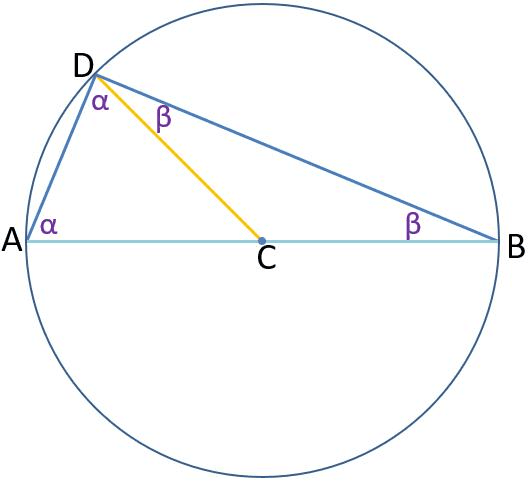
- Gave the first known geometric proof
- Example: A circle is bisected by its diameter
- Pythagoras
- Expanded geometry with theories and relationships
- Focused on logical structure
- Thales
Key Takeaway:
Greek geometry = Logical thinking + proof-based system
Book a Free Demo Class Today.
Euclid’s Contribution
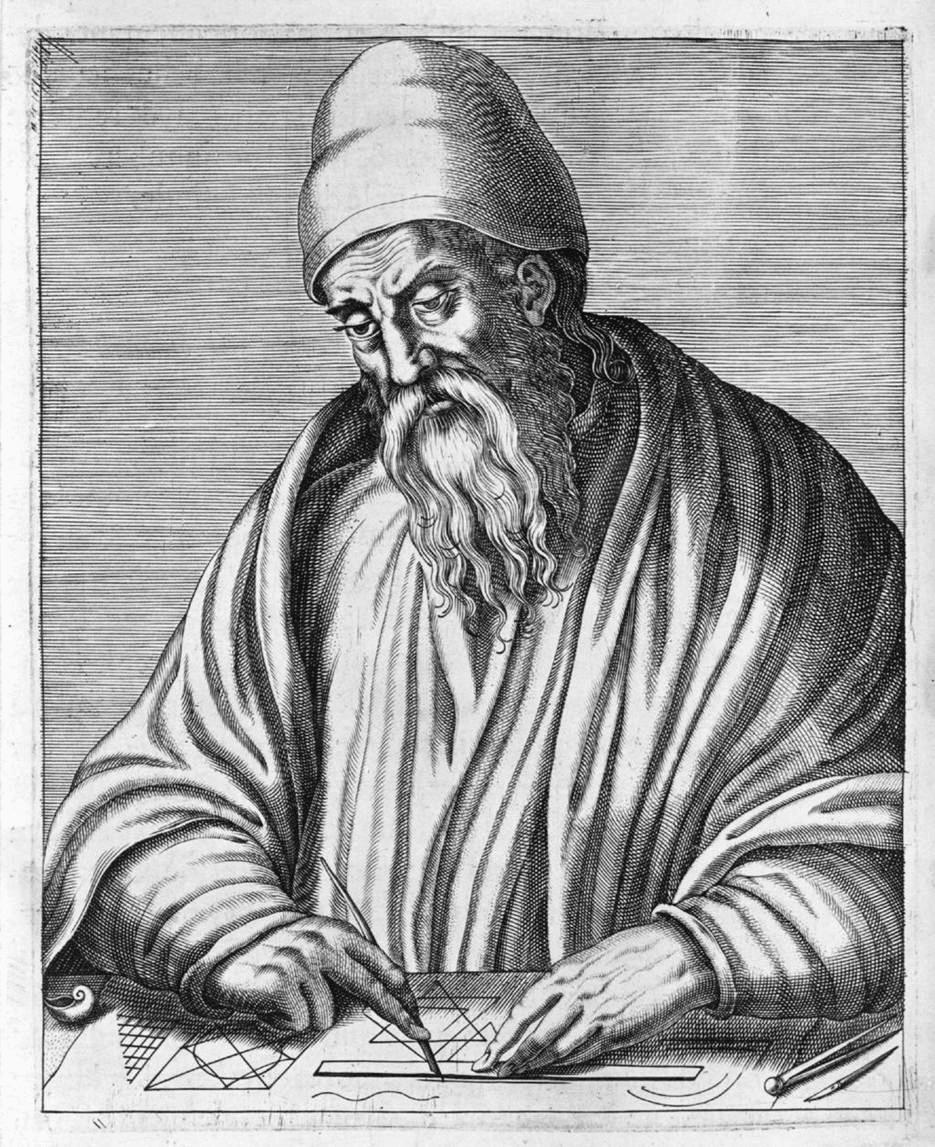
Then came the game-changer—Euclid.
- His Masterpiece: Elements
- A collection of all geometric knowledge of that time
What made Euclid special?
- Organized geometry into a clear logical system
- Divided knowledge into:
- Definitions
- Axioms
- Postulates
- Theorems
- His work had:
- 13 books (chapters)
- Around 465 propositions
This structure is still followed in modern mathematics.
Key Takeaway:
Euclid turned geometry into a systematic science
Euclid’s Geometry – The Foundation
What Makes Euclid’s Geometry Unique?
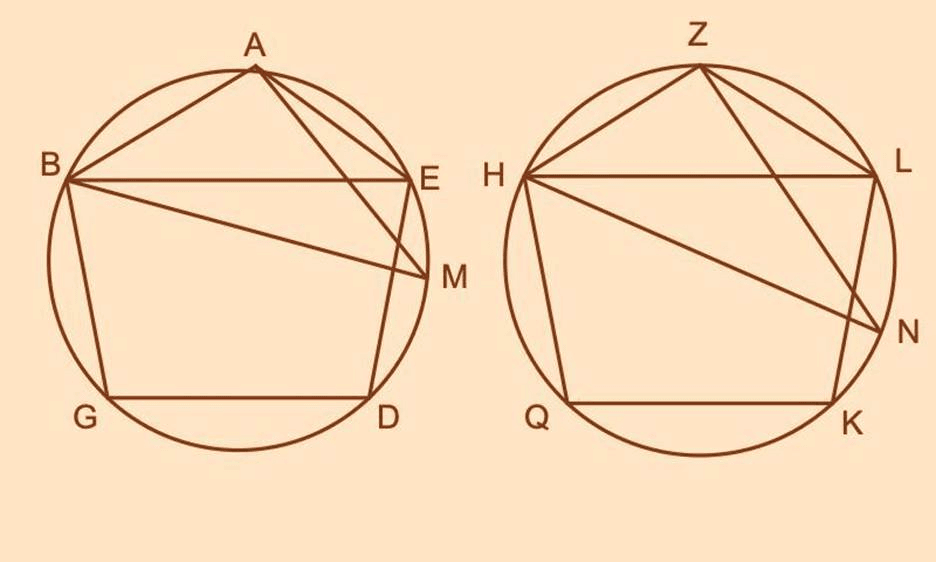
Euclid’s approach to geometry wasn’t just about shapes—it was about thinking in a structured, logical way. Here’s what makes it different:
- Logical Structure
Every concept is arranged in order—from basic ideas to complex results
Nothing is random; everything follows a clear sequence - Step-by-Step Reasoning
Each statement is explained through reasoning
No guessing—every conclusion has a reason behind it - Deductive System
Euclid used a method called deduction:- Start with basic truths
- Use them to prove new results
- Build a chain of logic
Think of it like solving a puzzle where every piece must fit perfectly before moving forward.
Key Idea: Start Small, Build Big
At the heart of Euclid’s geometry is one powerful idea:
- Begin with simple assumptions (axioms & postulates)
- Use them to prove theorems
- Then use those theorems to prove even more results
This creates a strong, connected system where:
- Nothing is memorized blindly
- Everything is logically justified
Example: Building a House Analogy
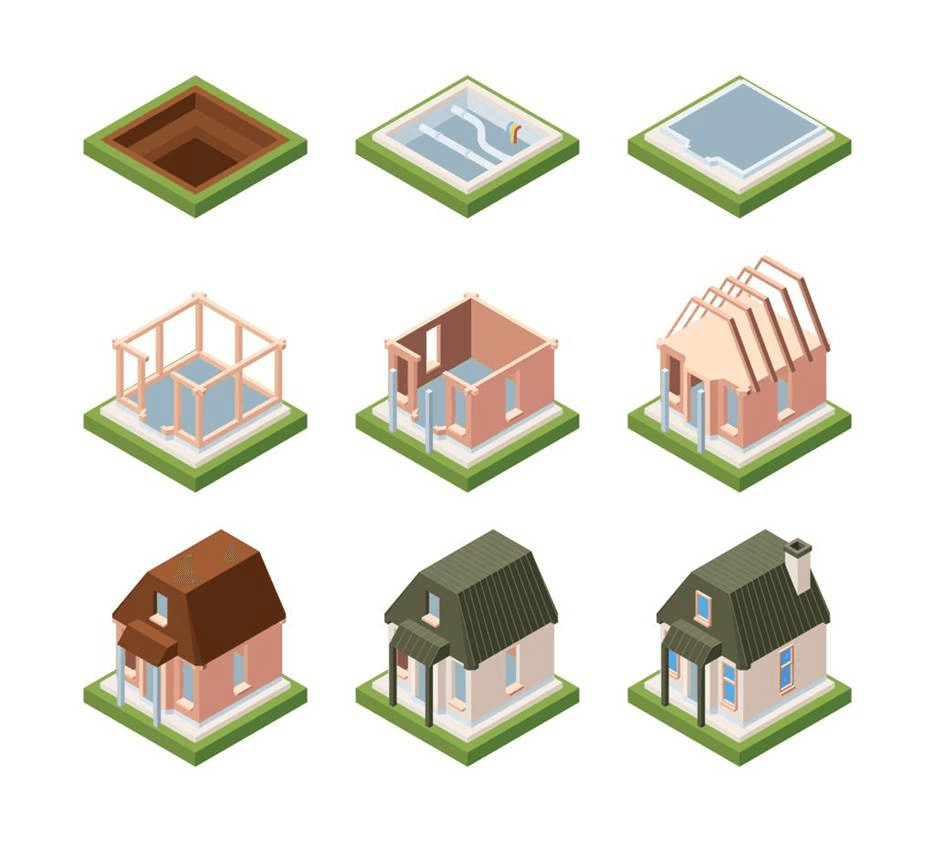
Think of Euclid’s geometry like building a house:
- Foundation = Axioms & Postulates (basic truths)
- Walls & Structure = Theorems (proved statements)
- Final House = Complete geometry system
If the foundation is weak, the entire structure can collapse. Similarly, if basic assumptions are unclear, all further results become unreliable.
Quick Insight
Euclid didn’t just teach geometry—he taught how to think logically.
That’s why his system is still considered the foundation of modern mathematics.
Try a Free Demo Class Now.
Understanding Undefined Terms
What Are Undefined Terms?
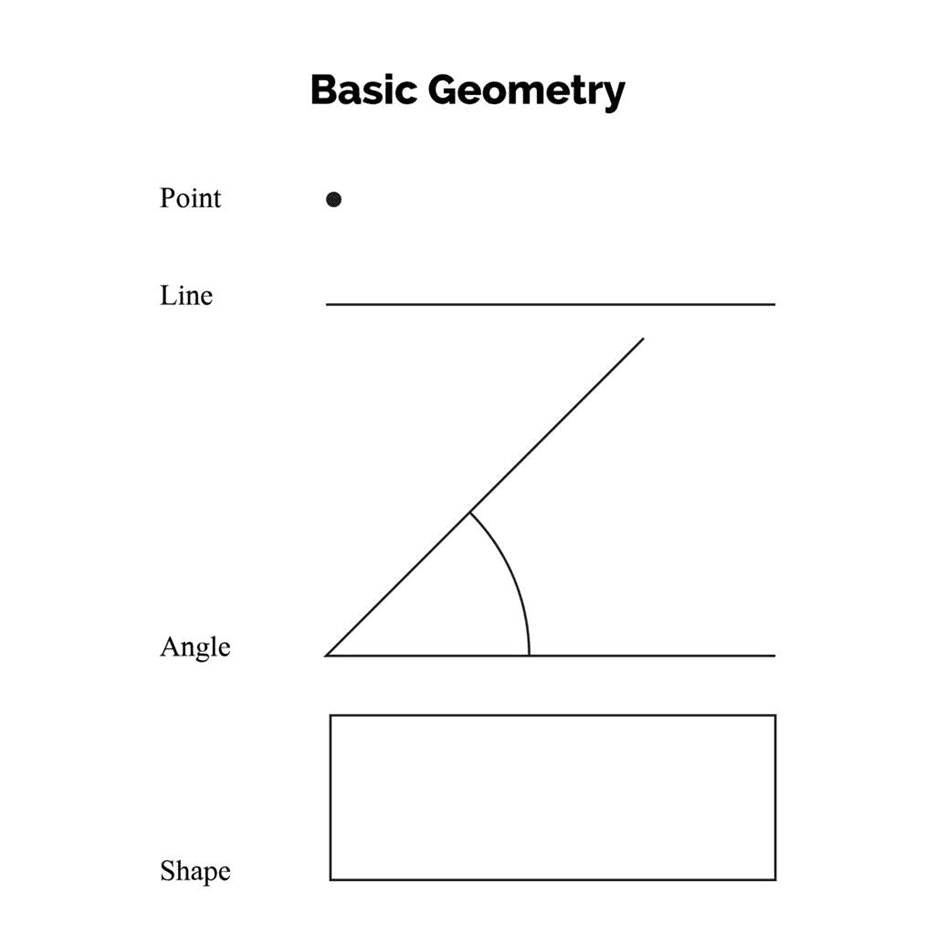
Before diving deeper into geometry, there’s something surprising you need to know: not everything in math is defined.
- Undefined terms are basic concepts that:
- Are not formally defined
- Are understood using intuition and observation
- They act as the starting point of geometry
- Without them, we wouldn’t be able to build any further concepts
Think of them as the “alphabet” of geometry—you don’t define every letter, you just learn and use them.
Three Main Undefined Terms
In Euclid’s geometry, three fundamental terms are accepted without definition:
- Point
- Represents an exact location
- Has no size, no length, no width
- Usually shown as a small dot
- Line
- A straight path extending infinitely in both directions
- Has length but no thickness
- Made up of infinitely many points
- Plane
- A flat surface that extends infinitely
- Has length and breadth, but no height
- Think of it like a perfectly flat sheet
Why Not Define Everything?
This is where things get interesting.
- If you try to define a point, you’ll need other terms
- Then those terms will need definitions too
- This continues forever → infinite chain of definitions
For example:
- If you define a point using “position”
- Then you must define “position”
- And then define words used in that definition
It never ends.
So mathematicians decided:
Let’s accept a few basic ideas without definition and build everything else from them.
Simple Concept Example
- A point has no dimension
- A line has one dimension (length)
- A plane has two dimensions (length + breadth)
Each step adds a dimension and builds complexity.
Activity Time
Try this quick exercise:
- Draw a point (just a dot)
- Draw a line (extend it both sides)
- Draw a plane (represent it as a flat surface like a rectangle)
Now think:
Which one was easiest to imagine?
Which one is hardest to draw exactly?
That’s the beauty of undefined terms—they are simple to understand, but impossible to define perfectly.
Enroll in a Free Demo Class Today.
Euclid’s Definitions Explained
Important Definitions
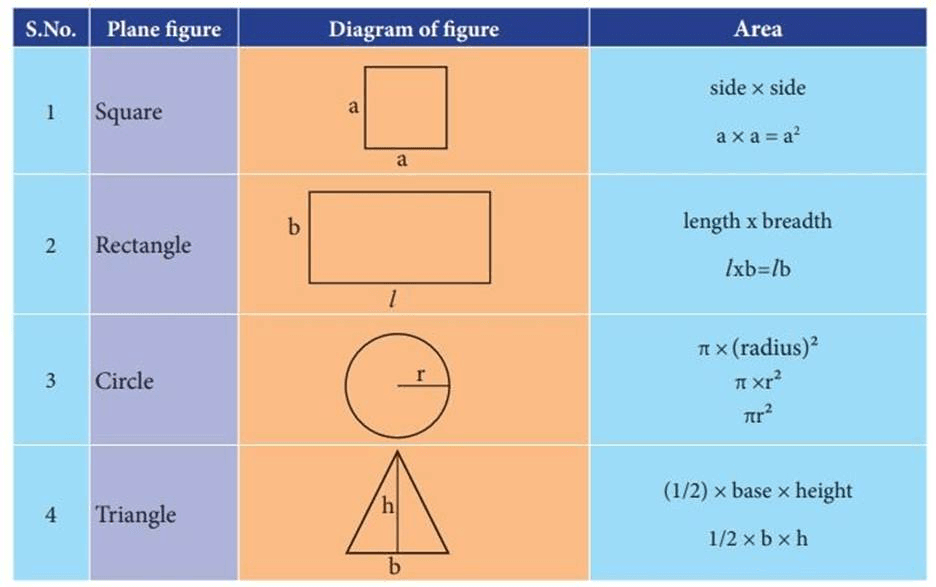
Once the basic (undefined) terms are accepted, Euclid tried to describe them more clearly using definitions. These definitions help us talk about geometry, even if they are not perfect.
Here are some of his most important ones:
- Point
- Defined as: “That which has no part”
- Meaning:
- No size
- No dimension
- Just a position
- Line
- Defined as: “Breadthless length”
- Meaning:
- Has length
- No thickness or width
- Extends infinitely
- Surface
- Defined as: “That which has length and breadth only”
- Meaning:
- Two-dimensional
- Flat like a sheet
- No height or thickness
These definitions were an attempt to explain geometry in words, based on observation and logic.
Limitations of Definitions
Here’s the catch—Euclid’s definitions are helpful, but not complete.
- Words like:
- “length”
- “breadth”
- “part”
are not defined anywhere
- This creates a problem:
- To understand one definition, you need another
- That definition needs another… and so on
This again leads to the infinite definition loop we discussed earlier.
So, even though Euclid gave definitions, mathematicians later realized:
- Some ideas are better understood intuitively rather than strictly defined
Concept Tip: Don’t Memorize, Visualize
Instead of trying to memorize these word-by-word, focus on:
- Visual understanding
- Imagine a dot → point
- Imagine a straight path → line
- Imagine a flat surface → plane
- Real-world connection
- Tip of a pen → point
- Edge of a ruler → line
- Surface of a table → plane
Smart Learning Tip:
Geometry becomes easy when you see it, not when you cram it.
Book Your Free Demo Class Slot Now.
Quick Check
- Can a point be measured?
- Does a line have thickness?
- Is a surface 2D or 3D?
If you can answer these confidently, you’ve understood the concept—not just memorized it.
You May Also Find Useful
Axioms – Universal Truths
What Are Axioms?
In geometry (and mathematics), not everything needs proof. Some statements are so obvious that we accept them as true without questioning them—these are called axioms.
- Axioms are:
- Statements accepted without proof
- Considered universally true
- Applicable across all areas of mathematics (not just geometry)
Think of axioms as the rules of the game. Without them, we wouldn’t know where to start or how to proceed logically.
Important Axioms (with Examples)
Let’s understand the key axioms given by Euclid in a simple way:
- Things equal to the same thing are equal to one another
- If A = B and B = C, then A = C
- If equals are added to equals, the wholes are equal
- If A = B, then A + C = B + C
- If equals are subtracted from equals, the remainders are equal
- If A = B, then A − C = B − C
- Things which coincide with one another are equal
- If two shapes overlap perfectly, they are equal
- The whole is greater than the part
- A full object is always bigger than any piece of it
These may seem simple, but they form the base of all mathematical reasoning.
Real-Life Examples
Let’s connect these axioms to everyday situations:
- Money Example
- If you and your friend both have ₹100, and both receive ₹50 more
→ You both now have ₹150
(Adding equals to equals)
- If you and your friend both have ₹100, and both receive ₹50 more
- Length Comparison
- If two ropes are of equal length, and you cut the same length from both
→ The remaining parts are still equal
(Subtracting equals from equals)
- If two ropes are of equal length, and you cut the same length from both
- Coinciding Objects
- If two books are exactly the same size and overlap perfectly
→ They are equal
- If two books are exactly the same size and overlap perfectly
Why Axioms Matter
- They help us build logical arguments
- They are the starting point for proofs
- Without axioms, geometry would have no foundation
Think & Answer
If A = B and B = C, then what is A equal to?
This simple question shows how powerful axioms are—they help us reach conclusions instantly using logic.
Schedule Your Free Demo Class Today.
Postulates – Geometry-Specific Rules
What Are Postulates?
While axioms are universal truths, postulates are assumptions that are specific to geometry.
- Postulates are:
- Accepted without proof
- Used only in geometrical reasoning
- The starting rules for constructing shapes and figures
Think of postulates as basic drawing rules—they tell us what is possible when working with points, lines, and shapes.
Euclid’s Five Postulates Explained Simply
Let’s simplify the five postulates given by Euclid:
- A line can be drawn joining any two points
- If you have two distinct points, you can always connect them with a straight line
- A line can be extended indefinitely
- A line segment doesn’t just stop—it can be extended endlessly in both directions
- A circle can be drawn with any center and radius
- Pick any point as the center and any distance as the radius—you can draw a circle
- All right angles are equal to one another
- Every 90° angle is the same, no matter where or how it is drawn
- Parallel line concept (the complex one)
- If a line intersects two lines and creates interior angles whose sum is less than 180°,
those two lines will meet on that side when extended
- If a line intersects two lines and creates interior angles whose sum is less than 180°,
Why Postulate 5 is Special
Postulate 5 stands out from the rest.
- It is longer and more complex
- Not as “obvious” as the other four
- It introduces the idea of parallel lines and angles
Because of its complexity:
- Mathematicians studied it deeply for years
- It became the foundation for advanced geometry concepts
- It even led to the development of different types of geometries later on
Visual Thinking Matters
Geometry becomes much easier when you draw what you learn.
Try this:
- Draw two points and join them → Postulate 1
- Extend the line on both sides → Postulate 2
- Draw a circle using a compass → Postulate 3
- Draw a right angle → Postulate 4
- Draw two lines with a transversal → observe angles → Postulate 5
Tip:
If you can see it, you can understand it better.
Try a Free Demo Class Now.
Axiom vs Postulate – Key Differences
Understanding the difference between axioms and postulates is important because both are starting points in mathematics—but they are used slightly differently.
Key Differences at a Glance
| Basis | Axiom | Postulate |
|---|---|---|
| Scope | Universal (applies to all of mathematics) | Geometry-specific |
| Usage | Used across algebra, arithmetic, geometry, etc. | Used only in geometry |
| Nature | General truths accepted without proof | Assumptions related to geometric constructions |
Simple Explanation
- Axioms are basic truths that apply everywhere in math.
For example, if two things are equal to the same thing, they are equal to each other. This idea works in numbers, shapes, measurements—almost everywhere. - Postulates, on the other hand, are rules designed specifically for geometry.
They help us draw and understand shapes—for example, you can always draw a straight line between two points.
Trick to Remember
- Axiom = General truth (works in all math)
- Postulate = Geometry rule (used only for shapes and figures)
Quick Check
- Is “whole is greater than the part” used only in geometry? → No → It’s an axiom
- Is “a line can be drawn between two points” about shapes? → Yes → It’s a postulate
Once you see this difference clearly, the rest of the chapter becomes much easier to understand.
Also Read
NCERT Class 9 Constructions Concepts and Step-by-Step Methods
Theorems – What Comes After
What Are Theorems?
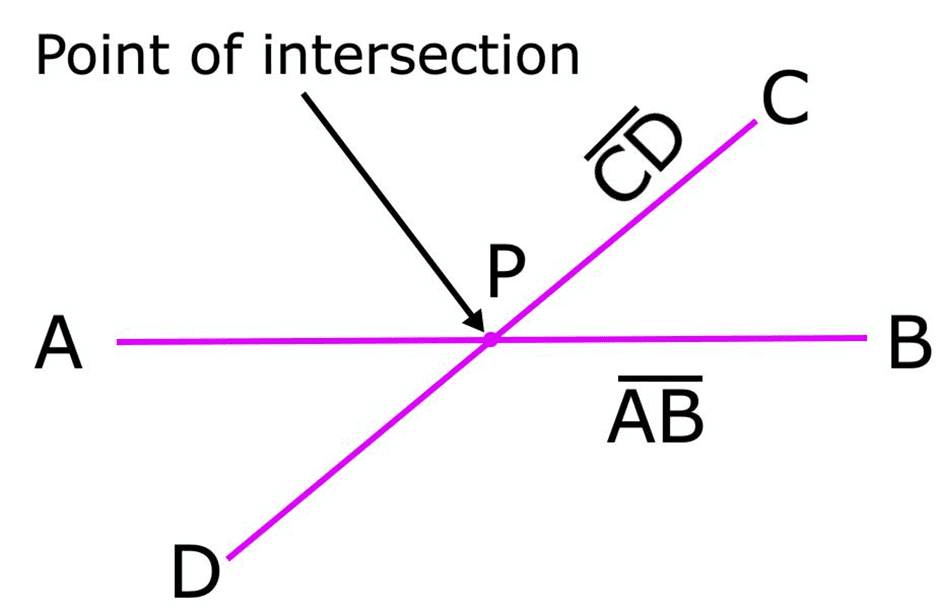
Once we have our basic building blocks—undefined terms, axioms, and postulates—the next step is theorems.
- Theorems are:
- Statements that are proved true
- Not assumed—they must be logically justified
- Based on earlier concepts
In simple words, a theorem is something you can explain and prove step by step.
How Theorems Work
Theorems don’t appear randomly—they follow a clear process:
- Start with axioms and postulates
- Apply logical reasoning
- Use previously proved results
- Arrive at a new proven statement
This method is called deductive reasoning, and it’s the backbone of geometry.
Example
Statement: Two lines cannot intersect at more than one point
- Suppose two lines intersect at two points
- But we already know:
- Through two distinct points, only one unique line can pass
- This creates a contradiction
So, the assumption is wrong, and we conclude:
→ Two lines can intersect at only one point
Book a Free Demo Class with Experts.
Concept Flow
Think of geometry like a step-by-step ladder:
- Undefined Terms → Basic ideas (point, line, plane)
- Axioms & Postulates → Accepted truths
- Theorems → Proven results
Each step depends on the previous one. If the base is strong, everything built on it becomes reliable.
Quick Insight
Theorems are where real “math thinking” begins.
They train you to question, reason, and prove—not just accept.
Solved Examples for Concept Clarity
Example 1: Prove that AB + BC = AC (when B lies between A and C)
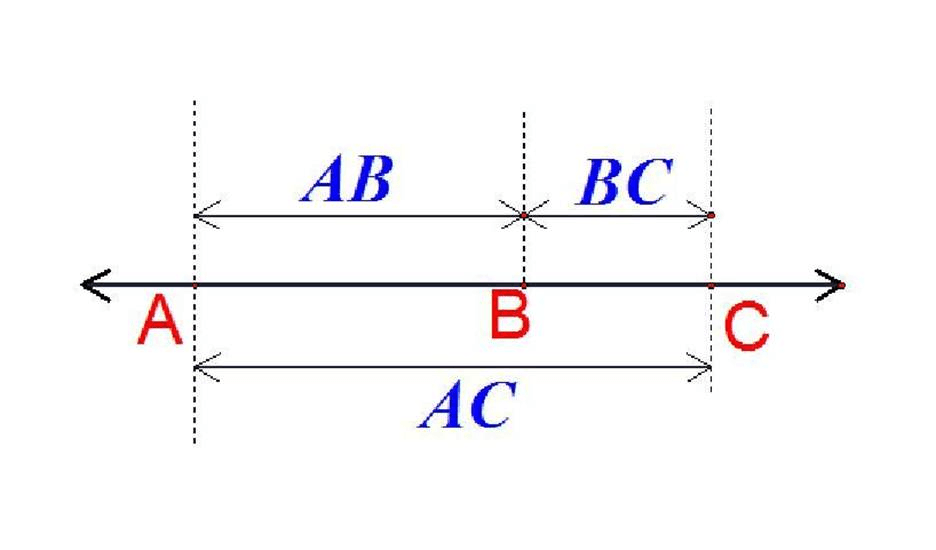
Given:
Points A, B, and C lie on a straight line, and B is between A and C
To Prove:
AB + BC = AC
Step-by-Step Thinking:
- Imagine a straight line from point A to point C
- Point B lies somewhere in between
- So the entire length AC is made up of two smaller parts:
- AB (from A to B)
- BC (from B to C)
Now here’s the key idea:
- When you place AB and BC together, they exactly coincide with AC
- According to Euclid’s axiom:
→ “Things which coincide with one another are equal”
Conclusion:
AB + BC = AC
Concept Insight:
This example shows how simple observations + axioms = powerful results.
Plan Your Free Demo Class Now.
Example 2: Construct an Equilateral Triangle
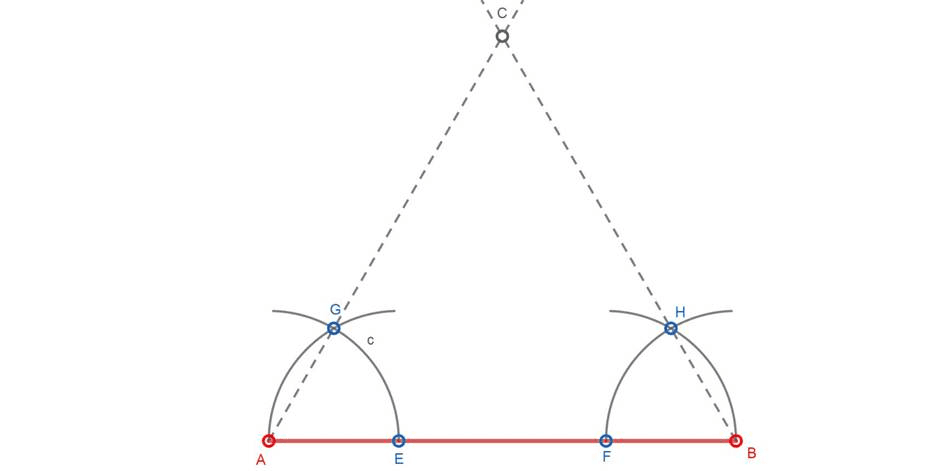
Given:
A line segment AB
To Construct:
An equilateral triangle (all sides equal)
Steps:
- Draw a line segment AB
- With A as the center and AB as radius, draw a circle
- With B as the center and BA as radius, draw another circle
- Let the circles intersect at point C
- Join AC and BC
Now you get triangle ABC
Why is it equilateral?
- AB = AC (radii of first circle)
- AB = BC (radii of second circle)
- Therefore, AB = BC = AC
Used Concept:
Postulate 3 → A circle can be drawn with any center and radius
How to Approach Such Questions
- Visualize first → Draw the figure clearly
- Break into steps → Don’t rush
- Use known rules → Axioms or postulates
- Explain logically → Every step should have a reason
Quick Tip
Geometry becomes easy when you see + think + connect.
Don’t just read the solution—try drawing it yourself.
Practice Questions
1. Concept-Based Questions (10)
- Define a point, line, and plane in your own words.
- What are axioms? Why are they important in mathematics?
- What is the difference between an axiom and a postulate?
- Why are some terms in geometry called undefined terms?
- Name the three main undefined terms in geometry.
- Explain Euclid’s definition of a line. What does “breadthless length” mean?
- What is a surface according to Euclid?
- Why is it not possible to define every term in geometry?
- What is meant by a theorem? How is it different from an axiom?
- How does geometry help in developing logical thinking?
2. True/False with Reasoning
- Only one line can pass through a single point.
- There are infinitely many lines passing through two distinct points.
- A line segment can be extended indefinitely on both sides.
- All right angles are equal to one another.
- Two distinct lines can intersect at more than one point.
- A point has length and breadth.
- If equals are added to equals, the results are always equal.
- Axioms are specific only to geometry.
- A circle can be drawn with any center and any radius.
- The whole is always greater than the part.
Book A Free Demo Class.
3. Application-Based Questions
- If A = B and B = C, prove that A = C using an axiom.
- If AB = CD and CD = EF, what can you conclude about AB and EF? Explain.
- If equals are added to equals, show with an example that the wholes are equal.
- If equals are subtracted from equals, prove that the remainders are equal.
- If two objects coincide exactly, what can you say about them?
- If B lies between A and C, prove that AB + BC = AC.
- Identify the postulate used when drawing a line between two points.
- Which postulate is used to extend a line segment? Explain with an example.
- Which postulate allows you to draw a circle?
- Explain how axioms help in proving theorems.
4. Construction-Based Questions
- Draw a line segment AB of length 5 cm.
- Draw a line passing through two given points.
- Extend a given line segment on both sides.
- Construct a circle with a given center and radius.
- Draw a right angle using a protractor.
- Construct an equilateral triangle using a compass.
- Draw two parallel lines and a transversal.
- Mark three collinear points on a straight line.
- Draw a plane surface representation (using a rectangle or parallelogram).
- Construct a triangle using any three given lengths (if possible).
Common Mistakes Students Make
Geometry may look simple at first, but many students struggle because of a few common mistakes. Being aware of them can save you a lot of confusion later.
- Confusing axiom and postulate
Students often mix these up. Remember:- Axioms = general truths
- Postulates = geometry-specific rules
- Memorizing instead of understanding
Geometry is not about cramming definitions. If you don’t understand the logic behind a concept, it becomes difficult to apply it in questions. - Ignoring diagrams
Many students skip drawing figures and try to solve questions mentally. This leads to errors because geometry is highly visual. - Skipping reasoning steps
Writing only the final answer without explanation is a common habit. In geometry, each step must be logically justified.
How to Study Euclid’s Geometry Smartly
Studying geometry the right way can make it one of the easiest and most interesting chapters.
- Focus on logic, not rote learning
Instead of memorizing statements, understand why they are true. - Practice diagrams regularly
Drawing figures helps you:- Understand relationships
- Avoid mistakes
- Improve clarity
- Relate concepts to real life
Connect geometry with things around you:- Lines in roads
- Shapes in buildings
- Angles in objects
- Revise axioms and postulates
These are your foundation. The better you know them, the easier it becomes to solve problems.
How PlanetSpark Helps Students Master Euclid’s Geometry
Learning geometry becomes much easier when concepts are taught in an engaging and structured way. This is where PlanetSpark helps students go beyond textbooks.
- 1:1 Personalized Learning
Every student gets individual attention, ensuring concepts are explained at their pace. - Visual + Concept-Based Teaching
Instead of just theory, students learn through:- Diagrams
- Real-life examples
- Step-by-step explanations
- Interactive Doubt Solving
Students can ask questions freely and get instant clarity, which builds strong understanding. - Real-Life Application Focus
Concepts are connected to everyday situations, making learning more relatable and interesting. - Confidence in Communication
Students are encouraged to explain concepts in their own words, improving both math and communication skills.

Building the Foundation of Geometry
Geometry begins with simple ideas like points, lines, and basic assumptions, but it grows into a powerful system of logical thinking. Euclid’s approach helps students understand not just what is true, but why it is true. With strong fundamentals, consistent practice, and curiosity, students can build a solid base that supports all future mathematics learning.
You May Also Read
Master Class 9 Maths NCERT: Complete Guide for Class 9th Students
Frequently Asked Questions
PlanetSpark uses 1:1 live sessions, visual explanations, and real-life examples to make Euclid’s Geometry easy and engaging for students.
PlanetSpark focuses on concept clarity, logical thinking, and communication skills, helping students truly understand geometry instead of memorizing it.
Yes, PlanetSpark offers personalized learning where each student gets individual attention to master geometry concepts step by step.
PlanetSpark teachers simplify axioms and postulates using diagrams, examples, and interactive methods for better understanding.
Absolutely. PlanetSpark trains students to think logically, apply concepts, and solve geometry problems with confidence.
PlanetSpark uses visual teaching techniques and guided practice to help students draw and understand diagrams accurately.
Yes, PlanetSpark is ideal for beginners as it builds strong fundamentals and gradually develops advanced understanding.